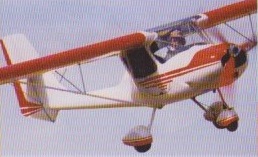
The aircaft was a Rans S4 Coyote Kit that was modified and registered N808KC with the FAA as a light sports Ultra One SN 101. Completed by Kenneth Cottle in 2005, the Ultra One has basic Instruments: airspeed, vertical speed, altimeter, rpm, cht, egt, external antenna, and electric start. The undercarriage has aluminium spring.
Engine: 1 x Rotax 503DC, 52 hp Propeller: Warp Drive 2 blade ground adjusted Wingspan: 29.5 ft Length: 17 ft Wing area: 127 Sq. ft Empty Weight: 428 lbs Gross Weight: 744 lbs Fuel capacity: 12 USG Cruise: 60-75 mph VNE: 95 mph VSO: 29 mph VX: 50 mph VY: 55 mph Climb rate: 600-700 fpm Take off and landing dist: <500 ft Seats: 1
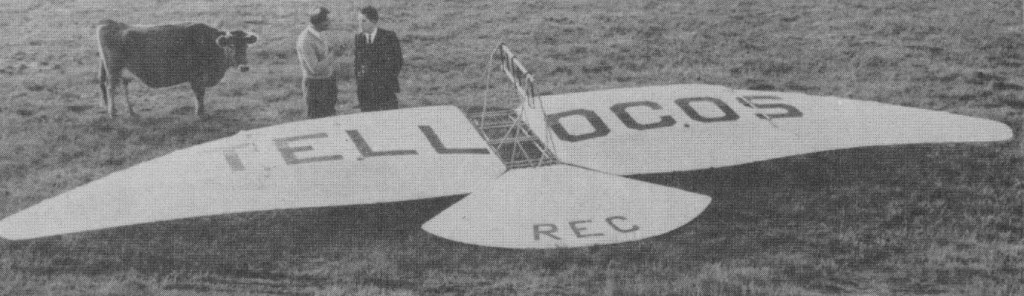
Australian Ron Costello, 46, of Victoria, designed and built this pedal-powered flapper in 1964. The tail is controlled ‘string’, with the pilot standing on a narrow platform.
Costello worked for the Civil Aviation Department and government buddies notified him officially by letter that man-powered craft don’t always work.
Manufactured in France, the strut-braced trike has gas shocks and can be fitted with factory options including floats, tow system, and spray system. The kit price includes engine and prop.
Phase II 503
The Phase II 503 Chronos 16 uses the same basic trike unit and engine as the Zoom, but uses a double-surface wing.
Phase II 503 Chronos 16
Phase III 582 ES Top 12.9
The Phase II 618 ES Chronos 16 Float has the 76 hp Rotax and has enough power to handle floats. Without floats it is good for towing a hang glider.
Phase II 618 ES Chronos 16 Float
Phase 2 / Zoom Engine: Rotax 503, 52 hp. HP range: 46-70. Speed max: 75 mph. Cruise: 48 mph. Range: 175 sm. ROC: 500 fpm. Take-off dist: 150 ft. Landing dist: 170 ft. Service ceiling: 15,000 ft. Fuel cap: 10 USG. Weight empty: 315 lbs. Gross: 750 lbs. Height: 12 ft. Length: 8 ft. Wing span: 35 ft. Wing area: 151 sq.ft. Seats: 2. Landing gear: nose wheel.
Cosmos Phase II 503 Empty weight: 130 kg Wing span: 10.6 m Wing area: 19 sq.m Fuel capacity: 55 lt Engine: Rotax 503 DCDI, 52 hp MAUW: 350 kg Seats: 2 Max speed: 105 kph Cruise speed: 60 kph Minimum speed: 40 kph Climb rate: 5 m/s Fuel consumption: 8 lt/hr Price (1998): 80 900 Fttc
Phase II 503 Chronos 16 Empty weight: 132 kg Wing span: 10.6 m Wing area: 16 sq.m Fuel capacity: 55 lt Certification: Vz, B, NL Engine: Rotax 503 DCDI, 52 hp MAUW: 350 kg Seats: 2 Max speed: 125 kph Cruise speed: 90 kph Minimum speed: 45 kph Climb rate: 5 m/s Fuel consumption: 7 lt/hr Price (1998): 87 300 Fttc
Phase III 582 ES Top 12.9 Empty weight: 138 kg Wing span: 9.87 m Wing area: 13 sq.m Fuel capacity: 55 lt Certification: Vz, B Engine: Rotax 582 DCDI, 64 hp MAUW: 350 kg Seats: 2 Max speed: 145 kph Cruise speed: 100 kph Minimum speed: 50 kph Climb rate: 7 m/s Fuel consumption: 9 lt/hr Price (1998): 109 900 Fttc
Phase II 618 ES Chronos 16 Float Empty weight: 158 kg Wing span: 10.6 m Wing area: 16 sq.m Fuel capacity: 55 lt Engine: Rotax 618 DCDI, 73 hp MAUW: 400 kg Seats: 2 Max speed: 130 kph Cruise speed: 100 kph Minimum speed: 55 kph Climb rate: 4 m/s Fuel consumption: 12 lt/hr Price (1998): 176 000 Fttc
USA 1995: 8710 Carefree Hwy, Peoria, AZ 85382, USA. Manufactures in assembled and kit forms a large range of single- and two-seat microlights with Rogallo wings and open trikes.
1998: 1 rue du Stade F-21121 Fontaine lès Dijons France
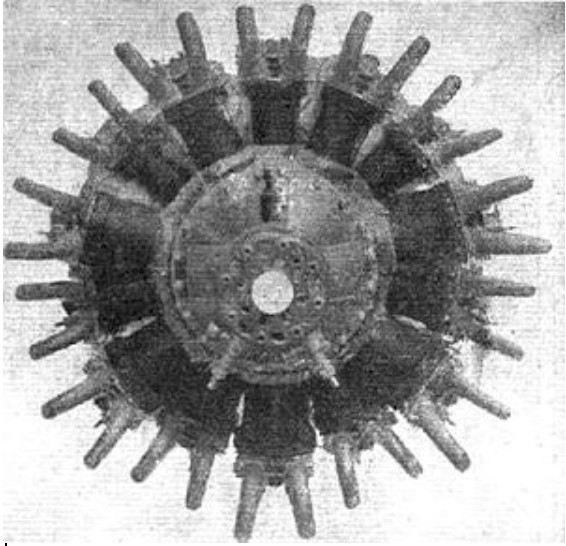
Designed by Roy Fedden of Cosmos Engineering and built at Bristol by Brazil-Straker under the direction of Roy Fedden, and first run in July 1917. The Cosmos Mercury fourteen-cylinder twin-row air-cooled radial Mercury featured an unusual crankshaft and connecting rod arrangement that dispensed with the more normal design of a single master rod linking to individual rods for each cylinder. It produced 347 horsepower (259 kW). It was said to run well without vibration and set an unofficial time to climb record while fitted to a Bristol 21A Scout F.1, the aircraft achieving 10,000 ft (3,000 m) in 5.4 minutes and 20,000 ft (6,000 m) in 16.25 minutes.
An Admiralty order for 200 engines was placed in 1917 but was later cancelled by Lord Weir due to the end of World War I, it is also stated that Lord Weir had a preference for the ABC Dragonfly. It did not enter production.
The name was re-used by Fedden for the later nine-cylinder Bristol Mercury radial engine.
Mercury Type: 14-cylinder air-cooled two-row radial engine Bore: 4.375 in (111.1 mm) Stroke: 5.8 in (147.3 mm) Displacement: 1,223 cu in (20.0 l) Diameter: 41.625 in (1,057.3 mm) Dry weight: 587 lb (266 kg) Valvetrain: 3 poppet valve per cylinder; 2 exhaust and 1 inlet Fuel type: Petrol Oil system: Pressure feed to main bearings Cooling system: Air-cooled Power output: Normal: 315 hp (235 kW) at 1,800 rpm at sea level, Maximum: 347 hp (259 kW) at 2,000 rpm at sea level Compression ratio: 5.3:1