A new sport wing in 1998.
Helix
Wing area: 30.2 sq.m
Pilot weight: 70/100 kg
No. of cells: 42
Wing span: 12.1 m
Aspect ratio: 4.8
Min sink: 1.2 m/s
Max speed: 44 kph
Price (1998) 5,400 DM
A new sport wing in 1998.
Helix
Wing area: 30.2 sq.m
Pilot weight: 70/100 kg
No. of cells: 42
Wing span: 12.1 m
Aspect ratio: 4.8
Min sink: 1.2 m/s
Max speed: 44 kph
Price (1998) 5,400 DM

Paraglider circa 1998.
For 1998 the Finesse had the number of lines considerably reduced and the trailing edge altered to create the Finesse Plus.
Finesse Plus
Wing area: 30.2 sq.m
Certification: DHV 2-3GH
Pilot weight: 85/120 kg
No. of cells: 62
Wing span: 13.04 m
Aspect ratio: 5.6
Min sink: 1.1 m/s
Max speed: 45 kph
Price (1998) 6,100 DM
1998: Forchenweg 37, D-71134 Aidlingen, Germany
In 1998, Stefan Schuller, ex test pilot of Flight Design, was the inspiration behind Hans Madreiter’s wings.
Paraglider manufacturer.
Germany
Produced the Delda-S/A GmbH Delta Dart II tandem two-seat pusher-engined homebuilt.
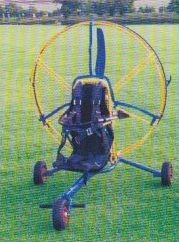
Andy Cronin developed the paramotors which can be flown with the company’s detachable trike unit.
Empty weight: 4-6 kg
Price (1998): £450-800
Andy Cronin developed the paramotors, all with electrc start and harness, and all can be flown with the company’s detachable trike unit.
450
Empty weight: 22 kg
Engine: Solo, 14.5 hp
Reduction: 1:2.5
Prop diameter: 115 cm
Fuel capacity: 8 lt
Price (1998): £2,300
450X
Empty weight: 23 kg
Engine: Solo, 18 hp
Reduction: 1:2.5
Prop diameter: 115 cm
Fuel capacity: 8 lt
Price (1998): £2,850
500
Empty weight: 23 kg
Engine: Solo, 18 hp
Reduction: 1:2.5
Prop diameter: 94 cm
Fuel capacity: 8 lt
Price (1998): £3,300
600
Empty weight: 28 kg
Engine: JPX 320, 25 hp
Reduction: 1:2.8
Prop diameter: 120 cm
Fuel capacity: 8 lt
Price (1998): £3,600
1998:
5, Tylers Road
Belton,
near Loughborough
LE12 9TX Leics
United Kingdom
Power pack builder
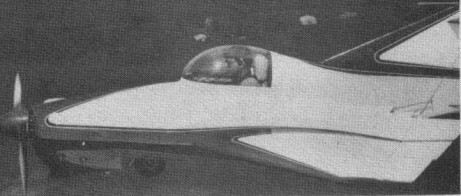
Lowell Borchers won a special Designer’s Trophy at the 1980 EAA Oshkosh Fly-In for his Delta Stingray after 6000 hours of work. The Stingray is about 70 percent plywood, 20 percent Douglas fir and 10 percent steel and fiberglass. It has a hand-carved 60/64 wooden pro¬peller and retractable landing gear. The Stingray is a take-off of John Dyke’s four-place Dyke Delta.
Gross Wt. 1075 lb.
Empty Wt. 740 lb.
Wingspan 15 ft
Length 14 ft l0 in
Engine 100-hp Continental 0-200.
Top 204 mph.
Cruise 180 mph.
Climb rate 1400 fpm.
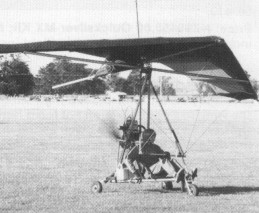
Designed and built by Terry Delore of Christchurch, NZ, and based on the English Hiway Skytrike. Most types of hang glider wing may be fitted. About 25 built.
Engine: Robin EC25PS 22hp or Robin EC34PM 30hp.
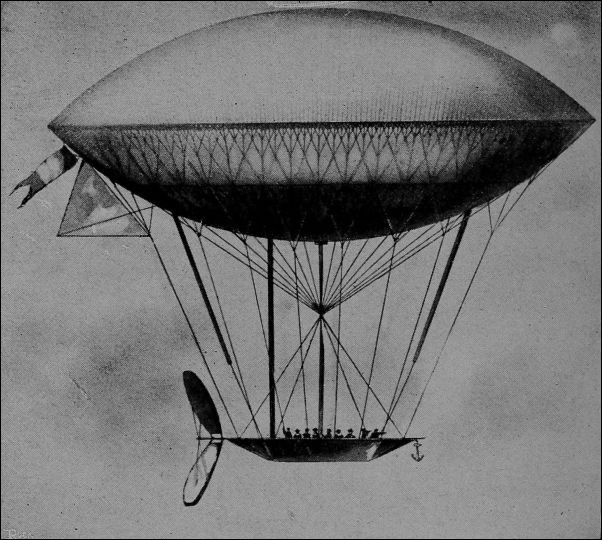
In 1870 Dupuy de Lôme devoted a large amount of time to perfecting a practical navigable balloon, and the French Government gave him great assistance in carrying out the experiments. For carrying out the project, he was given a credit of 40,000 francs; but the balloon was not ready until a few days before the capitulation. These experiments led to the development of one of the first navigable balloons, named the Dupuy de Lôme.
The Dupuy de Lôme airship was 36 meters in length, 14.84 meters in diameter, 29 meters tall, and had a total volume of 3,454 cubic meters. It was powered by a crank, which was operated by 4 or 8 men and which could provide a speed of between 9 and 11 km/h. The basket under the balloon could carry 14 people.

