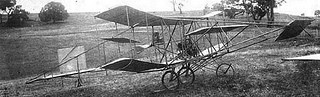
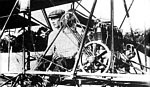
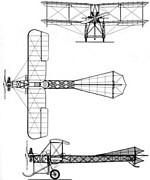
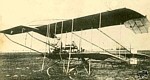
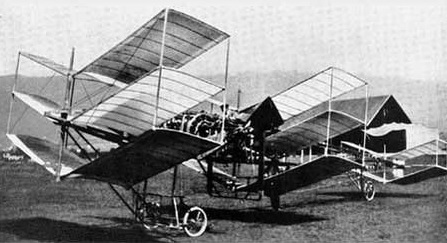
John Duigan’s first biplane, the photo having been taken at Mia Mia, Victoria, Australia in 1910. Though building it was a joint effort by the two brothers, ‘ownership’ is normally assigned to John alone. The craft was only marginally capable of flight, and after a crash in August 1910, it was rebuilt and modified, with the new version of it being somewhat more flight capable.
Designed and built by Johan & Reginald Duigan, it made the first flight in Australia by an Australian designed and built plane.
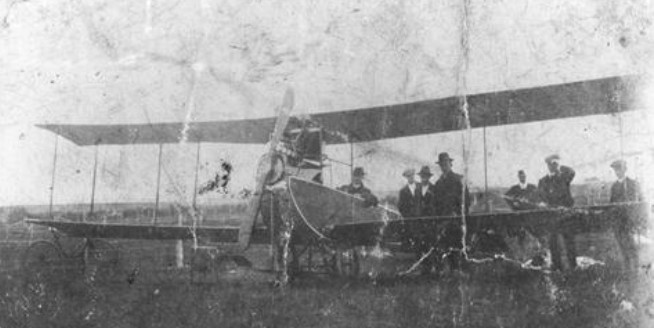
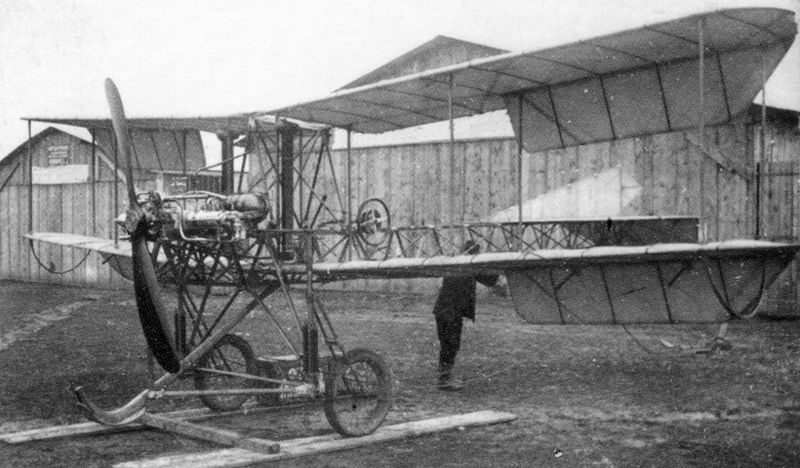
Duigan’s Avro-Type Biplane with Bariquand & Marré Wright Engine at Geelong, circa 1916
John Duigan and his bother Reginald built the aircraft at Ivanhoe, Victoria, in 1912-1913, basing its design on an Avro biplane that Duigan had previously owned in England, with some modifications to the wings and undercarriage.
John Duigan flew his homebuilt aircraft at Mia Mia, Victoria, Australia, on 16 June 1910, as the first Australian built aircraft to fly in Australian skies. After being damaged in a test flight at Keilor Plains the biplane, minus its original engine, was sold to Hans Christian Anderson, a Geelong motor garage owner in 1915. Andersen fitted it with a Wright Model ‘A’ Model 30 horsepower 4-cylinder engine built under licence by Bariquand & Marré of Paris in 1909. Andersen flew the biplane from the Belmont Common on several occassions until he crashed the plane at Lovely Banks circa 1916.
The engine is believed to be from the first plane flown in Australia, an imported Wright Flyer, in which Colin Defries first took to the air at Victoria Park Racecourse, Sydney, on 9 December 1909.
The plane is fitted with both landing skids and pnuematic-tyrred wire-spoked wheels.
The original Duigan biplane was in storage with the Museum of Victoria in Melbourne, Australia. The museum also has on display the Duigan replica that Ron Lewis built and flew from 1990-1995.
The Escape glider was made especially for paramotor flying by Eric Dufour. Made by Swing in Germany, the four certified sizes cover a take-off weight range from 80-250 kg, which means that even tandem trike flying is possible with the Escape. The Escape is a glider for beginners as well as for experienced pilots, DVH 1-2 and DULV 1, considering the corresponding weight range. The Escape glider is very easy to inflate and is also an excellent choice to fly PPG on trike. It has risers a for paramotor. It has performance with high passive safety and pleasant handling for situations ranging from training to cross-country or distance flying. The Escape is certified for motorized flying as well as for free flying. The trimmers allow cruise speed to be increased to approx. 45 km/h and the counter-torque to be compensated without troublesome counter-braking. Made from a high-quality and durable fabrics: Perseverance PN6 and Toray WT7, the Escape comes complete with back-pack bag or stuff sack, wind sock, and 3 year warranty. An Escape was 1st place at the 2006 PPG National American competitions.
This plane, the first Swiss two-seater, was a 1911 development of the earlier Dufaux-4 and had a similar landing gear and triangular-section fuselage. It was equipped with either 70 hp Gnôme or with Oerlikon 4-cylinder horizontally-opposed engines. Several were built, it was used in the flying school of Ernest Failloubaz, was flown by many of the most famous early Swiss pilots and also made the first Swiss military flights.
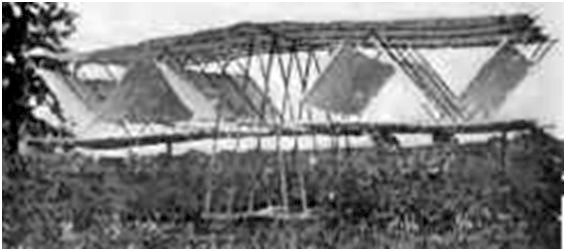
The first of several gliders tested by designer/builder Albert Q. Dufour, “not yet 20 years old”, in Milwaukee, Wisconsin, USA. It was launched from a 40 feet inclined runway ending 15 feet off the ground in 1907 and made flights of up to 100 feet.
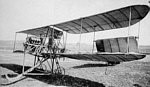
The 1909 Dufaux tractor biplane made many flights during 1909 and in 1910. Armand Dufaux flew almost 50 miles in 1 hr 18 mins over water the length of Lake Geneva (almost double the distance over water than Bleriot during his channel crossing)