A 1996 hang glider for Advanced pilots, the wing is well built, and it is made “beefy” in materials made to last. It is very easy to take off and the landing is no problem.
In flight the wing turns as in the books (pulled, shifted, pushed), and it can turn very tight. Its spiral stability in bends less than 30 ° inclination is reassuring. I get a good drop rate with. In rotation in thermal, it is easy to bow and correct turns. The wing can accelerate frankly (even if beyond 60-65km / h, it is not very valid in transition, there is a dull and it hangs anyway), and simply slow down.
It is an easy intermediate wing, without traps nor quirks nor behavior surprises. The Stealth is safe, secure, and with a little performance all the same.
Furtif 128 Wing area: 12.8 m² Wing span: 9.8 m Aspect ratio: 7.5 Hang glider weight: 28 kg Minimum pilot weight: 55 kg Maximum pilot weight: 75 kg Minimum speed: 28 km/h Maximum speed: 90 km/h Packed length: 5 m Packed length short: 3.8 m Number of battens: 24 Nose angle: 127°
Furtif 135 Wing area: 13.5 m² Wing span: 10.4 m Aspect ratio: 8.1 Hang glider weight: 29 kg Minimum pilot weight: 70 kg Maximum pilot weight: 90 kg Minimum speed: 28 km/h Maximum speed: 90 km/h Packed length: 5 m Packed length short: 4 m Number of battens: 26 Nose angle: 127°
Piloting is pleasant and clean, the landing without surprises, a good intermediate glider at the end of school before something more performant.
The vg really works.
Fuji 135 Wing area: 13.5 m² Wing span: 9.2 m Aspect ratio: 6.3 Hang glider weight: 26 kg Minimum pilot weight: 40 kg Maximum pilot weight: 60 kg Minimum speed: 25 km/h Maximum speed: 80 km/h Packed length short: 3.5 m Number of battens: 22 Nose angle: 120°
Fuji 140 Wing area: 14 m² Wing span: 10 m Aspect ratio: 7.1 Hang glider weight: 28 kg Minimum pilot weight: 55 kg Maximum pilot weight: 75 kg Minimum speed: 25 km/h Maximum speed: 80 km/h Packed length short: 4.2 m Number of battens: 24 Nose angle: 120°
Fuji 150 Wing area: 15 m² Wing span: 10 m Aspect ratio: 6.6 Hang glider weight: 29 kg Minimum pilot weight: 70 kg Maximum pilot weight: 85 kg Minimum speed: 25 km/h Maximum speed: 80 km/h Packed length short: 4.2 m Number of battens: 24 Nose angle: 120°
Fuji 165 Wing area: 16 m² Wing span: 10 m Aspect ratio: 6 Hang glider weight: 31 kg Minimum pilot weight: 75 kg Maximum pilot weight: 100 kg Minimum speed: 25 km/h Maximum speed: 80 km/h Packed length short: 4.2 m Number of battens: 24 Nose angle: 120°
The First 13.5 had good overall behaviour, including when towed, but more demanding at flair than newer wings.
First 13 Wing area: 13.5 m² Wing span: 9.6 m Aspect ratio: 7 Hang glider weight: 29 kg Minimum pilot weight: 60 kg Maximum pilot weight: 80 kg Minimum speed: 28 km/h Maximum speed: 85 km/h Packed length short: 3.8 m Number of battens: 26 Nose angle: 127°
First 13 light Wing area: 13.5 m² Wing span: 9.6 m Aspect ratio: 7 Hang glider weight: 28 kg Minimum pilot weight: 50 kg Maximum pilot weight: 65 kg Minimum speed: 28 km/h Maximum speed: 85 km/h Max glide ratio: 10.53 Max glide ratio speed: 41 km/h Minimum sink rate: 1.01 m/s Packed length short: 3.8 m Number of battens: 24 Nose angle: 127°
First 14 Wing area: 14.5 m² Wing span: 10.4 m Aspect ratio: 7.5 Hang glider weight: 31 kg Minimum pilot weight: 75 kg Maximum pilot weight: 100 kg Minimum speed: 28 km/h Maximum speed: 85 km/h Packed length short: 4 m Number of battens: 28 Nose angle: 127°
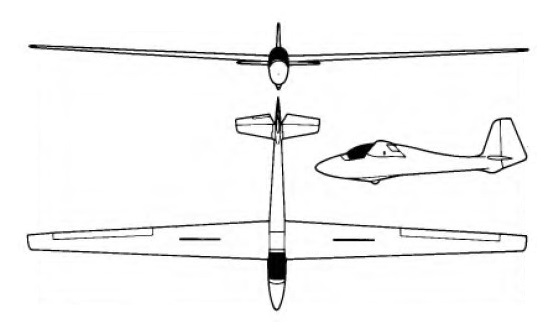
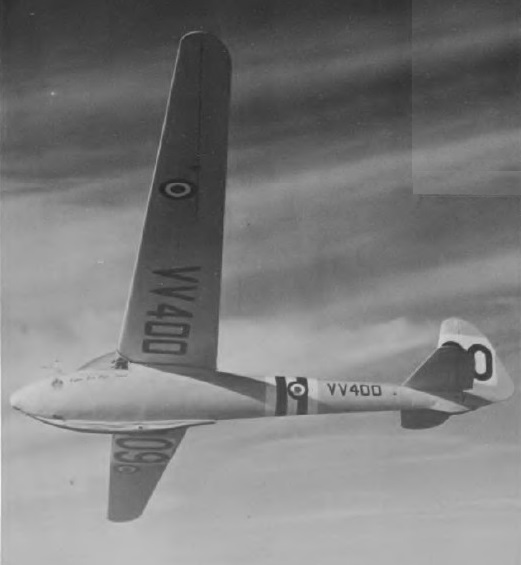
The first three marks of Olympia, which formed the bulk of the production of this type, differed little from the DPS Meise, but in the 1950s Elliotts began development of a new family of high performance Olympia variants incorporating laminar flow wings, and leading to the Olympia 419, which was sufficiently different from the first three marks of this design as to be almost a new type.
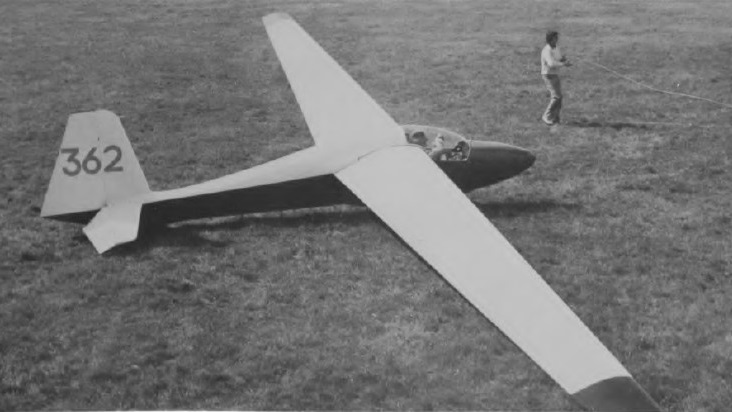
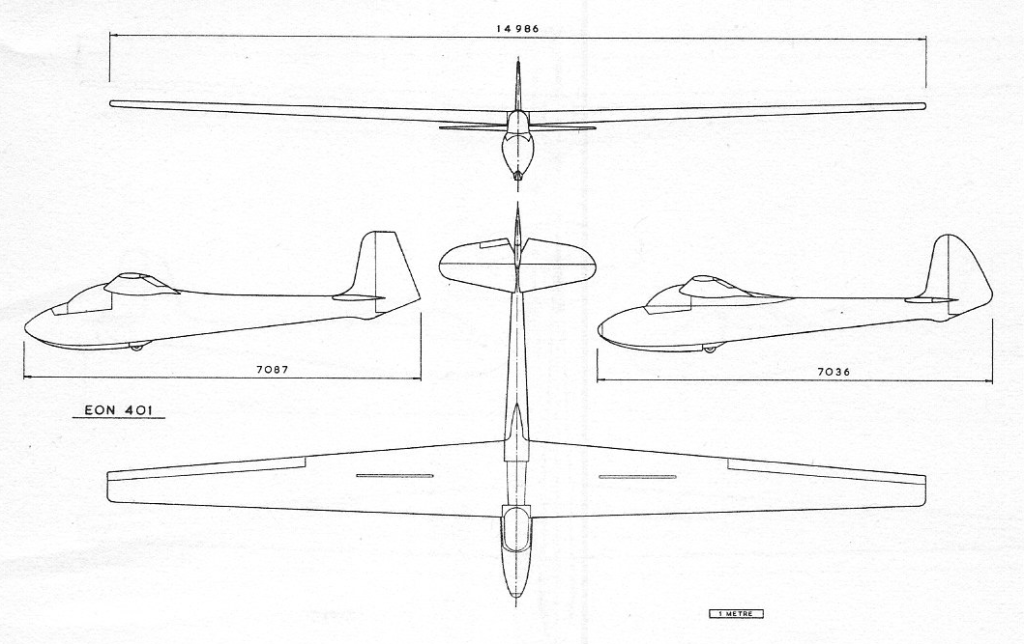
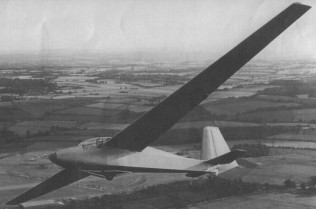
First of these new variants was the Olympia 4, later known as the 401, first flying in 1954, which was a Mk 2, G-ALNF, fitted with a laminar flow wing of NACA 64-series section, identical in span (15m) and plan form to the previous wing. The 401 had a revised fuselage nose section, square-cut rudders and elevators. Frise ailerons were featured but these were found to have only marginal power at low speeds and, after the 401’s debut in the 1954 World Gliding Championships, these were enlarged and the wing itself modified. G-ALNF was then fitted with a 17m span wing of the same aerofoil sections at root and tip, thus becoming the Olympia 402; aileron chord and span were increased. It was flown by Bill Ivans of the USA into fifth place in the 1956 World Championships, but was lost in an accident on the last day of the competition.
For the 1956 World Championships the Olympia 4 prototype was converted to 17 m / 55 ft 3.5 in as the Olympia 402.
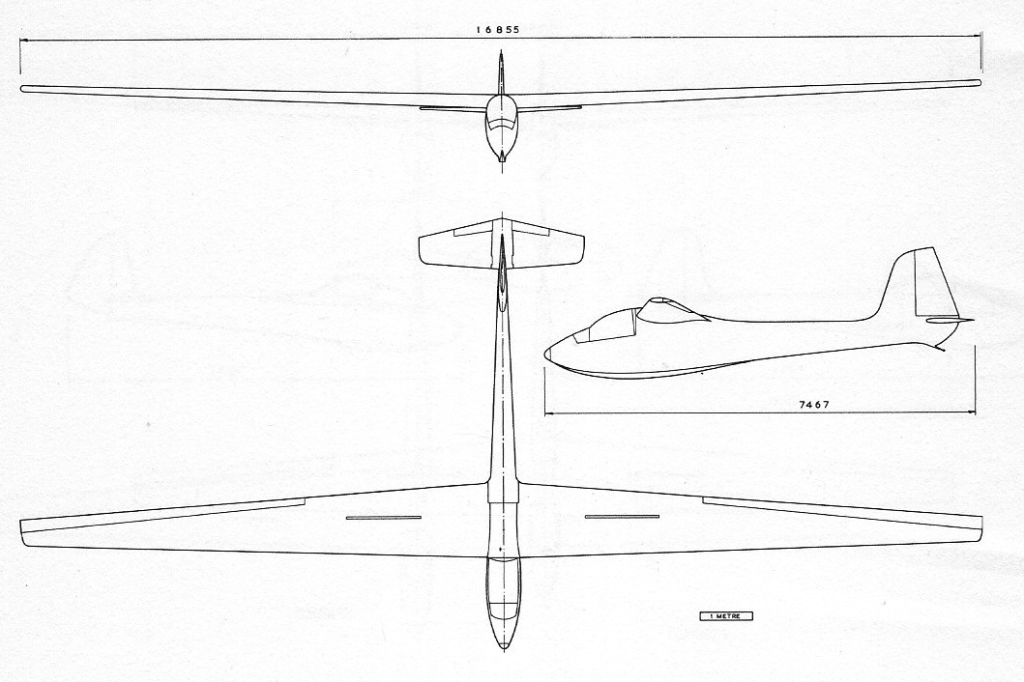
The Olympia 4 / 401 was succeeded by the Olympia 403 prototype, G-APEW, which retained the 17m span wing with a slightly thickened root but introduced some important design changes; this made its debut at the 1957 British national championships. The tail surfaces were entirely redesigned with increased area, the tailplane now being an all-moving surface which could be hinged upwards for transport. It had an anti-balance and trimming tab which at first covered the full span but was later reduced to half span. The fuselage was extended 10in forward by inserting an extra bay between the main bulkhead and the cockpit, and both the cockpit canopy and fuselage ‘neck’ were widened, that part of the fuselage under the wing being redesigned. The first flight of the 403 was in 1957.
The 403 was subsequently fitted with type 419 tailplane.
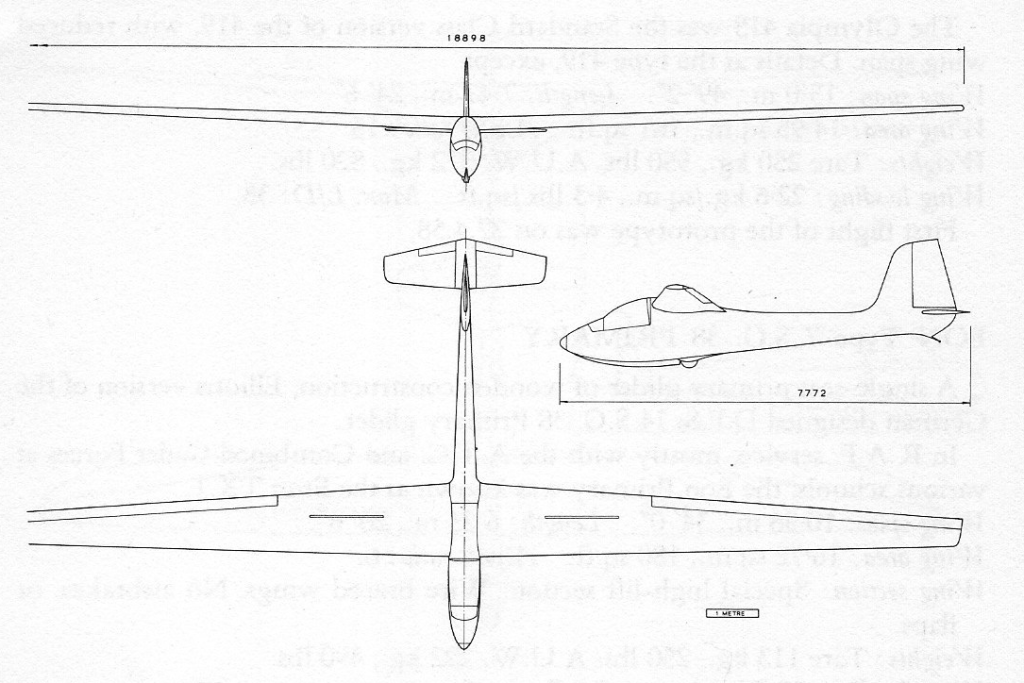
The next variant was the Olympia 419, which had the wing span increased to 18.9m (62ft), longer span Frise ailerons, a slightly longer nose than the 403 and greater rudder area, these changes giving better low speed performance and tailplane balance than the 403. The NACA 64-series laminar flow wing section was used. The 419 was constructed mainly of spruce, and all surfaces were covered by birch ply except for the rudder, tailplane and wings inboard of the ailerons. Balsa wood was used extensively as a filling for the wing ribs and as a non-structural material for wing tips and fairings.
The undercarriage consisted of a jettisonable twin wheel main unit and a tailskid, and the main landing skid under the forward fuselage was of stainless steel. Both the Olympia 419 prototype and the Olympia 415, which was a 15m span version of it, first flew in 1958; the latter did not go into production but the 419 was marketed at a price of £2,150 and in the end eight were built. These put up some good performances in both World and British National championships flown by such pilots as Nicholas Goodhart and Peter Scott.
On the 419X there was a main skid only, with droppable wheels.
The Olympia 415 was the Standard Class version of the 419, with reduced wing span. The first flight of the prototype was on 27 April 1958.
Variants:
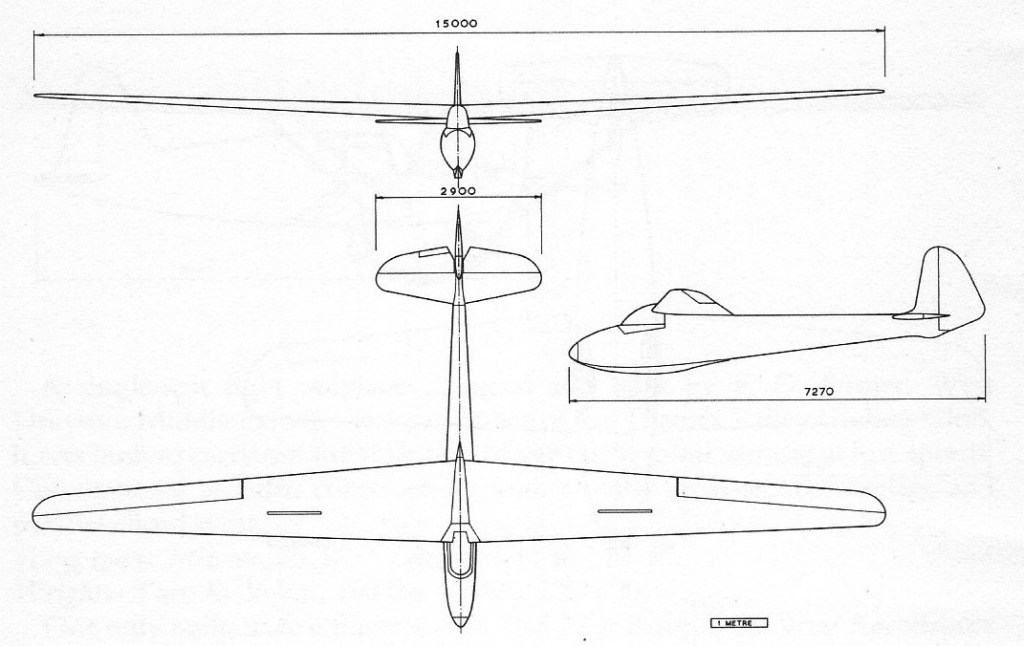
EoN Type 5 Olympia 4 New wing section Wingspan: 15.0 m / 49 ft 2 in Length: 7.27 m / 23 ft 10 in Wing area: 15.33 sq.m / 165 sq.ft Aspect ratio: 15 Wing section: NACA 64,3 618 root / 64,4 421 Empty weight: 204.12 kg / 450 lb AUW: 322.0 kg / 710 lb Max L/D: 36
EoN Type 5 Olympia 401 Revised 4, with new nose and square-cut empennage. 180 mm (7 in) shorter. Wingspan: 15.0 m / 49 ft 2 in Length: 7.09 m / 23 ft 3 in Wing area: 15.33 sq.m / 165 sq.ft Aspect ratio: 15 Wing section: NACA 64,3 618 root / 64,4 421 Empty weight: 204.12 kg / 450 lb AUW: 322.0 kg / 710 lb Max L/D: 36
EoN Type 5 Olympia 402 As 4, modified for 1956 World Gliding Championships with 17.0 m (55 ft 3.5 in) span. Wingspan: 17.0 m / 55 ft 3.5 in Length: 7.27 m / 23 ft 10 in Wing area: 15.33 sq.m / 165 sq.ft Wing section: NACA 64,3 618 root / 64,4 421 Empty weight: 204.12 kg / 450 lb AUW: 322.0 kg / 710 lb Max L/D: 36
EoN Type 6 Olympia 403 1957 development of Olympia 402, with strengthened and shortened fuselage (7.47 m (24 ft 6 in). New fin and rudder, all moving tailplane.
Eon Type 6 Olympia 415 1958 Standard class (15.0 m (49 ft 3 in)) span version of 419. Span: 49 ft 3 in / 15.0 m Length: 24 ft 6 in / 7.47 m Wing area: 161 sq.ft / 14.95 sq.m Aspect ratio: 15 Empty weight: 550 lb / 250 kg Max weight: 820 lb / 372 kg Wing loading: 22.6 kg/sq.m / 4.3 lb/sq.ft Min sinking speed: 1.84 ft/sec at 46 mph Best glide ratio: 35:1 at 52 mph
Eon Type 6 Olympia 419 / 419X Long span, long fuselage version of 403. Span: 62 ft 0 in / 18.9 m Length: 25 ft 6 in / 7.77 m Wing area: 186 sq.ft / 17.28 sq.m Aspect ratio: 19.9 Empty weight: 606 lb / 275 kg Max weight: 900 lb / 408 kg Wing loading: 21 kg/sq.m / 4.3 lb/sq.ft Min sinking speed: 1.84 ft/sec at 46 mph Best glide ratio: 38:1 at 52 mph
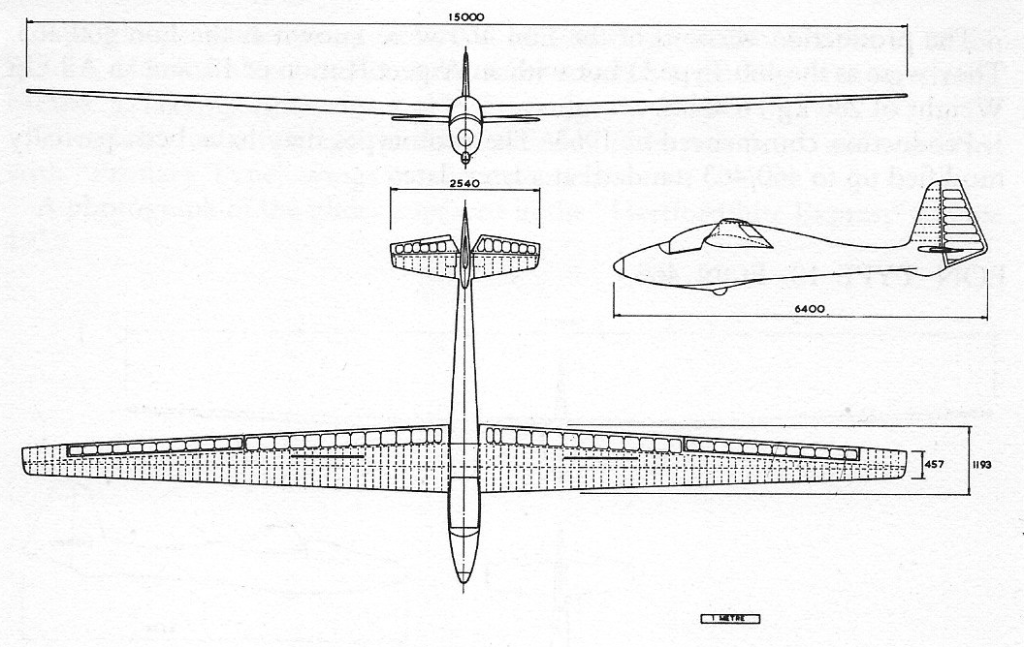
EoN 463 Span: 49 ft 2.5 in / 15.0 m Length: 21 ft 0 in / 6.4 m Height: 5ft 8 in Wing area: 132 sqft / 12.26 sq.m Aspect ratio: 18.0 Wing section: NACA 643618/421 Empty weight: 400 lb / 181 kg Max weight: 630 lb / 286 kg Water ballast: None Max wing loading: 23.33 kg/sq.m / 4.78 lb/sq ft Max speed: 136 mph / 117.5 kt / 218 km/h (in smooth air) Max rough air speed: 74 kt / 137 km/h Stalling speed: 30 kt / 56 km/h Min sinking speed: 2.2 ft/sec / 0.67 m/sec at 42.5 mph / 37 kt / 69 km/h Best glide ratio: 32:1 at 48 mph / 42 kt / 78 km/h
Just after the war, when sporting gliding was getting started again, it was evident that there would be a need for new sailplanes to supplement the surviving prewar ones, and to fill the gap until such time as postwar designs could go into production it was a logical step to build some of the best German prewar designs, some captured examples of which had been brought to Britain, in British factories.
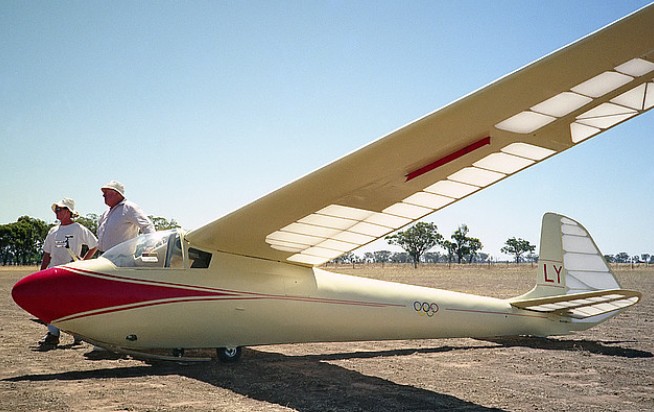
A combination of a desire to make use pre-war glider experience and refusal by the Board of Trade to allow Elliotts to return to its prewar furniture-making activities led to a decision to enter glider manufacturing, starting with the production of an improved version of the well known DPS Meise known as the Olympia. The Olympia’s heritage goes back to when Hans Jacob’s glider won the contest to design a standard glider for the 1940 Helsinki Olympic Games (hence the Olympia name). Elliotts of Newbury took up the production of an internally modified version of this glider after the war, with the first example flying in mid January 1947.
This was originally to have been built in Britain by Chilton Aircraft Co Ltd, makers of the prewar DW1 ultralight, but after building a prototype, first flying in January 1947, Chilton disposed of the manufacturing and sales rights and associated drawings to Elliotts in 1952.
An initial production batch of 100 was started; the type soon proved to be popular with private owners and clubs, also being exported to a number of countries.
A single-seat sailplane of conventional wooden construction, Elliots improved and developed version of the Chilton Olympia, The Olympie 1 had no flaps, but airbrakes were fitted. The undercarriage was the main skid, plus tail skid. The prototype had its first flight at White Waltham on 17 January 1947, and the price in 1947 was £495.
The Olympia was built in three versions differing only in the landing gear; the Mk 1 had a central steel-sheathed ash skid under the forward fuselage very similar to the Meise’s, while the Olympia 2 had a built-in fixed central monowheel and the Mk 3 had a jettisonable dolly wheel landing gear.
A one-piece quickly detachable bubble canopy for the pilot with a sliding ventilation and clear-vision panel on the port side replaced the Meise’s framed canopy, and there was an aerobatic harness and provision for a back-type parachute.
Otherwise the Olympia is very similar to the Meise; the high cantilever wings are of wooden construction with plywood and fabric covering, with D-spars in the leading edge and DPS air brakes, while the wooden ailerons are fabric-covered. The all-wooden monocoque fuselage has a luggage compartment under the wing root with an access door on the port side. The tail unit is of wooden construction with plywood and fabric covering, and there is a trim tab in the starboard elevator. Price of the Olympia 2 in 1960 was £850.
Six Olympia gliders were built by Fokker under licence.
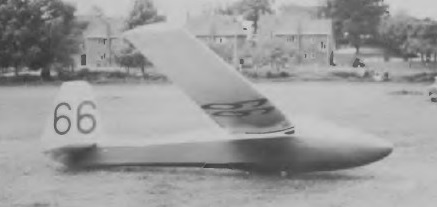
Olympia 1 Wingspan: 15.0 m / 49 ft 2 in Length: 7.27 m / 23 ft 10 in Wing area: 15.33 sq.m / 165 sq.ft Aspect ratio: 15 Wing section: Gottingen 549 root / 676 tip Empty weight: 204.12 kg / 450 lb AUW: 303.9 kg / 670 lb Wing loading: 20 kg/sq.m / 4.09 lb/sq.ft Max L/D: 25 Min sink: 0.67 m/sec at 63 kph / 2.2 ft/sec at 39 mph
Olympia Mk.II Span: 49 ft 2.5 in Length: 21 ft 5 in Wing area: 161.5 sq.ft Aspect ratio: 15.0 Empty weight: 430 lb Max weight: 670 lb Max speed: 129 mph Min sinking speed: 2.2 ft/sec at 39 mph Best glide ratio: 25:1 at 45 mph
Olympia 2B Wing span: 15.0 m (49 ft 2.5 in) Length: 6.61 m (21 ft 8 in) Wing area: 15.0 sq.m (161.5 sq ft) Wing section: Gottingen 549/676 Aspect ratio: 15.0 Empty weight: 195 kg (430 lb) Max weight: 304 kg (670 lb) Water ballast: None Max wing loading: 20.27 kg/sq.m (4.15 lb/sq.ft) Max speed: 112 kt (208 km/h) Stalling speed: 27 kt (50 km/h) Min sinking speed: 0.67 m (2.2 ft)/sec at 34 kt (63 km/h) Max rough air speed: 69 kt (128 km/h) Best glide ratio: 25 at 39 kt (72.5 km/h)
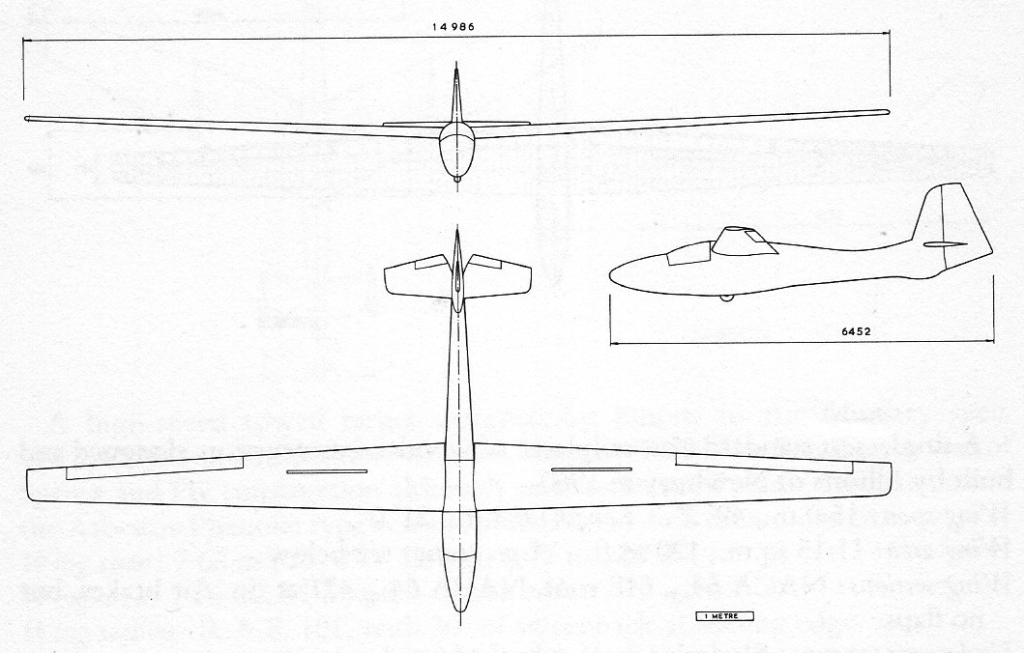
Intended as a Standard Class 15m span single-seater to replace the popular Olympia, the EoN 463, also known as the EoN 460/463, was the production version of the EoN 460 and incorporated the design experience and certain features of the laminar flow Olympia variants, especially the Olympia 403 and 419.
The EoN 460, or Elliotts AP/10 Type 460 as it was also known, first flew in prototype form on 26 April 1960 and only the five prototype 460s were built; the first had an aspect ratio of 20 and an all-up weight of 600 lb, the second and third had an aspect ratio of 18 and an all-up weight of 630 lb, the fourth was the same as the first but with a modified one-piece canopy and the fifth prototype was the same as the fourth but had modified outer wing sections. The tail unit was very similar to the Olympia 419’s and, as on the latter, the tailplane could be folded upwards for transport. The shoulder wings were set slightly lower than the Olympia’s and the centre and forward fuselage were similar to the Olympia 419’s, while the same NACA 64-series laminar flow wing section as on the 419 was used.
The Type 10 C EoN 460 was fitted with a modified cockpit canopy. The Type D was as the Type C but with modified sections to the outer wing. All types were fitted with folding tailplanes and the wings have Frise type ailerons.
The production versions of the EoN 460 were known as the EoN 460/463. They wee as the 460 Type D but with an aspect ratio of 18, and an AUW of 286 kg / 630 lb.
The production EoN 463 first flew in April 1963 and a total of 48 were built; this was practically the same as the fifth prototype 460, with an aspect ratio of 18 and an all-up weight of 630lb. The fabric and stringer top fuselage fairing of the 460 was now replaced by a glassfibre one on the 463, which also had a glassfibre instead of plywood nose section and a new cockpit canopy.
Both the 460 and 463 have wooden wings with light alloy spars, plywood-skinned and with overall fabric covering; the wings are similar to the Olympia 419’s except for the reduced span, the Frise ailerons being fabriccovered and the DFS-type air brakes of plywood. The fuselage, like the 460’s, is a wooden Warren girder type structure with plywood covering and a glassfibre rear fairing. The tail unit is a conventional fabric-covered wooden structure and the tailplane, unlike the all-moving surface of the Olympia 403 and 419, reverts to conventional elevators with a trim tab in the starboard one. There is a fixed unsprung mono-wheel with an internal expanding brake, and a tailwheel. The pilot’s canopy has direct vision panels and a demister, and oxygen and radio can be fitted if desired.
The 463 was followed by the EoN 465, developed for the 1965 World Championships, only two of these being built, the first one, the Series 1, making its maiden flight on 8 March 1965. The 465 had the fuselage height reduced and the pilot seated in a reclining position to reduce cross sectional area and hence drag; the main landing gear skid was deleted and the monowheel centre raised. An all-moving tailplane was reintroduced which did not fold up for storage. Pendulum sealed ailerons were fitted. The EoN 465 Series 1 had an all-up weight of 680lb and the second one, known as the Series 2, had a thinner wing section than the Series 1 and a strengthened main spar; its all-up weight was 700lb and wing area was increased to 140sq ft.
The 465 Srs.1 first flew in March 1965 and the Srs.2 in April 1965.
Following the death of Elliott’s managing director, Mr H. C. G. Buckingham, in the summer of 1965 the firm’s board of directors, after reviewing the situation, decided to end glider production due to its increasing unprofitability.
EoN 465
Type 10 EoN 460 Type A Wingspan: 15.0 m / 49 ft 2 in Length: 6.4 m / 21 ft 0 in Wing area: 11.15 sq.m / 120 sq.ft Aspect ratio: 20 Wing section: NACA 64,3,618 root / NACA 64,4,421 tip Empty weight: 159.21 kg / 351 lb AUW: 272 kg Max speed: 215 kph / 134 mph Aerotow speed: 152 kph / 95 mph
Type 10 EoN 460 Type B Wingspan: 15.0 m / 49 ft 2 in Length: 6.4 m / 21 ft 0 in Wing area: 11.15 sq.m / 120 sq.ft Aspect ratio: 18 Wing section: NACA 64,3,618 root / NACA 64,4,421 tip Empty weight: 159.21 kg / 351 lb AUW: 286 kg Max speed: 215 kph / 134 mph Aerotow speed: 152 kph / 95 mph
EoN 463 Span: 49 ft 2.5 in / 15.0 m Length: 21 ft 0 in / 6.4 m Height: 5ft 8 in Wing area: 132 sqft / 12.26 sq.m Aspect ratio: 18.0 Wing section: NACA 643618/421 Empty weight: 400 lb / 181 kg Max weight: 630 lb / 286 kg Water ballast: None Max wing loading: 23.33 kg/sq.m / 4.78 lb/sq ft Max speed: 136 mph / 117.5 kt / 218 km/h (in smooth air) Max rough air speed: 74 kt / 137 km/h Stalling speed: 30 kt / 56 km/h Min sinking speed: 2.2 ft/sec / 0.67 m/sec at 42.5 mph / 37 kt / 69 km/h Best glide ratio: 32:1 at 48 mph / 42 kt / 78 km/h
EoN 465 Srs.1 Span: 49 ft 2.5 in / 15.0 m Length: 21 ft 2 in / 6.45 m Height: 5ft 8 in Wing area: 132 sqft / 12.26 sq.m Aspect ratio: 18.0 Wing section: NACA 643618/421 Empty weight: 400 lb / 181 kg Max weight: 680 lb / 308.44 kg Water ballast: None Max wing loading: 23.33 kg/sq.m / 4.78 lb/sq ft Max speed: 136 mph / 117.5 kt / 218 km/h (in smooth air) Max rough air speed: 74 kt / 137 km/h Stalling speed: 30 kt / 56 km/h Min sinking speed: 2.2 ft/sec / 0.67 m/sec at 42.5 mph / 37 kt / 69 km/h Best glide ratio: 32:1 at 48 mph / 42 kt / 78 km/h
EoN 465 Srs.2 Span: 49 ft 2.5 in / 15.0 m Length: 21 ft 2 in / 6.45 m Height: 5ft 8 in Wing area: 132 sqft / 12.26 sq.m Aspect ratio: 18.0 Wing section: NACA 643618/421 Empty weight: 400 lb / 181 kg Max weight: 700 lb / 317.52 kg Water ballast: None Max wing loading: 23.33 kg/sq.m / 4.78 lb/sq ft Max speed: 136 mph / 117.5 kt / 218 km/h (in smooth air) Max rough air speed: 74 kt / 137 km/h Stalling speed: 30 kt / 56 km/h Min sinking speed: 2.2 ft/sec / 0.67 m/sec at 42.5 mph / 37 kt / 69 km/h Best glide ratio: 32:1 at 48 mph / 42 kt / 78 km/h
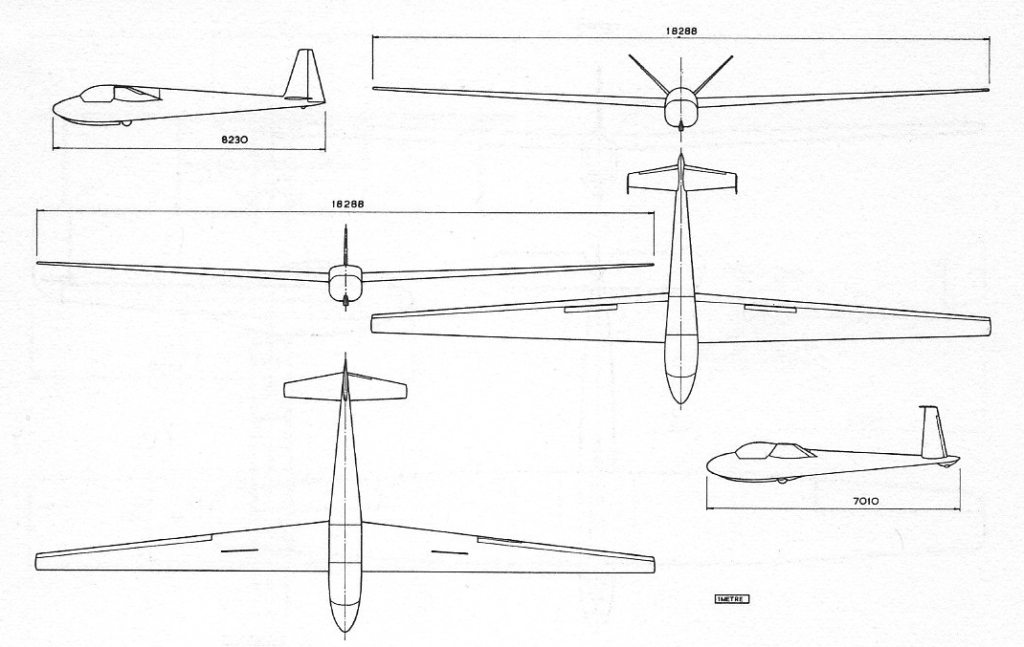
The initial version, known as the Crabpot, was designed by H. Kendall for the 1947 B.G.A. Two-seat Sailplane Competition. Conventional wooden construction, apart from the wings which had several spanwise webs and few ribs. The webs were 15mm thick, and the ribs were spaced at from 900 to 1200 mm pitch.
A cantilever wing, no flaps but airbrakes were fitted. All moving tailplane.
A project only, it won the competition.
Having one the competition, the Crabpot was re-designed. The wing section was altered, a “V” tail introduced, and the fuselage shortened. The wing material was altered and it was decided to manufacture it using an asbestos reinforced low pressure thermos setting plastic structure, a method that involved the use of heated concrete moulds and tailored felts. The wing was manufactured by F.G. Miles Ltd at Redhill Aerodrome, under the designation Miles M.76, but when tested, it broke up at a fraction of the design load. The K.1, as the Crabpot was by then known, was later built, using the traditional wooden construction methods, by Elliots of Newbury, as the EoN Type 9.
Only one was built, the first flight being at Lasham in March 1954, with full span ailerons. No CofA was issued as the K.1 was abandoned due to unsatisfactory flying characteristics, particularly unsolvable spinning problems.
Kendall Crabpot / K.1 Wingspan: 18.3 m / 60 ft 0 in Length: 8.24 m / 27 ft 0 in Wing area: 18.58 sq.m / 200 sq.ft Aspect ratio: 18 Wing section: NACA 43018 root, NACA 43012A tip Empty weight: 232 kg / 516 lb AUW: 414 kg / 911 lb Wing loading: 21.0 kg/sq.m / 4.3 lb/sq.ft Max L/D: 27 at 77 kph / 49 mph
EoN Type 9 Wingspan: 18.3 m / 60 ft 0 in Length: 7.01 m / 23 ft 0 in Wing area: 18.58 sq.m / 200 sq.ft Aspect ratio: 18 Wing section: NACA 66,3,418, NACA 64,2,415 tip Empty weight: 300 kg / 661.5 lb AUW: 453.6 kg / 1000 lb Max speed: 200 kph / 125 mph Stall: 64 kph / 40 mph Max L/D: 35
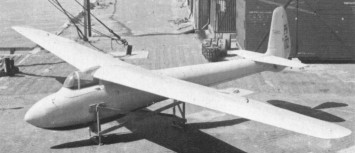
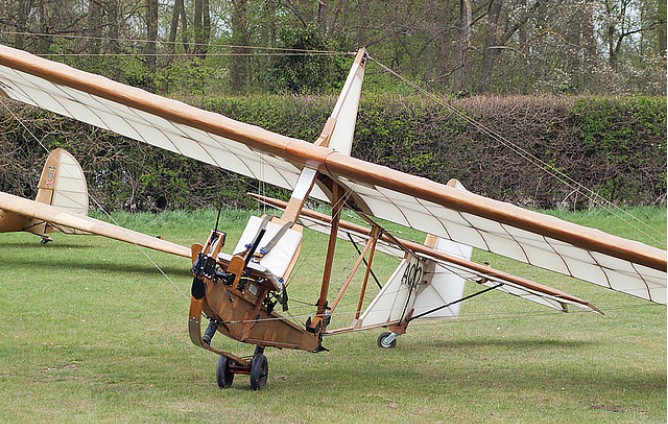
The EoN Primary, or Elliotts AP/7 Primary EoN as it is known in full, is a more modern but essentially very similar version of the Dagling/SlingsbyT-3 Primary and SG 38 formula of the 1930s for a simple single-seater basic training glider.
The prototype made its first flight in February 1948, and the first production model flew in April that year; the type was used not only by clubs but by the Air Training Corps and Combined Cadet Force under the service name of Eton TX Mk 1 to replace the Daglings previously used for Cadet instruction. It could also be supplied with a static training stand which acted as a simple flight simulator in which the glider was balanced on a pivot and wind forces assisted the trainee pilot to get the feel of the controls.
The constant chord wooden wing is wire-braced and has a high lift section of 12% thickness/chord ratio; it has a plywood leading edge and fabric covering, with fabric-covered wooden ailerons. Plywood leading edge spoilers are featured for use during ground-slides only. The fuselage is a flat wooden open girder-type structure supported by a horizontal beam with the landing skid underneath, with sprung compression legs; the pilot has a single open seat with minimum controls. Unlike the Dagling and Slingsby Primary, the EoN design did not have the option of a nacelle to provide some protection for the pilot. The tail unit is of fabric covered wooden construction and strut and wire braced, effective fin area being provided by filling in part of the open rear fuselage in front of the rudder.
EoN Primary
Production of the EoN Primary ended in 1958 after 80 had been built, but a number of these were still at Elliotts’ works at Newbury ready for final assembly in the spring of 1965, not long before Elliotts ceased all glider production.
Span: 34 ft 0 in 10.36 m Length: 20 ft 6 in / 6.25 m Height: 8 ft 0 in Wing area: 180 sqft / 16.72 sq.m Aspect ratio: 6.0 Empty weight: 250 lb / 113 kg Max weight: 490 lb / 222 kg Wing loading: 2.8 lb/sq.ft / 13.7 kg/sq.m Max speed: 73 mph / 117 kph Max aero-tow speed: 54 mph / 87 kph Stalling speed: 27 mph / 43.5 kph Max L/D: 8