1984 hang glider
Intermediate pilots
Cumulus 140
Wing area: 14.1 m²
Wing span: 10.76 m
Aspect ratio: 8.2
Hang glider weight: 34 kg
1984 hang glider
Intermediate pilots
Cumulus 140
Wing area: 14.1 m²
Wing span: 10.76 m
Aspect ratio: 8.2
Hang glider weight: 34 kg
1985 hang glider
Advanced pilots
Cosmic 150
Wing area: 15.1 m²
Wing span: 11.10 m
Aspect ratio: 8.15
Hang glider weight: 35 kg
Paraglider circa 1998.
Arcus Spirit 230
Wing area: 25.3 sq.m
Certification: Afnor
Pilot weight: 57-74 kg
No. of cells: 31
Wing span: 10.94 m
Aspect ratio: 4.9
Min sink: 1.2 m/s
Max speed: 46 kph
Price (1998) 15,500 Fr
Arcus Spirit 255
Wing area: 29.9 sq.m
Certification: Afnor
Pilot weight: 70-91 kg
No. of cells: 31
Wing span: 11.89 m
Aspect ratio: 4.9
Min sink: 1.2 m/s
Max speed: 46 kph
Price (1998) 16,000 Fr
Arcus Spirit 285
Wing area: 32.9 sq.m
Certification: Afnor
Pilot weight: 86-111 kg
No. of cells: 31
Wing span: 12.49 m
Aspect ratio: 4.9
Min sink: 1.2 m/s
Max speed: 46 kph
Price (1998) 16,500 Fr
Paraglider circa 1998.
Wing area: 45.8 sq.m
Certification: Afnor
Pilot weight: 120-220 kg
No. of cells: 27
Wing span: 15.66 m
Aspect ratio: 5.4
Price (1998) 22,900 Fr
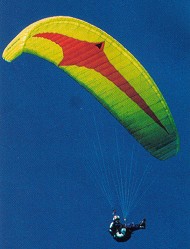
Paraglider circa 1998.
Aspire 225
Wing area: 26.2 sq.m
Certification: Afnor
Pilot weight: 70-91 kg
Wing span: 12.4 m
Aspect ratio: 5.9
Min sink: 1.1 m/s
Max speed: 50 kph
Price (1998) 20,800 Fr
Aspire 265
Paraglider circa 1998.
Wing area: 31.9 sq.m
Certification: Afnor
Pilot weight: 85-110 kg
Wing span: 13.76 m
Aspect ratio: 5.9
Min sink: 1.1 m/s
Max speed: 50 kph
Price (1998) 21,200 Fr
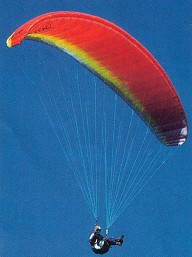
The Awak, new in 1998, was put together jointly with Swiss importer Asagiri, aided by Laforge, Viret and Stocker.
Awak 215
Wing area: 24.3 sq.m
Certification: Afnor
Pilot weight: 60-78 kg
No. of cells: 66
Wing span: 11.61 m
Aspect ratio: 5.6
Min sink: 1.1 m/s
Max speed: 50 kph
Price (1998) 18,000 Fr
Awak 245
Wing area: 27.6 sq.m
Certification: Afnor
Pilot weight: 75-98 kg
No. of cells: 66
Wing span: 12.38 m
Aspect ratio: 5.6
Min sink: 1.1 m/s
Max speed: 50 kph
Price (1998) 18,500 Fr
Awak 275
Wing area: 31.1sq.m
Certification: Afnor
Pilot weight: 90-117 kg
No. of cells: 66
Wing span: 13.14 m
Aspect ratio: 5.6
Min sink: 1.1 m/s
Max speed: 50 kph
Price (1998) 19,000 Fr
1998: Shinjuku YS bldg 3F, 6-11-2 Nishishinjuku, J-160 Tokyo, Japan.
The designer in 1998 was Yoshiki Oka.
Paraglider builder
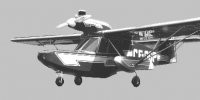
The Falconar Teal was a two-seat homebuilt, amphibious airplane designed by Chris Falconar of Edmonton, Alberta, Canada.
The Teal was based on the two- or three-seat AMF Maranda, and was built mostly of wood. It featured strut-braced high wing, with “W” configuration struts running from the wing roots, down to stabilizing floats (which also contained the main wheels), then back up the wings near 70% span; cruciform tail; two pilots seated side by side under the wing; access to the cockpit by side doors; tricycle undercarriage with the main wheels retracting into stabilizing floats only about 25% of the wing span. The nosewheel retracted into the bow and was covered by two conventional (side-hinged) doors. A rarity among flying boats was its engine location in a nacelle, above the wing, with the propeller rotating immediately in front of the windscreen.
The Teal was first flown in December 1967.
From the 1970s to the 1990s plans were sold by Falconar Aviation of Edmonton (downtown municipal airport). A handful were built by amateur aircraft constructors (aka homebuilders) in Canada and the United States. Most were powered by certified Lycoming or Continental engines.
Engine: 1 × Lycoming O-320-B2A, 160 hp (120 kW)
Wingspan: 33 ft 0 in (10.06 m)
Wing area: 160 sq ft (15 sq,m)
Airfoil: NACA 4412 (modified)
Aspect ratio: 6.6:1
Length: 24 ft 6 in (7.47 m)
Height: 7 ft 10 in (2.39 m)
Empty weight: 1,050 lb (476 kg)
Max takeoff weight: 1,500 lb (680 kg)
Maximum speed: 130 mph (210 km/h, 110 kn)
Cruise speed: 125 mph (201 km/h, 109 kn) (max cruise)
Stall speed: 37 mph (60 km/h, 32 kn)
Never exceed speed: 185 mph (298 km/h, 161 kn)
Range: 450 mi (720 km, 390 nmi) standard fuel
Ferry range: 700 mi (1,100 km, 610 nmi)
Service ceiling: 16,400 ft (5,000 m)
Rate of climb: 1,100 ft/min (5.6 m/s)
Crew: 1
Capacity: 1 passenger
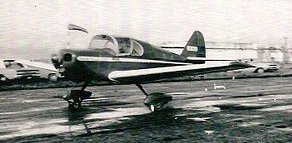
The Falconar Minihawk is a Canadian amateur-built aircraft, produced by Falconar Avia. The aircraft is supplied as a kit (US$11,600 kit only, less engine, 1998) or plans for amateur construction.
The aircraft features a cantilever low-wing, a two-seats-in-side-by-side configuration enclosed cockpit under a sliding canopy, fixed tricycle landing gear or, optionally, conventional landing gear, and a single engine in tractor configuration.
The Minihawk is made from wood, with its flying surfaces covered in doped aircraft fabric. The aircraft’s recommended engine power range is 65 to 100 hp (48 to 75 kW) and standard engines used include the 100 hp (75 kW) Continental O-200 four-stroke powerplant. Construction time from the supplied kit is estimated as 1500 hours.
Even though a prototype was constructed, by November 2012 no examples were registered in its home country with Transport Canada.
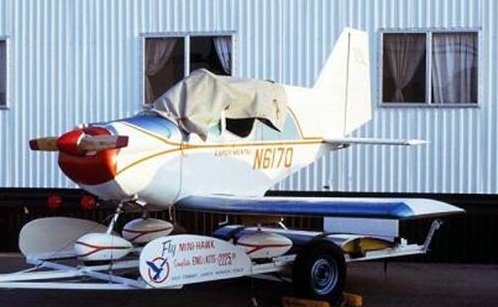
On June 30, 2019, Falconar Avia Inc closed for business and assets dissolved. The Master Sets (Original Drawings, Plans, Info Kits, Documentation) sold included the F-9, F-10, F-11A, E, and E2, F-12A, and Minihawk Series to Manna Aviation
Minihawk
Engine: 1 × Continental O-200, 100 hp (75 kW)
Propellers: 2-bladed metal
Length: 18 ft 0 in (5.49 m)
Wingspan: 25 ft 6 in (7.77 m)
Wing area: 106 sq ft (9.8 m2)
Empty weight: 645 lb (293 kg)
Gross weight: 1,070 lb (485 kg)
Fuel capacity: 15 U.S. gallons (57 L; 12 imp gal)
Maximum speed: 128 mph (206 km/h; 111 kn)
Cruise speed: 115 mph (100 kn; 185 km/h)
Stall speed: 50 mph (43 kn; 80 km/h) flaps down
Range: 570 mi (495 nmi; 917 km)
Rate of climb: 1,350 ft/min (6.9 m/s)
Wing loading: 10.0 lb/sq ft (49 kg/m2)
Crew: one
Capacity: one passenger
Cockpit Width: 40 in (102 cm)
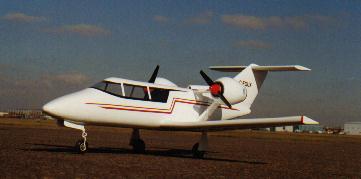
The MASTER X has been in conceptual development for a number of years. It was conceived to be a different kind of home built aircraft seating two in tandem. The philosophy of being different is consistent with earlier designs.
STOL (short take-off & landing) like performance, combined with the retractable landing gear for maximum efficiency and powerful twin engines mounted on pods aft of the cabin or a single engine in fuselage with belt-driven props.
Wing span: 30 ft.
Wing area: 127 sq.ft
Gross weight: 1450 lbs.
Cruise speed: 135 mph
Range: 740 mi.
Stall: 45 mph

