The Farman MF.1 was a cellular biplane with a 20m / 66 ft wingspan, powered by a 40 hp REP engine.
In 1911, piloted by Fourny, it beat the world record for flight duration with a flight of 2 hr 1 min 29 sec.
The Farman MF.1 was a cellular biplane with a 20m / 66 ft wingspan, powered by a 40 hp REP engine.
In 1911, piloted by Fourny, it beat the world record for flight duration with a flight of 2 hr 1 min 29 sec.
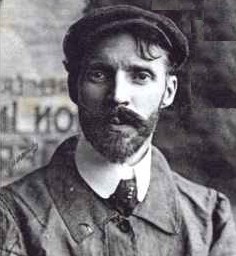
On November 9,1907 Henri Farman, in aVoisin-50 Antoinette biplane, made the first powered flight in Europe to last over a minute. At a 1909 Reims meeting he flew his own Farman III, the first aircraft with effective ailerons. Brother Maurice was also a designer; the two formed Avions Henri et Maurice
Maurice Farman designed the MF-7 Longhorn (1913) and MF-11 Shorthorn (1914), both used as trainer and observation aircraft by the Allied forces. Farman F.20 and F.40 developed, the latter with streamlined two-seat nacelle and powered by 135hp Renault engine. Farman F.50 night bomber followed; four-engined F.140 night bomber introduced 1925, replaced by F.221 and F.222 in 1937, the latter used subsequently by Vichy air force after June 1940 as a transport. Civil airliners included the F.60 Goliath. Twin-engined F.180 biplane, F.190 single-engined monoplane introduced 1928, three-engined F.300 in 1930.
The French aircraft manufacturer Socété des Avions H. M. et D. Farman, with factories at Billancourt (Seine), began aircraft engine design and manufacture aimed at civil aviation shortly after WWI.
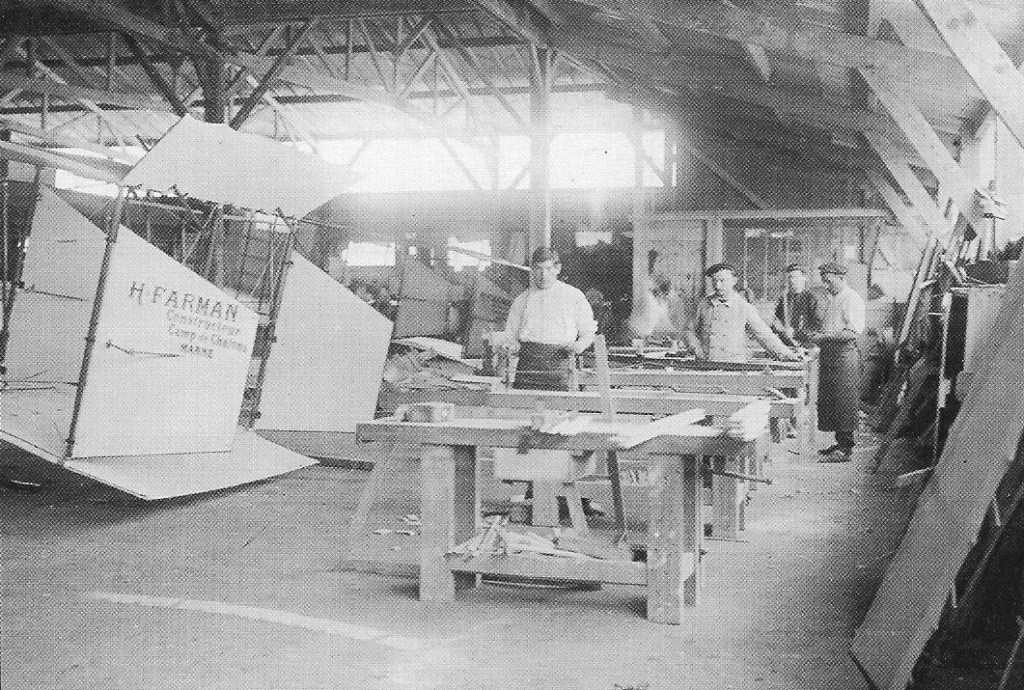
In France, the Socialist Government of the so called Popular Front brought all the companies building military aircraft, aero engines and armament under its control in 1936. The immediate result was the socialized oblivion of such established companies as Marcel Bloch, Bleriot, Nieuport, Potez, Dewoitine, Hanriot and Farman within half a dozen nationalized groups or Societies Nationales, named according to their geographical location (Nord, Ouest, Centre, Midi and so on). Hanriot joined Farman at Billancourt in 1936, eventually nationalized in 1937, to become SNCA du Centre.
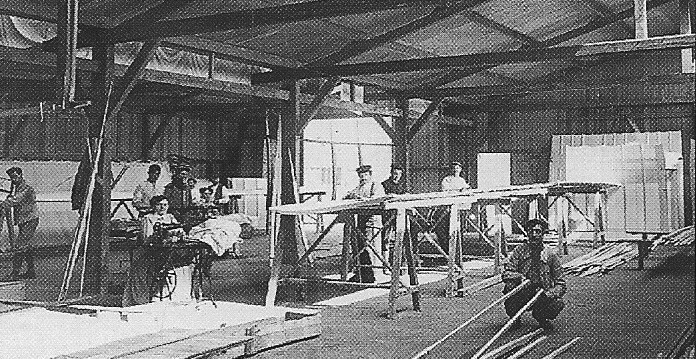
Farman becoming part of SNCAC.
After nationalization, in 1939 the Farman brothers acquired the license to manufacture the Stampe SV.4 trainer biplane. Although SNCAC was assigned manufacturing rights postwar, Farman retained license and with Jean Stampe the Societe Anonyme des Usines Farman developed Monitor I monoplane powered by 140 hp Renault engine. Variants included the II, III and IV, the latter being taken over by Stampe et Renard, Brussels.
UK
Revived program initiated by de Havilland Aircraft in 1958 to convert Chipmunk primary trainers for agricultural use. Three machines converted for the company’s own use, followed by others for agricultural aircraft operators.
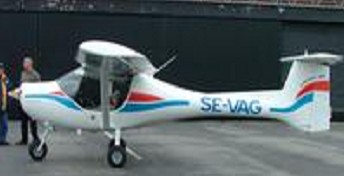
Modern two seat microlight aircraft that are unique for its very good aerodynamics, excellent flight qualities and a high economy of operation.
Carefully designed shape of the fuselage that is made of glassfibre laminate and its high quality surface provide minimum air resistance and minimum sensibility to side wind. The wings, as well as the tail plane are of metal construction covered in part with fabrics. The centre section of the wing is welded from steel tubes.
Aircraft have a uniquely spacious cabin, which guarantees comfort namely in long cross-country flights.
The position of the control stick between the seats makes getting in and out very comfortable. Large surface organic glass cover of the cabin offers a very good view.
The Allegro is equipped with a Verner engine but can also take a Rotax 582.
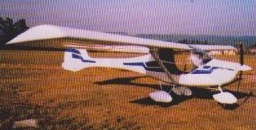

LSA America took over the construction of the European-introduced Allegro LSA. The composite/aluminum Allegro comes in three versions: Classic Trainer, Voyager and Executive. It’s full-fuel payload is 580 pounds. Prices 2012: $89,000 (Classic Trainer); $94,000 (Voyager); $99,000 (Executive).
Stall: 35 kt / 40 mph / 65 kmh
Cruise: 86 kt / 99 mph / 160 kmh
VNE: 119 kt / 137 mph / 220 kmh
Empty Weight: 285 kg / 628 lbs
MTOW Weight: 450 kg / 992 lbs
Climb Ratio: 1000 ft/min / 5 m/s
Glide Ratio: 1:12
Take-off distance (50ft obstacle): 820 ft / 250 m
Landing distance (50ft obstacle): 720 ft / 220 m
Allegro
Engine: Werner 1400, 80 hp
Wing span: 10.6 m
Wing area: 15.2 sq.m
MAUW: 450 kg
Empty weight: 260 kg
Fuel capacity: 50 lt
Max speed: 162 kph
Cruise speed: 130 kph
Minimum speed: 50 kph
Certification: vVz
Seats: 2
1998:
Kollarova 511
CZ-39701 Pisek
Czech Republic
LSA builder

The Comper Scamp or Fly was not completed and Capt. Gerard Fane, a supporter of Comper, redesigned the design with was in 1940 build and flown in 1941, the Fane F.1/40.
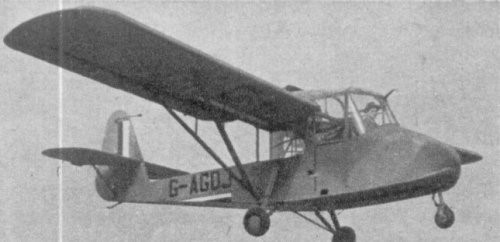
The Fane F.1/40 was a 1940s British Air Observation Post aircraft design by Captain Gerald Fane’s Fane Aircraft Company. The Comper Scamp or Fly was not completed and Capt. Gerard Fane, a supporter of Comper, redesigned the design to Air Ministry specification F.1/40. The Scamp had been designed by Nicholas Comper as a two-seater but he had not built it but redesigned it as a single seater, the Comper Fly. Fane took the Scamp design and reworked it as the F.1. It was of pusher configuration with a high wing set behind the pilot.

A single example of the Fane F1 (later f1/40), registered G.AGDJ, serial number T1788 was flown and tested by the Air Ministry at Heston Aerodrome on 21 March 1941.

It was in competition with the General Aircraft GAL.47 but neither were selected for service use. In September 1941 the F.1/40 was registered G-AGDJ as the Fane F1 to the builders, but was scrapped sometime during the war.

Engine: 1 × Continental A-80, 80 hp (60 kW)
Wingspan: 37 ft 0 in (11.28 m)
Length: 23 ft 5 in (7.14 m)
Max takeoff weight: 1,500 lb (680 kg)
Crew: 2

UK
The Fane Aircraft Company Limited was a British company formed by the aviator Captain Gerard Fane, DSC, and based at Norbury, London, England.
It was originally formed as Comper Fane Aircraft Limited (sometimes C.F. Aircraft) in August 1939, incorporating the name of his former collaborator and aircraft designer, the late Nicholas Comper. On 6 April 1940 the name was changed to the Fane Aircraft Company Limited.
The company’s only aircraft was based on the Comper Scamp. The Scamp had been designed by Nicholas Comper as a two-seater but he had not built it, redesigning it as a single seater, the Comper Fly. Fane took the Scamp design and reworked it as the Fane F.1/40 which first flew in 1941; with no orders from the Air Ministry only one was built.
On 10 August 1944 the company changed its name to Fane Engineering Designs Limited.
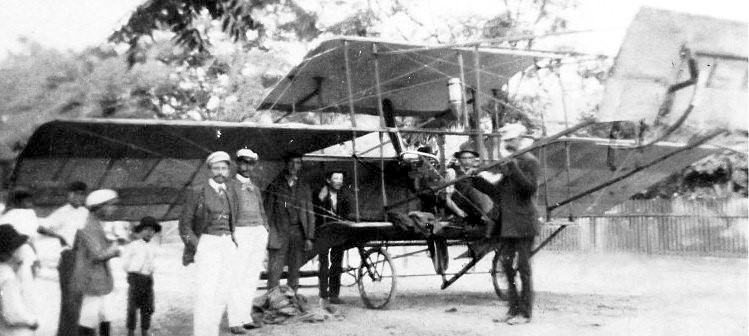
Károly Faludi (1872-1974), more known as an actor and singer later in his life, built two airplanes, powered by a 25 hp three-cylinder engine. One was a monoplane and one was a biplane, both with a raised central wing surface. They both crashed at their first test flights in Nagikanizsa in southwest Hungary, the first in the summer and second in October of 1910.

The 1909 Faludy III biplane was designed and built by Karoly Faludy in Hungary.
Span: 25’7″
Length: 22’8″
Károly Faludi (1872-1974), more known as an actor and singer later in his life, built two airplanes in 1910.

1989

