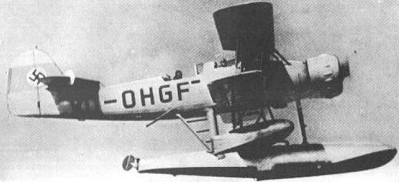
Reconnaissance floatplane, a biplane intended for shipboard duties. The Ar 196 was preferred, and the Fw 62 was merely a back-up design. Only four were built. In 1937 2 standard prototypes were built, V1 and V2. The first prototype having two floats.
V1 Engine: 1 x BMW 132 cd, 880 hp Prop: metal two-blade Wingspan: 12,35 m Length: 20 m Height: 3,40 m Empty weight: 2300 kg MTOW: 2850 kg Power loading: 3,238 kg/hp Vmax: 280 km/h Ceiling: 5900m
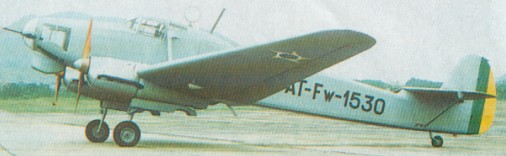
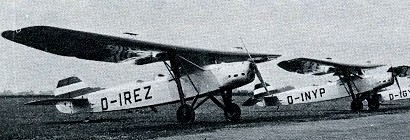
The Weihe was first flown in prototype form in 1935 as an advanced training, light 6 passenger transport and communications aircraft for the Luftwaffe, powered by two 179kW Argus As.10G engines. The main undercarriage retactable, and tail wheel fixed.
Before the outbreak of World War II Deutsche Luft-Hansa received eight as six-passenger commercial transports. Armament in the military training version comprised a gunner’s turret in the nose (which could be replaced by a metal cone for blind-flying instruction) and an aft gun position. The turret had space for an instructor and pupil for machine-gun and bomb-aiming training. Two seats side-by-side were provided in the cockpit for flying training, while a bomb trap with sights in a further compartment was provided for bombing instruction.
Fifteen were licence built by Brazil’s Oficinas Gerais da Aviation Naval during 1939-40. These were based on the Fw 58B-2 which was used as a gunnery trainer by the Luftwaffe.
Total production: 1350
V-1 Engines: 2 x Argus Ace 10c, 240 hp Props: two-blade metal fixed pitch Wingspan: 21,00 m Length: 14,00 m Height: 3,90 m 1 prototype
V-2: Armament: 1 MT MG 15 7,92 mm, 1 MT MG 15, 7,92 m 1 prototype.
V-4: Armament: 1 MT MG 15 7,92mm 1 prototype
Fw 58B-1 Engines: 2 x Argus Aces 10c, 240 hp Props: two-blade wood variable pitch Wingspan: 21,00 m Length: 14,00 m Height: 3,90 m Wingarea: 47,00 sq.m Empty weight: 2400 kg MTOW: 3600 kg Wing loading: 76,595 kg/sq.m Power loading: 7,5 kg/hp Vmax: 270 kph Vcruise: 240 kph Ceiling: 5600 m Range: 800 km Armament: 2 x MT MG 15, 7,92 mm
Fw 58B-2
Fw 58C Engines: Argus Ace 10c or Hirth HM 508D, 260 hp
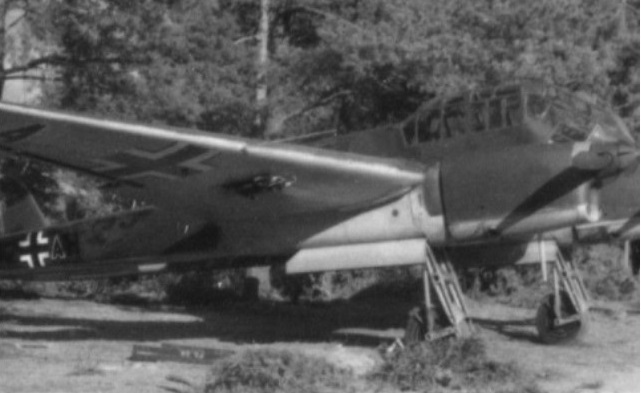
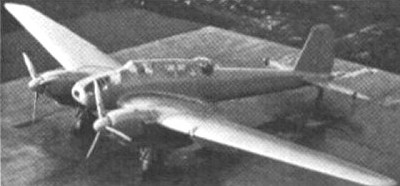
A twin-engined, three-seat strategic fighter, first flown in 1936. The Fw 57 was a contemporary of the Bf 110, with which it competed for orders. It featured a powered dorsal gun turret, and a glazed nose with twin semi-flexible cannon operated by the third crewmember. The Fw 57 was overweight and underpowered. Only three were built.
Fw 57 Engines: 2 x Daimler-Benz DB 600-A, 910 hp Props: metal three-blade fixed pitch Wing span: 25,00 m Length: 16,40 m Height: 4,08 m Empty weight: 6800 kg MTOW: 8300 kg Vmax: 404 kph Ceiling: 9100 m Armament: 2 x MG FF, 20 mm (nose) and 1 Mauser MG FF, 20 mm (dorsal turret).
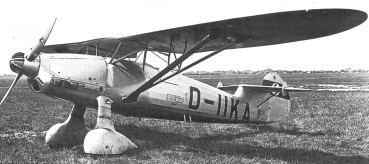
The Stosser (hawk) was the first Focke-Wulf design undertaken by Kurt Tank, and resulted for a German requirement for an advanced trainer with the As 100 engine. The resultant Fw 56 prototype that flew in November 1933 was a parasol-winged aeroplane of mixed construction with cantilever main landing gear units powered by a 179kW Argus As. 10C engine: two more prototypes followed. The V2 prototype had a modified undercarriage and metal wing. The V3 prototype had a further modified undercarriage, similar to the V1, first flying in 1934. Three Fw 56 A-0 were built with various modifications to the aerofoil. Two MT MG 17 of 7,92 m/m were fitted and provision for 3 bombs of 10 kg. In the summer of 1935 the Stosser was selected in preference to the Arado Ar 76 and Heinkel He 74, so three Fw 56A-0 pre-production and about 900 Fw 56A-1 production aircraft followed up to the end of production in 1940. These were extensively used as advanced trainers in fighter schools, though after trials that helped to validate the concept of dive-bombing the type was also used in dive-bomber schools. Austria ordered the type before its annexation by Germany, and 12 Stossers were also delivered to Hungary.
Fw 56 V1 Engine: Argus As 10C, 240 hp Prop: 2 blade fixed pitch Seats: 2 1 prototype
Fw 56 V2 1 prototype
Fw 56 V3 1 prototype
Fw 56 A-0 Armament: 2 MT MG 17 7,92 mm / 3 bombs 10 kg
Fw 56 A-1 Stosser Engine: Argus Aces 10c, 240 hp / 179kW Prop: two-bladed variable pitch Wingspan: 10,50 m (34ft 5.5 in) Length: 7,70 m (25ft3in). Height: 3,55 m Wingarea: 150.696 sq.ft / 14 sq.m Empty weight; 695 kg MTOW: 995 kg Max. payload weight : 145.5 lb / 66.0 kg Fuel capacity: 22 gal / 84 l Vmax: 173 mph / 278 kph @ SL Landing speed: 49 kt / 90 km/h Cruising speed : 132 kt / 245 km/h Take off distance: 551 ft / 168 m Initial climb rate : 1496.06 ft/min / 7.6 m/s Service ceiling : 20341 ft / 6200 m Range: 400 km / 249 miles Crew: 1 Armament: 1 or 2 Mg 17, 7,92mm plus provision for 3 x 10-kg (22-lb) bombs carried externally.
Developed to meet the requirements of the German meteorological service, the two seat, open cockpit prototype Focke-Wulf A 47 weather reconnaissance aircraft was first flown in June 1931 by Cornelius Edzard. Powered by a 164kW Argus As 10 engine, the A 47 was a parasol-wing monoplane with a wing of wood construction and a fabric-covered steel-tube fuselage. It was tested extensively by the Reichsverband der Deutschen Luftfahrtindustrie (predecessor of the present BDLI, or Federation of the German Aerospace Industries) and then evaluated operationally at the Hamburg weather centre, beginning in December 1932. Successful completion of the programme led to production orders, delivered between 1934 and 1936, and used by the meteorological service all over Germany.
Engine: Argus Aces 10, 220 hp Prop: two-blade variable pitch 2,80 m diameter Wingspan: 17,76 m Length: 10,50 m Height: 3,04 m Wingarea: 35,00 sq.m Empty weight: 950 kg MTOW: 1475 kg Fuel: 2x 75 lt Wing loading: 42,142 kg/sq.m Pwr loading: 6,704 kg/hp Vmax: 172 km/h Stall: 77 km/h ROC: 1000 m in 6 min, 2000 m in 13,3 min, 4000 m in 34 min
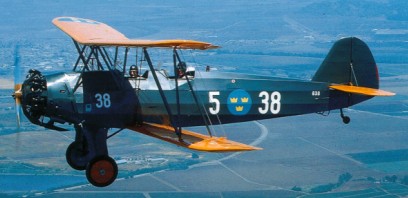
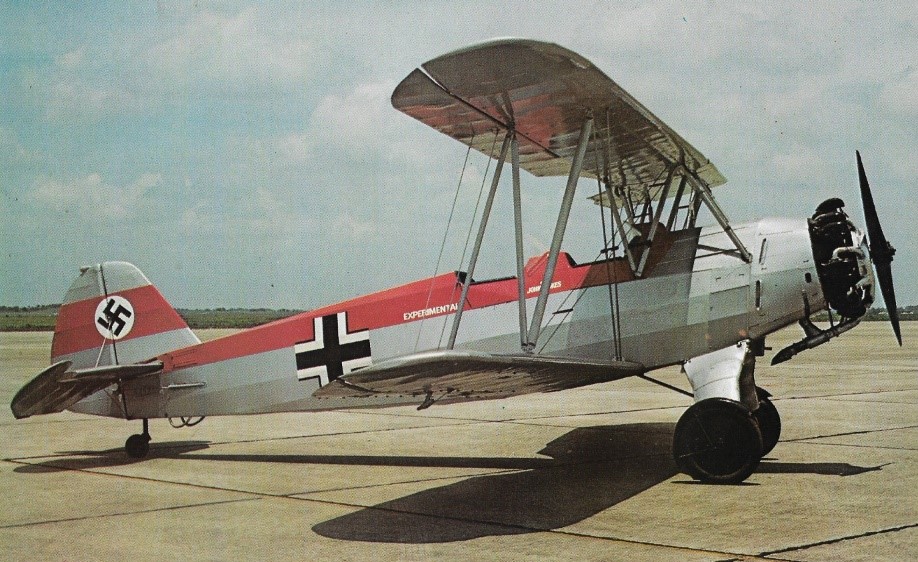
The development of the Fw.44 with the Focke-Wulf Flugzeugbau started in 1931, and the Fw 44A prototype first flew in the summer of 1932 powered by Argus As-8 in line engine which was replaced by the Siemens-Haiske Sh 14a radial engine in the production aircraft. Aerobatic champion Gerd Achgelis conducted the maiden flight of the Fw 44 Stieglitz (goldfinch) trainer late summer 1932.
In its basic form the type had severe handling problems, and these were eradicated by the newly arrived Kurt Tank in an intensive development programme that turned the Stieglitz into a superb aerobatic machine.
In addition to export orders from Bolivia, Chile, China, Czechoslovakia, Finland, Romania, Switzerland and Turkey, the Fw 44 was built under licence in Argentina, Austria, Brazil, Bulgaria and Sweden (85 designated Sk-12). The major operator was the Luftwaffe with the Fw 44B using the 109-kW (135-hp) Argus As 8 inline, followed by the Fw 44C that reverted to the Sh 144. Variants of the Fw 44C with detail improvements were the Fw 44D, F and Fw 44J. The Sk 12 Swedish license built Focke Wulf Fw 44J was first delivered to the Swedish Air Force Flying School in 1938.
Fw 44A Engine: Sh 144, 112kW (150hp) Span: 9m (29ft 6.25in) Length: 7.3m (23ft 11.5 in) Armament: none Max TO weight: 900 kg (1,984 lb) Max speed: 115 mph at sea level Operational range: 419 miles.
Fw 44B Engine: Argus As 8, 109-kW (135-hp)
Fw 44C Engine: Argus Aces 10C, 240 hp Prop: two-blade fixed pitch 2,80 m diameter Wimgspan: 17,76 m Length: 10,57 m Height: 3,04 m Wing area: 35,00sq.m Empty weight: 1065 kg MTOW: 1580 kg Fuel: 2 x 75 lt Vmax: 191 Kmh Vcruise: 175 km/h ROC: 1000 m in 4 min Ceiling: 5000 m Range: 640 km
Fw 44D Engine: Argus Ace 10D or E, 270 hp Prop: two-blade fixed pitch 2,80 m diameter Wingspan: 17,76 m Length: 10,57 m Height: 3,04 m Wingarea: 35,00 sq.m Empty weight: 1095 kg MTOW: 1475 kg Fuel: 2xX 75 lt
Fw 44E Engine: Argus Ace 10D or E, 270 hp Prop: two-blade fixed pitch 2,80 m diameter Wingspan: 17,76 m Length: 10,57 m Height: 3,04 m Wingarea: 35,00 sq.m Empty weight: 1095 kg MTOW: 1475 kg Fuel: 2xX 75 lt
S 24 Kiebitz two-seat trainer won 1931 German Aerobatic Championship flown by Gerd Achgelis, who conducted maiden flight of Fw 44 Stieglitz trainer late summer 1932.
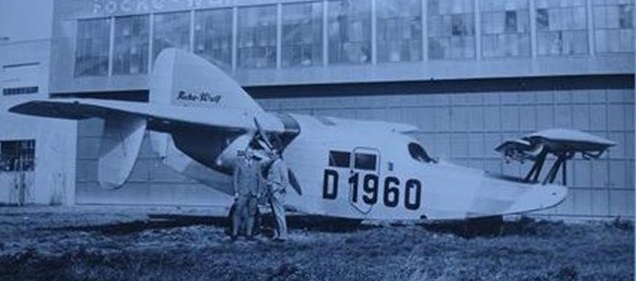
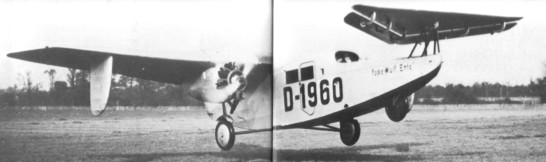
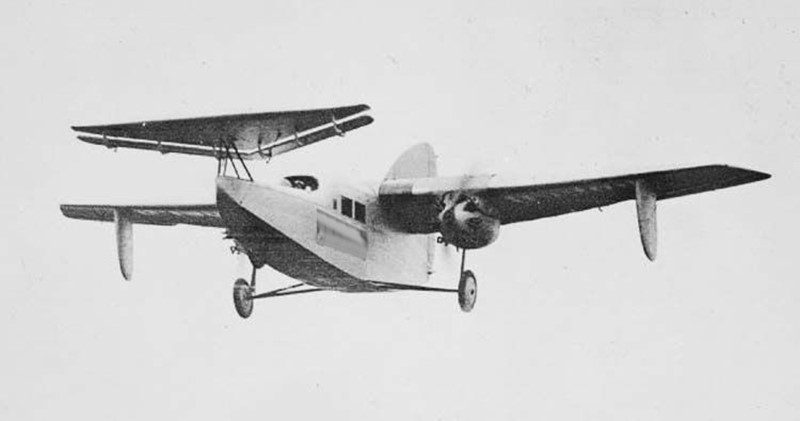
Focke Wulf Flugzeugbau G.m.b.H. built a twin engined canard in 1927. They called it the F.19 Ente, claiming that the tail first configuration gave it ‘exceptional stability and control at low speeds’. Stability and control in slow flight means safety.
Georg Wulf was killed September 29, 1927 test-flying an F-19 Ente canard.