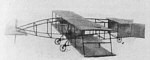
The 1910 Gibson No. 3 biplane with twin tractor propellers was designed and built by J. and G.T. Gibson in the UK.
The 1910 Gibson No. 3 biplane with twin tractor propellers was designed and built by J. and G.T. Gibson in the UK.
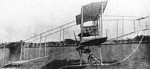
The 1910 Gibson No. 2 biplane was designed and built by J. and G.T. Gibson in the UK.
Span: 29′
Length: 30′
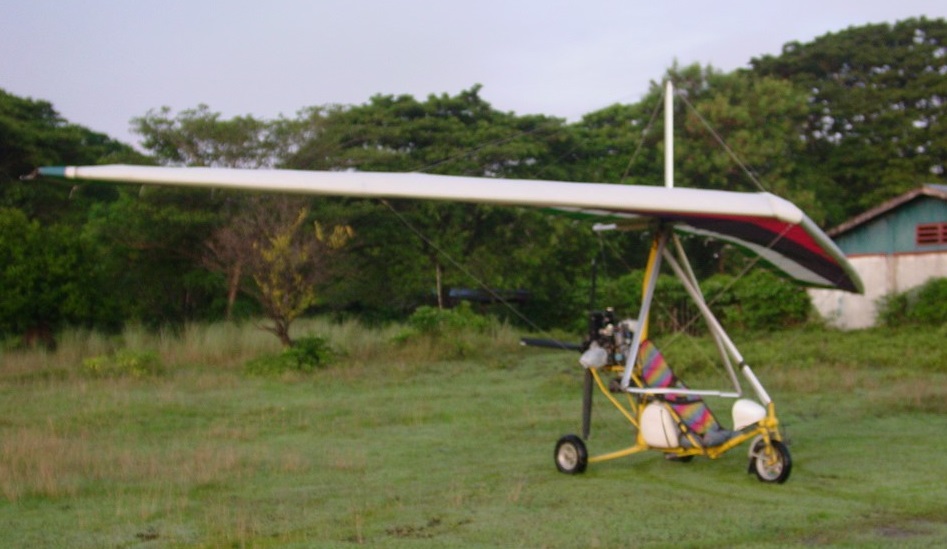
The aircraft was designed by Mark Gibson and produced by his company, GibboGear of Winter Haven, Florida, for the Fédération Aéronautique Internationale microlight class, with the intention of reversing the trend of its period of trikes becoming heavier, more expensive, stall faster, be harder to fly and thus require more flight training. The Butterfly addresses these issues by being a simple design and by employing a single surface wing with a large 240 sq ft (22 m2) area. Similarly the carriage is simple and lacks options, to reduce cost and weight. The resulting aircraft has a low landing speed of 20 mph (32 km/h) at the cost of a low cruise speed of 25 mph (40 km/h).
The Butterfly features a cable-braced hang glider-style high-wing, weight-shift controls, a single-seat, open cockpit, tricycle landing gear and a single engine in pusher configuration. The aircraft’s single surface wing is made from bolted-together aluminum tubing, covered in Dacron sailcloth. The wing is supported by a single tube-type kingpost and uses an “A” frame control bar. When the aircraft was in production the wing was also available from the factory as a kit, as well as fully assembled. The landing gear uses tubular suspension and the nose wheel is steerable. The engines that were factory-supplied included the twin-cylinder, two-stroke air-cooled 40 hp (30 kW) Rotax 447 and 50 hp (37 kW) Rotax 503.
The aircraft was supplied as a kit for amateur construction at a 2000 price of US$10,000 but buy 2017 was out of production.
Engine: 1 × Rotax 447, 40 hp (30 kW)
Wingspan: 32 ft 10 in (10 m)
Wing area: 240 sq ft (22 sq.m)
Empty weight: 290 lb (132 kg)
Gross weight: 660 lb (299 kg)
Fuel capacity: 10 U.S. gallons (38 L; 8.3 imp gal)
Cruise speed: 25 mph (40 km/h; 22 kn)
Stall speed: 19 mph (31 km/h; 17 kn)
Rate of climb: 750 ft/min (3.8 m/s)
Crew: one
The unique Genesis six-seat twin piston-engined monoplane, featured telescopic wings and a multi-configurational undercarriage to permit operations from land, water, or snow. Construction of prototype began 1998.
USA
Established 1988 to develop the unique Genesis six-seat twin piston-engined monoplane, featuring telescopic wings and a multi-configurational undercarriage to permit operations from land, water, or snow. Construction of prototype began 1998.
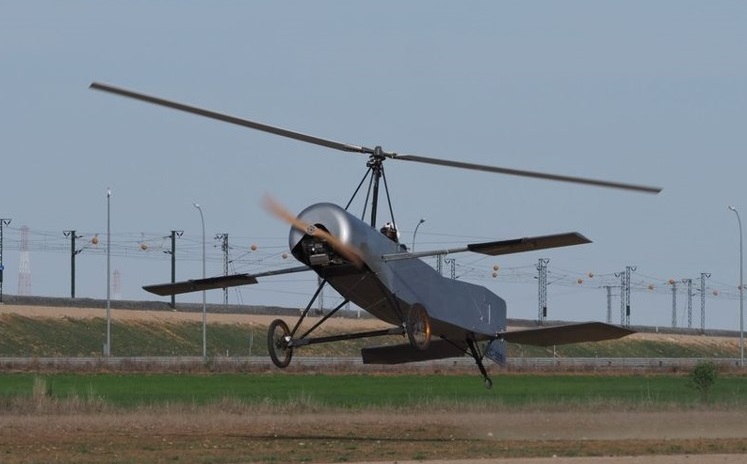
The project is the result of a decision by a group of friends at the Getafe Ultralight Club to commemorate the centenary of Juan de la Cierva’s historic first flight in his C.4 during January 1923. Following more than a thousand hours of design and fabrication work, the replica C.4 was ready for its official unveiling in January at Getafe Air Base, not far from the very spot where the original had first taken flight a hundred years earlier. The public unveiling took place at Camarenilla aerodrome March 2013, but the team chose to move the aircraft to Ocaña for its first flight. They disassembled the replica C.4 in the morning, driving it to the historic Ocaña Aerodrome by truck and then reassembling it.
Initial ground tests without the (unpowered) main rotor fitted, were carried out to check the engine operation and to test the aircraft in high-speed taxiing. After the crew fitted the rotor, a test run took place just a little after 6:00 p.m. local time. Pilot Fernando Roselló began the taxi run – but the autogiro lifted off briefly and then landed gently.
After this small jump, other takeoffs followed, until, finally, the Cierva took off and completed a couple of full circuits. Nerves, illusion and adrenaline were rewarded by seeing the autogyro take off from the ground without incident and land again successfully.
This particular early model does not having direct control through the inclination of the rotor hub, but rather still retains roll and elevator control with ailerons and rudder. While the replica C.4 stays true to much of the original design concept, the replica team chose to include some safety concessions, such as a modern engine and a well-proven, two-bladed rotor design (in place of the original four-bladed system which had only a marginal useful life of just a few hours flight time). One of the team engineers added that the rotor system, as it is without direct control, is based on Cierva’s patent, number 100595 of Dec 1926.
After alighting, Fernando Roselló stated that the aircraft behaved just as he had expected. It is a very stable aircraft, but since it lacks direct control (using aerodynamic control instead) it is slower to respond to control input. He flew as slowly as 50km/h and estimated a cruise of about 80km/h at about 4,500rpm, comparing it to 4,700rpm on his 80HP Rotax powered 912 gyroplane which flew at 80km/h with a positive variometer (rate of climb indicator).
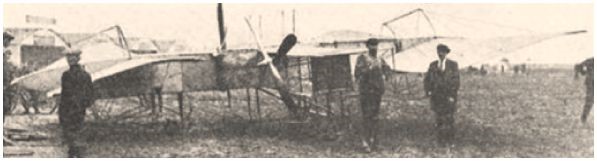
Engineer Alfred Marcel Joachimczyk in 1910, at the Deutsche Flugmaschinenbau Gesellschaft at Berlin-Rummelsberg, designed the “Maikäfer” (“Beetle”), with the construction being completed in the spring of 1911. After several trials and errors, the craft finally flew for 19 minutes, but was seriously damaged in a later flight. The Beetle was a two-seat aircraft with wings in a tandem arrangement, constructed of wood, steel tubes, and canvas. The landing gear consisted of wide wheels, a tail wheel, skids, and at the front of the hull were additional runners. The engine drove two pusher, counter-rotating propellers.
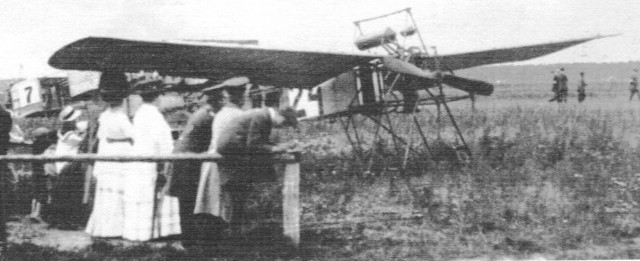
Designed by Willi Schultze-Herfort and built in Rummelsberg, near Berlin, by Deutsche Flugmaschinenbau Gesellschaft (D.F.G) in 1910 the Argus-powered monoplane as flown by Alfred Behrend at the 1. Internationale Flugwoche, 10-16 May 1910 in Johannisthal.
DFG / Deutsche Flugmaschinenbau Gesellschaft
Austria
Established in Vienna, was one of the early builders of heavier-than-air craft. Produced both the Etrich Dove and the Loehner Arrow.
USA
Successor to Vecto Instrument Corp and Vecto Aircraft Engineering Division, having acquired the assets of both companies on their owner’s death in 1965. Based at San Antonio, Texas, Geronimo carried out Vecto-designed conversions on the Piper Apache, fitting bigger engines and improving the aircraft’s internal and external appearance. Company name changed to Seguin Aviation in late 1960s.

