Goodyear GA-1

The Goodyear Aircraft Corporation began to design a small light amphibian before the end of the Second World War. The prototype designated GA-1 first flew in September 1944. It was a cantilever high-wing monoplane with underwing stabilizing floats. The GA-1 had an all-metal fabric-covered wing, an all-metal single-step hull, and a cruciform tail unit. It had a retractable tail-wheel, accommodation for two, and a pylon-mounted piston engine with a pusher propeller. Originally powered by a 107 hp (80 kW) Franklin 4ACG-100-H3 piston engine, later fitted with a 125 hp (93 kW) Franklin 6A engine.

After successful testing of the prototype, 18 demonstration aircraft were built. These differed from the prototype in that they had room for the pilot and two passengers. Two versions were built, the GA-2 with a 145 hp (108 kW) Franklin 6A4-145-A3 piston engine, and the GA-2B with a 165 hp (123 kW) Franklin 6A4-165-B3 flat-six piston engine.
Goodyear Aircraft Corp

Formed 1940 to take over the Goodyear Zeppelin Corporation. Served as aircraft manufacturer and subcontractor to numerous companies during Second World War, including complete construction of the FG-1 Corsair, a Chance Vought design. Reverted to lighter-than-air craft postwar, but built a few GA-2 Duck three-seat experimental amphibians in 1947-8. GA-400R light single-seat helicopter flown in May 1954. Produced the Goodyear Inflatable Aircraft with an inflatable wing in mid-1950s.

Goodwin Tri-Moto

The Goodwin Tri-Moto is an American powered parachute that was designed and produced by FL Goodwin of Phoenix, Arizona and introduced in 1997. The Tri-Moto had, as a design goal, creating a powered parachute carriage that can be folded up and transported on top of a recreational vehicle, in a small pick-up truck or even carried in a small boat. Folding it takes one person 20 minutes.

The aircraft was designed to comply with the US FAR 103 Ultralight Vehicles rules as a single seater or two-place trainer, including the category’s maximum empty weight of 254 lb (115 kg). The aircraft has a standard empty weight of 205 lb (93 kg). It features a 485 sq ft (45.1 sq.m) parachute-style high-wing, two-seats-in-tandem, tricycle landing gear and a single 45 hp (34 kW) 2si 430-F engine in pusher configuration.

The Tri-Moto is built from anodized aluminium tubing. In flight steering is accomplished via foot pedals that actuate the canopy brakes, creating roll and yaw. On the ground the aircraft has lever-controlled nosewheel steering. The main landing gear incorporates spring rod suspension. The aircraft was factory supplied complete and ready-to-fly.

The Tri-Moto is out of production.

Tri-Moto
Engine: 1 × 2si 430-F
Reduction: 3:1 gearbox
Propeller: 2-bladed wooden, 5 ft 6 in / 1.68 m diameter
Wing area: 485 sq ft (45.1 sq.m)
Wing loading: 1.87 lb/sq ft / 9.1 kg/m²
Empty weight: 205 lb / 93 kg
Gross weight: 905 lb / 411 kg
Cruise speed: 26 mph / 23 kph / 42 km/h
Rate of climb: 500 ft/min / 2.5 m/s
Fuel capacity: 6 U.S. gallons / 23 lt / 5.0 imp gal
Crew: one
Capacity: one passenger
Unit cost: US$8,000 (2001)

Goodwin, F.L.

FL Goodwin was an American powered parachutes manufacturer that was based in Phoenix, Arizona. The company specialized in the design and manufacturer of powered parachutes.

Founded in the 1990s FL Goodwin was out of business in the 2000s.

The company introduced its first model, the Goodwin Tri-Moto in 1997 and the following year the company introduced the Goodwin Buckshot, a conventional powered parachute design.

Gonzales Gil-Pazo GP II

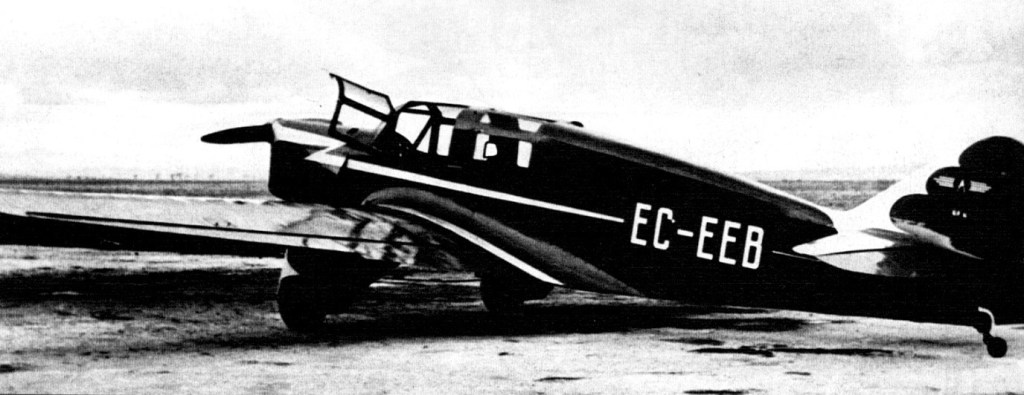
Gonzales Gil-Pazo GP II was built in Spain by Arturo Gil y Santibanez and Jose Pazo Montes. This special version was fitted with a single 130 hp engine. It took part in a record attempt from Barcelona to Senegal, piloted by Ramon Torres and Carlos Coll of the Aero Club Aero Popular de Barcelone, but landed in Morocco after cross winds affected its flight. It is photographed here at Madrid airport during test flights, where it proved it could average a speed of 250 kph with a range of 2000 km.

It was destroyed in an accident at Los Alcazares in January 1937.

Gonnel Uniplan

2nd version

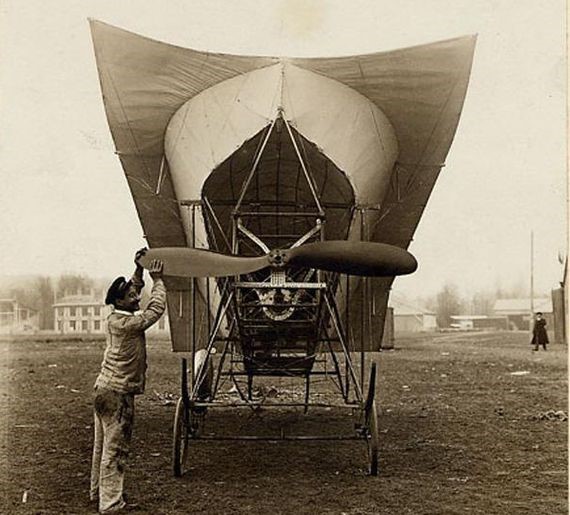
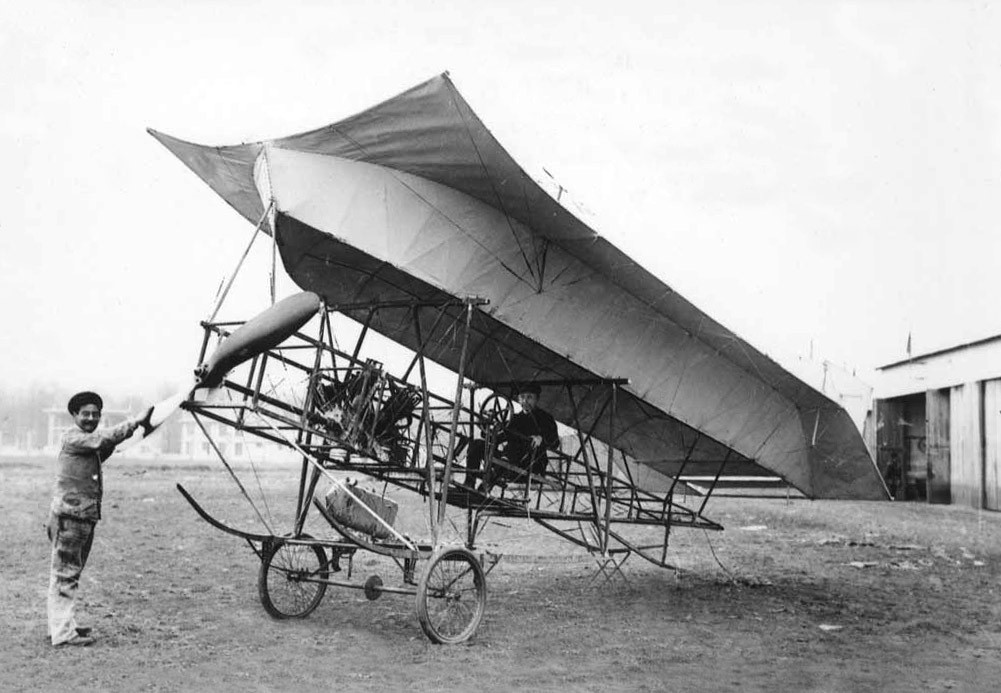
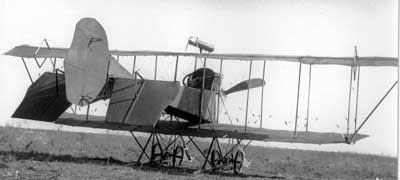
The second patented Uniplan of the Gonnel brothers – Raoul-Georges and Arthur-Édouard – built at Juvisy, France during March 1911.

This rebuilt, 2nd version of the machine, which is actually a complete rebuilt of the fuselage and undercarriage, was also fitted with a more powerful engine, a 45-50 hp 4-cylinder Velox-Suère.

Goldwing Aerostar

The Aero¬star is a totally newly de¬signed airplane with increased wing, canard and winglet area; a totally redesigned fuselage that is 3½ inches wider than the Goldwing ST and sports a center-mounted control stick; wide-track landing gear; and a vacuum-molded manufacturing process utilizing carbon graphite spar caps, high-density foam cores and Du Pont Kevlar in a variety of sandwich struc¬tures. The wings, canard, elevators and fuselage are built in large, specially designed molds. All major com¬ponents are completed in two halves, which are mated together while still in their molds.

Engine: Rotax 277.
Empty wt: 254 lbs.
Glide ratio: 16-1.
Sink rate: 350 fpm.
Max speed level: 63 mph.
Stall: 26 mph.
Vne: 70 mph.