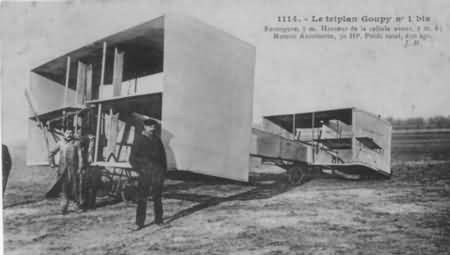
The Goupy I triplane was designed by Goupy, built by Voisin, in France 1909.
Span: 23′
Weight: 1430 lb
The Goupy I triplane was designed by Goupy, built by Voisin, in France 1909.
Span: 23′
Weight: 1430 lb
France
Company engaged largely in experimental work but built a few biplanes of its own design from around 1913.
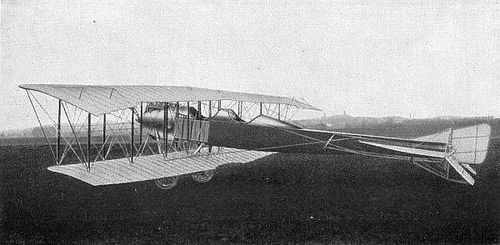
Bruno Büchner designed the 1913, 120 hp Argus powered, 20 m span Schuldoppeldecker biplane built by Gothaer Waggonfabrik.
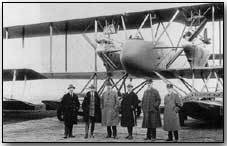
The Gotha WD.27 (for Wasser Doppeldecker – “Water Biplane”) was a patrol seaplanes developed in Germany during World War I. It was a conventional four-engine seaplane with engines grouped in tractor-pusher pairs on the lower wings. Contemporary records show three German Navy serial numbers allocated to the type, but firm evidence of only one of these being built.
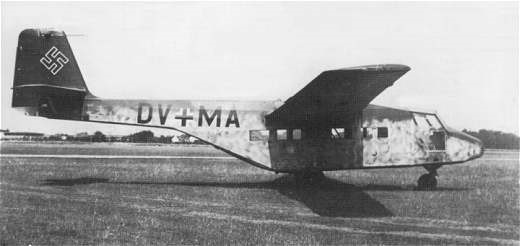
The Gotha Ka 430 was a military transport glider, first built in 1944. The glider was designed by Albert Kalkert. Twelve had been produced by the end of World War II, but none of them was used operationally.
The glider could carry twelve men, and tests were being conducted towards the end of the war to see if it could carry a cargo of 1,400 kg (3,100 lb). A single 13 mm (.51 in) MG 131 machine gun was fitted for self defence.
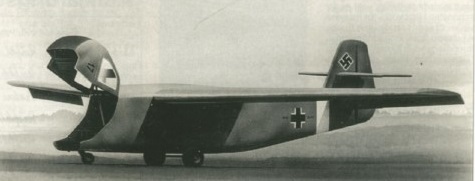
The Gotha Go 345 was a prototype German Military transport glider of the Second World War. A single example was tested in 1944.
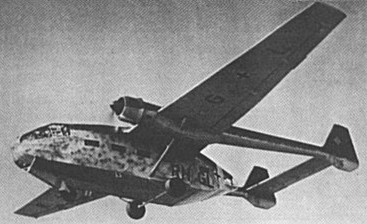
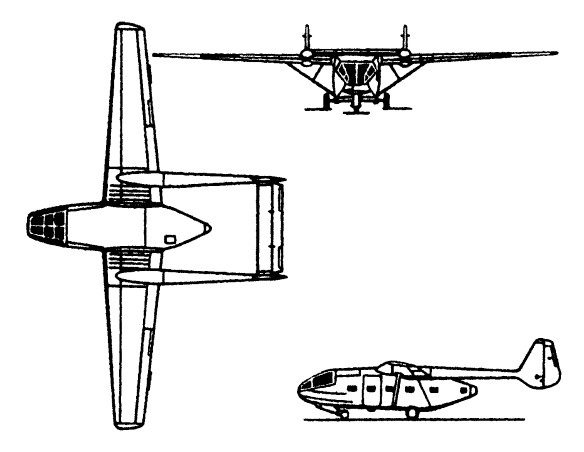
After the fall of France the French Gnome-Rhone 14M radial engine became available to the Germans in large numbers, and the Go 242 was modified to serve as the Go 244 twin-engined transport, each of the twin booms being extended forward of the leading edge of the wing to mount one of these engines. At the same time fixed tricycle landing gear was installed.
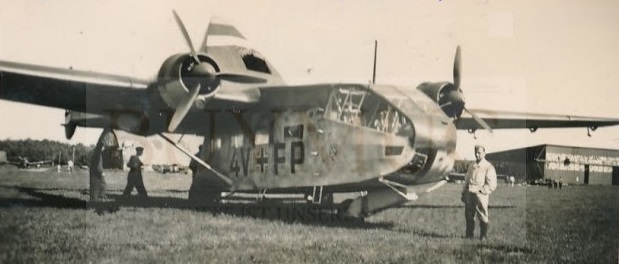
A total of 133 conversions was made from the five Go 242B variants and these were designated correspondingly Go 244B-1 to B-5. First deliveries were made in March 1942 to the Greek-based KGrzbV 104 and to KGrzbV 106 in Crete, but they proved to be relatively easy targets for Allied fighter aircraft and had been withdrawn by November 1942. Some Go 244s had 492kW BMW 132Z or captured Russian Shvetsov M-25As each of 559kW.
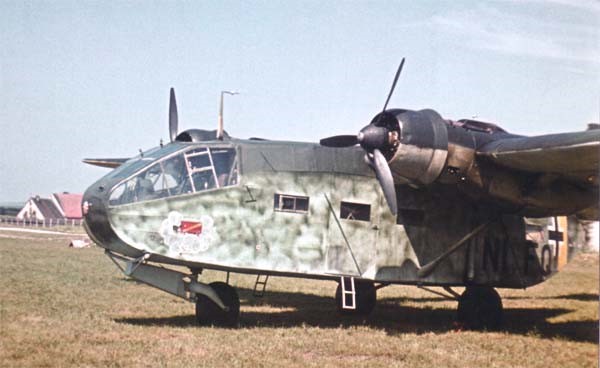
Go-244B-2
Engine: 2 x Gnome-Rhone 14M, 522kW
Max take-off weight: 7800 kg / 17196 lb
Empty weight: 5100 kg / 11244 lb
Wingspan: 24.5 m / 80 ft 5 in
Length: 15.80 m / 51 ft 10 in
Height: 4.70 m / 15 ft 5 in
Wing area: 64.4 sq.m / 693.20 sq ft
Max. speed: 290 km/h / 180 mph
Ceiling: 7500 m / 24600 ft
Range: 600 km / 373 miles
Armament: 4 x 7.9mm machine-guns
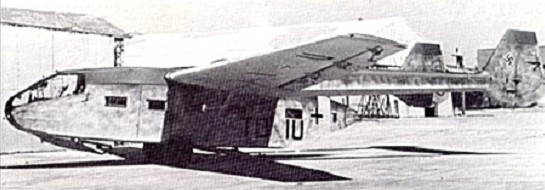
The work of Dipl. Ing Albert Kalkert, the Gotha Go 242 assault glider was developed with the approval of the Reichs-luftfahrtministerium since it offered almost three times the troop-carrying capacity of the DFS 230 then in use.
The fuselage pod was of steel tubular construction with fabric covering, and carried jettisonable landing gear and two retractable skids. The wings were made of wood with fabric and plywood covering.
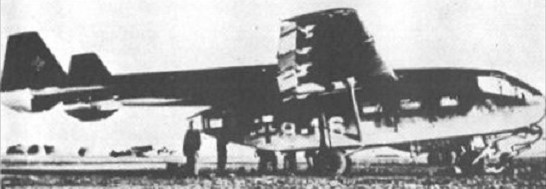
The aircraft could carry 21 fully-equipped troops, or equivalent weight in military loads, such as a Kubelwagen utility vehicle, loaded through the hinged rear fuselage.
Two prototypes were flown in 1941 and production followed permitting entry into service in 1942.
The type’s operational debut was made in the Mediterranean and Aegean theatres, Go 242 units being based in Greece, Sicily and North Africa. Heinkel He 111 tugs were usually employed and rocket-assisted take-off equipment could be fitted, the variety of propulsion units including four 500kg Rheinmetall-Borsig RI-502 solid fuel rockets. Production totalled 1,528 aircraft.
133 were modified into Go-244.
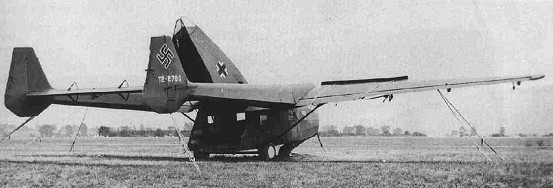
Go-242
Max take-off weight: 6800-7300 kg / 14992 – 16094 lb
Empty weight: 3200 kg / 7055 lb
Wingspan: 24.5 m / 80 ft 5 in
Length: 15.8 m / 51 ft 10 in
Height: 4.25 m / 13 ft 11 in
Wing area: 62.4 sq.m / 671.67 sq ft
Armament: 4 x 7.9mm machine-guns
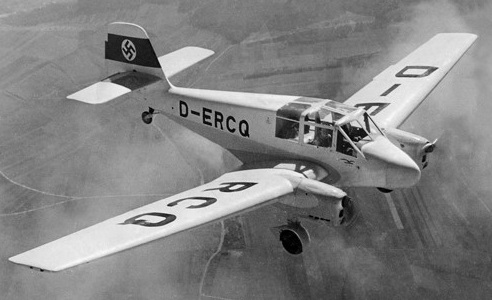
In January 1937 Major Werner Junck, chief of the LC II, the technical wing of the Reichsluftfahrtministerium responsible for the development of new aircraft, informed various minor aircraft manufacturers such as Gothaer Waggonfabrik, Bücker, Fieseler, Flugzeugwerke Halle and Klemm that they would not get any contracts for the development of military aircraft. He therefore advised them to concentrate in the development of a Volksflugzeug or a small twin-engined plane. As a result, Gothaer Waggonfabrik developed the Go 150.
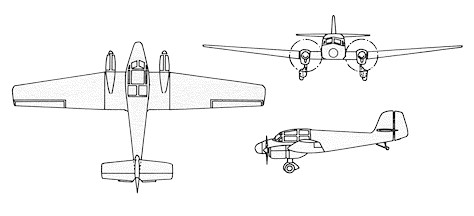
The aircraft was a twin-engined monoplane with an enclosed cockpit, designed by Albert Kalkert.
The first, D-ERCQ, first flew in 1937. The results of this flight were good, and production began. The aircraft was used to train both civilian and Luftwaffe pilots. The Go 150 was later also used in tests, where it was towed by a Heinkel He 46.
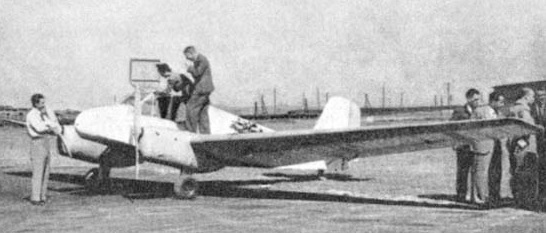
Two prototypes were built, followed by a series of 10. All of them received civil registration. Another series with 10 aircraft was planned but not fulfilled.
The Go.150 established flight altitude records in its class. Firstly, three test attempts in which the aircraft reached heights of 7100 m, 7500 and 7800 m were made. Only when there was full confidence in achieving the record, the Go.150 made the attempt.
On July 5, 1938, piloted by Fritz Platz, after 45 minutes he had reached 7,000 meters, but fell sharply in this rate of climb. At an altitude of 7100 meters, it was only 1m\sec, and in another 700 meters, it decreased to 0.5 m\sec. After 1.5 hours he reached an estimated height of 8,000 meters. After ascertaining the correct indication of the instrument pilot, and after 30 minutes, made a successful landing at its airport. This record was officially recorded FAI.
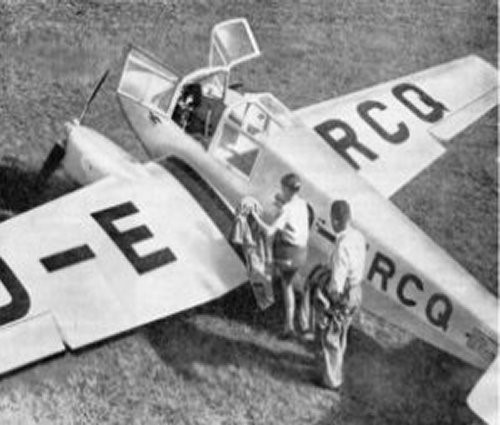
Engines: 2 × Zündapp Z 9-092, 37 kW (50 hp) each
Wingspan: 11.80 m (38 ft 9 in)
Wing area: 17.50 m2 (188 sq ft)
Aspect ratio: 8.1
Length: 7.15 m (23 ft 5 in)
Height: 2.03 m (6 ft 8 in)
Empty weight: 535 kg (1,179 lb)
Gross weight: 850 kg (1,874 lb)
Max takeoff weight: 1,036 kg (2,284 lb)
Fuel capacity: 80 kg
Oil capacity: 6 kg
Load: 315 kg
Fuel consumption: 12.7 l/100 km
Flying weight 48.5 kg/sq.m
Maximum speed: 200 km/h (124 mph; 108 kn)
Cruising speed: 185 km/h (115 mph; 100 kn)
Landing speed: 85 km/h
Range: 900 km (559 mi; 486 nmi)
Service ceiling: 4,200 m (13,780 ft)
Rate of climb: 2.74 m/s (539 ft/min)
Time to 1000m: 6min. 5sec.
TO dist to 20m: 400 m
Landing dist from 20m: 500 m
Crew: 1
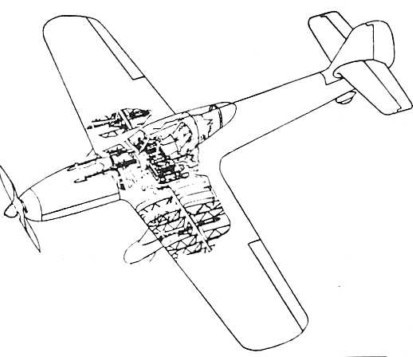
The Gotha Go 149 was a military aircraft developed in Germany in the mid-1930s for training fighter pilots. It was a conventional low-wing cantilever monoplane with tailwheel undercarriage, the main units of which retracted inwards. The wing was wooden, while the monocoque fuselage was metal. Two prototypes were constructed, and an armed version was also proposed as a light home-defence fighter (Heimatschutzjäger) armed with two 7.92 mm (.312 in) MG 17 machine guns, but the Luftwaffe did not purchase either version of the design, and no further examples were built.

