Gourdou-Leseurre GL.30 / GL.31 / GL.32 / GL.40 / GL.529 / GL.60

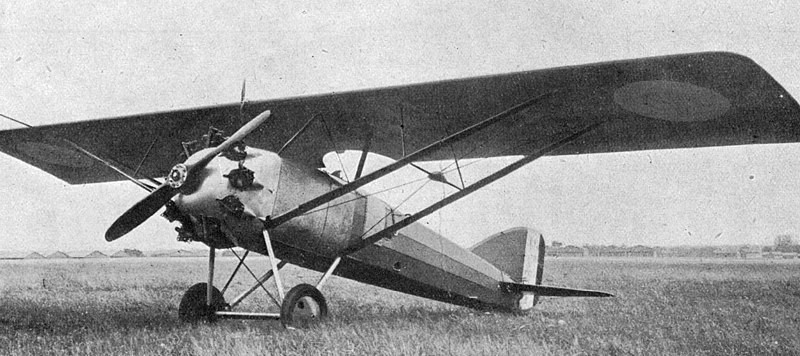
Gourdou-Leseurre GL-32 (LGL.32)

The GL-30 was a parasol-wing monoplane with retractable undercarriage and a Bristol Jupiter engine. Like most of Gordou-Lesserre’s earlier aircraft, it was a parasol wing design but its planform was trapezoidal rather than rectangular. In 1923 it flew the Coupe Beaumont course at an impressive 360 km/h (220 mph; 190 kn).

The GL.30 was the basis of a new fighter, the GL.31, which had a greater span, almost double the wing area, a fixed undercarriage, and a Gnome-Rhône 9A engine. It was armed with four machine guns, two in the forward fuselage and two in the wings. The GL. 31 was not flown until 1926 and then abandoned, overtaken by the GL.32, the company’s entry in a 1923 Aéronautique Militaire competition to select a new fighter. It returned to a rectangular plan wing.

By the time this prototype flew, the Gourdou-Leseurre had been acquired by Loire, and therefore the new aircraft was entered as the LGL.32. Placed second in the trials, the type’s performance was impressive enough to still result in an order in January 1927 for a small batch of aircraft – five evaluation aircraft and 20 preproduction machines. Eventually, 475 of this basic version, dubbed LGL.32C.1 in service, would be ordered by the Aéronautique Militaire and 15 more by the Aéronautique Maritime. Romania ordered a further 50 aircraft of the same design as the examples in French service, Turkey ordered 12 (these designated LGL.32-T) and another one may have been purchased by Japan.
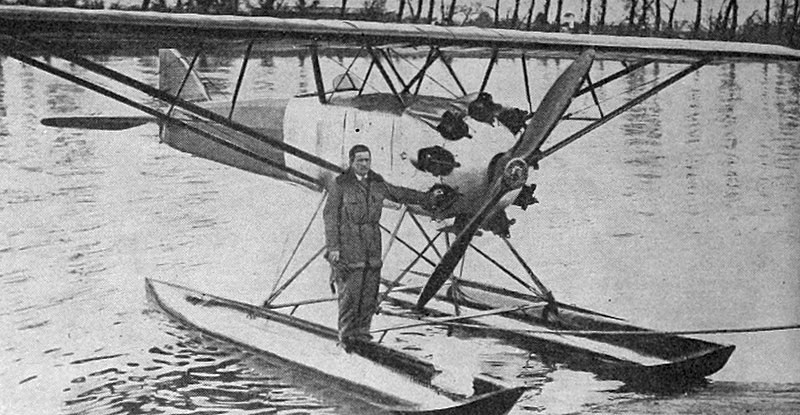
LGL.32 Hy May 1927

The LGL.32 Hy was a twin-pontoon floatplane version converted from the LGL.32 prototype. It set a world seaplane altitude record on 28 March 1927.

In French service, development turned from fighters to adapting the aircraft as a carrier-borne dive bomber. These featured general strengthening of the airframe, divided main undercarriage units, and a “fork” under the fuselage able to release a 50 kg (110 lb) bomb from under the fuselage while avoiding hitting the propeller.

While prolific, the GL.32 was not long-lasting, and attrition took a heavy toll on them. By 1934, all remaining examples were relegated to training and as instructional airframes; at the start of 1936, only 135 remained of the original 380 purchased. A number of these were sold to the government of the Second Spanish Republic and to the autonomous Basque Government. Another aircraft was supplied to the Basques in 1937, modified as a dive bomber along the lines of the previous French experiments. Designated the GL.633, this aircraft was used by Miguel Zambudio to attack the Nationalist battleship España, scoring decisive hits that contributed substantially to her subsequent sinking.
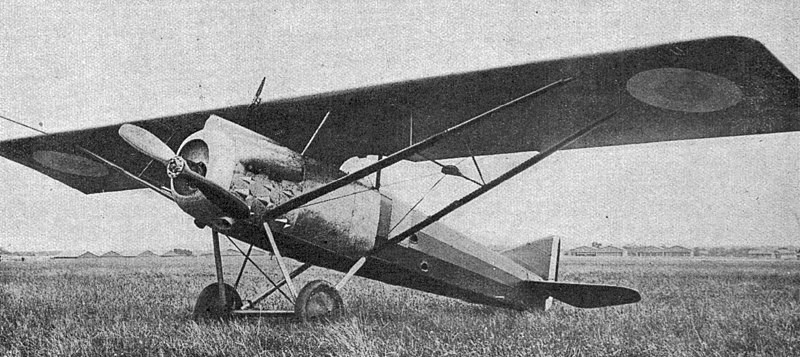
Gourdou-Leseurre LGL.33 C.1

Gallery

Variants:

GL.30
Racer with retractable undercarriage and
Engine: Bristol Jupiter
one built

GL.31 / GL.31C.1 / CL-I-3
Four-gun fighter prototype with fixed undercarriage
longer-span wings
engine: Gnome-Rhône 9A
one built

LGL.32 / GL.32C.1
Definitive two-gun fighter version
Powerplant: 1 × Gnome et Rhône 9A Jupiter VIII, 450 kW (600 hp)
Propeller: 2-bladed wooden fixed pitch
Wingspan: 12.2 m (40 ft 0 in)
Wing area: 24.9 m2 (268 sq ft)
Length: 7.55 m (24 ft 9 in)
Height: 2.95 m (9 ft 8 in)
Empty weight: 963 kg (2,123 lb)
Gross weight: 1,376 kg (3,034 lb)
Fuel capacity: 285 kg (628 lb) – (ca. 200 L (53 US gal; 44 imp gal))
Maximum speed: 270 km/h (170 mph, 150 kn) at sea level
Maximum speed: 260 km/h (160 mph; 140 kn) at 3,000 m (9,800 ft)
Maximum speed: 251 km/h (156 mph; 136 kn) at 5,000 m (16,000 ft)
Maximum speed: 215 km/h (134 mph; 116 kn) at 8,000 m (26,000 ft)
Landing speed: 90 km/h (56 mph; 49 kn)
Range: 500 km (310 mi, 270 nmi)
Service ceiling: 9,700 m (31,800 ft)
Time to 2,000 m (6,600 ft): 3 minutes 5 seconds
Time to 5,000 m (16,000 ft): 11 minutes
Time to 8,000 m (26,000 ft): 31 minutes
Wing loading: 54.8 kg/m2 (11.2 lb/sq ft)
Power/mass: 0.33 kW/kg (0.2 hp/lb)
Armament: 2x 7.7 mm (0.303 in) Vickers or Darne machine-guns – fuselage / 2x 7.7 mm (0.303 in) Darne machine-guns in wings
Crew: 1
ca. 490 built

LGL.32.01
The first prototype.

LGL.32T
Export version for Turkey
12 built

LGL.32 Hy
Twin-pontoon floatplane version converted from LGL.32 prototype.
one converted

LGL.321
LGL.32 converted to use 450 kW (600 hp) version of the Gnome & Rhône 9Ac
one converted

LGL.323
LGL.32 converted to use supercharged 373 kW (600 hp) Bristol Jupiter for unsuccessful altitude record attempts.
one converted

LGL.324
LGL.323 further modified and used by Pierre Lemoigne to set world landplane altitude record
500 kg payload of 9,600 m (31,500 ft) on 23 May 1929
Albert Lécrivain set world landplane altitude record
11,000 m (39,090 ft) on 24 October
one converted

LGL.33 / LGL.33C.1
Similar to LGL.32
revised wing struts, landing gear, and tail
Engine: Lorraine 12Eb
one built

LGL.34 / LGL.34C.1
Similar to LGL.32
Engine: Hispano-Suiza 12Gb
one built

LGL.341
similar to LGL.32
Engine: Hispano-Suiza 12Hb
two built, second with revised radiator arrangement

LGL.351
Engine: Renault 12J
one built

LGL.390
night fighter prototype
Engine: Hispano-Suiza 9Va
one converted from LGL.32

GL.410
modernised fighter with divided main undercarriage
one built

GL.430
strengthened carrier-borne dive-bomber prototype
one built

GL.432
dive-bomber variant similar to GL.430 used for operational testing
four built

GL.450
fighter version

GL-482
fighter version
Engine: Hispano-Suiza 12Xbrs
one built

GL.521
dive-bomber version
taller tail fin
Engine: Gnome-Rhône 9Kfr
two built

GL.633
dive-bomber similar to GL.432
one built

Gourdou-Leseurre

Gourdou-Leseurre joined Nieuport in 1925 to become Loire-Nieuport.

Joint designers of a parasol-wing monoplane in 1918. Few built. Developed into C.1 fighter of 1922 with retractable landing-gear and Gnome-Bristol Jupiter engine. In 1925 became associated with the French dockyard Ateliers et Chantiers de la Loire, with change of name to Loire-Gourdou-Leseurre. In 1929 disassociated with LGL and returned to original title.

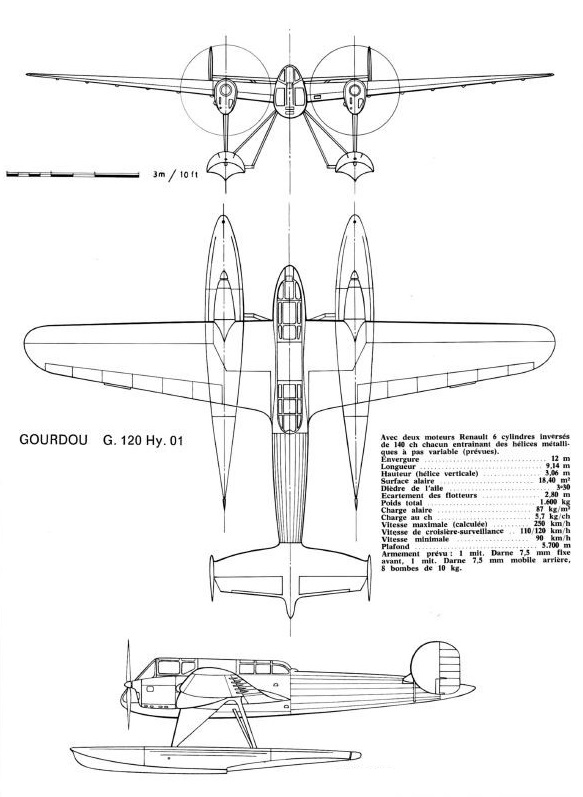
Gourdou G-120

In 1937, the French Navy launched a program for a twin-engine, catapultable twin-engine seaplane for anti-submarine warfare. The aircraft should not exceed a weight of 1,600 kg, and carry 10 bombs of 10 kg. It needed a top speed of 250 km / h, a minimum speed of 90 km / h, and a cruising speed of 110 to 120 km / h. Gourdou proposed a plane equipped with high-lift devices.

In early 1938, the Technical Service of Aeronautics commissioned a life-size, rectangular wing with a constant profile, which passed the tests in the large Chalais-Meudon wind tunnel in June. This wing of 12 m wingspan and 18 sq.m wing surface, resulted in the order of a prototype.

The structure of the wing was two longitudinal members braced by oblique ribs lattice. The wing was fabric covered. The aircraft had a Fowler-type double-flap system, fitting one into the other. In the “out” position, the ensemble retreated by increasing its initial surface area by 50% and opening two slots. The slits obtained by this system were “convergent-divergent”. They differed from the converging slits of Handley-Page beaks and flaps of Bernard aircraft. Once the shutters returned, there were only small dents on the underside.

The fuselage was of welded steel-molybdenum tube structure. It had an advanced cockpit, and a firing point for the gunner behind a common fairing. This defensive post was equipped with a 7.5 mm Darne machine gun. A second machine gun of the same type, fixed, was installed in the nose. The cockpit roofs were glazed, and the front part of the fuselage was Plexiglas.

Both floats each had a volume of 1500 litres. Each float was located under the engine nacelles. They were held in the vertical plane by a triangular panel and a rear strut. Two slashes connected him to the fuselage. The floats were built in three elements, like those of the seaplanes Bernard H.52 C1 and H.110 C1.

The empennages were also made of welded steel tubes. To clear the shot in the rear weapon, the tail was twin fin.

The aircraft was subjected to static tests on a specially designed bench in the Parc Saint-Maur plant. At the beginning of the winter of 1939-1940, the seaplane was transferred to Chalais-Meudon where a special three-column support had been built on the balance plate of the large wind tunnel. In December 1939, the glider tests were carried out, flaps out. The results were disappointing. The lift was 30% lower than expected, the drag higher, the stability at depth mediocre. The director of the wind tunnel tests, Mr. Rebuffel, decided to visualize the flow on the wing with a thin stream of hot oil. The defect was a small oil cooler placed in the leading edge of the wing between the fuselage and the engine. The air intake was on the underside and the exit located on the rear. The smoke clearly indicated that this exit was prominent and caused air separation throughout the area between the fuselage and the engine. Once this radiator output changed, everything returned to normal. The exit and the return of the shutters, in 11 seconds, created a normal flow.

The powered tests began in February 1940, with test pilot Jean-Marie Le Borgne. The metal propellers that were not delivered on time were replaced by wooden pitch propellers. The results confirmed the calculations: the stability was good.

The G.120 was transported to Athis-Mons, in a rented shed on the banks of the Seine. It was launched on June 1, 1940. The test pilot Le Borgne made several hydroplanings, shutters closed, with a test engineer in the rear seat. Passing on his own wake, the pilot noticed a certain lack of rigidity in the behaviour of the floats. During another test, the flaps released, and at 70 km / h the G.120 took off by surprise, after 100 m and rose to 20 m of altitude. After a small flight of 200 m, the pilot landed without difficulty. The next day, the aircraft flew again in front of the STAé officials and flew 50 m above the water for more than 3 km. After this flight, the pilot pointed out the lack of effectiveness of the ailerons. He had been obliged to counter the lateral wind with the rudder. The flotation behaviour of the floats was remedied. This work could not be completed because of the German invasion. To prevent the prototype from falling into the hands of the enemy, Le Borgne destroyed it and sank the wreck in the Seine.

Gourdou G.120 Hy
Engines: 2 x Renault, 140 hp
Wingspan: 12 m
Length: 9.14 m
Height: 3.06 m
Wing area: 18,40 sq.m
Cruising speed: 110-120 km / h
Maximum speed: 250 km / h
Ceiling: 5,700 m
Wing load: 87 kg / sq.m
Load factor 5.7
Armament: 2 x Darne 7.5 mm machine guns
Bombload: 8 x 10 kg bombs

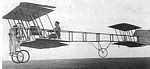
Goupy 1912 Hydroaéroplane

The 1912 Goupy “hydroaéroplane” was just a land plane set on floats with wheels and all, no further alterations. Typical was the fuselage “hung” between the wings and the sesquiplane construction with the struts somewhat at an angle. The construction at the nose looks like radiators, but are unlikely that as this design was fitted with a 100 hp Gnome rotary. Maybe a streamlined construction to get the engine neatly into the ‘square’ fuselage.

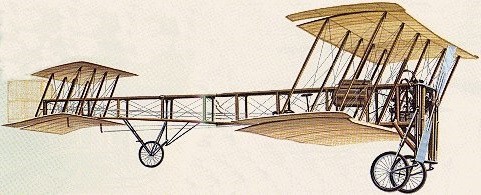
Goupy 1914-B

The three-passenger Goupy biplane, type 1914-B, resembled in general construction other machines of this firm. The cell is composed of two staggered planes of unequal length: chord 1.6 m. top plane 19.75 m. long, lower one 10.35 m. long.
The cell is rigid and lateral balance is obtained by powerful conjoined ailerons. The fuselage is of quadrangular section. The monoplane tail is slightly lifting and approximately rectangular, terminated by a flap 3.1 by .7 m. serving as an elevator.
The quadrangular rudder, above the tail, is partly balanced and in front of it is a small vertical fin. The 100 hp Gnome supported between two bearings turns a 2.8 m. propeller, the axis being 1.8 m. above the ground. The chassis is of the usual type, skids and wheels: the wheels are far enough forward to prevent “capotage.” The skids, however, do not seem sufficient to protect the propeller in a bad landing on rough ground.

Goupy 1914-B