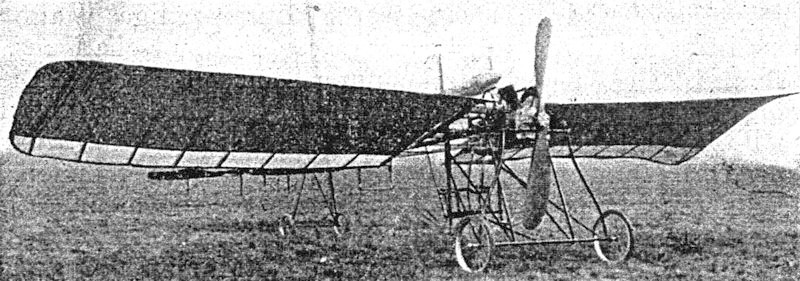
Heinrich Heitmanns company built his fourth monoplane as a Grade-like with a Delfosse engine. According to “Motorwagen” 1911, it flew successfully on the Wandsbecker Exerzierplatz.
Heinrich Heitmanns company built his fourth monoplane as a Grade-like with a Delfosse engine. According to “Motorwagen” 1911, it flew successfully on the Wandsbecker Exerzierplatz.
Heinrich Heitmann started gliding experiments in Bresleu, Germany, before moving back to Hamburg-Altona. His company built eight different types between 1909 and 1912

An American-designed and -built, two-seater mono-biplane, so called because it could be fitted with interchangeable wings and could be flown as either a biplane or a monoplane. It was the 1912 work of the Heinrich Brothers of Baldwin, Long Island, and was a conventional monoplane design, but had many original construction features.
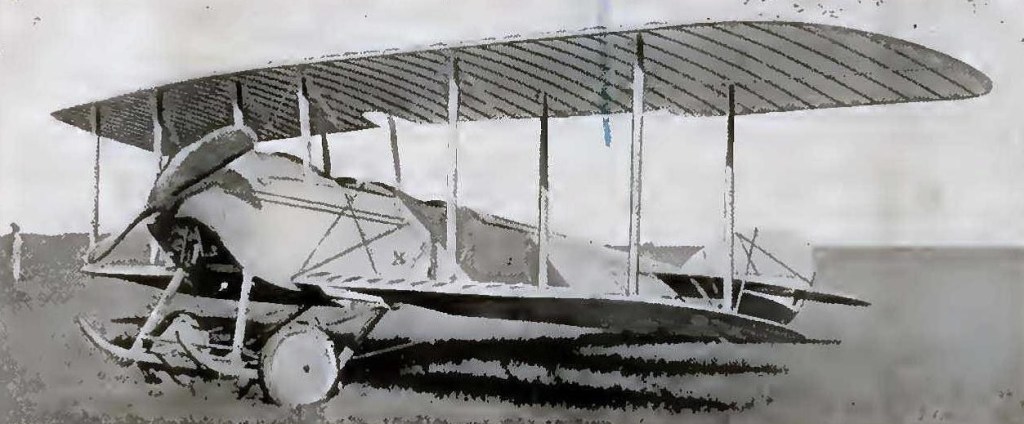
The Heinrich armoured Military Biplane was powered by a 9-cylinder 110 hp Gyro Duplex motor.
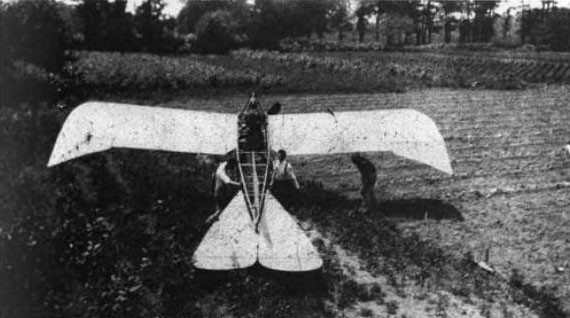
The Model A was the first monoplane of the brothers Albert & Arthur Heinrich from Baldwin, New York, on which both taught themselves to fly. Its maiden flight was made in May of 1910, and was powered by a 60 hp Emerson boat engine.
Brothers Albert & Arthur Heinrich from Baldwin, New York, were previously active in the boat business and both taught themselves to fly in their own Model A.
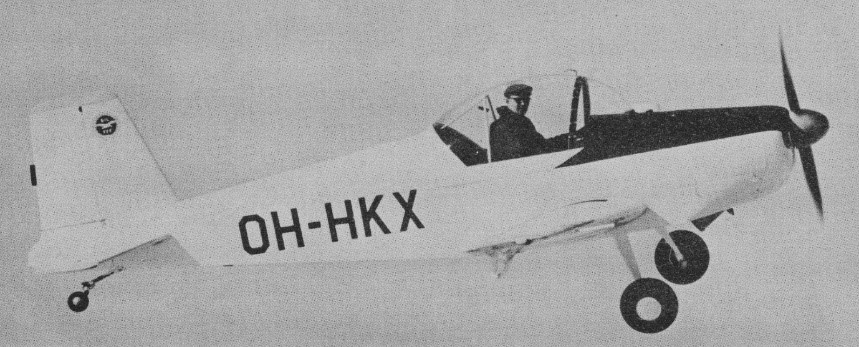
Juhani Heinonen produced the Heinonen HK-4 in 1964 for the Finnish Aeronautical Association.
Heinonen developed the two-seater with an all-wood wing, ailerons fabric covered. The all-wood fuselage has four main longerons and plywood covering. The tail is wood cantilever with fabric covered rudder and elevator. An elevator trim is adjustable from the cockpit.
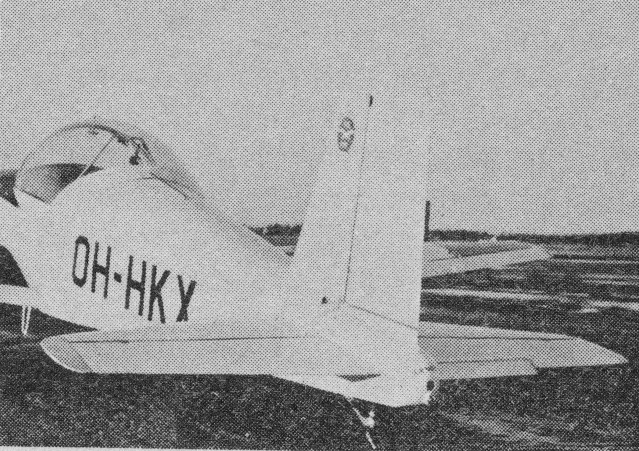
The landing gear uses cantilever spring steel main legs attached to the wing, and the tail wheel is steerable.
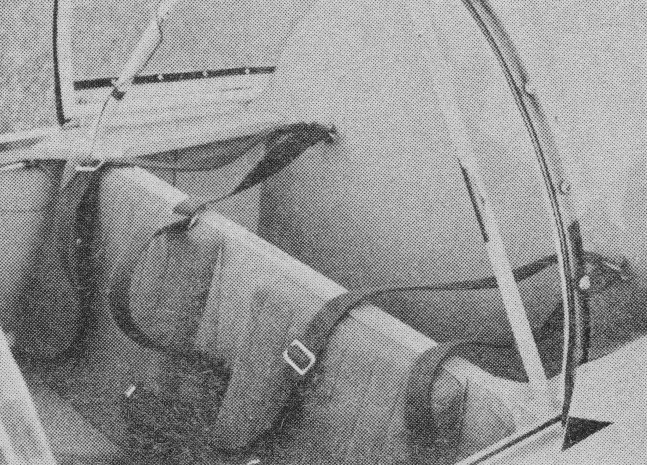
A baggage compartment is behind the seats.
Engine: Lycoming O-235-C1, 115 hp
Wing span: 26 ft 0.5 in
Lengt: 20 ft 2 in
Height: 7 ft 1.5 in
Empty weight: 870 lb
MTOW: 1323 lb
Top speed: 148 mph
Cruise: 127 mph
Service ceiling: 15,400 ft
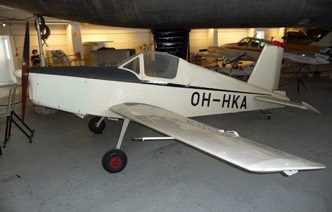
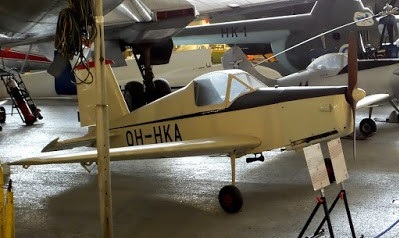
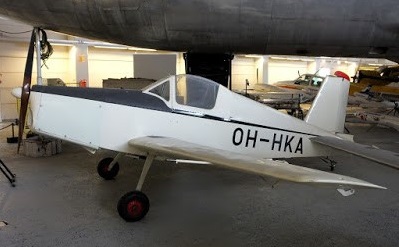
The HK-1 Keltiänen was designed and built by engineer Juhani Heinonen in 1954, registered OH-HKA.
The only Finnish aircraft which has achieved a world’s record. plane He made the record long distance flight on 10 July 1957, from Madrid to Turku nonstop, 2844 km in 17 hours 1 minute. This constituted a world’s record in category C-1.A; single-engine land planes with take-off weight max 500 kilos. The record stayed with this aircraft until 1974.
The aircraft was in use from 1954 – 1978.
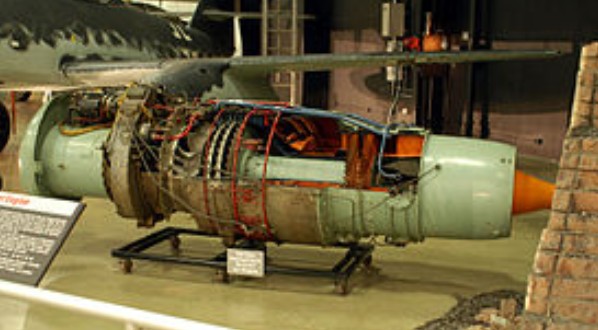
Starting in 1936, Junkers started a jet engine development project under the direction of Wagner and Müller, who worked on axial compressor designs. By 1940 they had progressed to the point of having a semi-working prototype, which could not run under its own power and required an external supply of compressed air.
Meanwhile, Hans Mauch, in charge of engine development at the RLM, decided that all engine development should take place at existing engine companies. In keeping with this new policy, he forced Junkers to divest itself of their internal engine teams. Müller and half of the existing Junkers team decamped and were happily accepted by Ernst Heinkel, who had started German jet development when he set up a lab for Hans von Ohain in 1937. The two teams worked on their designs in parallel for some time, von Ohain’s as the HeS 8 (or 109-001), and the Junkers team as the HeS 30 (109-006). Heinkel’s efforts were later re-organized at Hirth Motoren.
Helmut Schelp, who had taken over from Mauch, felt that the BMW 003 and Junkers Jumo 004 would reach production at about the same power levels long before either would be ready, and cancelled both of the Heinkel projects. He had outlined a new development plan, with three engine classes, the 003 and 004 were “Class 1” engines of under 1000 kg thrust suitable for small fighters, but only really useful in twin-engine designs. Schelp was much more interested developing a “Class II” engine of 1000–2000 kg, larger designs able to power a full-sized fighter design with a single engine. Schelp was also interested in seeing one of his own pet projects, the diagonal compressor, adopted. Schelp had earlier convinced Heinkel to put some effort into another pet project of his, a twin-compressor single-turbine turboprop, but had given up on this and instead offered Heinkel his new concept as a consolation prize.
In some ways, the HeS 011 can be considered a combination of the two teams’ designs, a three-stage axial compressor from Müller’s team, combined with a single-stage centrifugal compressor from von Ohain’s, the two driven by a single two-stage turbine. It featured a unique compressor arrangement, combining a three-stage axial compressor with a “diagonal” stage similar to a centrifugal compressor directly forward of the three-stage axial compressor, along with a low-compression impeller in the intake, just ahead of the diagonal stage to smooth out airflow. The engine operated at somewhat higher thrust levels, about 2,700 lbf (12 kN), as opposed to about 1,750 to 2,000 lbf (7.8 to 8.8 kN) thrust for the 003 and 004 respectively. The 011 shared two features with the Jumo 004, with an engine-mounted Reidel two-stroke engine functioning as an APU to get the central shaft turning during engine startup, but mounted above the intake orifice within a Heinkel-crafted prefabricated sheet-metal intake passage instead of inside the intake diverter as the 004 had done, and also had a variable geometry exhaust nozzle, with a restrictive body of differing aerodynamic shape to the 004’s Zwiebel (onion) unit, that likewise traveled fore and aft in the nozzle to vary the thrust. Plans were also made for a turboprop version, the HeS 021, but the workload at Heinkel was so high that this project was later given to Daimler-Benz to complete.
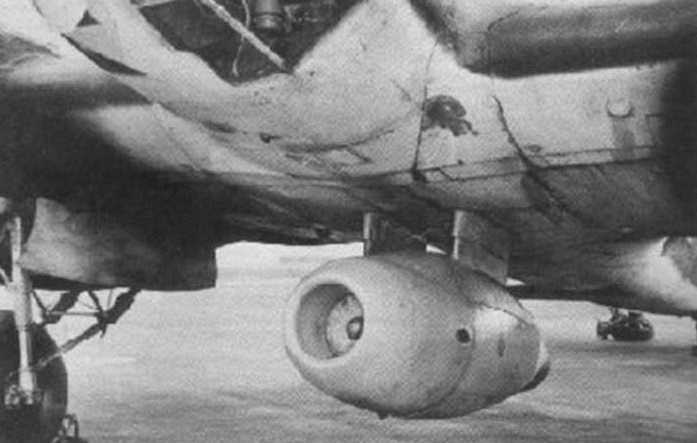
First run in September 1943, prototypes were available in 1944, and tested using a Heinkel He 111 bomber, mounting the engine on the external hardpoints under the fuselage.
Over the next year, practically all German aircraft designers based their projects on the 011. Like the nearly three hundred experimental examples built of the complex Jumo 222 piston engine, the HeS 011 turbojet never entered production, with only 19 prototypes built in total. One of these was mounted in the Messerschmitt Me P.1101 that was taken to the United States, forming the basis of the Bell X-5.
Two museum-preserved examples of the HeS 011 engine still exist in the United States, at the National Museum of the U.S. Air Force in Dayton, Ohio, and at the EAA AirVenture Museum in Oshkosh, Wisconsin.
Type: Turbojet
Length: 3450 mm (11 ft 3¾ in)
Diameter: 875 mm (34½ in)
Dry weight: 950 kg (2,094 lb)
Compressor: Diagonal + three stage axial
Combustors: 16 chambers
Turbine: Two stage axial.
Maximum thrust: 12.01 kN (2,700 lbf) at 10,000 rpm.
Thrust-to-weight ratio: 12.63 N/kg (1.29 lbf/lb)
The Heinkel HeS 40 (HeS – Heinkel Strahltriebwerk) was an experimental constant-volume jet engine designed by Adoph Müller’s team at Heinkel starting some time in 1940 or 41. It was based on the mechanical layout of the HeS 30, but replaced the conventional flame cans with oversized ones including large poppet valves that sealed off the chambers during firing. Constant-volume combustion, similar to the Otto cycle used in most piston engines, is considerably more fuel efficient than the constant-pressure combustion used in a typical jet engine.
The design was based on the HeS 30 not only to make parts more readily available as well as to make direct comparisons between the two easier. The main changes were to reduce the compression ratio of the compressor to about 2:1 (from 2.8:1), and add the new combustion chambers. The new chambers were considerably larger than the originals, forcing a reduction in the number from ten to six burners. The valve stems projected forward into streamlined fairings in the intake area behind the compressor.
The operational cycle of the engine is somewhat similar to a conventional six-cylinder engine. Slightly compressed air, similar to an automobile equipped with a turbocharger, was channeled into the cylinders in turn, closed off with the poppet valves, and then burned. By the time the combustion was complete the pressure in the flame cans would be much higher, although the actual compression ratio is not specified. The hot gas then blew through a turbine to extract power, instead of forcing a piston to move. Although there would be some loss of charge during the burning period, and thus the design would be less efficient than the true Otto cycle, it would nevertheless be somewhat more efficient than a traditional jet engine, at the cost of some complexity.
It appears the HeS 40 was never built, and remained a paper design. Nevertheless, work on the design was ended by 1942, by which point the HeS 30 was making good progress.

