1980: L.K. Heuberger, 10605 Whitehawk, Reno, NV 89508, USA.
LSA builder
1980: L.K. Heuberger, 10605 Whitehawk, Reno, NV 89508, USA.
LSA builder

Industrialist Henry Hettinger constructed this airplane, whose fabric-covered wings were sewn by his wife Mary. Hettinger made flights along the Cohansey River meadows, at the fairgrounds on Fayette Street, Bridgeton, New Jersey, and later outfitted the plane with pontoons. The 40 HP six cylinder engine was built by the Hettinger Engine Company.
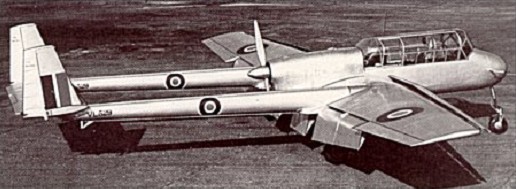
Prototype two-seat air observation post powered by a 179kW de Havilland Gipsy Queen 33 engine mounted as a pusher.
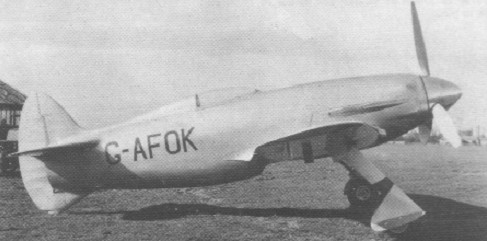
The Heston Type 5 Racer G-AFOK, designed by A.E.Hagg and G.Cornwell, was built at Heston during 1939-40, but crashed there on its maiden flight on June 12, 1940.
On June 12, 1940, the first aircraft for the record attempt, G-AFOK (Fox Oboe King), made its maiden flight at Heston Aerodrome, piloted by Squadron Leader G.L.G. Richmond, Heston Aircraft’s Chief Test Pilot. A heavy bump during the high-speed take-off run, with the canopy off, caused an unexpected early liftoff.
After an abrupt take-off, Richmond conducted a brief test flight with gear extended, but inadequate elevator control and engine overheating forced an emergency landing. Scalded by steam or coolant, he stalled the aircraft at 30 feet, crashing heavily. The undercarriage pierced the wings, and the tail detached. Richmond survived with minor burns.
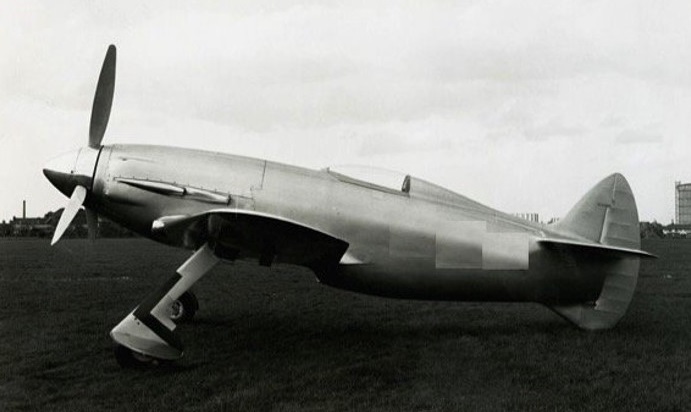
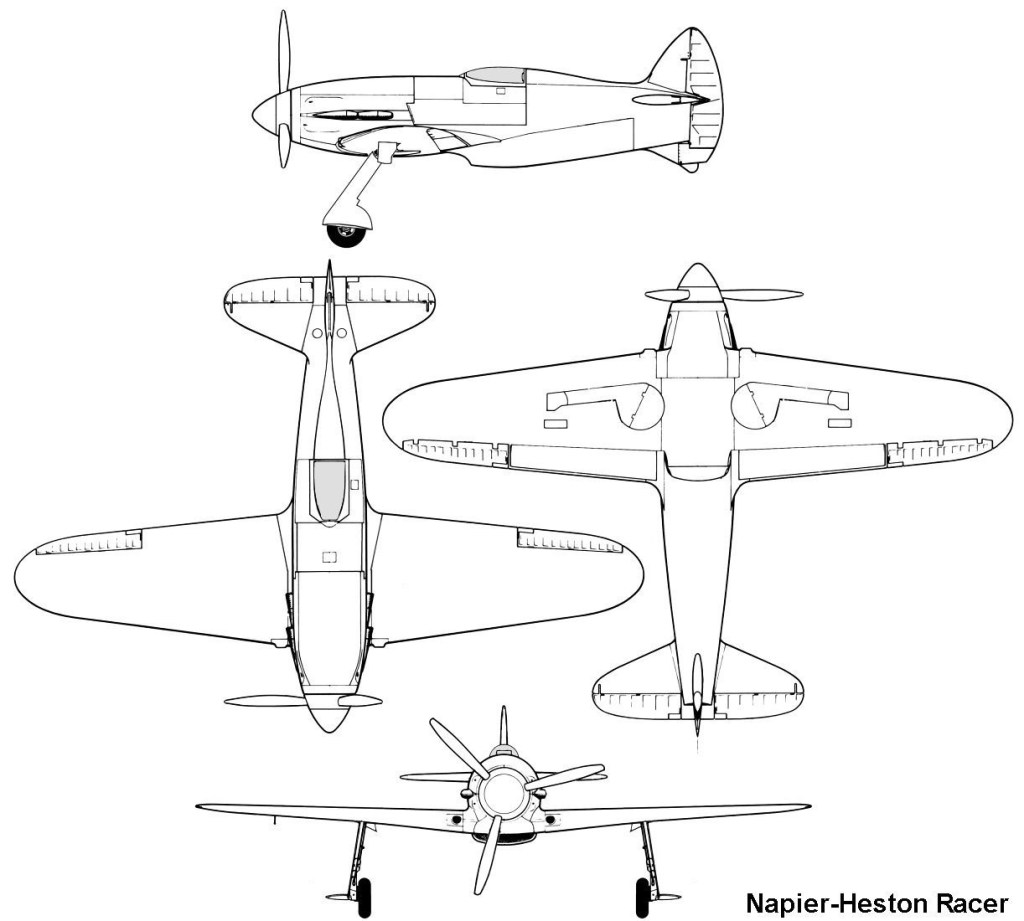
The 2,300 hp Napier Sabre-powered racer was sponsored by Lord Nuffield for a British attempt on the world speed record. A second was never completed.
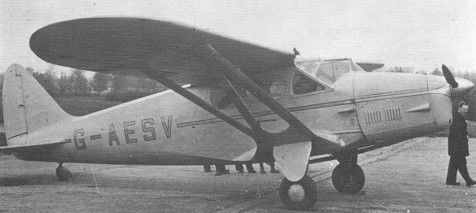
This 1935 five seat training aircraft featured hydraulically operated retractable landing gear. The main wheels retracted into a small stub wing which formed part of the wing bracing struts. The aircraft had a particularly quiet cabin which was also bigger than normal for its type. It was not, however, commercially successful.
The Heston Type 1 Phoenix was a five-seat cabin monoplane, the first on a British high-wing aircraft.
Engine: One 200 hp / 149kW D.H. Gipsy VI
Length: 30.1 ft (9.15 m)
Wing span: 40.3 ft (12.3 m.)
Weight empty: 2,000 lb (900 kg)
Passengers/Cargo: 1 pilot; 4 passengers.
Max. cruise: 135 mph (217 kph)
Ceiling: 20,000 ft (6,000 m) fully loaded
Range: 500 miles (800 km)
In March 1933 Comper Aircraft moved to Hooton to continue building Swifts and to produce the Mouse, Streak and Kite one offs. When the company folded in March 1934, Heston Aircraft Company Ltd was formed from its assets.
Heston Aircraft Co, Hounslow, Great Britain.
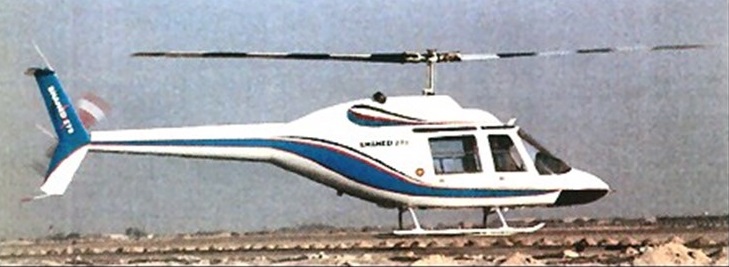
Three prototypes, first of which made maiden flight late 1997 or early 1998; most-flown prototype had accumulated 200 hours by March 2001. Public debut late 2002 as HESA 278, having previously been reported as Panha 287.
A fonr-seater; intended for dual military/civil use, though designed primarily to meet military requirements. Designed entirely in Iran, according to manufacturer, although some sources report use of locally made airframe and dynamic components of Bell 206 JelRanger.
Power is by a single turboshaft. Prototypes have evaluated Rolls-Royce 250 and equivalents from Turbomeca and a Russian supplier, but final selection apparently not made by late 2002. Fuel capacity 287 litres.
Shahed 278
Max. take-off weight: 1451kg
Empty weight: 682kg
Max. level speed: 240km/h
Service ceiling: 6400m
Hovering ceiling IGE: 6200m
Hovering ceiling OGE: 4800m
Range: 340km
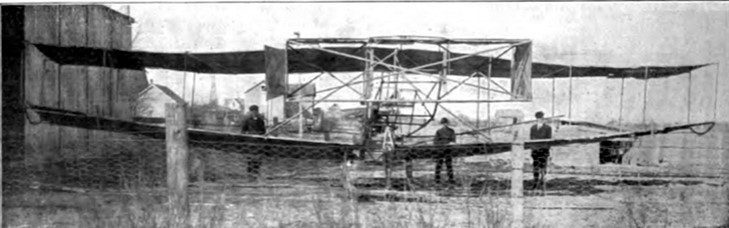
The second pusher biplane design built by the Herzog brothers of Harvard, Nebraska, USA, in 1909. It had a span of 48 ft, with a characteristic wavy W-shaped top wing and small horizontal stabilizing surfaces at the tips of the lower wings. The apparently tail-less plane had biplane elevators and rudders at the front, a three-wheel undercarriage and an aircooled engine of 21 hp of unknown make.
In response to a contest announced in Paris on a “flying bicycle” capable of at least 10m-long flight, Władysław Herzig from Poland designed and built such vehicle in 1913 which is said to make successful “jumps” of at least several meters.
Financed by the Royal Aeronautical Society: a two-man machine Hertfordshire Pedal Aeronauts’ Toucan (Toucan fly better than one). The Toucan was the first two man craft to fly; in December 1972 it made a flight of 613 m (670 yards).

