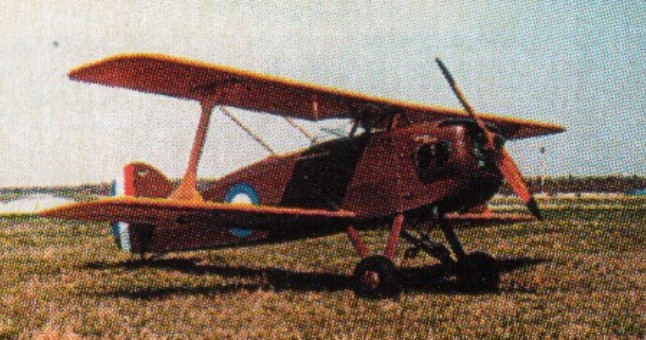
Don Wolf, a technical engineer at Fairchild’s Engine Division on many classified military projects and flew many different the past half century, then finally got around to designing a replica of the World War I wood-and-wire fighter types he loved as a kid. Rather than metal, he chose to build the framework of steel fittings of chrome-moly as well as tube structures for cabine, landing gear, etc. Wolf spent a year of spare time detailing Boredom Fighter after running stress analyses. First flying on 30 August 1979, the takeoff roll of 150 is spectacular, as well as its fast climb and excellent economy cruise of 100 mpg burning 3 gph of low-octane fuel.
W-II Engine: Continental, 65 hp Wing span: 20 ft Wing area: 100 sq.ft Length: 15.7 ft Height: 6ft Weight empty: 473 lbs Gross: 770 lbs Fuel cap: 15 USG Speed max: 120 mph Cruise: 110 mph Range: 440 sm Stall: 42 mph ROC: 1200 fpm Take-off dist: 150 ft Landing dist: 350 ft Service ceiling: 16,000 ft HP range: 65-75 Seats: 1 Landing gear: tailwheel
Markets plans for the W-11 Boredom Fighter single-seat biplane styled as a First World War fighter (first flown 1979). 1996: 17 Chestnut St, Huntington, NY 11743, USA.
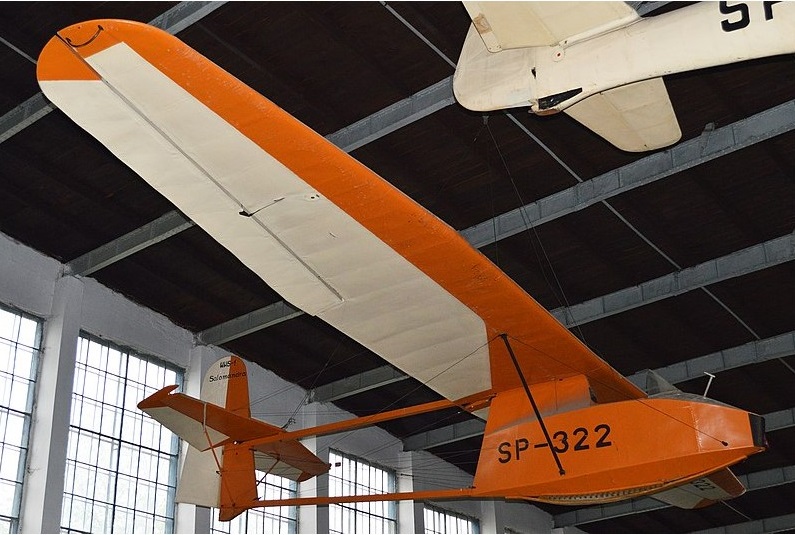
IS-A Salamandra in the Polish Aviation Museum in Kraków
As the head of the W.W.S. (Wojskowe Warsztaty Szybowcowe – Military Glider Workshops), Wacław Czerwiński designed the W.W.S. 1 Salamandra single-seat training glider during the mid-1930s. Built in Poland from 1936, the excellent handling properties, ideal for the solo training methods then in use, led to mass production in various workshops throughout Poland.
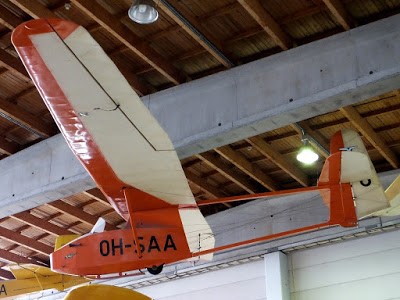
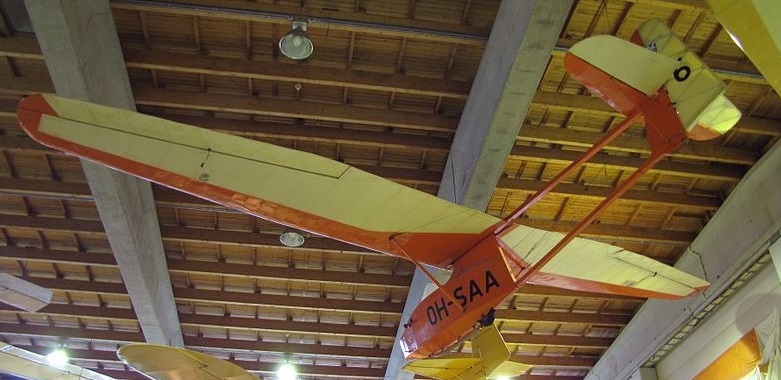
W.W.S.1 Salamandra in Finnish Aviation Museum
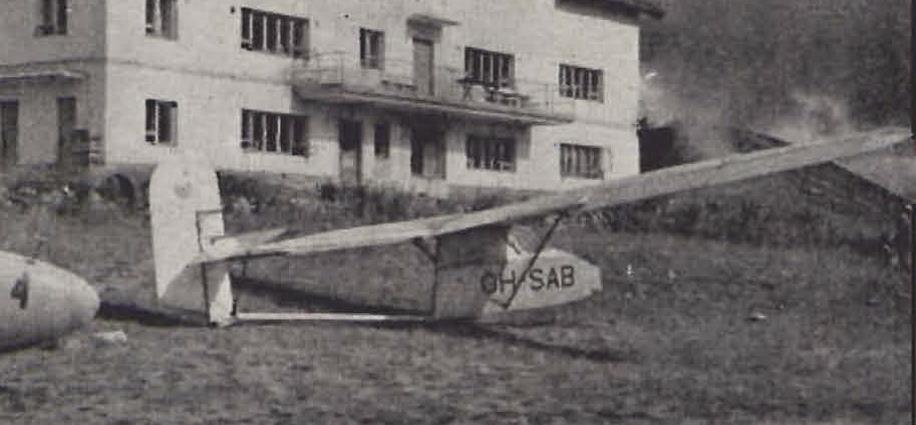
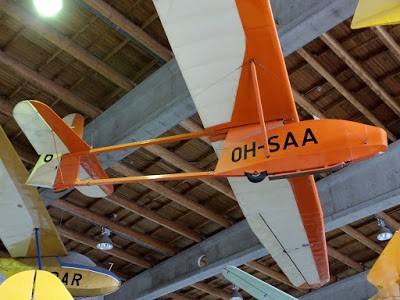
Construction of the Salamandra was entirely of wood with fabric covering on wings and tail unit. The fuselage consisted of a plywood covered nacelle for the single seat cockpit, with a wire-braced open strut rear fuselage supporting the cruciform style tail-unit. The high mounted wire braced wings were supported by struts from the bottom of the fuselage to approx 1/5 span. Wooden skids under the tail and fuselage nacelle comprised the undercarriage.
W.W.S.1 Salamandra in Finnish Aviation Museum
First flying in 1936, the most notable feat by a W.W.S. 1 Salamandra, in Poland, was an 11hr 15min flight by Buraka, between Brasław and Wilno, on 22 Aug 1938. Another marathon flight of 23 hours took place in Romania with a licence built version piloted by G. Braescu.
Before the war the WWS 1 was exported to Yugoslavia, Finland and Estonia.
During World War II, almost all Polish gliders and their technical documentation were destroyed or lost. After the war there was only one Salamandra left, kept hidden during the occupation, and it was decided to resume its production. Due to lack of blueprints, the design was reverse engineered in the IS (Instytut Szybownictwa – Gliding Institute). Five were built in March 1947 by the IS workshops as the first gliders in Poland after the war.
In 1948 a serial production resumed as IS-A Salamandra 48 in workshops in Jeżów. It was followed by improved variants Salamandra 49 and 53, produced also by other state-owned aviation factories throughout Poland, among others WSK Okęcie. After the war, 223 IS-A were built for Polish aero clubs, where they were used until 1962.
W.W.S.1 Salamandra OH-SAA
The later versions introduced airbrakes in the wings (Salamandra 49) and a windscreen (Salamandra 53). In Salamandra 53 there was introduced a bigger horizontal stabilizer, next retrofitted to earlier versions.
On 29 December 1956 there flew an export version Salamandra 53A – around 50 were exported to China, and a licence production started there. In China there was also developed a primary trainer two-seater variant, without a cockpit. In Yugoslavia there was built a similar glider Čavka, and in Finland – PIK-5. After migrating to Canada as a refugee, Czerwiński designed a modified Salamandra as the Czerwiński Sparrow, as well as an improved Sparrow designated Czerwiński Robin.
In 2017 one Salamandra was built in the Gliwice Aero Club, to original plans.
Variants:
W.W.S. 1 Salamandra Production aircraft from 1936. Wingspan: 12.48 m (40 ft 11 in) Wing area: 16.9 m2 (182 ft2) Wing profile: Göttingen-378 Aspect ratio: 9.2:1 Length: 6.48 m (21 ft 3 in) Height: 2.3 m (7 ft 6 in) Empty weight: 110 kg / 243 lb Gross weight: 190 kg / 418 lb Maximum speed: 150 km/h (93 mph) Maximum glide ratio: 15.2:1 @ 56 km/h (30 kts / 35 mph) Rate of sink: 0.81 m/s (159.5 ft/min)
IS-A Salamandra Reconstructed postwar version from 1947 5 built (SP-320 – SP-324). Empty weight: 140kg / 309lb Gross weight: 225kg / 496lb
IS-A Salamandra 48 1948 version 775 built (first – SP-580)
IS-A Salamandra 49 1949 version With strengthened construction, equipped with air brakes 93 built (first – SP-825)
IS-A Salamandra 53 1953 version With enlarged horizontal stabilizer, windscreen and other improvements 50 built. (first – SP-1224)
IS-A Salamandra 53A 1956 export version for China Around 50 built plus licence production.
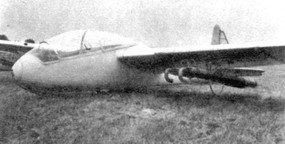
Stanislav Wojcicki designed in 1956 a pulse-jet giving about 10 kg of thrust. Four of these pulso were installed on a flying test bed, a two-seater glider Bocian. They were installed in pairs under the wings. In 1955, S.Wojcicki had also developed more powerful versions of 20, 40 and 70 Kgp.
The Bocian included an accelerometer for measuring horizontal accelerations.
The pulse was tested in two stages: first a 10 kg pulse, that start could only be performed in flight, then a group of four 8 kg pulse, allowing the autonomous takeoff of the Bocian.
These pulses had a consumption of 2 kg / kgf / h, a weight of 6 kg and a length of 2.80 m.
Wogen, when at age 98, recalled buying plans from a newspaper advertisement, built the biplane in 1931, and registered it as N12000 c/n 1, but did not know its fate.
A license was issued on 16 June 1931, cancelled on expiration on 1 April 1935.

 All Aero