Wolfmüller, Alois

Alois Wolfmüller was born in Landsberg am Lech. Together with Heinrich and Wilhelm Hildebrand he developed the 1894 Hildebrand & Wolfmüller motorcycle, the first in the world to be produced in series.

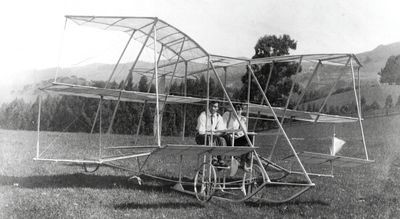
Wolfmüller’s “Schlagflügelapparatur”, or “Standflugmaschine” ornithopter, dated from December 1901.

Wolff Sky-Wolff

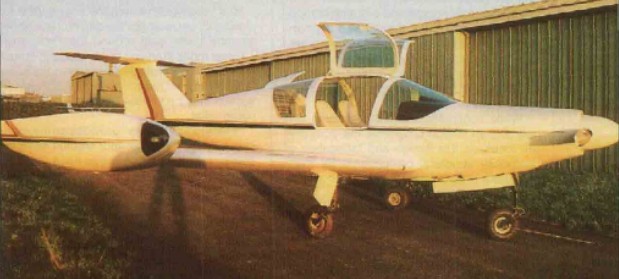
Paul Wolff’s 4 place, all composite Sky-Wolff was intended to make Oshkosh 1988, but was not flying in time, later, flying from Findel Airport in Luxembourg.

Aimed at a US25,000 kit price, The Sky-Wolff will have removeable wings, an electric/hydraulic retractable gear, and wet wing with additional tip tanks. The wing is equipped wih flaps and drooping ailerons.

Fuel capacity: 169.3 USG
Range: 4200 miles
Engine: Lycoming O-320
Cruise 75%: 186 kt / 214 mph
Stall: 50 mph

Wölfert Deutschland

The invention of Dr. Karl Wölfert; an 800 cubic meter capacity non-rigid dirigible, driven by an internal combustion Daimler gasoline motor of 8 hp. Wölfert made ascensions on “Deutschland” at Tempelhof-Berlin on August 28 and 29, 1896 and on March 6, 1897, but did not have a lot of success navigating his machine. On June 12, 1897, an exhibition of “Deutschland” in front of government dignitaries and military men ended disastrously. Carrying Dr. Wölfert and his mechanic Robert Knabe, the airship rose to 200 meters and was suddenly engulfed in flame, dashing both men to their death. The airship was the first to have an accident involving the combustion of the hydrogen lift gas resulting in fatalities.

Wolfe Aviation WAT

Single seat single engined flex wing aircraft with weight shift control. Rogallo wing. Pilot suspended below wing in trike unit, using bar to control pitch and yaw/roll by altering relative positions of trike unit and wing. Undercarriage has three wheels in tricycle formation. Push right go left nosewheel steering independent from yaw control. Aluminium tube trike unit, with optional pod. Engine mounted below wing driving pusher propeller.
The WAT the title stands for Wolfe Aviation Trike. In concept it is simple enough a monopole trike using a 2 inch (5cm) square section aluminium pole, adjustable in height to suit various Rogallo wings. Wolfe offers a variety of engines, with or without reduction drive, various seat options and also a selection of undercarriage designs. One of these undercarriages is unique as far as trikes are concerned in that it has retract¬able main wheels which fold behind the power pack to reduce drag. The WAT is also available with a double nosewheel. Another drag reducing option is a fabric pod.
To make the WAT as versatile as possible, the hang point uses a clamping arrangement, the idea being that the glider can be attached without drilling holes through the keel tube.
Standard engine is the Cuyuna 215 cc unit with reduction drive but among the engine options is a Cuyuna ULII-02. Price of the trike unit with 215 cc engine and reduction drive was $1690.

Engine: Cuyuna 215, 22hp at 6000rpm
Propeller diameter and pitch 50 x 20 inch, 1.27 x 0.51 m
V belt reduction, ratio 2.0/1
Max static thrust 160 lb, 73kg
Fuel capacity 2.0 US gal, 1.7 Imp gal, 7.6 litre
Length overall (Trike unit only) 5.0ft, 1.52m
Height overall (Trike unit only) 7.0 ft, 2.13 m
Empty weight (Trike unit only) 110 lb, 50kg
Wolf-Becher Triplane Glider

Triplane duo-seat glider designed and built in 1909 by Carl Wolf and August Becher, variously described as being from Oakland, California or Fitchberg, California. The aircraft is said to have made flights of up to 200 feet when launched from a specially built inclined ramp, 50 feet in height.

Wingspan: 19′ 8″
Wing area: 220 sq ft