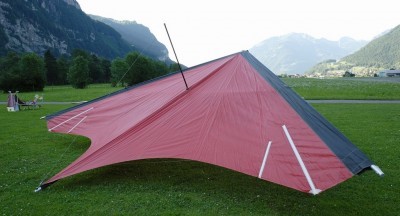
A 1977 hang glider.
A 1977 hang glider.
A 1975 hang glider.
Wing area: 16.4 m²
Minimum pilot weight: 55 kg
Maximum pilot weight: 70 kg
1974
Icarus Aircraft
37 So. Euclid/Suite 5
Pasadena
California
USA
Hang glider builder

The 2004 Spirit-L for advanced pilots has sensitive and neutral handling, very light weight (with the additionally added carbon tubes), impressive glide ratio and still easy to land.
Spirit-L
Wing area: 13.7 m²
Minimum speed: 29 km/h
Maximum speed: 90 km/h

The circa 1998 Imagine hang glider has a kingpost but no variable billow facility.

Imagine
Wing area: 14.8 m²
Wing span: 10.6 m
Aspect ratio: 7.73
Hang glider weight: 32 kg
Minimum pilot weight: 50 kg
Maximum pilot weight: 87 kg
Minimum speed: 32 km/h
Maximum speed: 100 km/h
Packed length: 5.5 m
Packed length short: 4.2 m
Number of battens: 21
Nose angle: 127°
Certification: DHV
Price (1998) 7850 DM

Hang glider circa 1998.
Funflyer
Wing area: 15.6 m²
Wing span: 9.9 m
Aspect ratio: 6.28
Hang glider weight: 25 kg
Minimum pilot weight: 50 kg
Maximum pilot weight: 87 kg
Minimum speed: 30 km/h
Maximum speed: 80 km/h
Nose angle: 120°
Price (1998) 4350 DM
Certification: DHV
1998: Schlesierstr 20, D-83071 Stephanskirchen, GERMANY
Proprieter, Thomas Pellici.
Hang glider builder
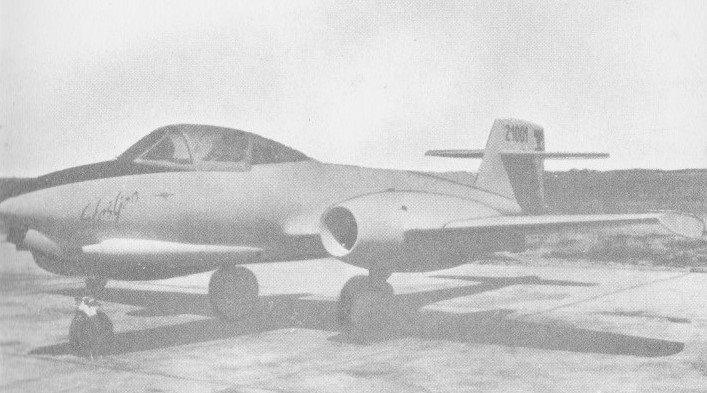
The J-451MM Stršljen is a development of the single seat 451M Zolja research aircraft, which was the first jet aircraft designed in Yugoslavia.
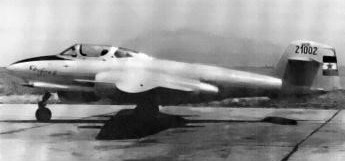
The Ikarus J-451MM Stršljen (“Hornet”) was developed in 1956 as a planned close support variant of the S-451M Zolja and test flown in 1957 by the Aeronautical Testing Centre. The design featured a tricycle undercarriage as opposed to the early tail dragger designs, more powerful Turbomeca Marboré turbojet engines and armament of 2 x 20mm Hispano-Suiza 404A cannons under the fuselage along with underwing rockets.
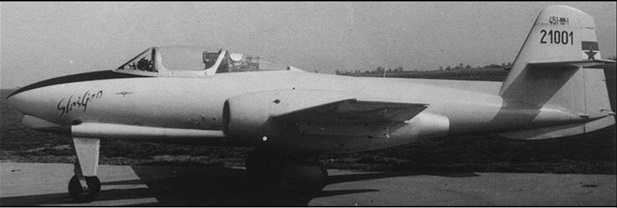
The airframe has low-set wings without sweepback, and un-swept tail surfaces, with the tailplane mounted part-way up the fin. The ailerons, elevators and rudder are conventional. The wingtips are turned down and a stabilising fin is under the nose. The outer wings fold upward for stowage and access to the engines.
The tricycle undercarriage has single wheels on each unit. The main wheels retract inward and nosewheel retracts forward.
Two cannon are located in fairings under the fuselage and underwing attachments hold up to four air-to-ground rockets.
Engines: 2 x Turbomeca Marbore, 880 lb
Wingspan: 25 ft 10.5 in
Wing area: 121.5 sq.ft
Length: 26 ft 3 in
Height: 5 ft 6 in
Empty weight: 5370 lb
Max speed: 497 mph at SL
Service ceiling: 39,600 ft
Range: 470 mi
Armament: 2 x 20 mm Hispano cannon
Hardpoints: 4
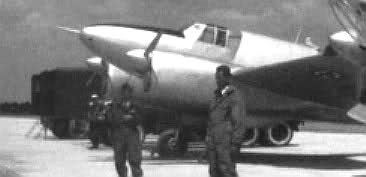
Originally designed before the World War II as a Zmaj R-1 the Ikarus 215 (Икарус 215 in Serbian) twin-engine plane, was a Yugoslav light bomber and a training aircraft. It was designed by Dusan Stankov and built at the Ikarus factory in Zemun-Belgrade.
The aircraft was of mixed construction, twin engine, with a crew of two to four. The main landing gear wheels retracted rearwards into the motor housing.
The prototype first flew in 1949. The 215 did not enter production. The prototype was used for training.
Engines: 2 × Ranger, SGV-770C-1, 387.7 kW (519.9 hp)
Propellers: 2-blade
Wingspan: 16.14 m (52 ft 11 in)
Wing area: 29.80 sq.m (320.8 sq ft)
Length: 13.35 m (43 ft 10 in)
Height: 4.03 m (13 ft 3 in)
Empty weight: 4,297 kg (9,473 lb)
Gross weight: 4,685 kg (10,329 lb)
Range: 1,120 km (696 mi; 605 nmi)
Service ceiling: 8,150 m (26,739 ft)
Crew: 2-4
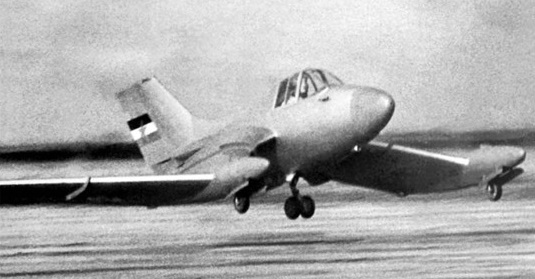
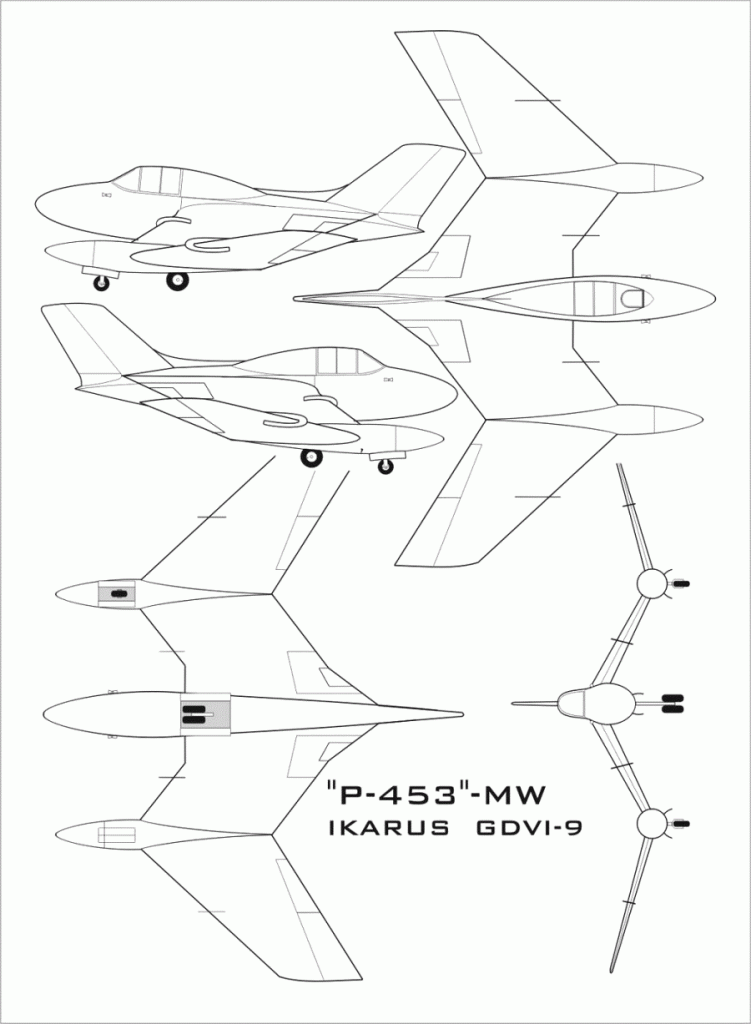
The Ikarus 453 (P-453-MW) was an aircraft designed in 1952. It featured reverse gull wings to accommodate two Turbomeca Marbore II turbojet engines in the nacelles on the wing. In 1952 the first flight was conducted without engines fitted (in glide mode) but it crashed and the project was cancelled (the pilot survived the incident).