The 1910 Illinschulz was designed and built by Illinschulz in France.
Span: 26’3″
Length: 22’11”
Weight: 770 lb empty
The 1910 Illinschulz was designed and built by Illinschulz in France.
Span: 26’3″
Length: 22’11”
Weight: 770 lb empty
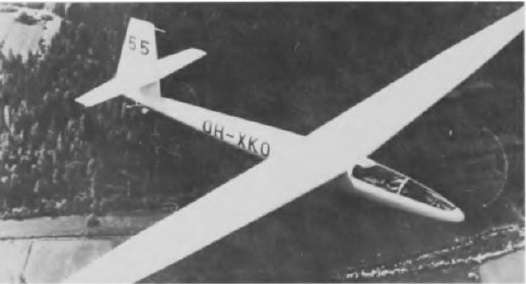
This Finnish high performance single-seater was designed by Mr Tuomo Tervo and Mr Jorma Jalkanen, whose earlier designs included the PIK-16C Vasama and Havukka sailplanes. Design work on the Kotka (or Eagle) began in December 1964 and the prototype was built by members of the Aeroclub Vasama or IKV, in association with K.K. Lehtovaara O/Y, construction starting in mid-1965; the Kotka made its first flight in May 1966; the type was later going to be put into series production by llmailukerho Vasama, but only the prototype was built.
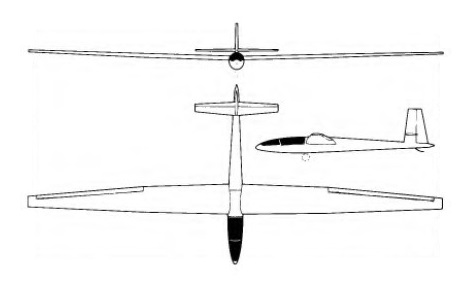
The Kotka is of conventional wooden construction with some use made of plastic foam and glassfibre; the cantilever shoulder wing is a boxtype single-spar wooden structure from almost the leading edge to the 55% chord line and entirely plywood-skinned, with a small number of wooden or plastic foam ribs at the trailing edge, and a glassfibre leading edge. Both the plain ailerons and the flaps are of plywood covered plastic foam construction. There are two pairs of light alloy air brakes in each wing, on the upper and lower surfaces. The wooden fuselage is glassfibre-covered from the nose to the wing trailing edge, and plywood-skinned aft of the wing. Some plastic foam is employed in the wooden tail unit, the variable incidence tailplane and fin being plywood covered and the rudder and elevators fabric covered. There is a mechanically retractable monowheel with drum-type brakes and also a detachable tailwheel for ease of ground handling. The pilot is seated in a semi-reclining and adjustable seat under a long, flush-fitting cockpit canopy which, together with the tall angular fin, gives the Kotka a distinctive appearance. The instrumentation included radio, an oxygen system, a central electric control panel and a landing gear warning system being provided.
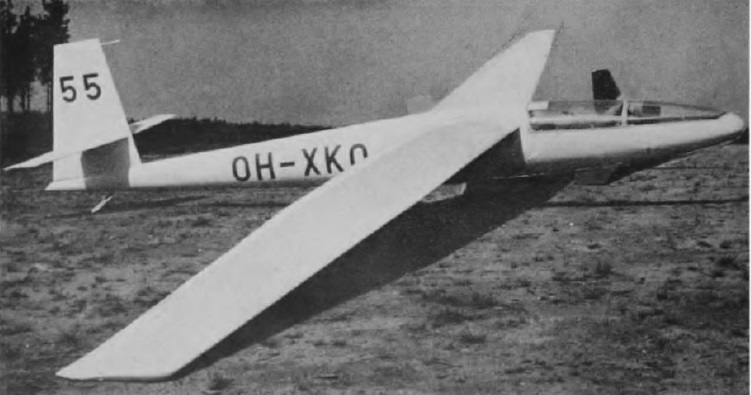
On 6 May 1968 Kotka flown by Seppo Hamalainen set up a Scandinavian goal-and-return record distance of 374 miles.
IKV-3 Kotka
Span: 18.2 m / 59 ft 8.5 in
Length: 7.75 m / 25ft 5 in
Height: 2.0 m / 6ft 6.5 in
Wing area: 17.0 sq.m / 183 sqft
Aspect ratio: 19.0
Wing section: Wortmann FX-62-K153/FX-60-126
Empty weight: 340 kg / 749 lb
Max weight: 450 kg / 992 lb
Water ballast: None
Max wing loading: 26.47 kg/sq.m / 5.42 lb/sq ft
Max speed: 155 mph / 135 kt / 250 km/h (in smooth air)
Max rough air speed: 93 kt / 172 km/h
Stalling speed: 28 kt / 52 km/h
Min sinking speed: 1.74 ft/sec / 0.53 m/sec at 43.5 mph / 37.5 kt / 70 km/h
Best glide ratio: 38:1 at 62 mph / 54 kt / 100 km/h
Germany
Offers the Eurofox two-seat, STOL, very light, braced high-wing cabin monoplane (certificated 1996), which is available in assembled or kit forms. Variant of the Czech Aerotechnik Aeropro/Evektor Fox.
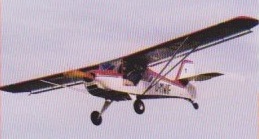
Inspired by the Kitfox and Avid Flyer, the Eurofox also uses a welded steel spaceframe fuselage, tubular spars and plywood ribs, all covered in Dacron.
Engine: Rotax 912, 80 hp
Wing span: 9.2 m
Wing area: 11.5 sq.m
MAUW: 450 kg
Empty weight: 250 kg
Fuel capacity: 58 lt
Max speed: 180 kph
Cruise speed: 150 kph
Minimum speed: 60 kph
Climb rate: 5 m/s
Fuel consumption: 10 lt/hr
Certification: VZ
Seats: 2
Price (1998): 63 240 DM
1998:
Mennwanger Straβe 3
D 88682 Salem
Germany
LSA builder
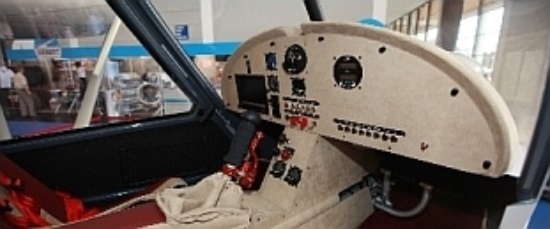
Designed and produced by Comco Ikarus, the C52 was introduced at the Friedrichshafen in 2011, supplied as a ready to fly aircraft.
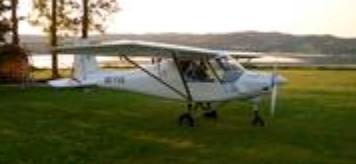
The tube and fabric C42 features an unstressed outer skin.
Known as Aerosport Ltd Ikarus C42 in the US, the Ikarus C42 is a popular school plane. More than 650 airplanes have been delivered worldwide.
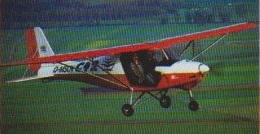
A newer model is the Ikarus C42B (C-42B). C42B 2009 Price: 40000 EURO
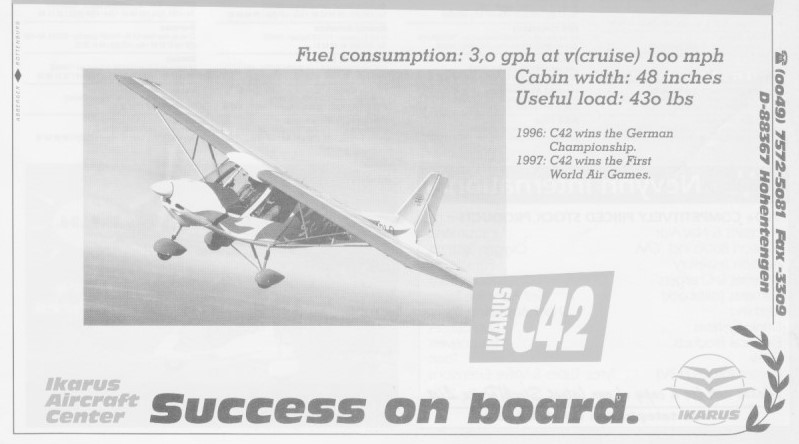
C-42
Engine: Rotax 912, 80 hp
Wing span: 9.9 m
Wing area: 13.2 sq.m
MAUW: 450 kg
Empty weight: 230 kg
Fuel capacity: 50 lt
Max speed: 175 kph
Cruise speed: 150 kph
Minimum speed: 65 kph
Climb rate: 5 m/s
Seats: 2
Fuel consumption: 11 lt/hr
C-42B
Stall: 35 kt / 40 mph / 65 kmh
Cruise: 86 kt / 99 mph / 160 kmh
VNE: 103 kt / 118 mph / 190 kmh
Empty Weight: 259 kg / 572 lbs
MTOW Weight: 450 kg / 992 lbs
Climb Ratio: 1000 ft/min / 5 m/s
Glide Ratio: 1:11 @ 70kn
Take-off distance (50ft obstacle): 1050 ft / 320 m
Landing distance (50ft obstacle): 770 ft / 234 m
C42FB
In 1976, began making hang gliders, of which under the name Ikarus over 2000 were built.
1983: Ikarus Comco, Tannenweg 20, D 7031 Aidl¬ingen, West Germany.
LSA builder

A 1981 hang glider.
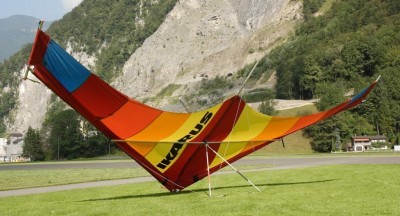
A 1977 hang glider.

