1998:
Via Flli.Cervi 3
I-42025 Cariago Reggi Emilia
Italy
JPX Italia was the importer of the French JPX engine and began building their own chassis and offering it with engines of other manufacturers.
Paramotor builder
1998:
Via Flli.Cervi 3
I-42025 Cariago Reggi Emilia
Italy
JPX Italia was the importer of the French JPX engine and began building their own chassis and offering it with engines of other manufacturers.
Paramotor builder
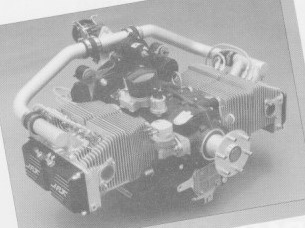
The 85 hp 4TX75/A engine is JAR certified and came with a 2 years or 1000 hr warranty. The magnetos fitted were Bendix.
4T X 75A
Cycle: 4 stroke
No cylinders: Flat 4
Bore: 95 mm
Stroke: 82 mm
Compression: 8.7
Displacement: 2325 cc
Cooling: Air
Ignition: Double magneto
Reduction: optional
Dimension: 755 x 680 x 520 mm
Weight: 78 kg
Max pwr: 85 hp at 3000 rpm
Max torque: 202 at 2900 rpm
Fuel consumption: 190/220 G/hp/hr
Price 1998: 70 940 Fttc
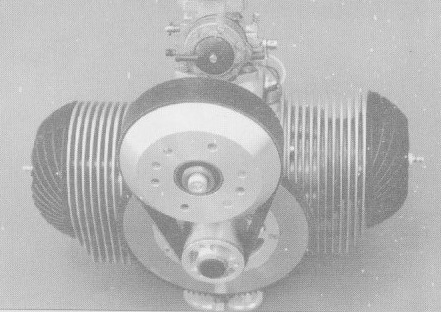
D 320 R
Cycle: 2 stroke
No cylinders: 2 opposed
Bore: 68 mm
Stroke: 44 mm
Displacement: 320 cc
Cooling: Air
Ignition: Electronic
Reduction: Poly-V belt 2.38/1
Weight: 9.5 kg
Max pwr: 18 hp at 6500 rpm
Price 1998: 18 452 Fttc

The JPX PUL 425, also called simply the JPX 425, is a French twin-cylinder, horizontally opposed, two-stroke aircraft engine.
The engine was produced only until the company went out of business in the early 1990s. The company was re-formed but the engine remains out of production and unsupported for parts.
The engine has two cylinders in a horizontally-opposed configuration, with cooling fins on the cylinders. The single ignition system uses a coil and points. Fuel is metered by a single Tillotson butterfly-type carburetor. Starting is by a recoil starter system with electric start as an option.
The 425 has a redline rpm of 4600 and does not use a reduction drive. Its weight of just 38 lb (17 kg) gives the engine a high power-to-weight ratio.
Applications:
Latécoère 225
Lazair 2
Lazair SS
Lazair Series III
Zenair Zipper
Specifications
Type: twin-cylinder, two-stroke engine
Displacement: 424 cc (25.87 cu inches)
Dry weight: 38 lb (17 kg)
Fuel system: Tillotson butterfly-type carburetor
Oil system: premixed oil and fuel
Cooling system: air cooled
Power output: 26 hp (19 kW) at 4600 rpm
1998:
ZI Nord
F72320 Vibraye
France
Light sport engine builder
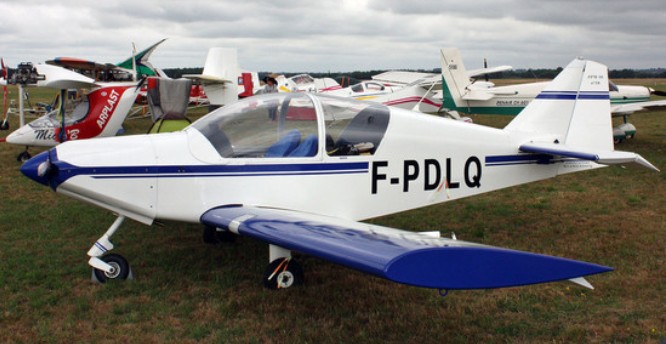
The JPM 01 Médoc is a French amateur-built aircraft that was designed by Jean-Pierre Marie in 1977 and produced by Les Avions Jean-Pierre Marie (JPM) of Le Mesnil-Esnard. The aircraft is supplied as plans for amateur construction, available in 2012 from Les Avions Jean-Pierre Marie (JPM).
The aircraft is named for the French community of Médoc.
The Médoc features a cantilever low-wing a two-seats-in-side-by-side configuration enclosed cockpit under a bubble canopy, fixed tricycle landing gear and a single engine in tractor configuration.
The aircraft is made from wood with its flying surfaces covered in doped aircraft fabric. Its 7.50 m (24.6 ft) span wing has an area of 9.30 sq.m (100.1 sq ft) and mounts flaps. Standard engines recommended are 60 kW (80 hp)-class Volkswagen air-cooled engines, including the 60 kW (80 hp) Limbach L2000 four-stroke powerplant.
The first example was completed by Pierre-Claude Guillem, and registered F-PGMB. It first flew on September 8, 1987. Originally fitted with a 65 hp JPX 4T-60A engine, it later received an 80 hp Limbach L2000 and the aircraft was winner of the 1988 SFACT Trophy for best multi place design. The JPM-01 built by the designer himself was first flown in August 1993, registered as F-PJPM.
A diesel engine powered version was designated JPM-01 Médoc Provence and the first example was completed by Didier Davenna in 2005. He had it registered as F-PDVN under the designation JPM-01 DDI. By mid-2012 at least fourteen Médocs has been built.
Almost forty years after its introduction the aircraft was redesigned and lightened, gaining slotted flaps to reduce stall speed.
JPM 01 Médoc / JPM-01 Tanagra
Engine: 1 × Limbach L2000, 60 kW (80 hp)
Length: 6 m (19 ft 8 in)
Wingspan: 7.50 m (24 ft 7 in)
Wing area: 9.30 sq.m (100.1 sq ft)
Empty weight: 286 kg (631 lb)
Gross weight: 496 kg (1,093 lb)
Fuel capacity: 60 litres (13 imp gal; 16 US gal)
Maximum speed: 210 km/h (130 mph; 113 kn)
Cruising speed: 175 km/h (109 mph; 94 kn)
Stall speed: 70 km/h (43 mph; 38 kn)
Never exceed speed: 247 km/h (153 mph; 133 kn)
Range: 700 km (435 mi; 378 nmi) with no reserve
Endurance: 4 hours plus 0.5 hour reserve
Service ceiling: 4,100 m (13,451 ft)
g limits: +3.5/–1.5
Rate of climb: 4 m/s (790 ft/min)
Wing loading: 53.3 kg/m2 (10.9 lb/sq ft)
Crew: one
Capacity: one passenger
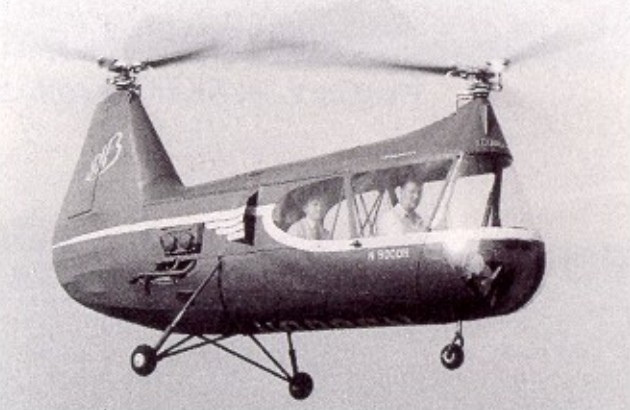
Development began in 1946 with the Helicopter Engineering and Research Corporation headed by D.K. Jovanovich and F. Kozloski, where a small 2-seat prototype (N9000H) was built with the designation JOV-3. This aircraft, powered by a 125hp Lycoming O-290, was flown successfully in 1948. It had 3-blade rotors of 5.64m diameter, a gross weight of 618kg, a maximum speed of 161km/h and a range of 221km.
The JOV-3 Tandem rotor machine was powered by a 100hp Franklin engine. It had a neat fuselage of steel tube covered with aluminium and fabric, with a tricycle undercarriage and a forward cockpit for two occupants seated in tandem. The rear pylon allowed the rear rotor to turn on a higher plane than the forward rotor so that the arcs could overlap safely.
In 1949 Helicopter Division of McCulloch Motors Corporation appointed as chief designer D. K. Jovanovich, formerly of Helicopter Engineering and Research Corporation, who developed his JOV-3 as McCulloch MC-4 tandem rotor two-seat helicopter, first flown Los Angeles March 20, 1951.
The Helicopter Engineering Research Corp was formed in 1947 by D.K. Jovanovich and F.J. Kozloski who were former employees of the Piasecki Helicopter Corp. Their first design, the two-seat tandem rotor Jov-3, flew in 1947. The company was renamed J.O.V. Helicopters in 1948. The design rights were sold to McCulloch Motors in the same year for their new Helicopter Division, with Jovanovich as Chief Engineer.
The Aircraft Division of McCulloch Motors Corporation developed a slightly larger model, the MC-4C. Jovair Corporation was formed some years later and took the design a stage further, resulting in the Sedan 4E (certificated 1963), of which limited production began in 1965. In June 1962 Jovair flew the prototype J-2 two-seat light autogyro; both programs were taken over 1969-1970 by McCulloch Aircraft Corporation.
Jovanovich and Kozloski left McCulloch when the Airplane Division was closed, and formed Jovair Corp in 1957 to continue their work on helicopters.
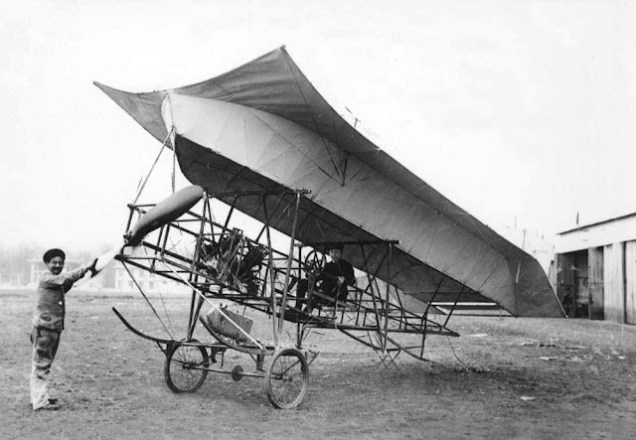
Henri Jourdan 1911

The Frenchman Jourdan tested during 1910-1912 at Juvisy (France) various versions of his aircraft in different forms. All his machines were characterized by a big central tube (‘conical barrel’). The engine with a tractor propeller was mounted before (or at first in) the barrel, to push air in the barrel. The idea might be to push the air through the barrel and fly. The machines had no model registration to differentiate them.
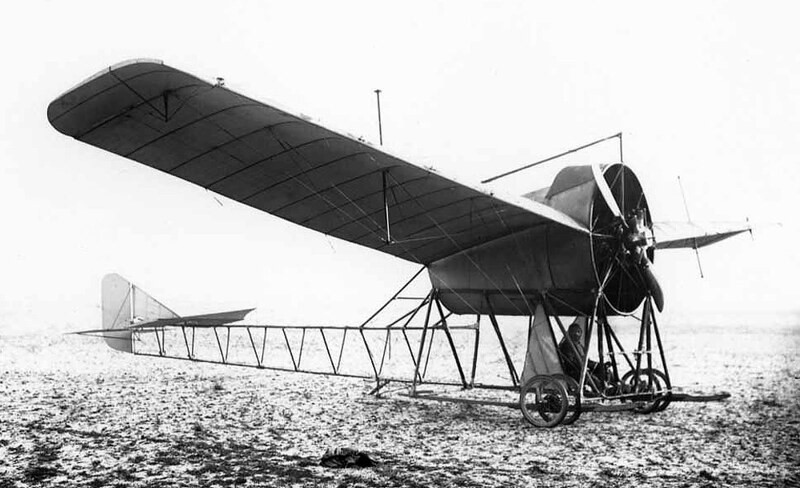
Possibly the Jourdan No.1 from Spring 1911 had a simple full rounded cone barrel in the front, then triangle elevator at the rear, and the wings have ailerons. The original machine giving the clearest view of the ideas of Jourdan. A very big barrel with the engine inside and propeller just as long as the diameter of the barrel. The shrouded propeller was patented December 30, 1910. Shoulder wings with wing warping. Machine did not fly after months of testing during 1910.
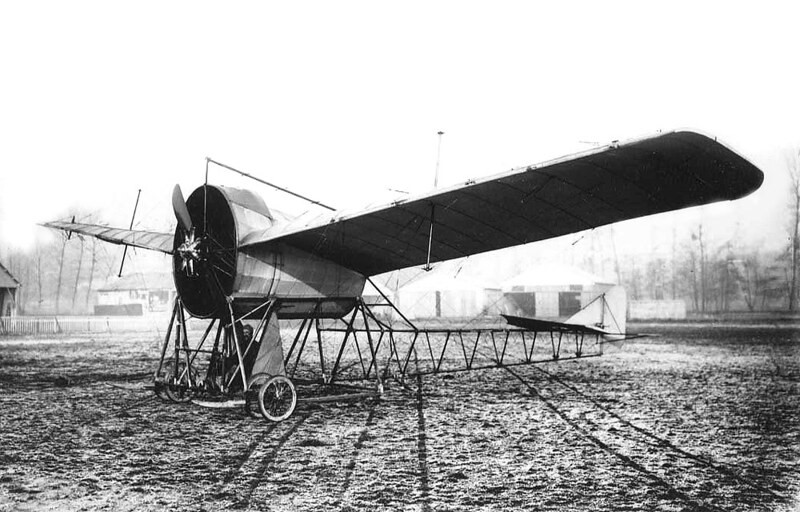
The Machine-2 of Spring 1911was a complete redesign, much smaller barrel, with the propeller before the barrel. Pilot could sit comfortably under the barrel seated within the massive undercarriage. This machine was (also) continually modified. At first it was fitted with wing warping, but after modification it was fitted with ailerons. As the machine was continuously modified there can be seen a sort of side board at the undercarriage, maybe to shield the pilot from the wind.
Machine was reported in the German press [Flugsport February 1911] and in the French press [L’Aérophile]. The machine was extensively tested, but no flight occurred.
The third machine of Spring 1912, was again a complete redesign. The full circle barrel was here replaced by a big half-barrel with a different undercarriage. The propeller was quite before the half barrel. Again, wing warping. The machine was again reported in the press [Flugsport March 1912] and it Flew. There is at least one picture of it (probably more) of the machine in flight.
A fourth version, which probably debuted in 1912, was a modification of the third, and notable mainly for the removal of the bottom half of the cylinder.
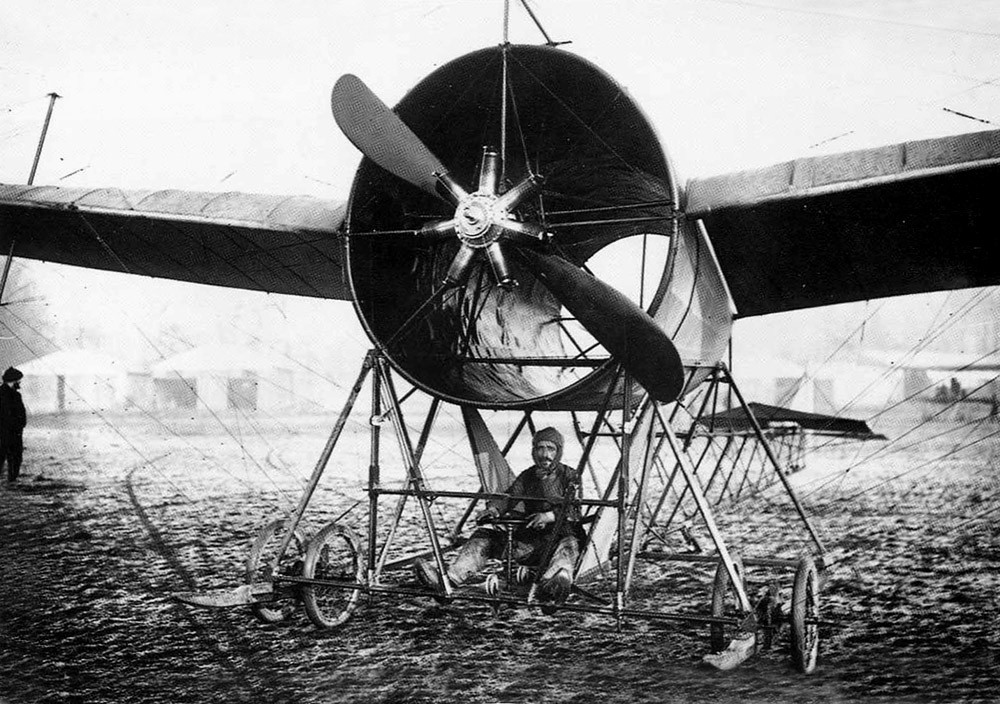
Etienne Jourdan died on July 15, 1912, leaving almost no trace of his ideas.
1912 Jourdan
Propeller: 2-blade fixed pitch wooden
Span: 46′
Length: 32’10”
Weight: 1100 lbs
Crew: 1

