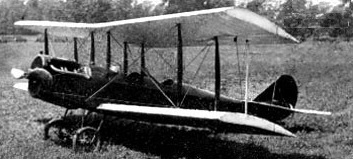
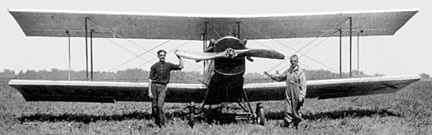
Junkers L2

The Junkers L2 was Junkers’ first water-cooled four-stroke engine and the first to be built on a production line, though only 58 were made. First run in 1925, it was a 4-stroke six-cylinder water-cooled inline engine and powered many Junkers aircraft until replaced by the more powerful L5.

The Junkers L2 (the L signifying a four-stroke petrol engine rather than a two-stroke diesel) had some features in common with their first petrol engine, the L1, both six-cylinder upright direct drive inline engines with four overhead camshaft driven valves per cylinder, but was water-cooled rather than air-cooled and had a much greater swept volume. It initially developed a cruise power of 195 horsepower (hp) (145 kW) at 1,550 rpm but was developed to 220 hp (164 kW).

The L2 powered early versions of several Junkers aircraft. It was soon replaced in these models by the more powerful Junkers L5 and only 58 L2s were built.

Variants:
L2 initial version.
L2a refined L2, 230 hp.

Applications:
Early versions of:
Junkers F 13
Junkers A 20
Junkers G 23
Junkers G 24
Junkers W 33
Re-engined:
Junkers Ju 21

Specifications:
L2
Type: 6-cylinder upright water-cooled inline 4-stroke piston engine
Bore: 150 mm (5.906 in)
Stroke: 180 mm (7.09 in)
Displacement: 19.1 L (1,166 cu in)
Length: 1.58 m (5 ft 2¾ in)
Width: 0.555 m (1 ft 9¾ in)
Height: 1.085 m (3ft 6¾ in)
Dry weight: 310 kg (684 lb)
Valvetrain: Two inlet and two exhaust valves per cylinder, overhead camshaft operated
Fuel system: Twin carburettors
Fuel type: Petrol
Oil system: Combined splash and pressure
Cooling system: Water-cooled
Reduction gear: Direct drive
Power output: cruise 195 hp (145 kW) at 1,550 rpm, take-off 230 hp (171 kW)
Fuel consumption: 31.82 kg/hr (70.16 lb/hr)

Junkers L1

The Junkers L1 was the first engine from that company to fly. First run in 1921, it was an aircooled, upright 6-cylinder inline 4-stroke petrol engine only produced in small numbers and largely used for research, but led to the successful L5 and its V-12 development, the L55.

Hugo Junkers’ early engineering experience was with stationary opposed-piston two-stroke diesel engines for industrial applications and this arrangement was eventually adapted for aircraft use. Nonetheless, his company’s first aero engine was a petrol-fuelled four-stroke, the 6-cylinder inline aircooled L1. L was Junkers’ notation for petrol engines from the L1 to the L10, which became the Jumo 210 in 1931. It first ran in 1921 and was the subject of much static testing, but the intention was always to produce a flight engine. The first aircraft to test fly the L1 was the Junkers T 19; this aircraft first flew in 1922, but the date of its first flight with the L1 is uncertain.

Notable features were the four large valves per cylinder, two inlet and two exhaust; the ball race main bearings; and the double ignition system, with twin magnetos and two sparking plugs per cylinder.

The L1 was largely an experimental engine, but a small production line was set up in 1925. Reliability was not high, however and only a few aircraft, themselves built only in small numbers, used the L1 and its variants. The large diameter, circular blower fitted to the L1a resulted in a flat fronted, circular cross section cowling, particularly noticeable on the Junkers T 19 and 26.

Variants:
L1
Original version.

L1a
Larger bore diameter and a large circular blower, gear driven, mounted at the front of the engine to enhance high altitude power.

L1b

Applications:
Focke-Wulf A 16b
Junkers T 19
Junkers T 26
Junkers J 29

Specifications:

L1a
Type: 6-cylinder air-cooled upright 4-stroke
Bore: 100 mm (3.94 in)
Stroke: 120 mm (4.72 in)
Displacement: 5.65 L (345 cu in)
Length: 1.115 m (3 ft 8 in)
Width: 700 mm ( 2 ft 3 in)
Height: 790 mm (2 ft 7 in)
Dry weight: 128 kg (282 lb)
Valvetrain: two large inlet and two large exhaust valves per cylinder, operated by overhead camshaft
Fuel type: petrol
Cooling system: air-cooled; finned cylinder heads
Reduction gear: none:direct drive
Ignition system: twin magnetos and two sparking plugs per cylinder
Power output: cruise 75 hp (56 kW); take-off 85 hp (63 kW)
Fuel consumption: 26 kg/hr (44 lb/hr)

Junkers / Junkers-Fokker-Werke AG / Junkers Flugzeugwerke AG / Junkers Flugzeug und Motorenwerke AG

Professor Hugo Junkers (1859-1935) became enthusiastically interested in aircraft development and worked for several aero-engine manufacturers. Convinced that all metal structure was the ultimate answer to successful aircraft design, he produced the experimental J.1 “Blechesel” (Tin Donkey) to exemplify his 1910 patent for a cantilever all-metal wing. The J.1 flew on December 12, 1915, giving unexpectedly stable performance.

Hugo Junkers Article

Six J 2s were then built, but when J 4 ground-attack biplane was ordered for German Army, he was not geared for mass production. Thus, Junkers-Fokker-Werke was formed at Dessau on October 20,1917, with equal shares held by Junkers and Anthony Fokker. Conflicts of personality caused Fokker and Junkers to separate in 1918, and the Junkers re-formed following April as Junkers FlugzeugwerkeAG at Dessau April 24,1919, first concentrating on all-metal civilian transports such as F13 four-passenger monoplane (more than 350 built).

Representatives of the Junkers Flugzeugwerke (Jfa), the German Government (Reichswehrsministerium, RWM) and the Soviet Government (Trotsky) signed a final agreement on November 26, 1922, and a former motor car factory at Fili, situated south of Moscow, was taken over by Jfa and expanded. Back in the Dessau design office headed by Dipi Ing Emst Zindel, work had begun during 1922 on three new military types intended for production at Fili the J20 two seat low wing reconnaissance floatplane and the J21 two seat reconnaissance and J22 single seat fighter parasol wing aircraft. The parasol wing configuration of the two last mentioned types turned out to be a failure, even though the J21 was built in quantity at Fili.

Junkers established a Swedish subsidiary, AB Flygindustri, near Malmo, and formed Junkers Motorenbau GmbH for production of aero engines. After death of Hugo Junkers the company became state-owned and, amalgamating with the aeroengine firm, became Junkers Flugzeug und Motorenwerke AG in 1936, then the largest aviation company in the world. For German rearmament program, Junkers built factories in many other parts of Germany, and in Czechoslovakia and France.
Avions Metalicos Junkers was founded at Madrid in 1923 to provide facilities for the construction of Junkers aircraft in Spain. A two-seat all-metal monoplane was in production in 1924.

Major types produced included G24 and G31 airliners of 1925/1926: W33 and W34 cargo transports, used also as trainers by Luftwaffe; the G38 “flying wing”of 1928 (prototype flew November 6,1929; production models carried 34 passengers plus seven crew). Some used as military transports in early stages of Second World War. On October 13,1930 came the first flight of famous Ju 52 cargo transport. Three-engined Ju 52/3m based on latter used in wide variety of roles before and during Second World War, production totalling more than 4,850. Prewar production continued with Ju 60 and Ju 160 airliners, Ju 86 bomber, transport and trainer, and Ju 87 dive-bomber in many versions. The 87 was followed by the Ju 88/188/388 family of twin-engined bombers. The Ju 90/290/390 family began as four-engined 38/40-seat airliners, converted as heavy transport/reconnaissance types in Second World War. Junkers was among first companies to produce military jet aircraft. Two prototypes of its Ju 287 with forward swept wings were captured by Russians in 1945.

After Second World War aircraft production ended, Junkers joined with Messerschmitt in 1966, and with absorption of small aero-engine plant by Messerschmitt group in 1975, the Junkers name disappeared entirely.
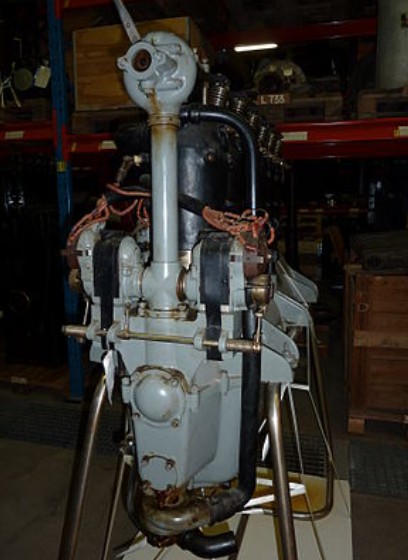
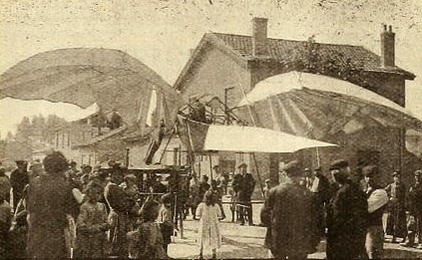
Juge & Rolland Ornithoptère

Thr Ornithopter of Jean-Baptiste Juge and Paul Rolland was designed and realized during 1907 through 1909. In a January 1909 magazine article written by Paul Rolland in “L’Aérophile” about the machine, Rolland begins with a plea to the editor of “L’Aérophile” for a more powerful engine (40 hp), as the one available had insufficient power. In the last paragraph he mentions that the first tests were made without any publicity given. Additionally, he states that the first wing flaps or “coups d’ailes” rather, “have given us every satisfaction.” Jean-Baptiste Juge had filed a French patent on September 28, 1907 (published November 28, 1908) for an “Aviateur”, which is remarkably similar to the finished model. That this patent has only Juge as inventor, gives the impression at least, that he was the driving intellectual force behind the design of the machine.