A biplane trainer for a 1928 competition (19 built)
Era
Keystone Pathfinder
A three-engined civil transport
Keystone LB-14 / Y1B-5
The last two LB designations covered seven LB 13s with 525 hp Hornets (redesignated in 1930 as five Y1B 4s and two Y1B 6s) and three LB 14s with 575 hp Hornets (redesignated as Y1B 5s).
Keystone LB-13 / Y1B-4 / B-4 / B-6

Developed from the Keystone B-3, the Keystone B-4 was a biplane bomber produced for the United States Army Air Corps in 1930. Originally seven were ordered by the United States Army Air Corps as the LB-13 light bomber. They were to be equipped with single vertical tails and were to be powered by a pair of 525 hp Pratt & Whitney GR-1690 radials. Serials were 30-344/353. When the LB- designation was dropped in 1930, the first five planes were redesignated Y1B-4. (The Y1B- designation indicates that funds for the design did not come from the normal annual funds.) Of seven LB-13s ordered, five were completed as Y1B-4s with 575 hp R-1860-7 engines (30-344/348). The Y1B-4 had a slightly better performance than the B-3A because of the more powerful engines, but was otherwise almost exactly the same.
The first B-3A (S/N 30-281) was converted to Y1B-4 configuration with the addition of R-1860-7 radial engines and low pressure tires. Because of more powerful engines, the performance of the Y1B-4 was a slight improvement on the B-3, but the only difference between the two planes was their engines.
On April 28, 1931, the army ordered 25 improved Y1B-4s as the Keystone B-4A. Serials were 32-117/141. This production version was part of the last biplane bomber order made by the Army Air Corps (along with 39 B-6As, identical in all respects except their make of engine), and the B-4As, delivered between January and April 1932, were the last biplane bombers delivered to the Air Corps.
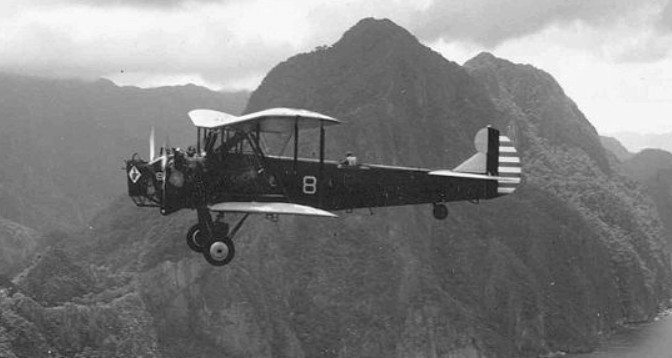
Like the B-3A, the B-4A carried five crew members; two pilots, a bombardier, and a front and rear gunner. The B-4A was externally almost identical to the B-3A which preceded it (as well as to the B-5 and B-6 which followed it).
B-4 was the last of the Keystone biplane bombers ordered by the U.S. Army in late 1931. These aircraft were used primarily as observation and reconnaissance aircraft as early as 1934 when the Martin B-10B went into operational service. Some remained in service into the early 1940s.
In 1932, Keystone produced 25 B 4As (575 hp R 1860 7 Hornets) and 39 B 6As (575 hp R 1820 1 Cyclones). Like the B 3A, these also had single tails; their armament was reduced to three 0.30 in (7.62 mm) guns, and bombload increased to 1130 kg (2500 lb).
Variants:
LB-13
Seven aircraft ordered but delivered as the Y1B-4 and Y1B-6 with different engine installations.
Y1B-4
Five pre-production aircraft, as the LB-10 but with two 575 hp (429 kW) Pratt & Whitney R-1860-7 engines.
B-4A
Production version of the Y1B-4, 25 built.
Serials:
Keystone Y1B-4
30-344/348
Keystone B-4A
32-117/141
Specifications:
B-4A
Engines: 2 × Pratt & Whitney R-1860-7, 575 hp (429 kW)
Wingspan: 74 ft 8 in (22.8 m)
Wing area: 1,145 sq.ft (106.4 sq.m)
Length: 48 ft 10 in (14.9 m)
Height: 15 ft 9 in (4.8 m)
Empty weight: 7,951 lb (3,607 kg)
Loaded weight: 12,952 lb (5,875 kg)
Wing loading: 11.31 lb/sq.ft (55.22 kg/sq.m)
Power/mass: 0.0888 hp/lb (146 W/kg)
Maximum speed: 130 mph (110 kn, 210 km/h)
Cruise speed: 103 mph (90 kn, 167 km/h)
Range: 850 mi (760 nmi, 1,400 km)
Service ceiling: 14,000 ft (4,300 m)
Rate of climb: 580 ft/min (30 m/s)
Crew: 5
Armament: 3 × .30 in (7.62 mm) Browning machine guns
Bombload: 2,500 lb (1,100 kg); 4,000 lb (1,800 kg) on short runs
B 6A
Span: 22.78 m (74 ft 9 in)
Length: 14.88 m (48 ft 10 in)
Gross weight: 6048 kg (13334 1b)
Maximum speed: 195 km/h (121 mph).
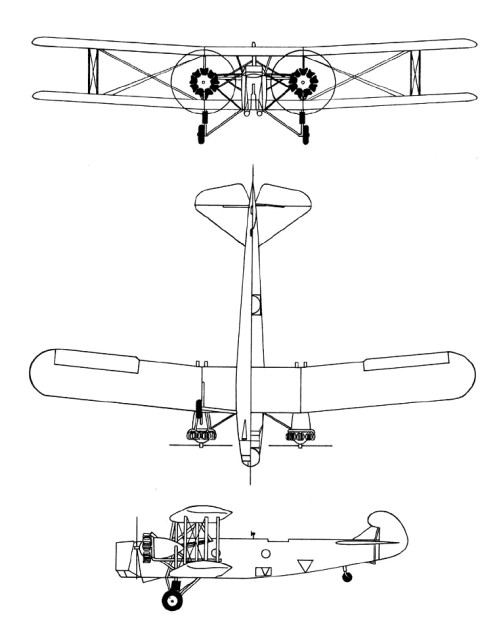
Keystone LB-12
A number of the Keystone aircraft became one off flying testbeds for various newly developed geared or direct drive versions of the Hornet and Cyclone engines. This programme gave rise to the new designations LB 8, LB 9, LB 10, LB 11, LB 11A and LB-12. Most of these were conversions from existing LB 6 or LB 7 bombers.
Keystone LB-11
A number of the Keystone aircraft became one off flying testbeds for various newly developed geared or direct drive versions of the Hornet and Cyclone engines. This programme gave rise to the new designations LB 8, LB 9, LB 10, LB 11, LB 11A and LB-12. Most of these were conversions from existing LB 6 or LB 7 bombers.
Keystone LB-10 / B-3 / B-5

A number of the Keystone aircraft became one off flying testbeds for various newly developed geared or direct drive versions of the Hornet and Cyclone engines. This pro¬gramme gave rise to the new designations LB 8, LB 9, LB 10, LB 11, LB 11A and LB¬-12. Most of these were conversions from existing LB 6 or LB 7 bombers.
The major production model which follow¬ed was the single tailed LB 10A, powered originally by 525 hp R 1690 3 Hornets, of which 63 were built. These were delivered under the new designation B 3A, the USAAC having adopted a single ‘B’ category for all types of bomber in 1930. Later, 27 of them were refitted with R 1750 3 Cyclones in place of the Hornets and were redesignated B 5A.
LB 10A
Engine: 525 hp R 1690 3 Hornet
Span: 22.78 m (74 ft 9 in)
Length: 14.88 m (48 ft 10 in)
Gross weight: 5875 kg (12 952 1 b)
Maximum speed: 183 km/h (114 mph).
Keystone LB-9
A number of the Keystone aircraft became one off flying testbeds for various newly developed geared or direct drive versions of the Hornet and Cyclone engines. This programme gave rise to the new designations LB 8, LB 9, LB 10, LB 11, LB 11A and LB-12. Most of these were conversions from existing LB 6 or LB 7 bombers.
Keystone LB-8
A number of the Keystone aircraft became one off flying testbeds for various newly developed geared or direct drive versions of the Hornet and Cyclone engines. This programme gave rise to the new designations LB 8, LB 9, LB 10, LB 11, LB 11A and LB-12. Most of these were conversions from existing LB 6 or LB 7 bombers.
Keystone LB-6 / LB-7
The Keystone LB series had been characterized by tapered wings, but the XLB 6 of 1927 (converted from the tenth LB 5) introduced constant chord wings with new powerplant (two 525 hp Wright R 1750 1 Cyclone radials) mounted between the wings, and a lengthened fuselage. Thus modified, this became the standard configuration for the remaining Keystone LB types, beginning with 17 production LB 6s and continuing with 18 LB 7s, which were identical except for their 525 hp Pratt & Whitney R 1690 3 Hornet engines.

