Barry Hill Palmer had a good paying aerospace job and was flying on a minimalist and inexpensive glider purely for curiosity and fun. He did not attempt to modernize or market the flexible wing hang glider; there was no attempt to publicize on the media, except for an ‘accidental’ report made by a small local newspaper. Palmer freely gave information about the wing to any person interested, including Francis Rogallo and Richard Miller, who develop the famous Bamboo Butterfly Rogallo wing hang glider, the plans of which circulated in some American magazines in the mid 1960s; Tara Kiceniuk’s followed with plans for the bamboo Batso Rogallo wing.
Era
Khevenhüller Schwingengleiter

A wing-flapping glider built and tested with moderate success by early Austrian experimenter and nobleman Graf Georg Khevenhüller at his castle, Burg Hochosterwitz, in Kärnten. In 1913 Count Khevenhüller built his last Schwingenflieger (as photographed), without any help of Wels. The machine had a weight of 50 kg and was constructed from bamboo, metal tubing and the wings of duralumin and balloon silk. The Count had the idea to flap the 12 meter span wings using human power, whereby a pulley construction was devised so that a person could beat the wings and hold the machine in the air. To give the glider its needed initial speed, a launching railway of 40 meters was laid down with a maximum slope of 20 degrees on the eastern part of Burg Hochosterwitz. Although this aircraft purportedly flew up to 100 meters in October 1913, all the attempts failed to make more than one flap of the wings, partly because of the instability of the machine in the air. After a severe crash, further attempts to fly the machine were halted and apparently remains preserved at Hochosterwitz.
Khevenhüller, Graf Georg
Graf Georg Khevenhüller had begun in 1905 with a glider he himself built and in 1911, to further his experiments, the Count partnered with Franz Xaver Wels. From here the bar was set higher: to realize a glider with flapping wings. A machine seems to have been built, yet it was not successful and the men parted company soon after.
KAI KhAI-24
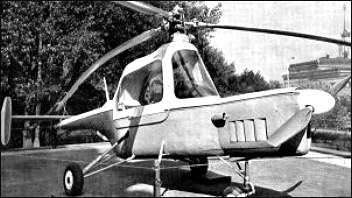
The KhAI-24 autogyro was built by the Kharkov Aviation Institute in the mid-1960s. Its fuselage resembled that of a conventional light aircraft with a tandem two-seat cabin, twin tail fins and a 115hp four-cylinder in-line inverted air-cooled M-332 engine in the nose. It was fitted with a fixed tricycle undercarriage and a three-blade main rotor. There is no indication that more than the single prototype was ever built.
Engine: M-332, 115hp
Top speed: 150km/h
Range: 250km
KAI KhAI-5 / KhAI-51 / KhAI-52 / Neman R-10
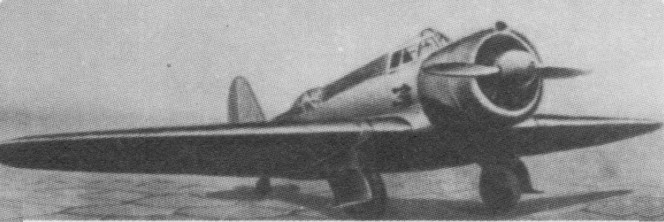
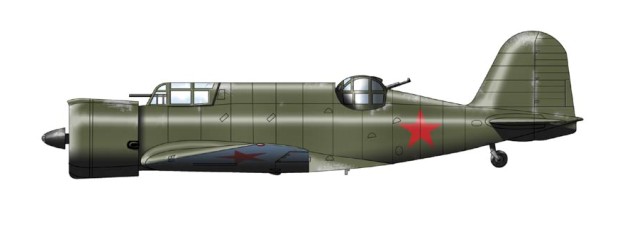
KhAI-5 was a prototype of the fast photoreconnaissance aircraft. It featured numerous innovations developed for KhAI-1 aircraft, including retractable gear, wing and control surfaces with stressed skin, internal bomb/camera bay, new type of gunner’s turret, and remotely controlled camera capable to make shots at 80° relatively to flight direction. Neman’s slogan was “No parts in the air flow”, so the whole design was very clean.
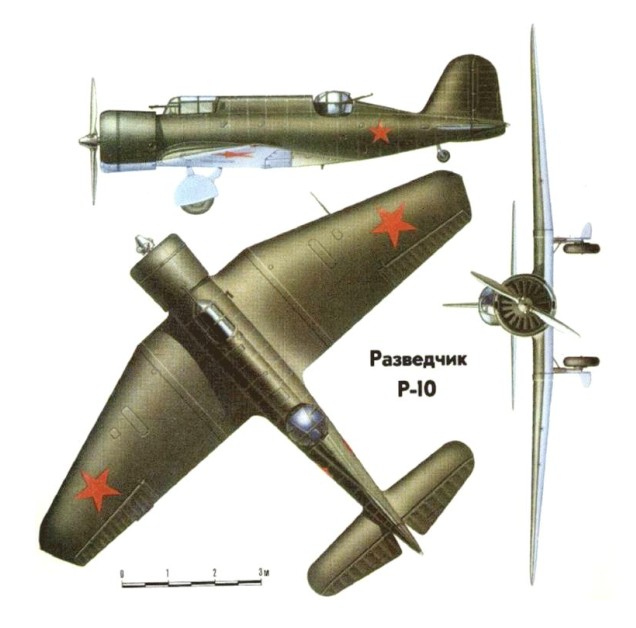
The KhAI-5 had low, plywood-covered wooden wings. The fuselage was of semi-monocoque construction. The undercarriage retracted into the wings. The crew consisted of two: a pilot and an observer-rear gunner in separate compartments; the observer sat in a turret with one machine gun. In the observer compartment’s floor there was an AFA-13 camera for reconnaissance duties. Between the crew compartments there were fuel tanks and a vertical bomb bay. The maximum bomb load was 300 kg/661 lb (6 × 50 kg/110 lb or 10 × 25 kg/55 lb). The plane was powered initially by the M-25A, later M-25V radial engine power: 540 kW (730 hp). The two-blade propeller was made of metal. Armament consisted of 2 x fixed forward firing 7.62 mm (0.300 in) ShKAS machine-guns in the forward top decking and 1 x manually aimed ShKAS machine-gun in the rear turret.
The first prototype of the plane, with a factory designation KhAI-5 (ХАИ-5), flew in June 1936. Despite a lower performance, the aircraft won a contest against another reconnaissance plane design, the Kotcherigin R-9, and was accepted for a production with the military designation R-10 (‘R’ for razvyedchik – reconnaissance). 493 R-10s had been manufactured in Kharkiv and Saratov aviation plants by early 1940. The first series showed some teething problems, and because of these I. Neman was arrested by the NKVD on December 11, 1938 under false accusation of sabotage and espionage.
In 1938, a variant KhAI-5bis was tested – fitted with an M-25E engine, it developed a speed of 425 km/h (264 mph). In 1938, the KhAI-52 ground attack aircraft, based on the R-10, was also developed. It was fitted with an M-63 670 kW (900 hp) engine and armed with seven machine guns and 400 kg (882 lb) bombs. A production run of an experimental series of 10 aircraft was prepared, but it was cancelled after one was produced and I. Neman had been arrested.
In total over 490 were built.
Some production R-10s were fitted with more powerful Tumansky M-88, Shvetsov M-62 and M-63 engines. Over 60 aircraft, withdrawn from the Air Force, were used from 1940 as mail carriers by Aeroflot, under the designation PS-5 (Russian: ПС-5), with 3 passenger seats.
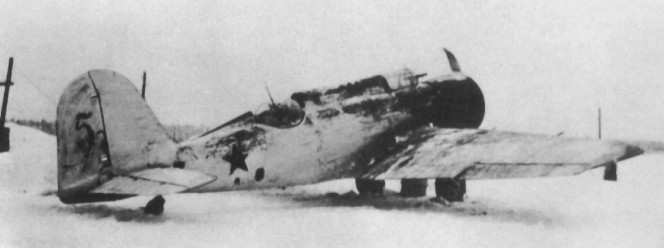
The aircraft entered service in the Soviet Air Force in 1937, replacing some Polikarpov R-5s. R-10s were first used in combat in the Soviet-Japanese Battle of Khalkhin Gol in 1939. Then, they were used in the initial stage of the World War II, starting with use against Poland in the Invasion of Poland (without combat encounters) and against Finland in the Winter War (1939–1940). R-10s were next used in the first period of the German-Soviet war, following the German attack on June 22, 1941. By this time, they were outdated and suffered heavy losses. They were used as close reconnaissance aircraft, and, in need, also as light attack bombers. Later many were used as night bombers, to avoid losses in encounters with fighters. The remaining R-10s were withdrawn from combat service in 1943 (two Finnish pilots claimed shooting R-10 in 1944).
Variants
R-10 – Production version of KhAI-5
KhAI-5bis / KhAI-51 – Improved R-10/KhAI-5, one example flown early 1939.
KhAI-52 – Production version of KhAI-51. Ten ordered but production halted with the arrest of I.Nyeman.
Specifications
Engine: 1 × Shvetsov M-25V, 531 kW (712 hp)
Propellers: 2-bladed Hamilton Standard two-pitch propeller
Length: 9.3 m (30 ft 6 in)
Wingspan: 12.2 m (40 ft 0 in)
Wing area: 26.8 sq.m (288 sq ft)
Empty weight: 1,823 kg (4,019 lb)
Gross weight: 2,515 kg (5,545 lb)
Fuel capacity: 260 kg (573 lb) fuel + 30 kg (66 lb) oil
Maximum speed: 350 km/h (217 mph; 189 kn) at sea level, 388 km/h (241 mph) at 2,500 m (8,202 ft)
Landing speed: 125 km/h (78 mph)
Range: 1,450 km (901 mi; 783 nmi)
Service ceiling: 7,700 m (25,262 ft)
Time to altitude: 1,000 m (3,281 ft) in 2 min 24 sec, 5,000 m (16,404 ft) in 12 min
Take-off distance: 250 m (820 ft)
Landing distance: 230 m (755 ft)
Crew: 2
Armament:
2 x fixed forward firing 7.62 mm (0.300 in) ShKAS machine-guns in the forward top decking
1 x manually aimed ShKAS machine-gun in the rear turret
Bombload: 6 x 50 kg (110 lb) FAB 50 bombs in internal bays
KFM 112M
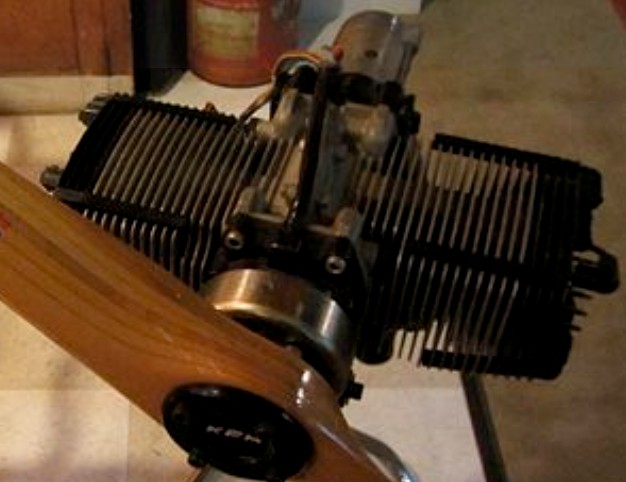
The KFM 112M is a four-cylinder, four-stroke, dual ignition, horizontally opposed aircraft engine designed for ultralight aircraft and motor gliders. The engine was designed and produced by the KFM (Komet Flight Motor) Aircraft Motors Division of Italian American Motor Engineering of Italy as a follow-on engine to their KFM 107 series and has been out of production since 1990.
The KFM 112 is a conventional four-cylinder engine that is very compact and lightweight at only 54 kg (119 lb), including the starter, alternator and carburetor. The engine features dual electronic ignition, a single OVC carburetor, hydraulic valve lifters, nickel-silicon treated cylinders and bi-metallic valves with chromed stems. It was offered without a reduction system. Starting is electric starter only.
The engine produces 62 hp (46 kW) at 3400 rpm for three minutes for take-off, 60 hp (45 kW) at 3200 rpm for five minutes and 54 hp (40 kW) at 3090 rpm continuous.
Applications:
Partenavia P.86 Mosquito
Specifications:
112M
Type: Four-cylinder, horizontally opposed, four-stroke aircraft engine
Bore: 90 mm (3.54 in)
Stroke: 64 mm (2.52 in)
Displacement: 1628.60 cc (99.38 cu in)
Length: 583 mm (22.95 in)
Width: 603 mm (23.74 in)
Height: 380 mm (14.96 in)
Dry weight: 54 kg (119 lb)
Fuel type: premium auto fuel or avgas
Oil system: pressurized
Cooling system: air-cooled
Reduction gear: none
Power output: 62 hp (46 kW) at 3400 rpm for three minutes for take-off, 60 hp (45 kW) at 3200 rpm for five minutes and 54 hp (40 kW) at 3090 rpm continuous
Compression ratio: 9.5:1
Fuel consumption: 16.3 l/hr (4.3 US gal/hr) at full power, 11.2 l/hr (2.97 US gal/hr) at 70% power.
Specific fuel consumption: 212 g/Hph (0.46 lb/Hph) at 90% power, 185 g/Hph (0.42 lb/Hph) at 70% power
Power-to-weight ratio: 0.90 kg/hp (1.98 lb/hp)
KFM 107
The KFM 107 is a two-cylinder, two-stroke, single ignition, horizontally opposed aircraft engine designed for ultralight aircraft and motor gliders.
The KFM 107 is a conventional twin-cylinder engine that is very compact and light weight at only 15.2 kg (34 lb) in its 107s version. The engine features single capacitor discharge ignition, a single Tillotson butterfly-type carburetor, integral fuel pump, tuned exhaust system and reed valve induction. It was offered with 2:1 belt drive reduction system. Starting is electric starter or recoil starter.
Most versions of the 107 produce 25 hp (19 kW) at 6300 rpm for five minutes for take-off and 22.5 hp (17 kW) at 6080 rpm continuous.
The engine was designed and produced by the KFM (Komet Flight Motor) Aircraft Motors Division of Italian American Motor Engineering of Italy and has been out of production since 1986.
Variants:
107s
“Standard” version, direct drive, recoil start, 25 hp (19 kW), weight 15.2 kg (34 lb)
107e
“Electric” version, direct drive, electric start and alternator 25 hp (19 kW), weight 19.1 kg (42 lb)
107rs
“Standard with Reduction” version, reduction drive, 25 hp (19 kW), weight 17.5 kg (39 lb)
107er
“Electric & Reduction” version, direct drive, 25 hp (19 kW), weight 21.4 kg (47 lb)
107e Maxi
Upgraded version with an OVC carbutaror with fixed jets, 64 mm (2.52 in) stroke, 334 cc (20.38 cu in), 11:1 compression ratio, 2.1:1 or optional 2.55:1 reduction drive. Produces 30 hp (22 kW) at 6300 rpm for five minutes for take-off and 27 hp (20 kW) at 6080 rpm continuous.
Applications:
Alpha Marco J-5
Danieli Piuma
Diehl AeroNautical XTC Hydrolight
Latécoére 225
Monnett Monerai P
Monnett Moni
Phase 3 Eclipse
Rutan Solitaire
Sadler Vampire
Specifications:
107s
Type: Twin-cylinder, horizontally opposed, two-stroke aircraft engine
Bore: 60 mm (2.36 in)
Stroke: 52 mm (2.05 in)
Displacement: 294 cc (17.94 cu in)
Length: 432 mm (17.01 in)
Width: 440 mm (17.32 in)
Height: 353 mm (13.90 in)
Dry weight: 15.2 kg (34 lb)
Valvetrain: reed valve induction
Oil system: premixed 4% oil and fuel
Cooling system: air cooled
Reduction gear: none on the “s” model
Power output: 25 hp (19 kW) at 6300 rpm for five minutes for take-off, 22.5 hp (17 kW) at 6080 rpm continuous
Compression ratio: 10.5:1
Keystone Pup
In 1927 Keystone designed and built an open cockpit Pup.
Keystone K-55 Pronto

The Keystone K-55 Pronto was a mail plane developed in the United States in the late 1920s. It was a conventional single-bay, unequal-span biplane design with slightly staggered wings. The pilot sat in an open cockpit, in tandem with a forward cockpit that could carry two passengers side-by-side. The fixed, tailskid undercarriage had divided main units.
Pronto was the first aircraft Keystone made for the civil market. However, like many aircraft manufacturers of the late 1920s – early 1930s, this attempt was not successful. A number of these aircraft were purchased by the government of Peru. Operated by the aviation arm of the Peruvian Navy, these aircraft initiated the first airmail service into the Peruvian Amazon. The first flight of this service was made by two Prontos, piloted by Leonardo Alvariño Herr and Harold B. Grow from Lima to San Ramón on 26 October 1927.
At least one Peruvian Pronto was fitted with pontoons and used to survey the Amazon River for locations suitable for seaplane operations.
In the Colombia-Peru War one Peruvian K-55 flow by Lieutenant Suero was captured by the Colombian Army.
Engine: 1 × Wright J-5, 220 hp (160 kW)
Wingspan: 39 ft 11 in (12.17 m)
Length: 26 ft 9 in (8.15 m)
Empty weight: 594 kg
Maximum take-off weight: 1100 kg
Maximum speed: 112 mph (180 km/h)
Cruising speed: 160 km / h
Range: 500 miles (800 km)
Crew: One pilot
Capacity: 2 passengers
Keystone K-78 Patrician

Patrician was three-engined 20-passenger monoplane.

