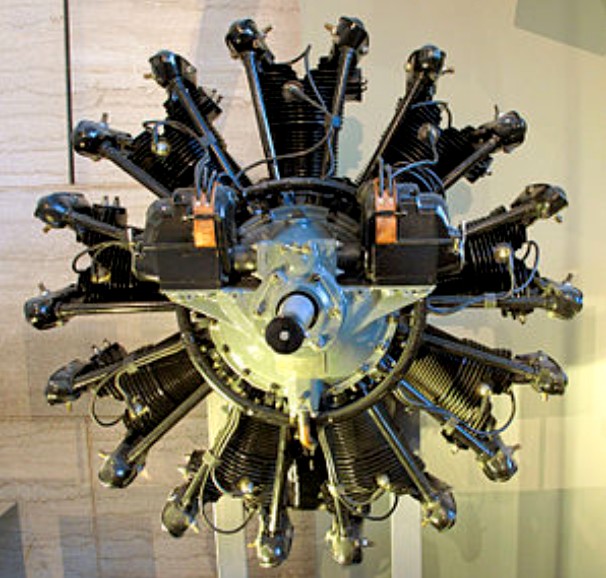
During the mid-1930s, Wright also developed two fourteen-cylinder double-row versions of the Whirlwind, the R-1510 (introduced 1933) of 600 hp (450 kW), and the R-1670 of 800 hp (600 kW). These were used in a number of military aircraft prototypes, but neither engine reached the production stage.
R-1510 14-cylinder twin-row radial, 600 hp (450 kW)
The Wright R-790 Whirlwind was a series of nine-cylinder air-cooled radial aircraft engines built by Wright Aeronautical Corporation, with a total displacement of about 790 cu.in (12.9 L) and around 200 hp (150 kW). These engines were the earliest members of the Wright Whirlwind engine family. The R-790 Whirlwind began as the Lawrance J-1, a nine-cylinder air-cooled radial developed in 1921 by the Lawrance Aero Engine Company for the U.S. Navy. The Navy was very enthusiastic about air-cooled engines, which it felt were better suited for naval use than liquid-cooled ones. But Lawrance was a small company, and the Navy doubted it could produce enough engines for their needs. Despite urgings from the Navy, the major U.S. aircraft engine makers, Wright and Curtiss, were satisfied with their liquid-cooled engines and showed no interest in building air-cooled ones. Since the Navy was already a major purchaser of Wright engines, it decided to force the issue by suggesting that Wright purchase Lawrance and build the J-1 itself, while informing the company that the Navy would not buy any more of its existing engines or spare parts. In order to keep the Navy’s business, Wright was thus compelled to buy Lawrance in 1923, and the Lawrance J-1 became the Wright J-1. By the time Lawrance merged with Wright, it had already developed the J-2, a more powerful version of the J-1 with slightly enlarged bore and displacement. However, Lawrance decided the J-1 was large enough, and the J-2 never went into production; only two examples were built. Over the next two years, Wright gradually refined the J-1 engine, introducing the J-3, J-4, J-4A, and J-4B. The changes improved the engine’s reliability, cooling, and fuel consumption, but the basic design, dimensions, and performance were unaltered. The J-4 was the first engine to bear the Whirlwind name; previous engines had no name, only a designation. The J-5 Whirlwind, introduced in 1925, was a complete redesign of the engine which greatly improved its cooling and breathing, further increasing its reliability and reducing its fuel consumption. Among the more visible changes were a much wider separation between the valves, for better cooling airflow, and completely enclosed pushrods and rocker arms, rather than exposed ones as on the earlier engines. The U.S. government later designated the J-5 Whirlwind as the R-790, but it did not apply this designation to the older engines. All these engines had a bore of 4.5 in (11.4 cm), a stroke of 5.5 in (14.0 cm), and a displacement of 788 cu.in (12.91 L). The J-5 was the last of the original nine-cylinder Whirlwinds. In 1928, it was replaced by the seven-cylinder version of the Whirlwind J-6. Many Whirlwind engines were used in U.S. Navy aircraft, mostly in trainers but also in some ship-based observation and fighter aircraft. As the engines were refined and their reputation for reliability grew, their usage expanded to U.S. Army trainers and a wide range of U.S. civil aircraft, including the earliest versions of the Fokker Trimotor and Ford Trimotor airliners. The reliability of J-5 Whirlwind engines also led aviators to use them for a number of record-setting distance and endurance flights. The most famous of these is Charles Lindbergh’s solo transatlantic flight from New York City to Paris on May 20–21, 1927, in the Spirit of St. Louis, powered by a single Whirlwind J-5C. During Lindbergh’s flight, the engine ran continuously for 33.5 hours. Lindbergh’s achievement greatly boosted the Whirlwind’s already good reputation. Some other historic long-duration flights made in aircraft powered by the J-5 Whirlwind:
Clarence Chamberlin and Bert Acosta made a record endurance flight of 51 hours, 11 minutes, 25 seconds in a single-engined Wright-Bellanca WB-2 over New York City in April 1927.
Chamberlin and Charles Levine flew non-stop from New York City to Eisleben, Germany, in the same Wright-Bellanca on June 4–6, 1927, in a flight lasting 42.5 hours (3,920 mi).
The first successful flight from the continental U.S. to Hawaii was made by Albert Hegenberger and Lester Maitland in the Fokker C-2 Bird of Paradise from Oakland, California, to Honolulu, Hawaii, on June 28–29, 1927, lasting 25 hours 50 minutes (2,400 mi).
The first flight across the Pacific was made by Sir Charles Kingsford Smith in the Fokker trimotor Southern Cross from Oakland to Brisbane, Australia, with stops in Hawaii and Fiji, from May 31 to June 9, 1928. The leg from Hawaii to Fiji lasted 34.5 hours over 3,100 mi (5,000 km) of open ocean.
A record endurance flight of 150 hours, 40 minutes, and 14 seconds was made by U.S. Army fliers in the Fokker C-2A Question Mark over southern California on January 1–7, 1929. Achieved with the help of aerial refueling, this flight only ended when a pushrod failure stopped one of the engines. Charles L. Lawrance, who developed the original Whirlwind series and became president of Wright, won the 1927 Collier Trophy for his work on air-cooled radial aircraft engines. The Whirlwind J-5 was also produced under license in Poland by several makers. Among these were Polskie Zakłady Skody, the Polish branch of Škoda Works, which built about 350 to 400 engines from 1929 to 1931, and the Polish firm Avia, which manufactured a further 300 engines from 1935 to 1938. Polish-built J-5s were used in numerous Polish aircraft, mostly in military training, observation, and liaison aircraft.
Variants J-1: Lawrance J-1 as built by Wright Aeronautical in 1923. J-3: Wright’s first refined version, 1923. J-4: Improved version, 1924. First to be named “Whirlwind”. J-4A, J-4B: Further refinements of J-4. J-5 (R-790): Complete redesign with improved reliability and performance, 1925.
Applications: U.S. aircraft- Boeing NB-1 Buhl-Verville CA-3 Airster (J-4) Buhl-Verville CA-3A Airster (J-5) Consolidated NY-1 and NY-2 Consolidated O-17 Consolidated PT-3 Curtiss AT-5 and AT-5A Hawk Curtiss N2C-1 Fledgling Fairchild FC-2 Fokker F.VIIA-3m and F.VIIB-3m Fokker Universal (Model 4) Ford Trimotor 4-AT-A and -B Keystone Pronto Lockheed Vega 1 Naval Aircraft Factory N3N-1 Canary New Standard D-25 Pitcairn PA-5 Mailwing and PA-6 Super Mailwing Ryan B-1 Brougham Spirit of St. Louis Stearman NS-1 Stearman C2B and C3B Stinson Detroiter SB-1 and SM-1 Stinson Junior SM-2AB Texas-Temple Aero C-4 Texas-Temple Commercial Wing Travel Air 4000 Vought FU Vought UO Waco 10-W (ASO) and 10-T (ATO)
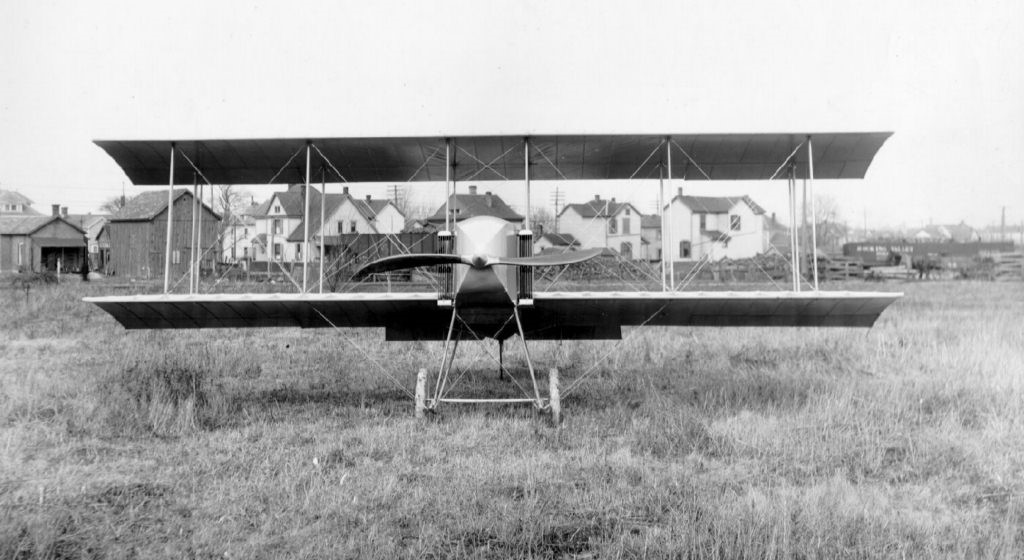
The 1915 Wright L was a two-place, open cockpit biplane primary trainer with standard control surfaces. Powered by a 100hp Hall-Scott A-7, it was similar to the Dayton-Wright FS-1 except for a longer wing.
The Model L was inferior to many other biplanes that were being produced at the time. It failed to secure any military orders and few were produced.
This was the last airplane produced by the Wright Company under that name. By this time Orville Wright no longer owned the company, but he was retained as a consultant and may have had some input on the design of the Model L.
Wright Model L Engine: 100hp Hall-Scott A-7, 75 hp at 1400 to 1560 rpm Propeller: Single direct-drive, 8 ft (244 cm) Wingspan: 29 ft (8.8 m) Wing area: 360 sq ft (33.4 sq. m) Wing chord: 6.5 ft (198 cm) Wing separation: 5.7 ft (174 cm) Camber: 1:20 Length: 24.2 ft (7.4 m) Horizontal rear elevator: 20 sq ft (1.9 sq m) Twin movable vertical rear rudders: 8.5 sq ft (0.8 sq m) Weight: 850 lbs (386 kg) Speed range: 25 to 80 mph (40 to 129 kph)
The Wright K of 1916 featured chain-driven, interwing-mounted twin props, powered by a 60-70hp Wright engine. One was built, going to the USN as AH-23 / A51.
The 1915 Wright J, or Long Bull (Burgess), was a two-place, open-cockpit, biplane floatplane similar to the Aeroboat. It was a license-built civil version of the Burgess-Wright C.
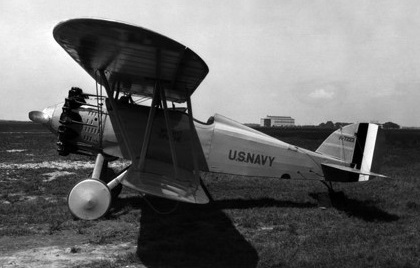
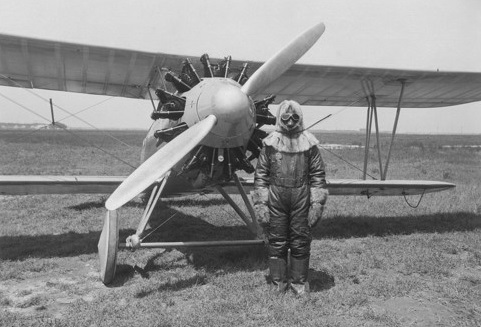
After the U.S. Navy declared its preference for radial engines, Wright developed the P-1 Simoon. To demonstrate the engine, the F3W was designed to carry it. The new air-cooled, supercharged 1,176.036-cubic-inch-displacement (19.272 liters) Wright Aeronautical Division R-1200 Simoon 9-cylinder radial engine, was rated at 350 horsepower at 1,900 r.p.m. The R-1200 weighed 640 pounds (290 kilograms). The F3W was a single-seat biplane, with a steel tubing fuselage and wood wings, covered by fabric. Designed to be a carrier-based fighter and powered by the Simoon engine, its performance was poor. One was built, A7223, and tested XF3W-1. After the Navy took delivery of the aircraft, they installed a rival company’s engine, the number two Pratt & Whitney R-1340 radial Wasp A engine. The aircraft was redesignated XF3W, and flew with the new engine for the first time on 5 May 1926. The XF3W-1 was the first airplane to fly with a Pratt & Whitney Wasp engine. The Navy used the XF3W as a test bed for the Pratt & Whitney engine until 1930, during which time the aircraft set a number of records.
On 6 September 1926, the XF3W set the world altitude record for seaplanes of 38,500 ft (11,700 m). On 8 May 1929: Lieutenant Apollo Soucek, United States Navy, set a Fédération Aéronautique Internationale (FAI) World Record for Altitude when he flew the prototype Wright Aeronautical Division XF3W-1 Apache, Bu. No. A7223, to 11,930 meters (39,140 feet) over NAS Anacostia, Washington, D.C. The record was certified by the National Aeronautic Association. Lieutenant Soucek was awarded the Distinguished Flying Cross for this achievement.
The National Advisory Committee for Aeronautics (NACA) used the XF3W-1 for engine and cowling tests at the Langley Memorial Aeronautical Laboratory (LMAL), Langley Field, Hampton, Virginia. Which engine was installed at the time of Lieutenant Soucek’s record flight is uncertain.
Wright XF3W-1 Apache, Bu. No. A7223, at NACA Langley.
The XF3W-1’s engine was supercharged by a NACA Model 2E Roots-type supercharger, built by the Allison Engineering Company. This supercharger, serial number 1, is in the collection of the National Air and Space Museum.
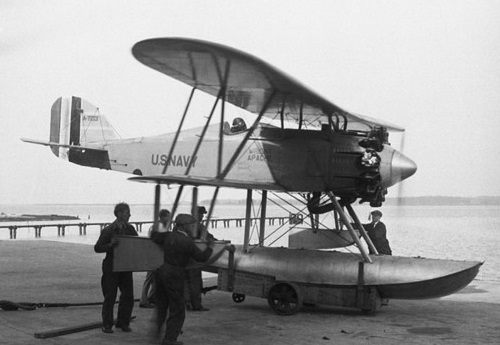
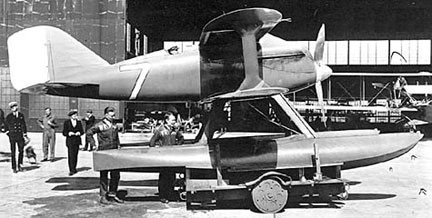
Lieutenant Soucek set two other World Records with the XF3W-1 Apache. On 4 June 1929, with the Apache configured as a float plane, he flew it to an altitude of 11,753 meters (38,560 feet). The following year, 4 June 1930, he flew the Apache to 13,157 meters (43,166 feet). The XF3W was fitted with a single centreline float to evaluate the concept of basing floatplanes on battleships.
XF3W-1 with floats Engine: 1 × Pratt & Whitney R-1340-B, 450 hp (336 kW) Wingspan: 27 ft 4 in (8.33 m) Wing area: 215 sq.ft (19.97 sq.m) Length: 22 ft 1 in (6.73 m) Height: 8 ft 6 in (2.59 m) Empty weight: 1,414 lb (641 kg) Gross weight: 2,128 lb (965 kg) Maximum speed: 162 mph (261 km/h) Service ceiling: 38,560 ft (11,753 m) Crew: 1
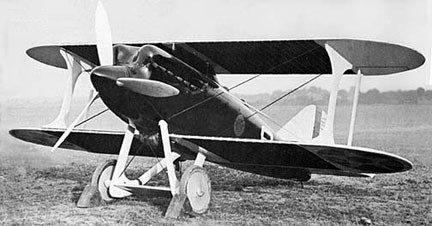
Two Wright F2W-1 were built for the US Navy in 1923 as Pulitzer racers A6743 and A6744. First flying on 27 August 1923, piloted by L H Sanderson, the first crashed on landing during trials and was damaged beyond economical repair.
A6744 was converted to twin floats as F2W-2 in 1924, but also crashed during testing.




 All Aero