Inter-Wars
Abrial A-12 Bagoas
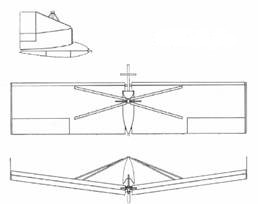
Georges Abrials main interest was soaring, so he decided to design a tailless glider: the A-12. After testing successfully a scale model at the St Cyr wind tunnel, he built the full-size prototype. This glider had an aspect ratio of 6 to 1. During the development of this new glider, in 1932, Georges Abrial had to face so much technical difficulties that he decided to give up the project. He christened his project “Bagoas”, the name of a famous Persian poisoner.
Abrial A-3 Oricou
In 1927, Abrial built a two-seater airplane powered by a 40 hp engine, the A-3 “Oricou”.
Peyret-Abrial A-5 Rapace
The Peyret-Abrial “Rapace”, aka Abrial A-5, single-seat sailplane, was designed with the assistance of Louis Peyret and Professor Toussaint. One was built. The “Rapace” beat the international altitude record with 720 m. 16m span
Abrial A-2 Vatour
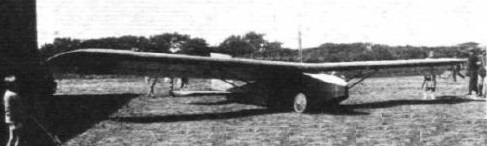
The A-2 Vautour was designed by Georges Abrial of the Institut Aérotechnique de Saint-Cyr and built by Louis Peyret. Each wing, joined to a centre-section on top of the fuselage with light dihedral, had a rectangular plan apart from an angled tip and carried a broad chord aileron which filled about 60% of the span. They were of mixed construction with two rectangular section dural spars and plywood ribs. Each wing was braced with a pair of parallel struts, dural tubes enclosed in streamlined, wooden fairings, between the lower fuselage longerons and the wing spars just inside the ailerons.
Its fuselage was rectangular in section, with spruce longerons and laminated wood frames. The sides were everywhere vertical but ahead of the wing it narrowed in plan and decreased in depth to a rounded nose. The downward sloping upper surface here was not flat but curved, formed from thin aluminium sheet. The pilot’s open cockpit was just in front of the leading edge, with a rubber-cord restrained canvas sheet between him and the aluminium surface, intended as protection in a crash. It contained some basic instrumentation, including an airspeed indicator and an altimeter, both with sensors well above the wing centre-section on a mast, as well as a compass.
The horizontal tail of the Vautour, mounted at mid-fuselage height, was similar in plan to the wing. The tailplane was much narrower than the one piece elevator. The fin was likewise narrower than the rudder and together had a rhomboidal profile, allowing the elevator clearance below. Both surfaces were wood-framed and ply covered, with the exception of the fabric covered rudder.
Its landing gear was very simple, with wheels close to the sides on a split axle mounted within the fuselage. Rubber cord shock absorbers were used and the tailskid was also mounted elastically.
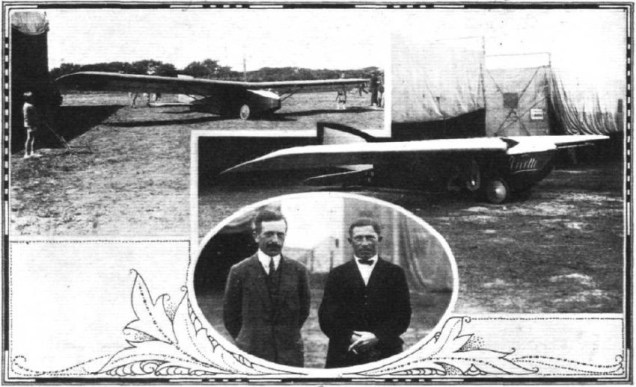
The date of the first flight of the Vautour is not known but it made its first major public appearance in the meeting held at Vauville from 22 July to 11 August 1925. The competition included both gliders and low-powered aircraft. The Vautour, flown by Auger, gained the prize for greatest altitude above the starting point, reaching 720 m (2,360 ft). It was placed second in a competition to fly the maximum number of 1 km (0.62 mi) laps, managing 36. It remained at Vauville after the contest and in February 1926 Auger returned to it with the intention of an attack on the altitude and distance records, as well as competing in several contests. By April the attempt had been abandoned due to unsuitable winds and the glider was dismantled and returned to Paris, with the hope of later using a site in Eure. There is no record that these attempts were made.
Wingspan: 12.65 m (41 ft 6 in)
Wing area: 20 m2 (220 sq ft)
Aspect ratio: 8
Airfoil: Royer
Length: 6.25 m (20 ft 6 in)
Empty weight: 106 kg (234 lb)
Gross weight: 180 kg (397 lb)
Crew: 1
Abrial-Levasseur A-1
Georges Abrials first full-size glider was the Levasseur-Abrial A-1 of 1922. It was destroyed on its fourth take-off.
Abreu AE-5
Designed by Joaquin S Abreu, the one AE-5 built, N592, had a steel tube fuselage and wood-framed parasol wing. It was a high wing 2 place monoplane. The engine and belly fuel pod was a detachable unit that could be released from the cockpit in case of fire or a dire emergency, and the ship would become a glider. In its first test in 1929, this was demonstrated at Alameda CA. From 5,500′ the motor and tank unit was jettisoned, falling into sand dunes by the bay, and the ship glided for about 15 minutes before heading for the runway. There a group of people running toward the oncoming ship forced pilot Reed Vowles to swerve the plane and nose it into soft ground, sustaining minor damage.
Engine: LeRhône rotary, 90hp
Wingspan: 38’0″
Length: 29’0″
Abrams P-1 Explorer
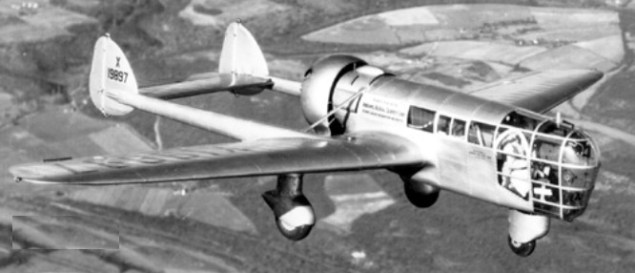
Explorer – a twin-boom pusher monoplane of 1936, to the design of Talbert Abrams. Incorporated a fully-glazed nose.
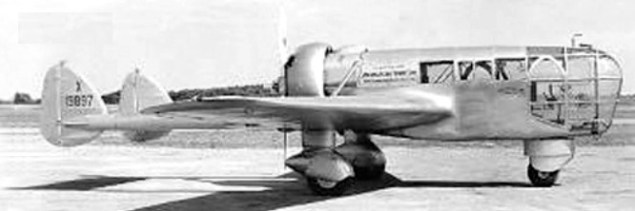
Designed by Talbert Abrams and Kenneth Ronan, a prototype, X19897, was constructed by Ronan & Kunzl of Marshall MI. Created as a photo-survey plane with a service ceiling of 21,000′, first flown in November 1937, it was repowered with 450hp supercharged Wright in 1938. Only the one was ever built.
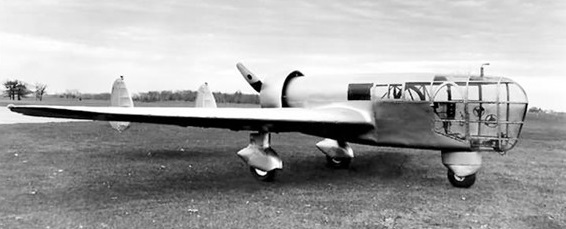
The Explorer is stored with the Smithsonian National Air and Space Museum, awaiting restoration.
Engine: Wright R-975, 330hp
Wingspan: 36’0″
Length: 26’6″
Useful load: 1410 lb
Max speed: 185 mph
Cruise: 165 mph
Stall: 66 mph
Range: 1400 mi
Engine: Wright, 450hp
Wingspan: 36’0″
Length: 26’6″
Max speed: 200 mph
Cruise: 185 mph
Stall: 66 mph
Abrams Aircraft Corp
USA
Abrams was an early aerial photographer in World War I. He used a Curtiss Jenny postwar, forming ABC airlines. In 1923 Abrams founded Abrams Aerial Survey Company.
Abrams Aircraft Corp was formed in 1937 to build the Explorer twin-boom pusher monoplane to the design of Talbert Abrams, president of the Abrams Aerial Survey Corp.
1929: ABC Airline Corp, Lansing MI.
1930: (Talbert) Abrams Aerial Survey Corp.
1936: Abrams Air Craft Corp, 606 E Shiawassee St, Lansing MI.
Abraham AS.2 Iris
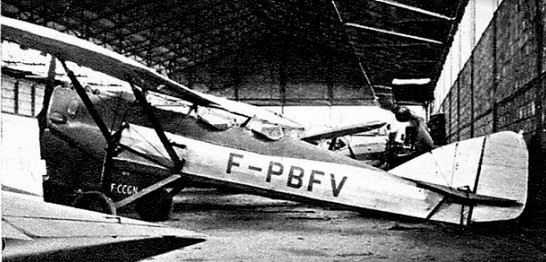
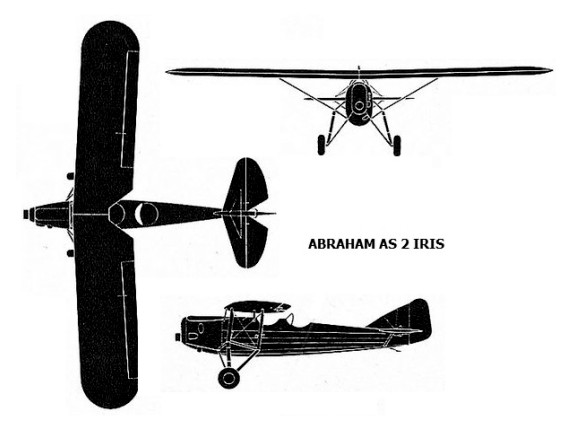
In 1930 Edmond Abraham built the Iris I, a 2 seat parasol monoplane. This was modified as the Iris II with a Renault, 95hp engine.
French regulations evolved and the craft ended at Avignon Chateaublanc.
In 1930 Edmond Abraham built the Iris I, a 2 seat parasol monoplane. This was modified as the Iris II with a Renault, 95hp engine.
French regulations evolved and the craft ended at Avignon Chateaublanc.
Iris II
Engine: Renault 4Pb, 95 hp
Prop: 2 blade wooden
Wingspan: 9.8m / 37 ft 2 in
Length; 6.97m / 22 ft 6 in
Height: 2.5m / 7 ft 7 in
Wing area: 15 sq.m / 161 sq.ft
Empty weight: 467 kg / 1027 lb
MAUW: 760 kg / 1672 lb
Max speed: 180 kph / 113 mph
Range: 400 km / 250 miles