The 1928 Aero-Craft Mfg Co Inc Aero-Coupe was a three-place open cockpit (or cabin) biplane designed by F R Anderson, a USAS Brig General at the time.
Convertible to an open cockpit for training use, or the seats could be removed to make a cargo/mail bay. Only one was built, N4917, which crashed in 1926. It cost $5,800.
Engine: 120hp Warner Scarab Wingspan: 32’0″ Length: 24’0″ Useful load: 1000 lb Max speed: 115 mph Cruise: 100 mph Stall: 38 mph Range: 460 mi Seats: 3
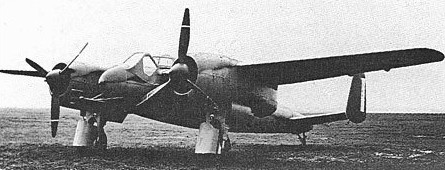
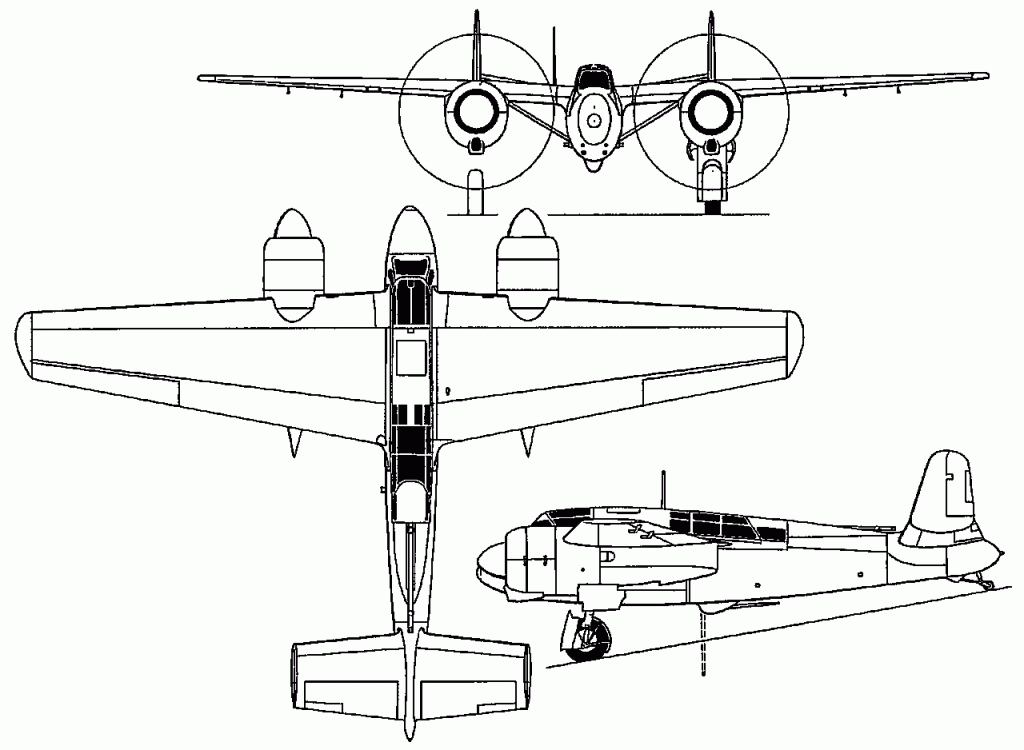
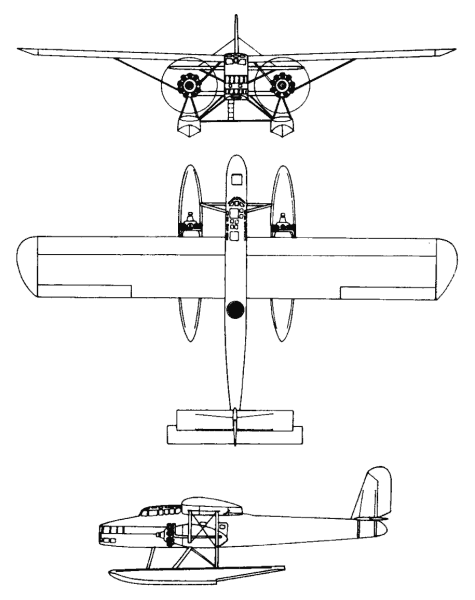
Derived from the Hanriot H.220, and after a major redesign as the H.220-2, was displayed statically as the NC 600 in July 1939 at the Salon de l’Aeronautique held in Brussels. The genuine NC 600 differed from the H.220-2 in having, a number of changes, including a revised wing. The wing of the NC 600 had three degrees of leading edge taper and perpendicular spars (span and area remaining unchanged). Although the H.220-2 had not overcome the airflow turbulence generated by the wing centre section bracing struts which produced serious tail buffet under certain conditions, the SNCA du Centre retained this feature for the NC 600, which flew for the first time on 15 May 1940. This aircraft, which introduced raised aft fuselage decking, redesigned endplate fins and rudders, and a raised tail assembly, was powered by two Gnome-Rhone 14M0/01 Mars radials each rated at 710hp for take-off. Armament was two 20-mm HS 404 cannon plus two 7.5mm MAC 1934 machine guns firing forward and a 20mm weapon on a flexible mounting firing aft, this partially retracting into a slot in the fuselage decking. The NC 600 was proposed as a two-seat fighter, and six were under construction when Germany occupied Bourges. Further development was then abandoned when the SNCAC former Hanriot factory at Bourges was chosen to build Breguet 696.
Engines: 2 x Gnome-Rhone 14M0/01 Mars radial, 710hp Take-off weight: 4000 kg / 8819 lb Empty weight: 2948 kg / 6499 lb Wingspan: 12.8 m / 42 ft 0 in Length: 8.80 m / 29 ft 10 in Height: 3.40 m / 11 ft 2 in Wing area: 21.16 sq.m / 227.76 sq.ft Max. speed: 542 km/h / 337 mph Range: 860 km / 534 miles
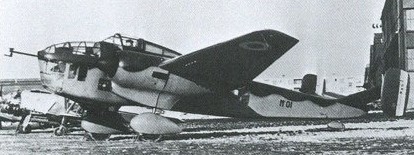
The first prototype NC.530 Exp flew on 29 June 1939, the second NC.530.01 on 29 December 1939. Further development was cancelled due to occupation of France in 1940.
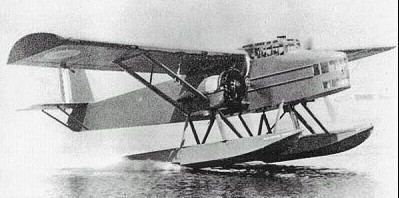
A floatplane trainer, some were used for reconaissance in 1939. The NC.470 was initially developed by Farman as the F.470. Germany captured 14 in 1942. Approx 24 built.
NC.471 Engines: 2 x 500hp Gnome-Rhone 9Kgr Take-off weight: 6000 kg / 13228 lb Empty weight: 3710 kg / 8179 lb Wingspan: 24.45 m / 80 ft 3 in Length: 16.1 m / 53 ft 10 in Height: 4.85 m / 16 ft 11 in Wing area: 95.0 sq.m / 1022.57 sq ft Max. Speed: 230 km/h / 143 mph Cruise speed: 190 km/h / 118 mph Ceiling: 6000 m / 19700 ft Range: 1140 km / 708 miles Crew: 6 Armament: 1 x 7.5mm machine-gun, 200kg of bombs
In France, the Socialist Government of the so called Popular Front brought all the companies building military aircraft, aero engines and ar¬mament under its control in 1936. The im¬mediate result was the socialized oblivion of such established companies as Marcel Bloch, Bleriot, Nieuport, Potex, Dewoitine, Hanriot and Farman within half a dozen nationalized groups or Societies Nationales, named ac¬cording to their geographical location (Nord, Ouest, Centre, Midi and so on). Farman and Hanriot formed the new Societe Nationale de Constructions Aeronautiques du Centre, known as SNCAC or Aerocentre. After World War II, although four of the nationalized groups continued operating un¬der state control, private companies were al¬lowed to resume the design and manufacture of both civil and military aircraft. Aerocentre conducted the final development of the Farman line of four-engined heavy bombers which had engines in tandem underslung pairs, derived from the F.211 of 1931. Aerocentre went into liquidation during 1949, its plants and work being shared by SNCAN (Nord), SNCASO (Sud-Ouest) and engine form SNECMA.
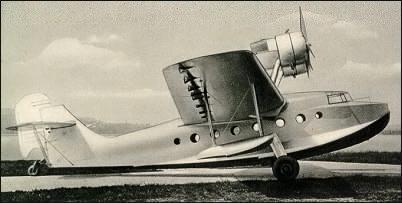
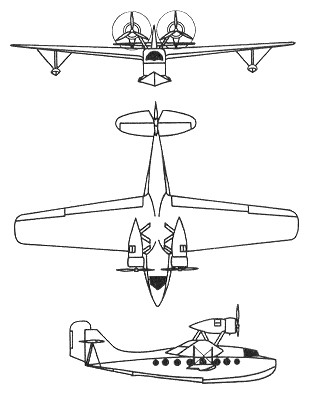
The prototype MC.94 commercial amphibian flew for the first time in 1935 powered by two 574kW Wright SGR-1820-F air-cooled radial engines, and fitted with retractable wheels which swung forward into streamlined casings in the leading edges of the wings. The two pilots had a fully enclosed cockpit, and up to 12 passengers a main cabin equipped with a toilet to the rear, baggage in an aft compartment and marine gear in a nose compartment. The first five production MC.94 (without the retractable wheels of the prototype) were similarly powered. The only other production aircraft were six similar flying-boats with 596kW Alfa Romeo 126 RC.10 engines. All MC.94 served initially with Ala Littoria.
Engine: 2 x Alfa Romeo 126-R.C.10, 550kW Take-Off Weight: 8200 kg / 18078 lb Empty Weight: 5350 kg / 11795 lb Wingspan: 22.8 m / 74 ft 10 in Length: 16.2 m / 53 ft 2 in Wing Area: 76.0 sq.m / 818.06 sq ft Max. Speed: 292 km/h / 181 mph Cruise Speed: 250 km/h / 155 mph Ceiling: 6000 m / 19700 ft Crew: 3 Passengers: 12
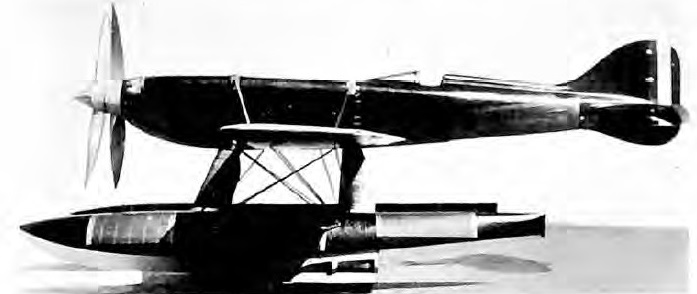
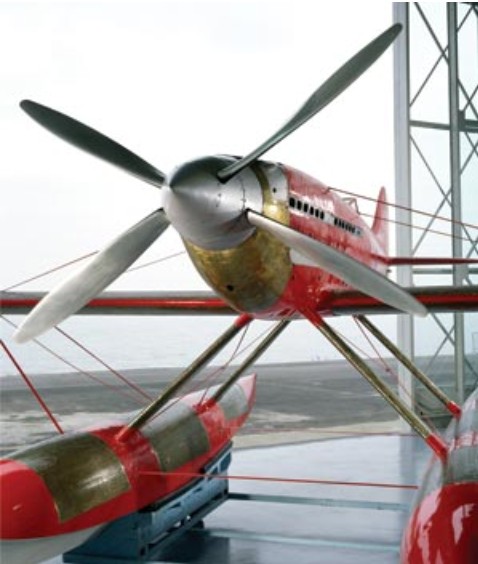
Designed by Mario Castoldi over three years from 1931 to 1933, it was hoped this plane would enter (and win) the Schneider Trophy race of 1931 but the plane could not be ready in time for that contest (the winner was the British Supermarine S.6B).
First flown in June 1931, the MC.72 was a single-seat twin-float seaplane. The unique engine was effectively two in tandem driving separate (counter-rotating) propellors.
In late 1927, Italian Mario de Bernardi upped the world absolute speed record mark to 298 mph with a Macchi M-52 seaplane developed from the M-39 in which he had won the 1926 Schneider Race. He soon raised the mark to 318 mph with the same airplane.
Problems with the Fiat 24 cylinder engine hp prevented it taking part in the Schneider seaplane contests, but Francesco Agello boosted the 3 km speed record with it to 423.57 mph 10 April 1933 and then 100 km speed record to 390.8 mph. The Coupe de Vitesse Louis Bleriot record of 30 min was raised to 384.86 mph. A world speed record was established on October 23, 1934 at 440.67 mph / 709 km/h. This world speed record lasted for five years – but as a record for a piston-engine seaplane it has never been broken (likely because development of racing seaplanes essentially came to an end with the end of the Schneider Trophy contest).
The Schneider Trophy never experienced any casualties during competition, but several pilots were killed training for the races. Italy had five casualties: Vittorio Centurione in 1926 in a Macchi M-39; Giuseppe Motta in 1929 in a Macchi M-67; Tomasso Dal Molin in 1930 in a Savoia S.65; Giovani Monti and Stanislao Bellini in 1931 in a Macchi MC-72.
As a result of three consecutive victories for the British, the Schneider races were over.
Engine (1934): Fiat AS.6 24 cyl., 2300 hp Engine (1934): Fiat AS.6 24 cyl., 2500 hp Engine (1934): Fiat AS.6 24 cyl., 2800 hp Prop: Twin CR
Engine: 2 x Fiat A.S.6, 2280kW Take-Off Weight: 2907 kg / 6409 lb Empty Weight: 2500 kg / 5512 lb Wingspan: 9.5 m / 31 ft 2 in Length: 8.2 m / 26 ft 11 in Height: 3.3 m / 10 ft 10 in Max. Speed: 702 km/h / 436 mph Crew: 1
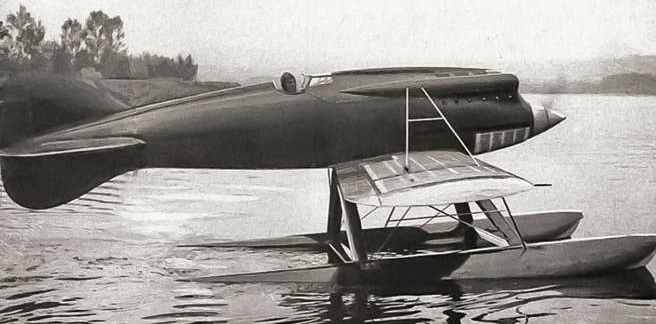
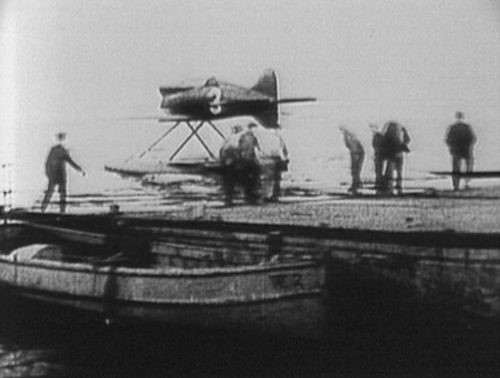
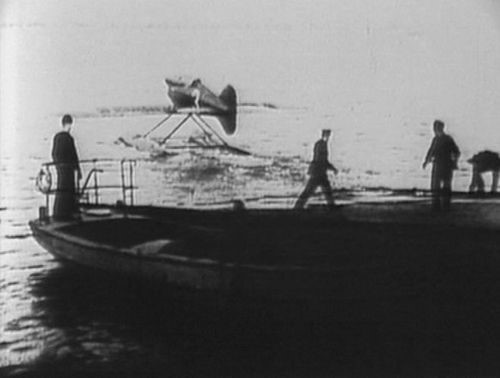
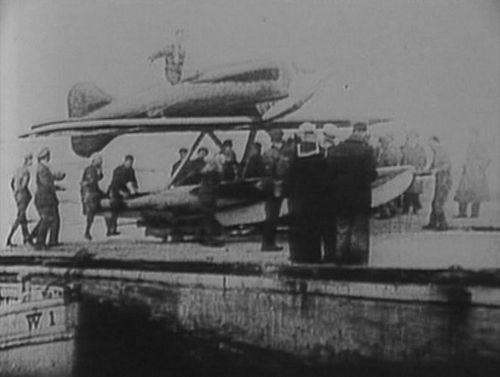
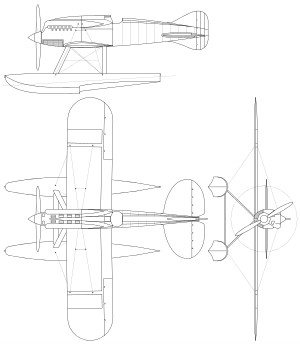
In 1922 Mario Castoldi moved to Macchi Aeronautica, where he became famous for designing a series of seaplanes that set world speed records. His first winning plane was the Macchi M.39 seaplane. It was designed in 1925-26 to compete in the Schneider Trophy race of 1926. Powered (like all the Macchi planes from this time) by a Fiat engine it managed a top speed of 396 km/h (246 mph) and won the contest for that year.
Macchi M.39
Italian Mario de Bernardi won the 1926 Schneider Race with a Macchi M-39.
Macchi M.39
The Schneider Trophy never experienced any casualties during competition, but several pilots were killed training for the races. Italy had five casualties: Vittorio Centurione in 1926 in a Macchi M-39; Giuseppe Motta in 1929 in a Macchi M-67; Tomasso Dal Molin in 1930 in a Savoia S.65; Giovani Monti and Stanislao Bellini in 1931 in a Macchi MC-72.