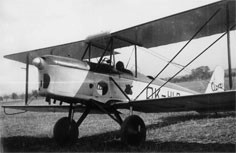
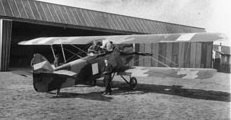
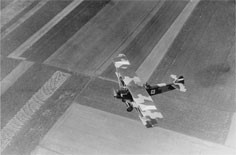
The original two-seater version of the Aero A 34 type was built in 1929 and powered by a 85 Walter Vega engine. The wings are wood-framed covered by fabric. Steel-framed fin, rudder, as well as tail-plane and elevator all covered by fabric. The fuselage is steel-tube-welded frame combined with fabric-covered wooden skeletal structure.
In 1934 came a sporting A-34 Blackbird powered by a 105 hp Walter Junior.
A-34 Engine: Walter Junior, 105 hp Span 8.7 m Length: 7.1 m Empty weight: 500 kg Top speed: 160 kph Service ceiling: 3000 m Range: 320 km Climb 1500m: 11 min 48 sec Crew: two
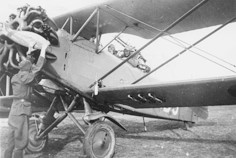
The Ap-32 light bomber was in production from 1930. Its forerunner was the A-32 type, whose span was by 40 cm narrower, length by 6 cm longer and empty weight by 26 kg lower. The powerplants were of the same 450 horsepower.
The Ap-32 type was used also as a recce aircraft. Its armament comprised two fixed and two ones flanking the cockpit incl. bomb racks under the lower wing for twelve pieces of 10 kg bombs.
Engine: Walter Jupiter 450 hp Wingspan: 12.8 m Length: 8.14 m Empty weight: 1072 kg Climb to 5000m: 26 min Service ceiling: 6700 m
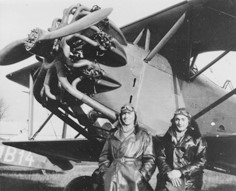
The A-30 two-seat reconnaissance biplane and A-130 had been forerunners of the Aero A-230.
Built from 1930.
A-230 Engine: Lorraine Ditrich, 490 hp Wing span : 15.3 m Length: 10 m Empty weight: 1420 kg Maximum speed: 198 kph Climb to 5000 m: 27 min Service ceiling: 5800 m Endurance: 5 hr 30 min
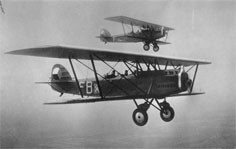
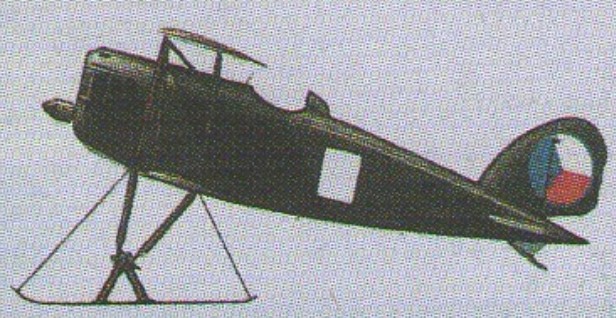
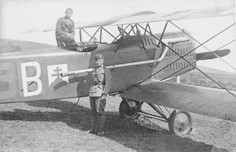
The Aero A-11 type came into existence by fitting a 240 hp Walter W-IV engine in the Aero 12 airframe. This aircraft was being built until 1930 year and used by the Czechoslovak Air Force in recce-, training- ground attack- and bomber versions. Observer armed by one rearward-firing machine gun and pilot by a fixed synchronized one.
The Aero A.11 was for the Czech Army Air Force in the interwar years between World War One and World War Two. The A.11 was designed from the outset as a multi-purpose airframe and would see no fewer than 20 different variant types since first flying in 1923.
Aero A-12 bomber
The A.11 pilot and gunner sat in tandem along the box-type fuselage. The biplane wing structure was fitted just in front and around the pilot’s position with the single liquid-cooled engine mounted forward. A single .303 caliber machine gun was fitted for self defence.
The Aero A.11 was seen in its typically reconnaissance platforms but was adept to day or night bombing. Other notable variants would go on to include a target tug (in the form of the A.29) and several day and night bombers of similar design.
Aero A-12
The A.29 target-tug variant would also form the basis for the first Czech sea-operating float plane.
440 were built.
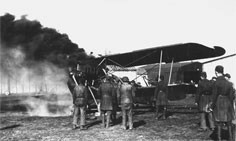
Aero A-11.117 Equipped with exhaust-flame dampers for night-time flights
Aero A.11 Engine: 1 x Walter W.IV 8-cylinder liquid-cooled, 240hp Length: 26.90 ft (8.2 m) Span: 41.90 ft (12.77 m) Height: 10.17 ft (3.10 m) Empty Weight: 3,263 lbs (1,480 kg) Maximum Speed: 133 mph (214 kmh; 116 kts) Maximum Range: 466 miles (750 km) Service Ceiling: 23,600 ft (7,193 m) Range: 750 km Armament: 1 x 7.62 mm machine gun Accommodation: 2
Aero A.12 Engine: Maybach Mb-IV, 240 hp Span: 12.80 m Length: 8.34 m Empty weight: 1080 kg Maximum speed: 200 kph Service ceiling: 7500 m Range: 760 km Armament : A fixed synchronized machine gun and one firing rearward
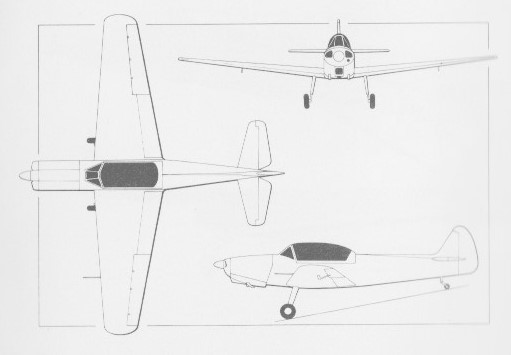
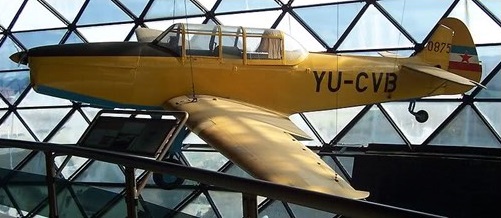
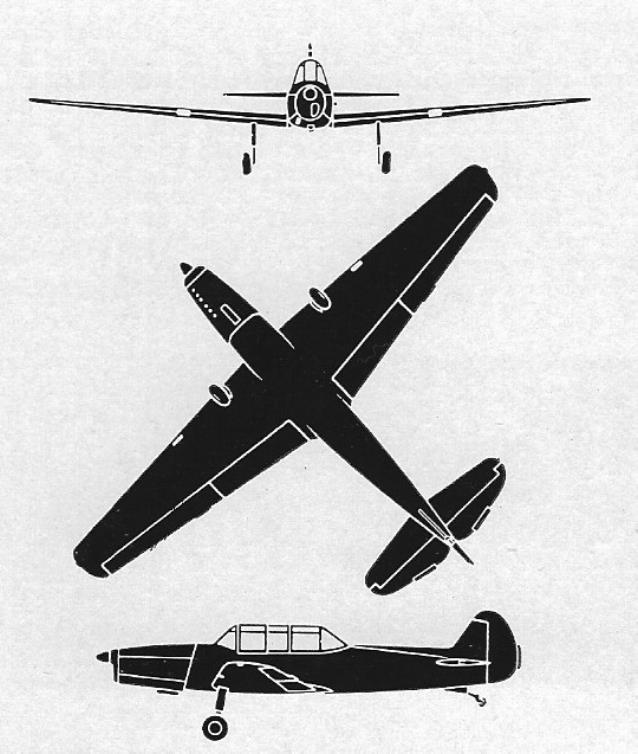
The Aero 3 is a development of the Aero 2 two-seat primary trainer, retaining much of the all-wood structure of the earlier machine, but with a more powerful 185 hp Lycoming O-435-A engine, giving an all round improvement in performance.
Main external feature that distinguishes the Aero 3 from the 2, apart from the engine cowling, is the one-piece blown plastic canopy which replaced the former ‘greenhouse’. Full dual controls are fitted and the front seat can be covered with a hood for blind flying tuition.
Production began in 1957 and it largely replaced the Aero 2 in service with the Yugoslav Air Force. They could be equipped for civil or military use.
Engine: Lycoming O-435-A, 185 hp Wingspan: 34 ft 5.5 in / 10.50 m Length: 28 ft 1.75 in / 8.58 m Max TO weight: 2641 lb / 1198 kg Max cruise: 97 kt / 112 mph / 180 kph at 2950 ft / 900 m Max speed: 143 mph Service ceiling: 14,100 ft / 4300 m Range: 366 nm / 422 miles / 680 km Seats: 2 tandem
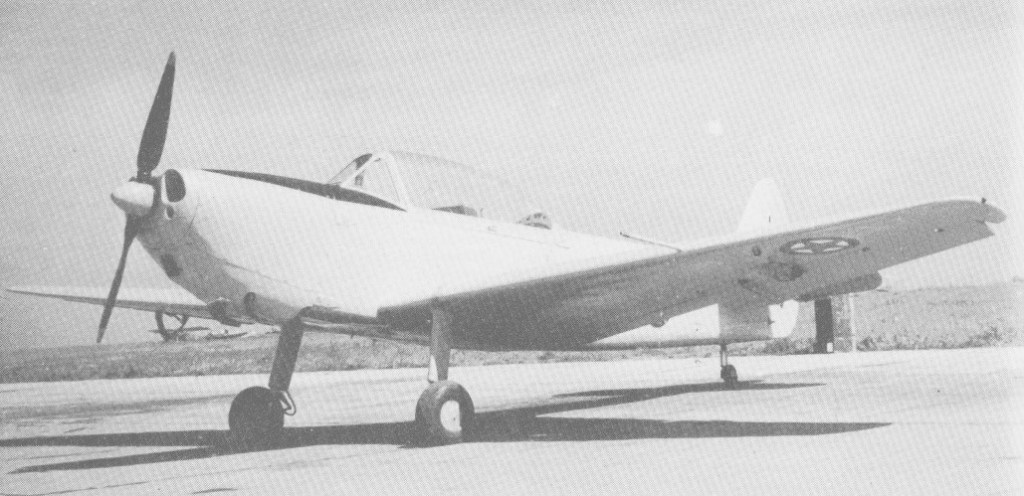
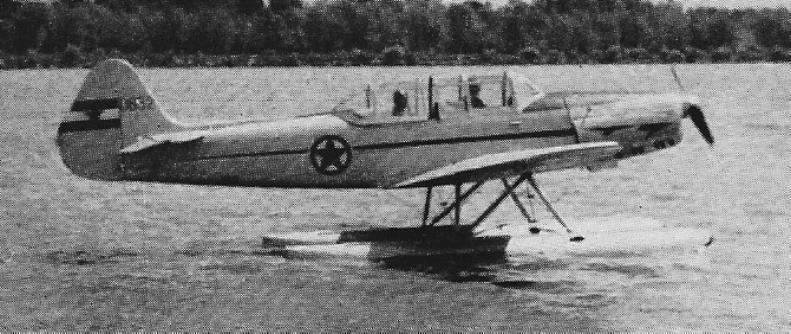
The Ikarus Aero 2 was designed in response to a Yugoslav Air Force requirement for a modern, monoplane trainer to replace the Fizir FN biplanes then in service. Although the design pre-dated the war, the Aero 2 was a piston-engined military trainer aircraft built in Yugoslavia in the years following World War II.
Designed by Ing. Petkov and Ing. Boris Cijan, the prototype was built by the Ikarus factory at Zemun and flew for the first time on 19 October 1946.
Aero 2H
Variants:
Aero 2B Open cockpit version: 145hp (108kW) de Havilland Gipsy Major
Aero 2BE Enclosed cockpit version: 145hp (108kW) de Havilland Gipsy Major
Aero 2C Open cockpit version: 160hp (119kW) Walter Minor 6-III
Aero 2D Enclosed cockpit version: 160hp (119kW) Walter Minor 6-III
Aero 2E Enclosed cockpot version: 160hp (119kW) Walter Minor 6-III
Aero 2F Open cockpit version Engine: 160hp (119kW) Walter Minor 6-III Span: 34 ft 5.25 in Length: 27 ft 0 in Loaded weight: 2156 lb Max speed: 139 mph at SL Seats: 2
Aero 2H Twin-float version: 160hp (119kW) Walter Minor 6-III
General characteristics: Engine: 1 × de Havilland Gipsy Major, 108 kW (145 hp) Wingspan: 10.5 m (34 ft 5¼ in) Wing area: 17.4 sq.m (187 sq.ft) Length: 8.45 m (27 ft 8¾ in) Height: 2.80 m (8 ft 10¼ in) Empty weight: 564 kg (1241 lb) Gross weight: 996 kg (2196 lb) Maximum speed: 208 km/h (129 mph) Range: 680 km (423 miles) Service ceiling: 4500 m (14,765 ft) Seats: 2
Aero Tovarna Letadel was founded in Prague 1919, owned originally by a lawyer, this company made accessories as well as building aircraft. Built copies of Austrian Phonix (Brandenburg) biplanes, but later developed own designs Led by Ing. Husak. A-11 and A- 30, both international record-breakers, were two-seat reconnaissance biplanes of 1920s and 1930s; A-34 was a light two-seater; A-35 a four-passenger monoplane; A- 38 a nine-seat cabin biplane. By early 1930s company was making A100 two-seat multipurpose aircraft and A102 fighter. Aero M.B.200 was French Marcel Bloch bomber, 124 license-built, and partly subcontracted to Avia; Aero 204 was eight-passenger civil monoplane; a military development of this aircraft was designated Aero 304. A fast medium bomber was tested in 1938, but war prevented its production.
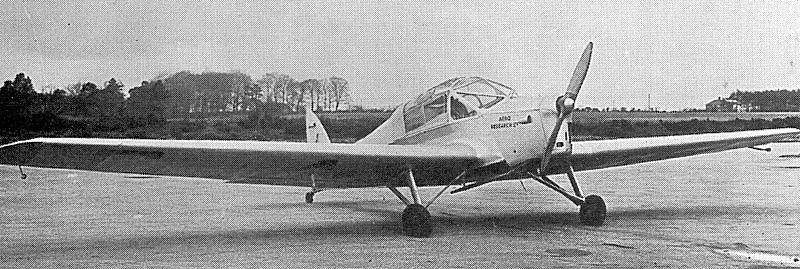
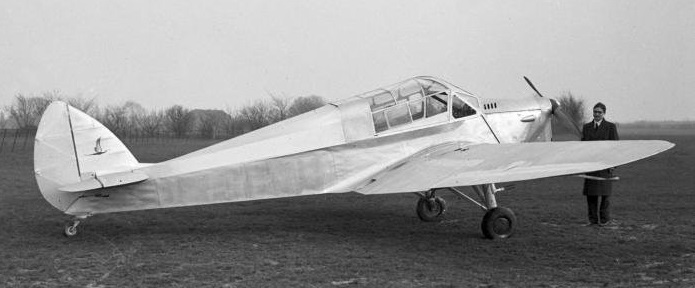
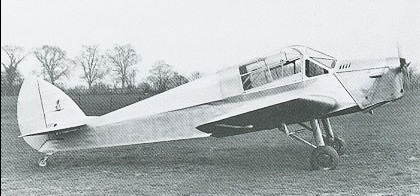
The Snark research aircraft G-ADDL c/ DB.2 was designed by Dr. N.A. de Bruyne and built by Aero Research Ltd in 1934. It was built to test low weight, bakelite-bonded plywood, stressed skin wing and fuselage structures
Apart from the structure the Snark was a conventional looking low-wing four-seat cabin monoplane, powered by a nose-mounted 130 hp (97 kW) de Havilland Gipsy Major piston engine. Registered G-ADDL the Snark first flew from Cambridge on 16 December 1934 flown by de Bruyne.
In May 1936 the Snark was transferred to the Royal Aircraft Establishment at Farnborough for research into the aerodynamics of thick wing monoplanes, with serial number L6103. The aircraft was sold by the RAE on 8 June 1938 but was destroyed by German bombing at Croydon Airport in 1940.
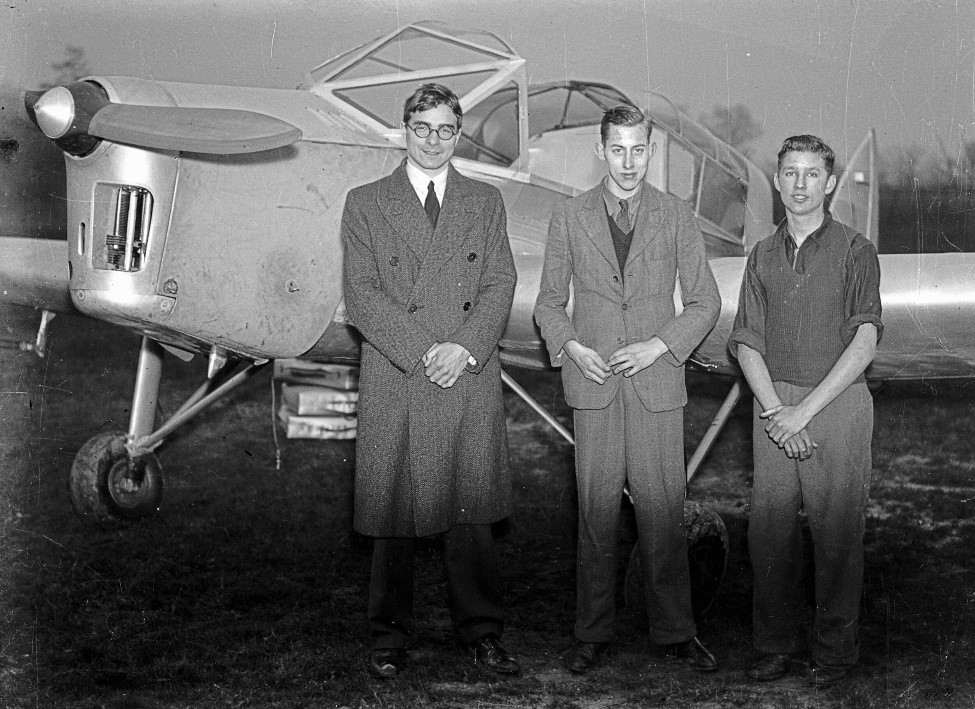
Dr Norman de Bruyne (left) with two of Aero Research’s staff members
Powerplant: 1 × de Havilland Gipsy Major, 130 hp (97 kW) Wingspan: 42 ft 6 in (12.95 m) Length: 24 ft 7 in (7.49 m) Empty weight: 1,200 lb (544 kg) Gross weight: 2,200 lb (998 kg) Maximum speed: 123 mph (198 km/h, 107 kn) Cruise speed: 110 mph (177 km/h, 96 kn) Range: 450 mi (724 km, 390 nmi) Service ceiling: 15,500 ft (4,725 m) Rate of climb: 600 ft/min (3.0 m/s) Crew: 1 Capacity: 3
The third design of Dr. N.A. de Bruyne, the Ladybird was a single seat, shoulder wing monoplane, powered by a Scott Squirrel.
It was started in 1936 at Duxford by Aero Research Ltd as c/n DB.3 G-AFEG. It was not finished and taken over for competition by J.N.Maas in 1937 and redesignated de Bruyne-Maas Ladybird and given a new c/n, M.1.
It first flew at Cambridge in 1937 but was re-engined in 1938 with a Bristol Cherub. It apparently spent most of its time flying as DB.3/M1.
It survives somewhere in the Peterborough area.
Engine: Bristol Cherub, 30 hp Wingspan: 32.021 ft / 9.76 m Wing area: 106.241 sq.ft / 9.87 sq.m MTOW: 800.4 lb / 363.0 kg Weight empty: 421.2 lb / 191.0 kg Wing load: 7.59 lb/sq.ft / 37.0 kg/sq.m Crew: 1