Designed by Oleg Konstantinovich Antonov between 1926-1929 were the OKA- 3 to 7.
Inter-Wars
Antonov OKA-1
First aircraft designed by Oleg Konstantinovich Antonov (1924) was OKA-1 glider.
Antoni
ITALY
Societa Italiana Brevetti Antoni completed in 1923 an experimental aircraft with variable-camber wing using patents and designs of Ing Guido Antoni. Firm was wound up shortly afterwards. Antoni, an inventor in several fields, was first associated with aviation in 1912.
ANT / Central Aero-Hydrodynamic Institute / TsAGI
USSR, Moscow.
Founded by Bolshevik government December 1,1918 under Prof N. E. Zhukovskii; based on Moscow Technical University’s pre-Revolution research organization. Departments for study of propellers, aero engines, aeronautical construction materials, flight testing, etc. Separate flight test center for Soviet Air Force established 1920; alternative centers for aero engines 1930 and materials 1932. Zhukovskii died 1921; succeeded by S. A. Chaplygin (1921-1941), N. I. Kharlamov, M. N. Shulzhenko and (since early 1960s) V. M. Myasischchev.
In 1924, Pavel Sukhoi joined the Central Aero and Hydrodynamic Institute, or TsAGI, eventually becoming a bureau design leader under Andrei N. Tupolev.
The creation of the BOK practically coincided with the restructuring of the experimental building in the USSR. The 27 of August of 1931 the TsKB and TsAGI were merged into one organization which was named TsKB-TsAGI and controlled directly by the OGPU. ES Paufler was appointed by the control structure and SV Ilyushin as technical director.
After collaborating in the design of the ANT 25, Sukhoi was responsible for the design, in 1932, of one of the world’s first single seat low wing cantilever monoplane fighters to embody such innovations as a. fully enclosed cockpit and a retractable undercarriage. This aircraft, the ANT 31, or 1 14, flew in October 1933, and series production of an improved version, the 1 14bis which first flew on February 14, 1934, was, in fact, ordered but cancelled two years later when it was found impossible to eradicate some of the fighter’s shortcomings.
New facility built 1931 at Stakhanov, Moscow; continued until 1939. Most aircraft designs before Second World War carried ANT designations, other designers also employed, some eventually heading their own bureaus, e.g. Petlyakov and Sukhoi.
Aircraft with TsAGI designations included Komta twin-engined 10-passenger triplane of 1922; 1- EA to 5-EA and A-4 to A-15 series of helicopters and autogyros from various designers between 1928-1940; and TsAGI-44 (MTB-2) four-engined flying-boat bomber, redesignated from ANT-44 after arrest of Tupolev in 1936.
After Second World War TsAGI became purely research center and moved to new premises at Zhukovskaya, near Ramenskoye. New facilities since provided for new Hydrodynamic Institute at Novosibirsk.
Ansaldo Ansaido A.300
Before Ansaido merged completely with Fiat, in 1925, company built the A.300 two/three-seat multipurpose biplane, extensively produced and used.
The 1919 A.300 was a single-engine two-seat biplane utility aircraft. Three-seat versions were also built for reconnaissance use.
Ansaldo Ansaido Flying Limousine
A 6 place biplane circa 1920s.
Angus Aquila
A single seat, low wing, braced monoplane of all wood construction with aluminium covered wings.
Designed and built by A.L.Angus in Wiltshire, UK in 1930, it first flew in 1931 at Hanworth as G-ABIK cn 1.
It was withdrawn from use 21 March 1931.
Engine: Salmson AD.9
Angle, Glenn D
In 1939 Glenn D Angle of Detroit MI., USA, built a five cylinder, air cooled radial aero engine of 184 cu.in, producing 100hp.
ANEC IV Missel Thrush
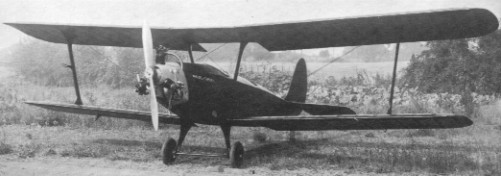
The ANEC IV was built for the 1926 Daily Mail light aeroplane competition. An attempt to produce a low-cost two seater with a 35 hp engine.
ANEC II

Built in 1924 by the Air Navigation and Engineering Company at Addlestone, Surrey, for the Air Ministry’s light aeroplane competition for two-seaters fitted with engines of up to 1,100 cc, the ANEC was eliminated from the trials owing to problems with the valve springs in its Anzani engine. Entered in the 1925 King’s Cup by Maj J.C. Savage, it did not take part, again owing to engine maladies. After being fitted with a 32 h,p, Bristol Cherub III engine and a strutted undercarriage, the machine finally came into its own, winning the Air League Challenge Cup Race, a 11 6 mile round trip from Castle Bromwich to Woodford, on July 16, 1927. Subsequently operated from Heston aerodrome by Air Commodore Alien Wheeler, the ANEC was withdrawn from use at West Mailing in 1937 before being moved to Old Warden for storage. The fuselage of G EBJO was restored over a three year period in the mid 1990s by Don Cashmore at Radcliffe on Trent in Nottinghamshire, and delivered back to Old Warden in October 1997 for completion by Shuttleworth engineer Andy Preslent. The fuselage and wings were reunited in October 2000. The ANEC then flew with an ABC Scorpion 2 engine restored by two of Shuttleworth’s engine specialists, Phil Norris and Bryan Avery.


