Armstrong Siddeley Lynx / Alfa Romeo Lynx

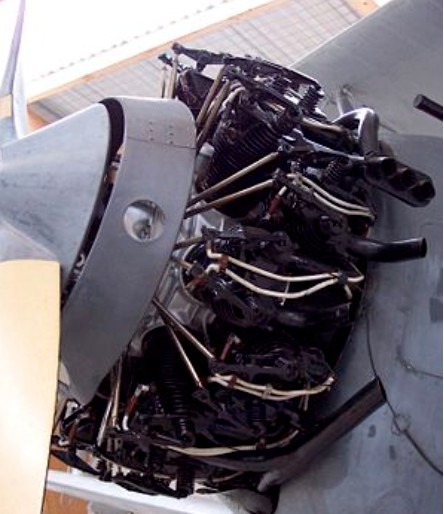
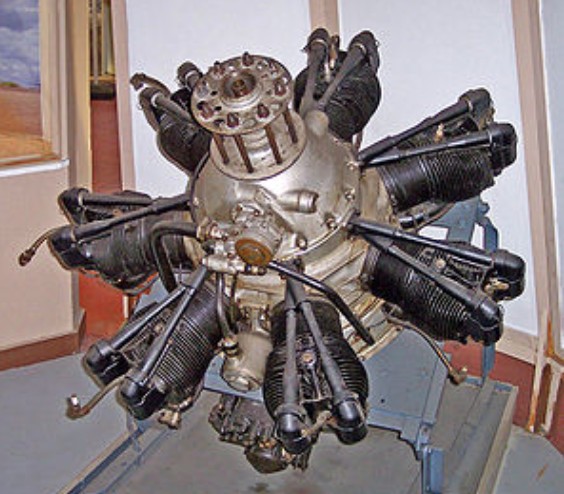
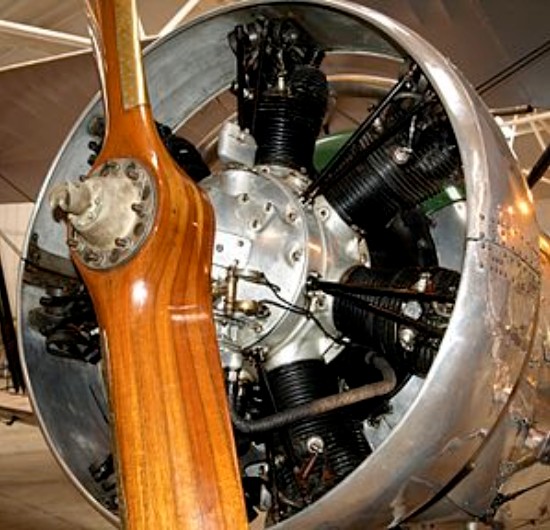
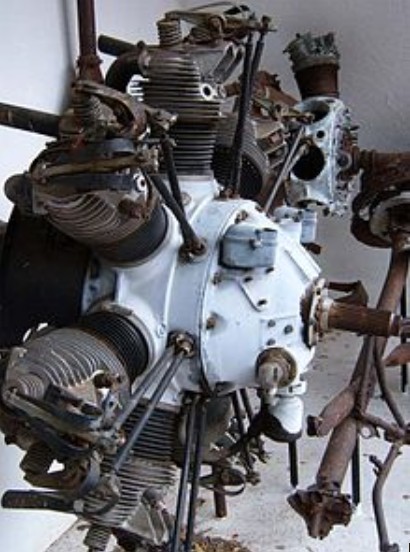
The Armstrong Siddeley Lynx is a British seven-cylinder aero engine developed by Armstrong Siddeley from the Armstrong Siddeley Jaguar. Testing began in 1920 and 6,000 had been produced by 1939. In Italy Alfa Romeo built a 200 horsepower (150 kW) licensed version of this engine named the Alfa Romeo Lynx.

Approximately 6000 were built.

Armstrong Siddeley Lynx

Variants:

Lynx I
1920, 150 hp.

Lynx II
1920, 184 hp.

Lynx III
1924, 200 hp.

Lynx IV
1929, 180 hp.

Lynx IVA
1930, 188 hp.

Lynx IVC
1929, 208/225 hp.

Lynx IV(G)
1929, Geared propellor drive.

Lynx IV(MOD)
1929, 188 hp, reconditioned and modified Lynx IV.

Lynx IV(S)
1928, 200 hp, Fully supercharged.

Lynx V / Lynx Major became Armstrong Siddeley Cheetah
1930, increased bore and stroke, name changed from Lynx V to Lynx Major then Cheetah. Effectively half a Panther.

Applications:

Airspeed Courier
Airspeed Envoy
Albatros L 68
Avro 504
Avro 618 Ten
Avro Avocet
Avro 641 Commodore
Avro 626
Avro Sea Tutor
Avro Tutor
BAT Bantam
Blackburn Lincock
Boulton Paul Bittern
Canadian Vickers Vanessa
Canadian Vickers Varuna
Canadian Vickers Vedette
Cierva C.8
de Havilland Hawk Moth
Fairchild FC-2
Fokker C.VII
Fokker F.VIIA
Gloster Grouse
Messerschmitt M 18
Morane-Saulnier MS.230
Nieuport-Delage NiD 39
Larynx
Parnall Parasol
Raab-Katzenstein RK-26
Wackett Warrigal
Saro Cloud
Saro Cutty Sark
Supermarine Seamew
Vickers Vireo
VL Tuisku
Westland Wagtail

Alfa Romeo Lynx
Breda Ba.19
Breda Ba.25
IMAM Ro.10

Specifications:

Lynx IV
Type: 7-cylinder air-cooled radial engine
Bore: 5.0 in (127 mm )
Stroke: 5.5 in (140 mm)
Displacement: 756 cu in (12.4 L)
Length: 45.6 in (1,158 mm)
Diameter: 42 in (1,067 mm)
Dry weight: 525 lb (238 kg )
Valvetrain: Overhead valve, 2 valves per cylinder
Fuel system: Carburettor
Cooling system: Air-cooled
Power output: 187 hp (139 kW) at 1,700 rpm cruise / 215 hp (160 kW) at 1,900 rpm max
Power-to-weight ratio: 0.35 hp/lb (0.6 kW/kg)

Armstrong Siddeley Leopard

The Armstrong Siddeley Leopard was a British 14-cylinder twin-row air-cooled radial aero engine developed in 1927 by Armstrong Siddeley. It was the most powerful radial engine in the world when introduced.

Variants:

Leopard I
700 hp, medium supercharged. Direct drive propeller.

Leopard II
700 hp, geared epicyclic drive.

Leopard III
800 hp, two-valve cylinder head, direct drive.

Leopard IIIA
800 hp, geared epicyclic drive.

Applications:
Blackburn Iris
Junkers Ju 52
Hawker Dantorp
Hawker Horsley

Specifications:

Leopard I
Type: 14-cylinder twin-row air-cooled radial engine
Bore: 6.0 in (152.4 mm)
Stroke: 7.5 in (190.5 mm)
Displacement: 2,970 cu in (48.6 L)
Length: 60.85 in (1546 mm)
Diameter: 58 in (1473 mm)
Dry weight: 1,466 lb (665 kg)
Valvetrain: Overhead valve, four valves per cylinder
Fuel type: Petrol
Cooling system: Air-cooled
Power output: 700 hp (522 kW) at 1,650 rpm at sea level
Compression ratio: 5.00:1
Fuel consumption: 45 gal/hr (169 l/hr) at cruise speed
Power-to-weight ratio: 0.47 hp/lb

Armstrong Siddeley Jaguar

The Jaguar was developed from the Royal Aircraft Factory RAF.8 design proposal of 1917, and was engineered to use a gear driven supercharger. The Jaguar was a petrol-fuelled air-cooled 14-cylinder two-row radial engine design. First run on 21 June 1922 initial performance was not as expected, as a result the bore was increased to 5.5 in (139.7 mm) with all variants after the Jaguar I using this dimension. Throughout its career the Jaguar suffered from vibration due to a lack of a crankshaft centre bearing.

The Jaguar III was first used in 1923, followed in 1925 by the Jaguar IV and in 1927 by the Jaguar VI. The most powerful version of the engine, the Jaguar VIC, produced a maximum of 490 hp (365 kW) on takeoff at 1,950 rpm and weighed 910 lbs (413 kg). The later Lynx was designed using one row of Jaguar cylinders.

Variants:

Jaguar I
1922, 300 hp.

Jaguar II
1923, 385 hp, increased bore, capacity 1,512.5 cu in (24.8 L).

Jaguar III
1923, 385 hp.

Jaguar IIIA
1923, 380 hp.

Jaguar IV
1925, 385 hp, twin carburettors

Jaguar IVA
420 hp, Geared propeller drive.

Jaguar IVC
1928, 400 hp, revised connecting rod design, enclosed valve gear.

Jaguar IV(S)
1925, 365 hp, fully supercharged.

Jaguar V
1928.

Jaguar VI
1927.

Jaguar VI(S)
1928, supercharged version of Jaguar VI.

Jaguar VIC
1927, 470 hp, geared propeller drive version of Jaguar VI.

Jaguar VID
1928.

Jaguar VIIA
1929, 400 hp, fully supercharged.

Jaguar VIII
1928, 405 hp, fully supercharged, geared propeller drive

Applications:

Airco DH.4
Airco DH.9
Armstrong Whitworth Ajax
Armstrong Whitworth Aries
Armstrong Whitworth Argosy
Armstrong Whitworth Atlas
Armstrong Whitworth Siskin
Armstrong Whitworth Starling
Armstrong Whitworth Wolf
Avro 642
Blackburn Airedale
Blackburn C.A.15C
Blackburn Turcock
Boulton Paul P.71
De Havilland Dormouse
De Havilland DH.50
De Havilland Giant Moth
De Havilland Hyena
Fairey Ferret
Fairey Flycatcher
Fokker C.V
Fokker D.XVI
Gloster Gnatsnapper
Gloster Grebe
Handley Page Hampstead
Hawker Danecock
Hawker Hawfinch
Hawker Hoopoe
Hawker Woodcock
Larkin Lascowl
Martinsyde ADC 1
Nieuport Nighthawk
Parnall Plover
RAAF Experimental Section Warrigal II
Supermarine Air Yacht
Supermarine Nanok
Supermarine Southampton
Vickers Vellore
Vickers Vespa
Vickers Viastra
Vickers Vimy Trainer
Westland Wapiti
Westland Weasel

Jaguar I
Type: 14 cylinder 2-row radial engine
Bore: 5 in (127 mm)
Stroke: 5 in (127 mm)
Displacement: 1,375 cu in (22.5 L)
Length: 41 in (1,041 mm)
Diameter: 43 in (1,092 mm)
Dry weight: 710 lb (322 kg)
Supercharger: Gear driven
Fuel system: Carburettor
Cooling system: Air-cooled
Power output: 680 hp (507 kW)
Compression ratio: 5:1
Fuel consumption: 19 gal/hr (71 L/hr) at cruise
Power-to-weight ratio: 0.95 hp/lb (1.6 kW/kg)

Armstrong Siddeley Hyena

The Armstrong Siddeley Hyena was a British aero engine developed by Armstrong Siddeley. Designed in the 1930s, it was an unusual experimental radial engine with inline cylinder banks. First run in 1933, it was flown using an Armstrong Whitworth A.W.16 fighter aircraft as a test bed. Unresolved problems with cooling of the rear cylinders prevented the engine from going into production. Few details of this engine survive as company records were lost.

Hyena
Type: 15-cylinder 3-row radial engine with inline banks.
Bore: 5.3 in (137 mm)
Stroke: 4.88 in (125 mm)
Displacement: 1,615.58 cu in (26.6 L)
Valvetrain: Overhead poppet valves
Supercharger: Medium supercharged
Fuel type: 77 Octane petrol
Cooling system: Air-cooled
Reduction gear: Epicyclic geared, left hand tractor
Power output: 618 hp at 2,000 rpm at sea level

Armstrong Siddeley Genet

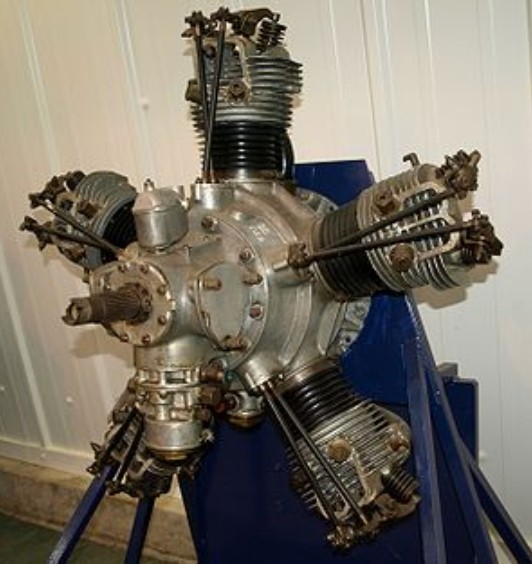
The Armstrong Siddeley Genet was a five-cylinder, air-cooled, radial engine for aircraft use built in the UK, first run in 1926. It developed 80 hp at 2,200 rpm in its final form and was a popular light aircraft powerplant. The Genet was later developed inti the Genet Major.

Variants and applications:

Genet I
Genet I producing 65 hp.
Avro 618 Ten
Avro Avian prototype
Blackburn Bluebird I
BFW M.23
Cierva autogyros. C.9 and C.10
Drzewiecki JD-2
Fleet Fawn
Junkers A50 Junior
Saro Cutty Sark
Southern Martlet
Westland-Hill Pterodactyl

Genet II
The Genet II produced 80 hp due to an increased compression ratio of 5.25:1.
ANEC IV
Avro Avian
Blackburn Bluebird II
Cierva C.19 autogyro
Darmstadt D-18
de Havilland DH.60 Moth
Fairchild 21
Klemm Kl 25
Nicholas-Beazley NB-8G
Parnall Imp
Robinson Redwing II
Southern Martlet
Westland Widgeon

Genet IIA
Also 80 hp and with minor differences to the Mark I.
Robinson Redwing II

Specifications:

Genet I
Type: 5-cylinder single-row radial
Bore: 4 in (101.6 mm)
Stroke: 4 in (101.6 mm)
Displacement: 251.43 cu in (4.1 L)
Length: 28.5 in (724 mm)
Diameter: 34 in (863.6 mm)
Dry weight: 168 lb (76 kg)
Valvetrain: Overhead poppet valves
Cooling system: Air-cooled
Reduction gear: Direct drive, Left hand tractor
Power output: 65 hp at 1,800 rpm
Compression ratio: 5.2:1
Power-to-weight ratio: 0.38 hp/lb

Armstrong Siddeley Genet Major / Civet     

Genet Major

The Armstrong Siddeley Genet Major is a British five-cylinder (later seven-cylinder), air-cooled, radial engine for aircraft, designed and built by Armstrong Siddeley and first run in 1928. It developed 140 horsepower (104 kW).

In Royal Air Force use the seven-cylinder version was known as the Civet I. The Feliform names used are in line with company convention, the and Civet both being large cat-like carnivores.

Armstrong Siddeley Civet

Variants and applications:

Genet Major I
The Genet Major 1 was a five-cylinder engine of 105 horsepower (78 kW) that was closely related to the Genet I but with increased bore and stroke.

Applications:

Avro Avian
Avro 619
Avro 624
Avro 638 Club Cadet
Cierva C.19 Autogiro
Civilian Coupé
Saro Cutty Sark
Southern Martlet
Westland IV

Genet Major 1A (Civet I)
The Genet Major 1A (or Civet I in RAF service) was a seven-cylinder development of the Genet Major I, nominally rated at 145 horsepower (108 kW).

Applications:

Avro Avian
Avro Cadet
Avro Rota
Cierva C.30A Autogiro
RWD-6 (not specified 7-cylinder Genet Major sub-type)
Saro Cutty Sark
Westland Wessex

Genet Major III
As Genet Major IA but with cylinders using cast rocker boxes.

Genet Major IV
A geared propeller drive version of the Genet Major IA, 160 horsepower (120 kW).

Applications:

ANBO V

Specifications:

Genet Major IA/Civet I
Type: 7-cylinder single-row radial piston engine
Bore: 4.25 in (107.95 mm)
Stroke: 4.5 in (114.3 mm)
Displacement: 452.01 cu in (7.3 L)
Length: 38.8 in (985.5 mm)
Diameter: 38.15 in (970 mm)
Dry weight: 327 lb (148 kg)
Valvetrain: Overhead poppet valves
Fuel type: 77 Octane petrol
Cooling system: Air-cooled
Reduction gear: Direct drive, Left hand tractor
Power output: 165 hp (123 kW) at 2,425 rpm at sea level
Compression ratio: 5:1
Power-to-weight ratio: 0.5 hp/lb

Armstrong Siddeley Lynx Major / Cheetah

Cheetah X

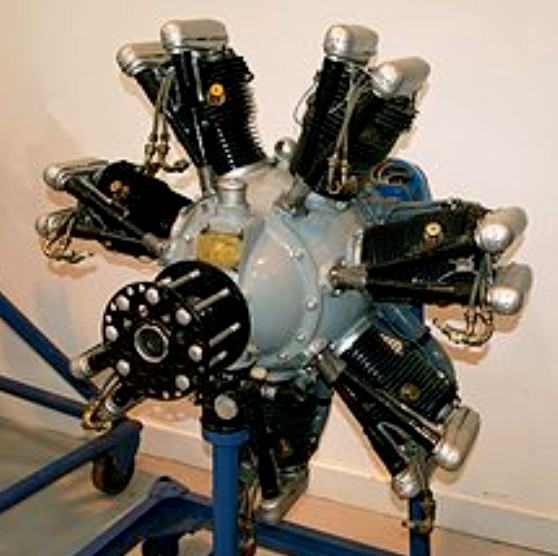
The Armstrong Siddeley Cheetah is a seven-cylinder British air-cooled aircraft radial engine of 834 cu in (13.65 lt) capacity first run in 1935 and produced until 1948. Early variants of the Cheetah were initially known as the Lynx Major.
The Cheetah was used to power many British trainer aircraft during World War II including the Avro Anson and Airspeed Oxford.

The Cheetah was developed from the earlier Lynx using the increased bore cylinders from the Armstrong Siddeley Panther but the engine retained the stroke of the Lynx. Initially only direct-drive variants were produced with later engines being made available with propeller reduction gear of various ratios. Superchargers were also available for later variants, both geared and directly driven by the crankshaft.

The basic design of the Cheetah remained unchanged from its introduction in 1935 to the last examples built in 1948. It was the first engine of its type to be certified for 1,200 hours of operational time between overhauls, with over 37,200 examples built.

Variants:

Lynx V (Lynx Major)
1930, 230 hp (171 kW).

Cheetah V
1935, 270 hp (201 kW) at 2,100 rpm.

Cheetah VA
1935, 285 hp (212 kW) at 2,425 rpm.

Cheetah VI
1935, 307 hp (229 kW) at 2,425 rpm.

Cheetah VIA
1936, as Mk VI but with Mk IX cylinders.

Cheetah IX
1937, 345 hp (257 kW) at 2,425 rpm.

Cheetah X
1938, 375 hp (280 kW) at 2,300 rpm.

Cheetah XI
345 hp (257 kW) at 2,425 rpm, geared version of Cheetah X.

Cheetah XII
Similar to Mk X, adapted for target drone aircraft.

Cheetah XV
420 hp (313 kW) at 2,425 rpm.

Cheetah XVII
1948, 385 hp (287 kW) at 2,425 rpm.

Cheetah XVIII
385 hp (287 kW) at 2,425 rpm, carburettor modified for aerobatics.

Cheetah XIX
355 hp (265 kW) at 2,425 rpm

Cheetah 25
345 hp (257 kW) at 2,425 rpm, Cheetah XV uprated to 475 hp (355 kW) at 2,700 rpm, modified constant-speed unit.

Cheetah 26
385 hp (287 kW).

Cheetah 27
1948, 385 hp (287 kW).

Applications:
Airspeed Consul
Airspeed Courier
Airspeed Envoy
Airspeed Oxford
Airspeed Queen Wasp
Airspeed Viceroy
Avro 626
Avro 652
Avro Anson
Blackburn Lincock
Bristol Bulldog
626 Prefect
CASA C-201 Alcotán
de Havilland Hawk Moth
Edgar Percival Prospector
Handley Page H.P.R.2
Hispano HS-42
IAe.22 DL
Kingsford Smith PL.7
Koolhoven F.K.51
Marinens Flyvebaatfabrikk M.F.8
Marinens Flyvebaatfabrikk M.F.10
Percival Provost (prototype)
VEF JDA-10M

Specifications:

Cheetah IX
Type: Seven-cylinder single-row supercharged air-cooled radial engine
Bore: 5.25 in (133 mm)
Stroke: 5.5 in (140 mm)
Displacement: 834 cu in (13.65 L)
Length: 52.8 in (1,342 mm)
Diameter: 47.6 in (1,210 mm)
Dry weight: 637 lb (289 kg)
Valvetrain: Two pushrod-actuated valves per cylinder
Supercharger: Centrifugal, 5.4:1 reduction
Fuel system: Claudel-Hobson carburettor
Fuel type: 87 octane rating petrol
Cooling system: Air-cooled
Reduction gear: No
Power output: 338 hp (252 kW) at 2,100 rpm for takeoff

345 hp (257 kW) at 2,425 rpm at 7,875 ft (2,400 m)
Specific power: 0.41 hp/cu in (18.83 kW/L)
Compression ratio: 6.35:1
Specific fuel consumption: 0.45 lb/hp/hr (271 g/kW/hr)
Oil consumption: 0.24–0.45 oz/hp/hr (9–17 g/kW/hr)
Power-to-weight ratio: 0.54 hp/lb (0.89 kW/kg)

Arjanguelsky SB-B

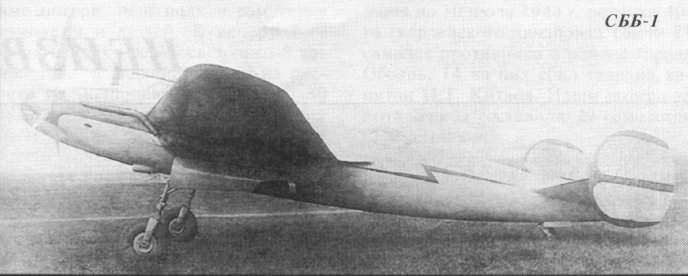
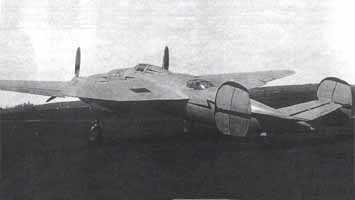
Arjanguelsky SB-B (Russian: Архангельский СБ-Б). The SB-B was the last attempt to keep the SB in service.

Parallel to the development of the SB-RK 2M-105 model, the bureau led by Arjanguelsky began work on a short-range, high-speed bomber in 1939. Initially, the project received factory index S (with this designation tests were performed in the wind tunnel of the model in TsAGI), but soon the name was changed to B. The new design was a radical modification of the model with the aim of obtaining much higher performance and better technological processes to facilitate construction.

The crew was three: pilot, navigator and radio operator-gunner.

The main advantage of the model lay in the aerodynamic improvements. Although similar in configuration to previous models, the B featured a double-tail unit.

The biggest changes focused on improving the aerodynamics. The wingspan was reduced and the wingtips modified. In general, the wing area was reduced to 40 sq.m. The tail unit was modified to carry double tails. The power nacelles were once again aerodynamically improved.

In the structure of the SB-B it was decided to use open profiles instead of metal tubes. Also noteworthy is the extensive use of rivets and stamped parts instead of welds. Due to the war, aluminum production was scarce. For this reason, the ends and the area of the wings between the stringers were built using bakelite sheets glued to the metal structure, which allowed to obtain a higher quality and high resistance surface. To avoid perforations in this structure, the decision was made not to attach the main undecarriage into the wings.

The powerplant was again modified. The Klimov M-105TK engine included a TK-2 turbocharger that made it possible to reach 612 km / h at a height of 9000 meters. The use of the Klimov M-106 was also foreseen, with which according to the calculations it would reach 587 km / h at 7000 meters of altitude. In both engine versions, the use of 3-SMV-2 three-bladed propellers with a diameter of 3.25 m was foreseen.

The radiators were located inside the wing with the intakes on the leading edge of the central plane and the outlets to the rear. They planned to use aluminum radiators developed in the SKB of the NKAP of Leningrad.

The tail wheel of the landing gear could be retracted in flight, also to improve aerodynamics.

The normal operating capacity envisaged 600 kg of bombs, but the maximum capacity was 1000 kg, of which 800 kg could be located in the hold. The armament included bombs between 2.5 and 250 kg.

The defensive weapons included a normal caliber UltraShKAS machine gun in the nose with 600 rounds, operated by the navigator and another UltraShKAS with 800 rounds or a heavy caliber ShVAK-12 machine gun with 300 rounds, operated by the radio operator-gunner.

The performance of the new model far surpassed that of the standard SB bomber. However, the results still did not exceed the 600 km / h requested by the Defense Committee. The biggest problem was the ranga. With a cruising speed at 0.8 of the maximum speed the range with Klimov M-105TK engines, the calculations did not exceed 880 km and with Klimov M-106 engine 970 km. At the cost of reducing the offensive load, the range could be increased to 1,500 km. To solve these difficulties, the project envisaged the use of external fuel tanks of 520 kg to be located under the wings. In this case the take-off weight was 7025 kg.

In November 1939, after a detailed review of the model, the construction of the prototype was approved. By decision of the Defense Committee on 4 March 1940 two copies would be built, B-1 and B-2, at Factory No. 22. The first version would correspond to a fast bomber, while the second would correspond to a dive bomber. The B-2 would have a wider fuselage and nose with a different configuration.

The B-1 prototype with Klimov M-105 series engines was completed around October 1940 and flight tests immediately began. On October 2 the B-1 was taken off the list of Factory No.22 and ground work and test runs began. The problems presented by the Klimov M-105 engine, which ended with catastrophes in Nikolai Polikarpov’s aircraft, forced extreme care in the tests of the B-1, so it was decided to transfer the plane to the Central Airfield in Moscow where the November 6 took flight with test pilot Yu.K. Stankievich at the controls. After six flights, it was decided to return the plane to the airfield of Factory No.22 in Fili. On 26 November 1940, while landing at Fili the left landing gear was damaged.

Upon returning to the workshops, Arjangelsky decided to take the opportunity and carry out a series of improvements as a result of the test flights carried out. The plane was ready to fly again on February 20, 1941.

Between 24 March and 9 of June 1941 the factory tests piloted by Stankevich got excellent speed of 540 km / hr at 4900 meters. After minor refinements it was expected to increase this number by 20 – 25 km / h. The second prototype, the B-2, was built during the summer of 1941 and it was expected to achieve an increase of 40 to 60 km / h.

In November 1940 a high-ranking commission that included representatives of the TsAGI, the VVS and the NKAP made a comparison between the Petlyakov PB-100, the Yakovlev BB-22PB and the Arjanguelsky SB-RK and SB-B. As a result of this meeting, it was decided to promote the production of the PB-100 (future Pe-2) as the main dive bomber and to keep the BB-22 in production. The SB-B was not approved because at that time it had not yet passed the testing stage. However, the program received the green light to continue its course.

Despite the excellent results obtained by the SB-B, even superior in many respects than those of the Pe-2, the start of the war brought about the cancellation of the project. The prototype B-1 was sent to the rear deep once the decision to evacuate the KB of Arjanguelsky to the city of Omsk. What may have happened later is unknown. Arjanguelsky set about repairing the existing SB bomber and was eventually reinstated to the KB of Tupolev.

SB-B / B
Engines: 2 1050 hp М-105Р engines in the B-1
Wingspan: 16.00 m
Wing area: 46.0 m²
Length: 12.27 m
Height: 3.52 m
Empty weight: 4100 kg
Normal takeoff weight: 5980 kg
Maximum speed at sea level: 454 km / h
Maximum speed at height: 540 km / h
Cruising speed: 475 km / h
ROC: 788 m / min
Range at 80% maximum speed: 880 km
Ceiling: 10,100 m
Crew: 3: commander, navigator and radio operator-gunner.
Armament: 4 ShKAS 7.62 mm machine guns
Bombload: 8 max capacity was 1000 kg / normal weights 600 kg
Arjanguelsky, Alexander Alexandrovich

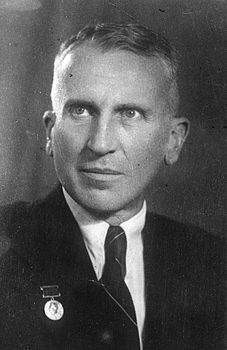
Alexander Alexandrovich Arjanguelsky (Russian: Александр Александрович Архангельский) was born on December 17 (29), 1892 in Kazan. In 1911 he entered the Faculty of Physics-Mathematics of the Moscow State University, but in 1912 he transferred to the Moscow Higher Technical College (MVTU).

During his studies he worked in the aerodynamic laboratory together with N. Ye. Zhukovski in revising the calculations for the gigantic Sviatagor plane. In this period he met important personalities of Soviet aeronautics such as AN Tupolev, BS Stiechkin, VP Vetchinkin and AA Mikulin.

Upon graduation in 1918 he began to work at the newly created State Central Institute of Aerohydrodynamics.

After the was created Bureau of Construction of Tupolev in TsAGI, he joined this and participated in the development of the entire line ANT. In 1922 he was appointed assistant to Andréi Nikoláyevich Túpolev and from 1926 as a substitute for the main builder. As of 1932 he became head of the fast aircraft department. His main works include the direction of the first modern Soviet bomber, the SB (С коростной Б омбардировщик or Fast Bomber) or ANT-40 and its development as a civil transport aircraft called PS-35 (П ассажирский С амолет No. 35 or Passenger Plane No. 35).

Starting in 1936, he went on to direct his own Construction Bureau (KB) located in Factory No.22 and was responsible for the mass production of the SB and the design of the Ar-2 and SB-B aircraft.

In 1938 and as a result of a false accusation, he was arrested. He was assigned to the special construction bureau TsKB-29 NKVD from where he left in 1941, proving blameless.

From 1941 Arjanguelsky was evacuated to Omsk with the Tupolev KB and from 1942 he was appointed chief designer, participating in virtually all projects in the KB, both military and civilian.

In 1943 Alexander Arjanguelsky returned to Moscow and was reassigned to Factory No. 156 which was responsible for the production of parts and maintenance to maintain the existing fleet of SB bombers, as well as the modernization of the Tupolev Tu-2s.

When he received an order from Stalin in late 1945 to work hard on the development of the Tu-4 bomber, Arjanguelsky became Tupolev’s right hand man. In the summer of 1947 the Tu-4 bombers were ready to participate in the air parade over Red Square. For his important contribution to the development of Soviet aeronautical technology, he was awarded the title of Hero of Socialist Labor.

From 1971 Arjanguelsky was selected as president of the Scientific-Technical Council and Principal Constructor of the Bureau of Experimental Constructions (OKB) AN Túpolev.

Alexander Arjanguelsky died on December 18, 1978. He was buried in Moscow.

Awards and distinctions
Hero of Socialist Labor (August 8, 1947) for his decisive participation in the development of the strategic bomber Tu-4.
Six Order of Lenin (1933 for the 15th anniversary of the TsAGI, 1945, 1947, 1957 and 1958).
Order of the October Revolution (1971).
Four Order of the Red Banner of Labor (1939, 1963).
Two Order of the Red Star (1936, 1944).
Honorary Personality of Science and Technology of the Russian Federation (1947).
Lenin’s Prize (1957) for the creation of the Tu-104 jet airliner.
Stalin Second Order Prize (1941) – For work on the Túpolev SB bomber.
Stalin Prize of the First Order – For work in the field of aircraft construction.
Zhukovski Prize.
Zhukovski Gold Medal for the best work in aviation theory (1962).

Aircraft produced
In A. Túpolev’s OKB until 1936
Tupolev ANT-2
Túpolev ANT-4 (TB-1)
Túpolev ANT-6 (TB-3)
Túpolev ANT-9 “Krylia Sovietov”
Túpolev ANT-20 “Maxim Gorki”
Tupolev ANT-21 (Mi-3)
Túpolev ANT-29 (DIP)
Túpolev ANT-35 (PS-35)
Tupolev ANT-40 (SB)
Tupolev SB bis

In the OKB under your direction of Factory No.22
Arjanguelsky MMN
Arjanguelsky SB-RK or Ar-2
Arjanguelsky SB-B
Arjanguelsky USB
Arjanguelsky / Mozharovski / Venievidov MoV-2 (BSh-MV)
Arjanguelsky T

In A. Túpolev’s OKB since 1941
Tupolev Tu-2
Tupolev Tu-4
Tupolev Tu-104
Tupolev Tu-114
Tupolev Tu-124
Tupolev Tu-134
Tupolev Tu-154