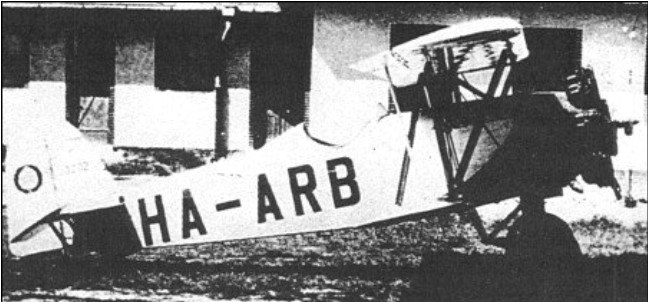
The poor results achieved with the AVIS I fighter prompted Prof Abody-Anderlik and his team to redesign the aircraft despite the decision of the Legilyi Hivatal to acquire 21 Fiat CR.20bis fighters from Italy. While retaining the Jupiter VI engine, the redesigned fighter, the AVIS II, featured a slimmer, slab-sided fuselage, redesigned vertical tail surfaces, narrower interplane bracing struts and increased gap. Empty weight was reduced by 100kg and, after initial trials, the engine was enclosed by a Townend ring. The AVIS II commenced flight test early in 1935, but still proved overweight and lacking in the agility demonstrated by contemporary foreign fighters. The planned armament of twin 7.62mm Gebauer guns was never fitted. Development was abandoned in favour of the higher-powered AVIS III.
Engine: 1 x 420hp Weiss Jupiter VI Wingspan: 9.00 m / 30 ft 6 in Length: 7.80 m / 26 ft 7 in Height: 2.90 m / 10 ft 6 in Wing area: 21.20 sq.m / 228.19 sq ft Take-off weight: 1320 kg / 2910 lb Empty weight: 1110 kg / 2447 lb Max. speed: 300 km/h / 186 mph Range: 500 km / 311 miles
During the course of 1931, the Central Repair Workshops at Szekesfehervar-Sosto began construction of the AVIS (Anderlik-Varga-Iskola-Sport) aircraft, ostensibly a single-seat trainer and sports aircraft, but, in fact, a fighter intended for use by the Legtiyi Hivatal (Aviation Department), the clandestine Hungarian air arm. An all-metal, single-bay, staggered biplane designed by Prof Elöd Abody-Anderlik, Laszlo Varga, Istvan Liszt and Deszo Fridrik, the first aircraft, the AVIS I, was completed and flown in 1933. Powered by a 420hp Manfred Weiss-built Jupiter VI nine-cylinder radial, intended armament being twin synchronised 7.62mm Gebauer machine guns, the AVIS I proved seriously underpowered, prompting major redesign as the AVIS II. The sole example of the AVIS I was eventually delivered to the flying school at Szombathely where it was to serve until 1936.
AVIS I Crew: 1 Engine: 1 x 420hp Weiss Jupiter VI Wingspan: 9.00 m / 30 ft 6 in Length: 7.50 m / 25 ft 7 in Height: 3.40 m / 11 ft 2 in Wing area: 21.20 sq.m / 228.19 sq ft Max take-off weight: 1480 kg / 3263 lb Empty weight: 1260 kg / 2778 lb Max. speed: 280 km/h / 174 mph Cruise speed: 233 km/h / 145 mph Ceiling: 5200 m / 17050 ft Range: 320 km / 199 miles Armament: 2 x 7.62mm mg
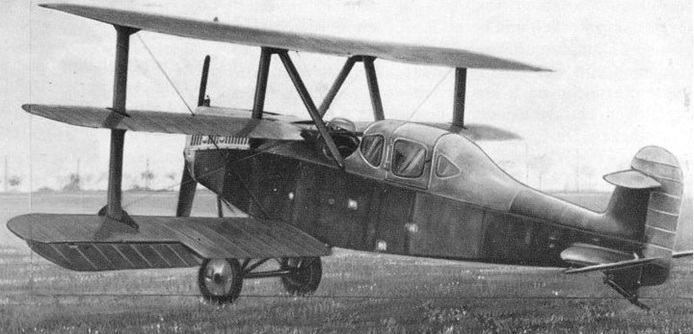
An Anglo Belgian fighter aircraft, the original Felix engined Firefly I was a private venture single seat biplane fighter first flown on November 12, 1925. Although it was much faster than contemporary RAF fighters top speed 302 km/h (188 mph) it did not go into production, but an improved all metal version, the Firefly IIM, was entered for an RAF fighter competition in 1929. Apart from its construction, this differed considerably from the Mk I, having a pronounced stagger to the wings, much improved interplane and landing gear struts, modified vertical tail surfaces, redesigned turret with the stowing cradle for a ventral radiator (instead of wing mounted), and a more powerful engine (480 hp Rolls-Royce Kestrel IIS) in an aerodynamically cleaner cowling. A 0.303 in (7.7 mm) Vickers machine gun was mounted in each side of the fuselage, forward of the cockpit, to fire forwards through the propeller disc. The Mk IIM lost the RAF competition to the Hawker Fury, but in a home based competition, against strong continental opposition, it proved superior to all its rivals and was the only one of them to demonstrate a terminal velocity dive. As a result, in 1930 Belgian’s Aeronautique Militaire ordered 45 (later increased to 88), of which all but the first 25 were manufactured by Fairey’s Belgian subsidiary at Gosselies. Deliveries began in late 1931 and were completed during 1933. Although they were no longer in first line service at the outbreak of the Second World War, about 50 were still on charge in May 1940 when Germany invaded Belgium, and took part in the brief fighting which followed. Most of the Fireflys that survived this period succeeded in escaping to France. Fairey in Britain also built one Firefly Mk III/IIIM, a carrier version with bigger area wings, strengthened fuselage, catapult and arrester gear, bomb racks, and provision for floatplane landing gear. This competed unsuccessfully for a Royal Navy order against the Hawker Nimrod, but was later used as a practice floatplane by the 1931 RAF Schneider Trophy team. Two other Firefly IIMs were converted to Firefly IVs with 758¬hp Hispano Suiza 12 Xbrs engines.
Firefly IIM – Span: 9.60 m (31 ft 6 in). Length: 7.52 m (24 ft 8 in). Gross weight: 1490 kg (3285 lb). Maximum speed: 282 km/h (175 mph).
Avions Metalicos Junkers was founded at Madrid in 1923 to provide facilities for the construction of Junkers aircraft in Spain. A two-seat all-metal monoplane was in production in 1924.
AVIOLANDA MAATSCHAPPIJ VOOR VUEGTUIGBOUW NV AC-pi / ML-sp Founded December 1926. Before Second World War built under license Dornier Wai twin-engined flying-boats for Royal Netherlands Naval Air Service and Curtiss Hawk biplane fighters for East Indies Army Air Service. After war made assemblies for Gloster Meteor, Hawker Hunter, and Lockheed Starfighter. Made N.H.I. Kolibrie helicopter. Developed AT-21 pilotless drone and aircraft components (e.g. passenger ramps). Extensive repair and overhaul work also undertaken. Aviolanda, De Schelde and Fokker were eventually to unite, but not until long after World War Two.
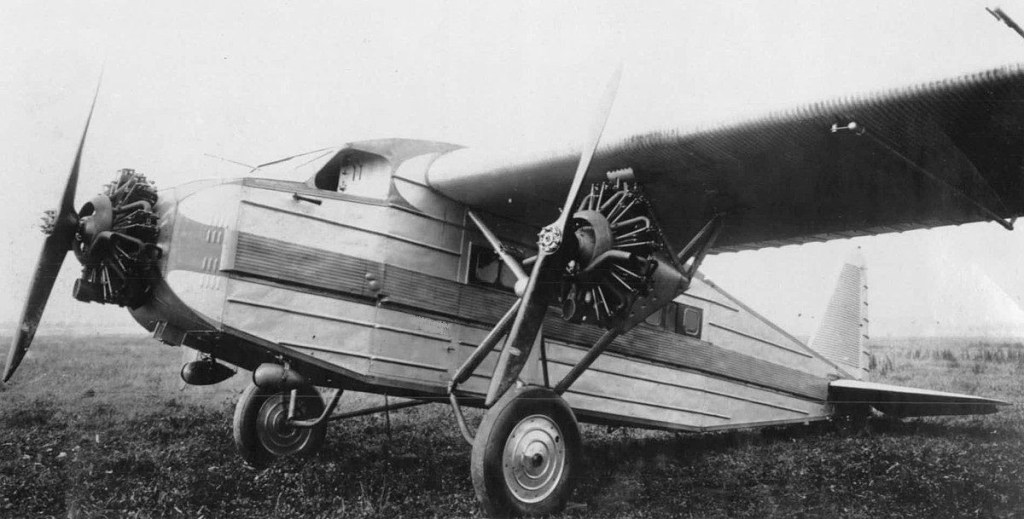
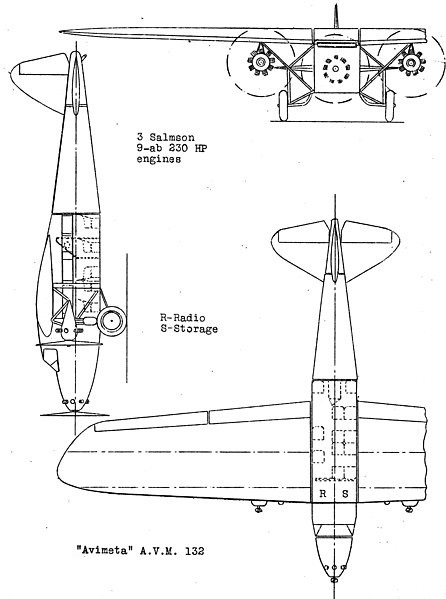
The Aviméta 132 was a three-engined monoplane transport for eight-passengers designed and built by Aviméta (Société pour la Construction d’Avions Métallique ).
The Aviméta 132 was a high-wing monoplane with a fixed conventional landing gear, powered by three uncowled 230 hp (172 kW) Salmson 9Ab radial air-cooled piston engines. Fuel tanks were built into the wings, fitted with jettison valves to empty the tanks in an emergency. The enclosed cockpit sat two crew with a cabin for eight passengers.
First flying in 1927, it was intended to build both a day and night version but only one aircraft was built and it did not enter production. It was the first French all-metal aircraft but only one aircraft was built.
Engines: 3 × Salmson 9Ab, 170 kW (230 hp) each Wingspan: 21.8 m (71 ft 6 in) Wing area: 752 sq.m (8,090 sq ft) Length: 14.3 m (46 ft 11 in) Height: 3.75 m (12 ft 4 in) Empty weight: 2,700 kg (5,952 lb) Gross weight: 10,850 kg (23,920 lb) Maximum speed: 180 km/h (112 mph; 97 kn) Cruise speed: 170 km/h (106 mph; 92 kn) Range: 900 km (559 mi; 486 nmi) Service ceiling: 3,750 m (12,300 ft) Time to altitude: 2,000 m (6,600 ft) in 19 minutes Wing loading: 68.5 kg/sq.m (14.0 lb/sq ft) Power/mass: 0.1054 kW/kg (0.0641 hp/lb) Crew: 2 Capacity: 8 passenger
Aviméta (Société pour la Construction d’Avions Métallique) grew out of the Aeronautical Department of the Schneider-Creusot arms manufacturer. Both the frame and the corrugated covering of the Aviméta 88 were made from Alferium, an aluminium-iron alloy developed by Schneiders.
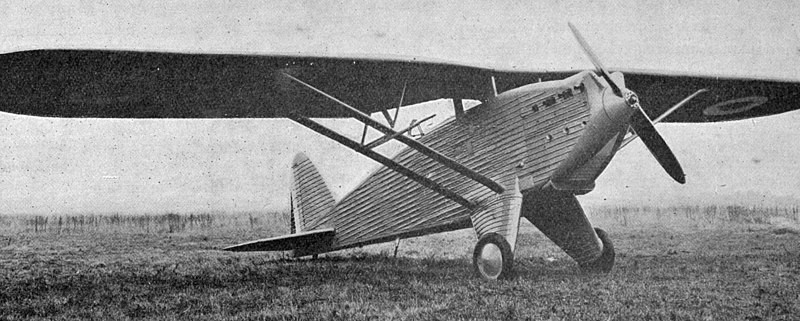
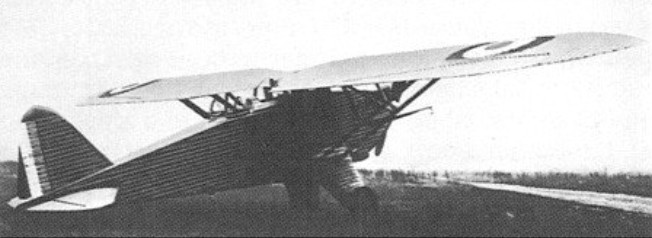
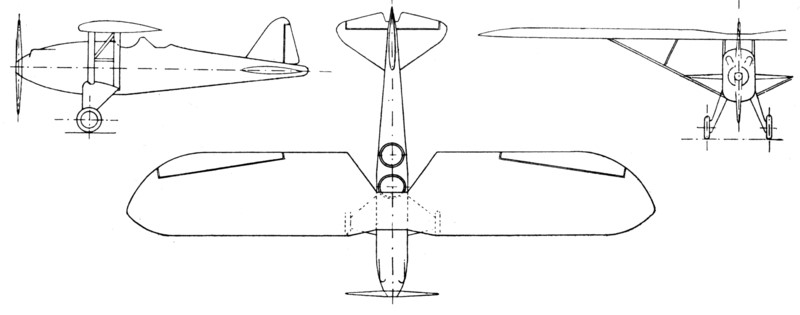
Designed by George Lapère, the Aviméta 88 was an all-metal two-seat reconnaissance-fighter or heavy fighter tested in 1927. It was a parasol aircraft, with wings of constant chord and with slightly pointed, semi-elliptical tips. The thin-airfoil-section wings were built around two lattice girder spars and had a skin thickness of 300 μm. There was a large, trapezoidal cut-out in the trailing edge to improve the view from the cockpits. Its aileron hinges were set at a shallow angle to the trailing edge.
The wings were braced to the fuselage with a parallel pair of struts from the lower longerons to the spars at about mid-span assisted by N-form, cross-braced jury struts at right angles. Four very short struts from the upper fuselage longerons to the wing centre section formed a low cabane.
The square-section, rounded-cornered fuselage was built around these four longerons and a set of diagonally braced formers. The Aviméta’s 444 kW (595 hp) Hispano-Suiza 12Hb water-cooled V-12 engine was in a pointed nose, driving a two-blade propeller. There were two open cockpits, with the pilot forward at mid-chord and the gunner/observer behind in line with the trailing edge. Behind the cockpits the fuselage tapered rapidly in profile to a conventional empennage, with the tailplane mounted at mid-fuselage. Both horizontal and vertical surfaces were strongly tapered, particularly on the leading edges, with a broad tailplane and fin but with small, inset elevators and rudder. The Aviméta 88 had independent bungee-sprung wheels on legs enclosed in tapered trouser fairings attached to the lower longerons at the bottom of the wing struts. The fuel was in crash proof and in-flight jettisonable tank.
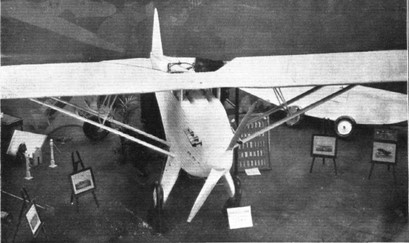
The Aviméta 88 was on show at the December 1926 Paris Aero Salon. It may not have flown by that date, and rather little is known about its later history, though it gave a “pretty impressive” display at Villacoublay in September 1927. Development was terminated when the official call for a two-seat fighter-reconnaissance aircraft was rescinded.
Engine: 1 × Hispano-Suiza 12Hb, 444 kW (595 hp) Propeller: 2-bladed Wingspan: 17.00 m (55 ft 9 in) Length: 9.76 m (32 ft 0 in) Height: 3.55 m (11 ft 8 in) Wing area: 40 sq.m (430 sq.ft) Empty weight: 1,550 kg (3,417 lb) Gross weight: 2,400 kg (5,291 lb) Fuel capacity: 310 kg (680 lb) (420 l (92 imp gal; 110 US gal)) Maximum speed: 240 km/h (149 mph; 130 kn) at sea level, 220 km/h (140 mph) at 5,000 m (16,000 ft) Service ceiling: 7,500 m (24,600 ft) Time to altitude: 16 min to 5,000 m (16,000 ft) Crew: two Armament: two fixed, synchronised 7.7 mm (0.303 in) Vickers machine guns firing through propeller disc and two more mounted on the wing. A pair of Lewis guns on flexible mounting in rear cockpit.
Societe Avimeta was formed in 1926 as a separate aeronautical firm by Etablissements Schneider, exploiting use of structural material ‘Alferium’. The Avimeta AVM-88 of 1927 was a parasol monoplane two-seat fighter with corrugated skin.