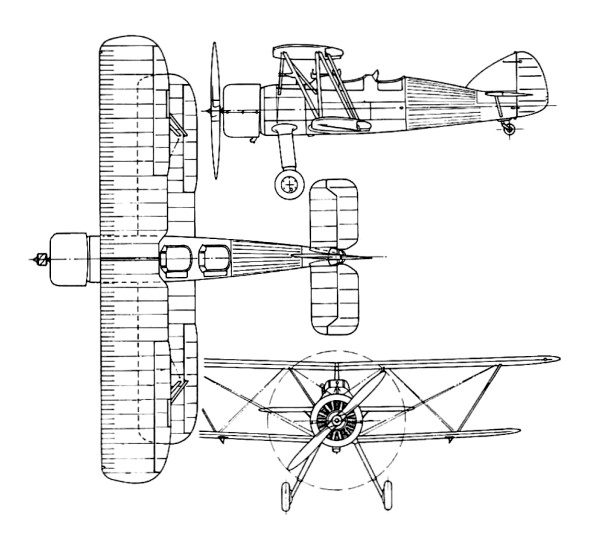
Babcock X / Babcock-Vlchek X
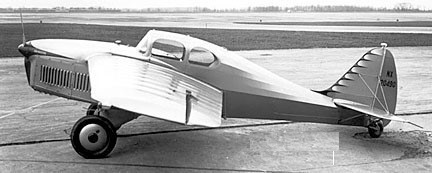
The 1928 LC-11 Cadet was developed by Verne Babcock from his original concept from 1921.
A single place, open cockpit, mid-wing monoplane, power was from a 55hp Clark engine.
Three were built: N551E / cn 502, N889E, and NX7997 / cn 501. Two were built by Taubman, possibly with 90hp LeBlond, the last was Babcock-built and possibly refitted with 90hp Franklin.
Engine: 55hp Clark
Wingspan: 30’0″
Length: 19’0″
Loaded weight: 500 lb
Speed: 100 mph
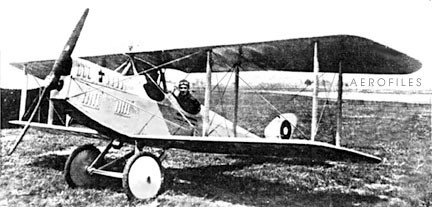
The 1919 LC-7 (Light Commercial 7) was a 2 place, open cockpit biplane, powered by a 60hp Kemp I-4.
A 1925 single place, open cockpit biplane.
Engine: 90hp Curtiss OX-5
Loaded weight: 700 lb
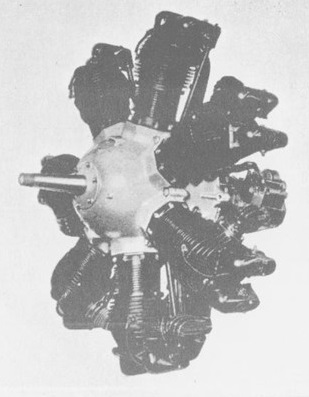
The Axelson B cylinder barrels are Ni-Cr steel forgings, with cylinder heads of cast aluminium alloy screwed and shrunk on to the barrels. Coolong pins are machined integral with the barrel. Hinged rocker boxes compensate for heat expansion, automatically maintaining valve tappet clearance regardless of engine temperature. .
Approved Dept. Commerce Certificate No.16
Type: 7 cylinder, fixed radial, air cooled
Rating: 150 hp at 1800 rpm
Displacement: 612.3 cu.in
Compression ratio: 5-1
Bore: 4.5 in
Stroke: 5.5 in
Diameter: 45 in
Length: 37.75 in
Weight: 420 lb
Fuel consumption: not more than .55 lb/hp/hr
Oil consumption: not more than .017 lb/hp/hr
Lubrication: Duplex gear pressure pump, 60-70 lb, ½ crankshaft speed
Ignition: 2 Scintilla Magnetos, MN-7 D type
Carburation: Stromberg NAR 5-A
Spark plugs: 1 per cylinder
Price: $2950
The Axelson Aircraft Engine Company was a manufacturer of aircraft engines based in Los Angeles in the late 1920s.
Their engines were originally known as ‘Floco’, because the manufacturer was originally Frank L. Odenbreidt Co. Their products included the 115 hp Axelson A-7-R and 150 hp Axelson B. Axelson engines were used to power the Swallow F28-AX, among other contemporary aircraft.
Axelson Aircraft Engine Co
Box 337
Los Angeles
California
USA
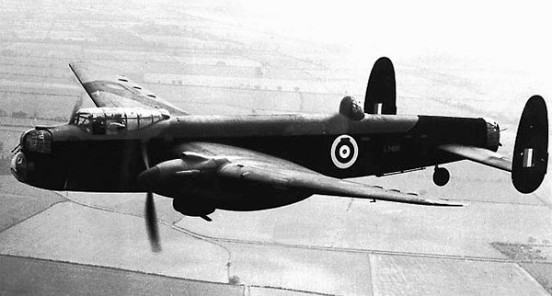
The Avro Manchester was to fulfill Air Ministry Specification P.13/36. The specification called for a twin engine heavy bomber that could sport a multi-purpose payload of bombs or torpedoes.
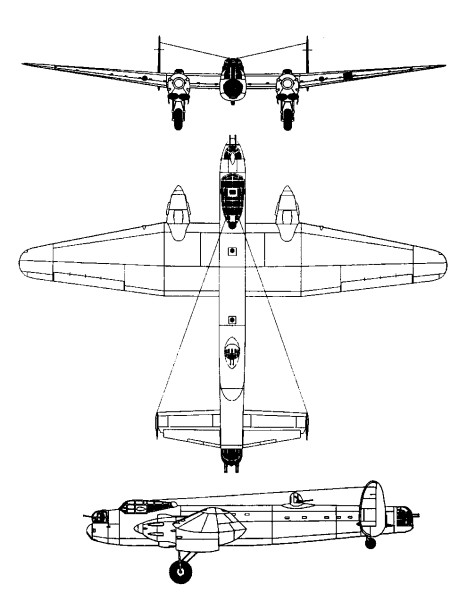
The Manchester twin engines were underslung on mid-mounted monoplane wings with dihedral outboard of the engines and main wheel undercarriage. The fuselage was of a mostly straight design from nose to tail. The flight deck maintained a good all-around vantage point and featured extensive framing. The empennage was dominated by the identifiable twin vertical fin arrangement common to other Avro designs. The initial production Manchester, however, sported a third vertical tail fin running between the base two and along the rear portion of the upper fuselage. The rear fuselage extended out beyond this assembly, which held the rear gunner’s position.
Crew accommodations amounted to seven personnel. The aircraft was defended by 8 x 7.7mm (.303 caliber) Browning machine guns in various strategic emplacements. Two were fitted to the nose turret while the tail turret mounted no fewer than four of these weapons. The remaining two were positioned in a dorsal turret mounted to the rearward portion of the fuselage. From an offensive standpoint, the Manchester could field up to 10,350lbs of internally-held bombs or torpedoes (2).
Production model specs were quite pedestrian with a top reported speed of 250 miles per hour, a range of 1,200 miles and a service ceiling of just 19,500 feet.
Power for the Manchester was derived from the twin Rolls-Royce Vulture I 24-cylicnder X-type engines of 1,500 horsepower each (initially rated as high as 1,760 horsepower each). This selection of powerplant would eventually become the Manchesters undoing as the engines proved to have a nasty tendency to catch fire when in-flight. Though the same issue greeted the Handley Page Halifax design, forcing the Halifax to become a four-engine bomber utilizing the Rolls-Royce Merlin X series of engines, Avro continued the Manchester design with the Vulture series. By the series operation run, no fewer than 30 Manchesters were lost to engine failures effectively forcing the bomber out of service.
The first Manchester prototype, model L7246, took to the skies for the first time on July 25th, 1939. This aircraft was followed by a second prototype going airborne on May 26th, 1940. The Manchester entered production in this form as the Manchester Mk I model series but was delivered in only 20 such examples. Mk I aircraft joined No. 207 Squadron in November of 1940. Its first mission came about on February 24th, 1941. Manchester Mk IA’s soon followed and were delivered in 200 total examples. These particular Manchesters differed in that they had their central tail fins removed in favor of enlarging the remaining two tail fins. In this form, the Manchester would be most oft-remembered.
At the height of its operational use, the Manchester formed at least eight bomber squadrons and was utilized by RAF Coastal Command as well. The last Manchester mission was recorded on June 25th, 1942. Production ended almost as soon as it had begun, wrapping up in November of 1941.
The Manchester II appeared as a proposed and improved model version of the Manchester series. These Manchester would have sported twin Bristol Centaurus or Napier Sabre engines to make up for the deficiencies inherent in the selected Rolls-Royce Vulture brand engines used in production Manchesters. Unfortunately for the Manchester and Avro, this model series was never produced.
A single Manchester Mk I was pulled aside to undergo a conversion to a new Manchester III standard. This new model design (BT308) featured a greater wingspan incorporating the power of four engines but still retaining the three vertical tail surfaces of the original Manchester. First flight of the recently-dubbed “Lancaster” aircraft was achieved on January 9th, 1941. A follow-up model, the DG595, was debuted shortly thereafter and featured the enlarged twin vertical tail fins of the Manchester IA. This “Manchester III” would essentially become the prototype model of the Avro Lancaster series of multi-engine heavy bombers.
In the end, only 209 Manchesters would ever be completed, with production split between Avro (177) and Metropolitan-Vickers (32).
Canada became the only other Manchester operator during its short-lived service life.
Engines: 4 x Rolls-Royce “Vulture”, 1312kW / 1736 hp
Max take off weight: 25401 kg / 56000 lb
Empty weight: 13350 kg / 29432 lb
Wingspan: 27.46 m / 90 ft 1 in
Length: 21.13 m / 69 ft 4 in
Height: 5.94 m / 20 ft 6 in
Wing area: 105.63 sq.m / 1136.99 sq ft
Max. speed: 230 kts / 426 km/h
Cruise speed: 298 km/h / 185 mph
Service ceiling : 19193 ft / 5850 m
Cruising altitude : 14993 ft / 4570 m
Wing load: 49.2 lb/sq.ft / 240.0 kg/sq.m
Range (max. weight): 2623 km / 1630 miles
Crew: 7
Armament: 8 x 7.7mm machine-guns, 4700kg of bombs

1935
Engine: 1 x 240hp Armstrong Siddeley Lynx IVC
Take-off weight: 1589 kg / 3503 lb
Empty weight: 1016 kg / 2240 lb
Wingspan: 11.38 m / 37 ft 4 in
Length: 8.31 m / 27 ft 3 in
Height: 3.05 m / 10 ft 0 in
Wing area: 28.52 sq.m / 306.99 sq ft
Max. speed: 209 km/h / 130 mph
Cruise speed: 177 km/h / 110 mph
Ceiling: 3505 m / 11500 ft
Range: 805 km / 500 miles
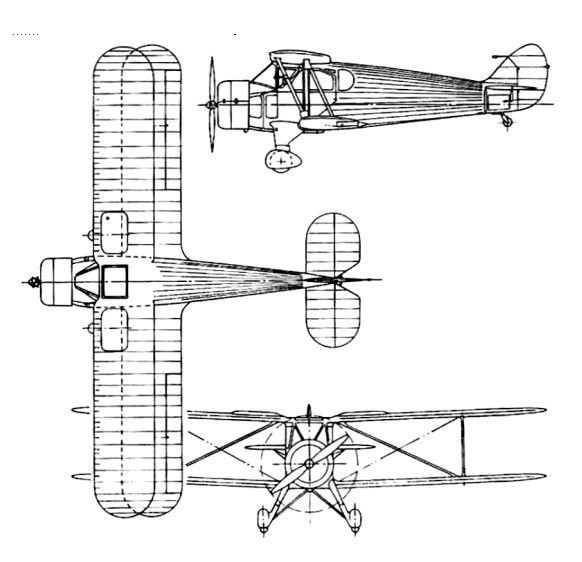
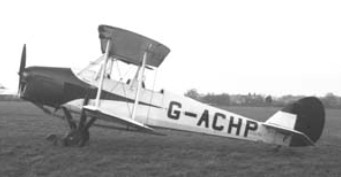
The Avro 638 Club Cadet and the basically similar 643 Cadet Mk.II were produced in the 1930s. Both types have identical wings, undercarriage and tail unit, but the wings of the Cadet have more stagger than those of the Club Cadet to provide improved view from both cockpits.
Engines used were the 130 hp DH Gipsy Major 1 and 135 hp AS Genet Major radial.
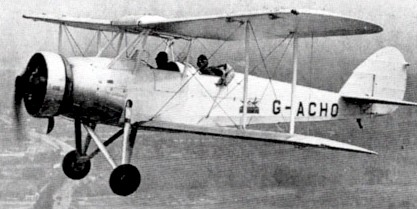
1933
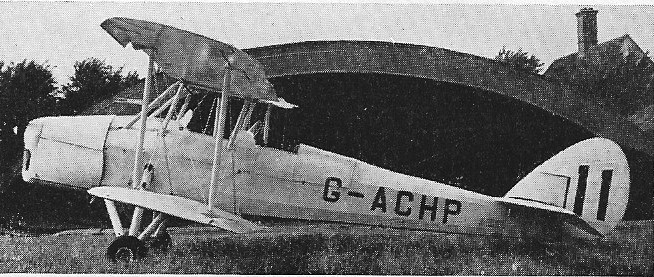
Engine: 1 x 135hp Armstrong Siddeley Genet Major I
Take-off weight: 908 kg / 2002 lb
Empty weight: 565 kg / 1246 lb
Wingspan: 9.19 m / 30 ft 2 in
Length: 7.54 m / 25 ft 9 in
Height: 2.67 m / 9 ft 9 in
Wing area: 24.34 sq.m / 261.99 sq ft
Max. speed: 185 km/h / 115 mph
Cruise speed: 161 km/h / 100 mph
Range: 523 km / 325 miles
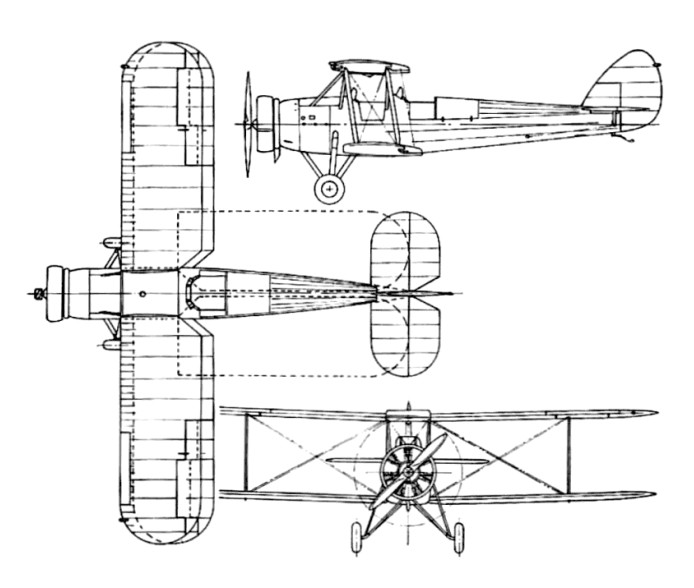
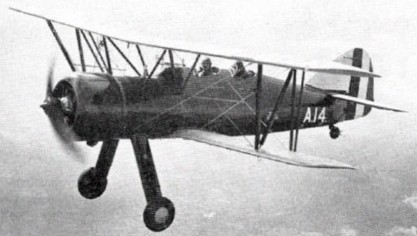
1935
Avro 636A
Engine: 1 x 680hp Armstrong Siddeley Panther XI
Take-off weight: 1781 kg / 3926 lb
Empty weight: 1348 kg / 2972 lb
Wingspan: 10.06 m / 33 ft 0 in
Length: 8.38 m / 28 ft 6 in
Height: 3.53 m / 12 ft 7 in
Wing area: 24.25 sq.m / 261.02 sq ft
Max. speed: 370 km/h / 230 mph
Cruise speed: 314 km/h / 195 mph
Ceiling: 9754 m / 32000 ft
Range: 467 km / 290 miles