In early 1934 Boeing began design studies for a multi-engine bomber and a basically similar civil transport. When, in June 1934, the USAAC invited proposals for a new bomber, Boeing’s Model 299 was revamped to meet the Army specification and duly became built by the thousands as the B-17 Flying Fortress.
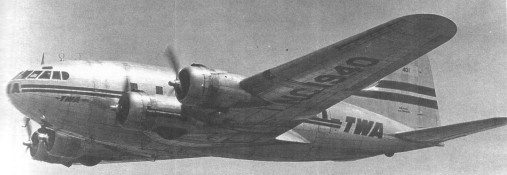
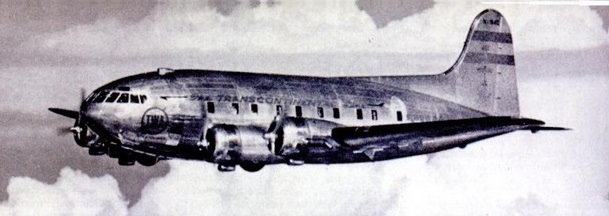
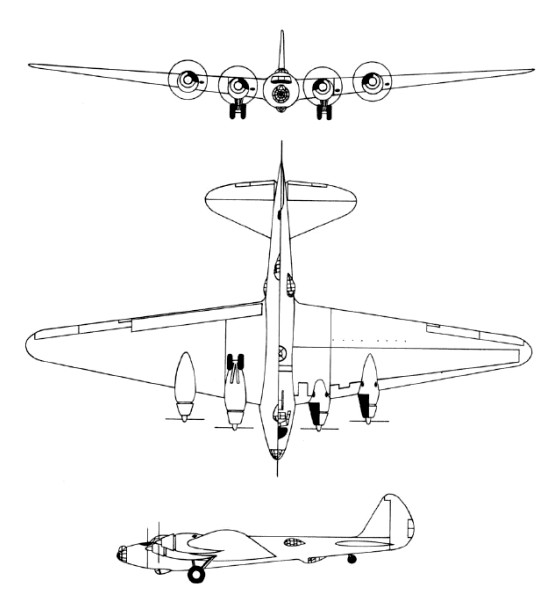
The Model 300 was also changed as ideas were developed and in its Model 307 form was similar to the B-17C, except for a very different fuselage. This was of circular cross-section with pressurisation for the crew of five and 33 passengers. The Model 307 introduced an extra crew member – known as the flight engineer – to relieve the captain of certain duties such as power plant, fuel and pressurisation management and monitoring.
The prototype Model 307 (named Stratoliner because of its high cruising ceiling) flew for the first time on 31 December 1938.
A total of ten were built: the prototype; five SA-307B for Transcontinental & Western Air; three S-307 for Pan American; and a single SB-307B for the late Howard Hughes.
First delivered to PanAm in 1940, the Boeing 307 went into service in 194, carrying passengers on long haul American routes. The night plane version had berths for 16 passengers and reclining chairs for a further 9.
The 307B differed from the 307 in having 1100 Wright Cyclone GR-1820-G105A engines instead of G-102s, and slotted flaps in place of split trailing edge flaps.
TWA’s SA-307B were impressed for service with the Army’s Air Transport Command during World War II, being used as C-75 for VIP transport over the North and South Atlantic.
307B
The TWA 307Bs were extensively modified after wartime USAF service; the cabin pressurisation equipment was removed, and B-17 wings and 1200 hp Wright R-1820 engines were fitted. These were eventually sold to France.
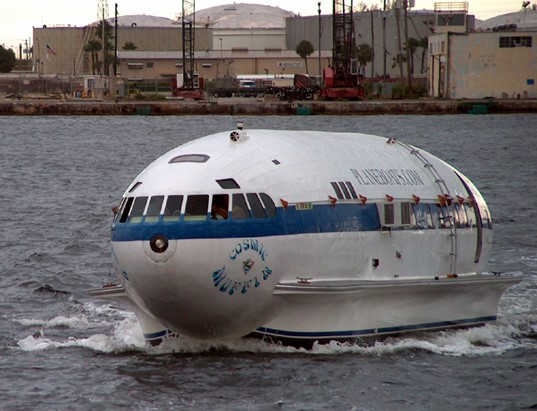
A special model SB-307B for Howard Hughes was built with more powerful engines and extra fuel tanks for an around-the-world flight that was cancelled due to the start of World War II. The flight was never made. It was the first Stratoliner delivered to a customer; its initial flight (with experimental license NX19904) occurred on July 13, 1939. Postwar it was fitted with a luxury interior, including a bedroom, and named The Flying Penthouse.
A 1964 hurricane severely damaged it and rendered it unflyable. In 1969 it was purchased as scrap for $61.99 — the fuselage was salvaged (the aft rounded pressure bulkhead formed the cabin after end), then mounted on a boat hull and converted into a luxury yacht named The Londonaire. It was rebuilt beginning in 1994, and is a Florida based, operating yacht named Cosmic Muffin, with N19904 painted on its sides.
S-307 Engines: 4 x Wright GR-1820 Cyclone, 671kW Take-off weight: 19050 kg / 41998 lb Empty weight: 13608 kg / 30001 lb Wingspan: 32.61 m / 106 ft 12 in Length: 22.66 m / 74 ft 4 in Height: 6.34 m / 20 ft 10 in Wing area: 138.05 sq.m / 1485.96 sq ft Max. speed: 396 km/h / 246 mph Cruise speed: 354 km/h / 220 mph Ceiling: 7985 m / 26200 ft Range 50 % pwr: 1,635 miles / 2,616 km Crew: 4 Pax cap: 33
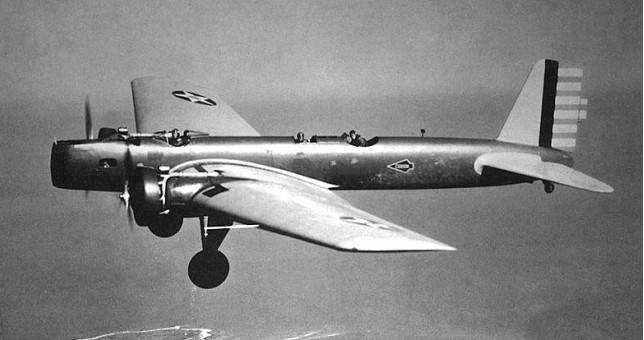
US Army men like Colonels Hugh Knerr and C.W. Howard were working steadily in the 1930s to ensure, to the best of their capabilities, that a strategic bomber would be available. This thinking had led to the introduction into service of such bombers as the Boeing B-9, and the Martin B-10 and B-12. While it was appreciated that these did not represent the ideal, they prepared the way for the procurement of a true strategic bomber. In 1933 came the US Army’s requirement for a design study of such an aircraft, then identified as the XBLR-1 (Experimental Bomber Long Range): a range of 8046km was included in the specification to provide long-range strategic capability. Both Boeing and Martin produced design studies, but it was Boeing which received the US Army’s contract for construction and development of its Boeing Model 294, under the designation XB-15. When this large monoplane flew for the first time, on 15 October 1937, it was then the largest aircraft to be built in the USA. It introduced features including internal passages within the wing to permit minor engine repairs or adjustments in flight, two auxiliary power units within the fuselage to provide a 110-volt DC electrical system, sleeping bunks to allow for ‘two-watch’ operation, and the introduction of a flight engineer into the crew to reduce the pilot’s workload. Intended to be powered by engines of around 1491kW, the actual powerplant was four 746kW Pratt & Whitney Twin Wasp Senior radial engines, which meant that performance was far below that estimated. Purely an experimental aircraft, it was, however, provided with cargo doors and flown as a cargo transport during World War II under the designation XC-105.
XB-15 Engines: 4 x Pratt & Whitney R-1830-11 Twin Wasp Senior, 746kW Take-off weight: 41731 kg / 92002 lb Empty weight: 17105 kg / 37710 lb Wingspan: 45.42 m / 149 ft 0 in Length: 26.7 m / 87 ft 7 in Height: 5.51 m / 18 ft 1 in Wing area: 258.26 sq.m / 2779.88 sq ft Max. speed: 314 km/h / 195 mph Ceiling: 5760 m / 18900 ft Range: 8256 km / 5130 miles
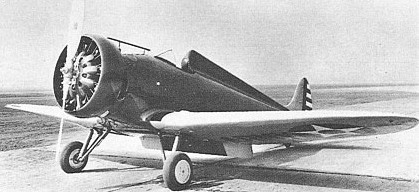
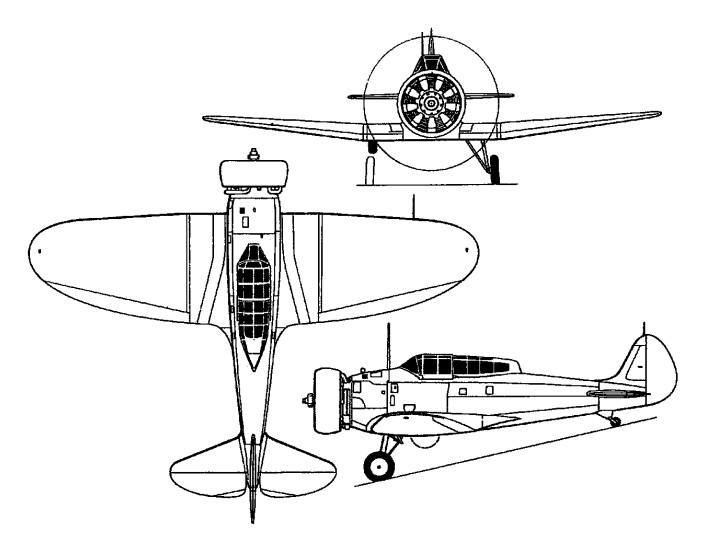
The P-29 or company Model 264 was a Boeing effort to improve on the P-26 ‘Peashooter’. It dispensed with the drag-inducing fixed gear, struts and bracing wires. A low-set cantilever wing monoplane pursuit ship with retractable landing gear, one of the three machines built attained a speed of 376km/h at 2286m with its 410kW Pratt & Whitney R-1340-35 engine. Initially flown on 20 January 1934, the first of the three airframes was originally designated XP-940 and was built with an enclosed, flush canopy. Boeing pilot Billy Acker asserted that the canopy ‘rattled like a bird cage’. After brief flight tests in which Army pilots also judged the canopy impracticable, this first airframe was returned to the manufacturer, rebuilt with the more traditional open cockpit, and redesignated YP-29A The second airframe, designated YP-29, added landing flaps to the basic design while the third, the YP-29B, added greater dihedral to the wings. But flight tests confirmed that the P-29, which was heavier than the P-26, offered at best only a very marginal improvement in performance. Though the three airframes were exhaustively tested well into the mid-1930s and contributed to institutional knowledge about fighter design, they were eventually deleted from inventory and scrapped.
Engine: 410kW Pratt & Whitney R-1340-35 Take-off weight: 1620 kg / 3572 lb Empty weight: 1167 kg / 2573 lb Wingspan: 8.95 m / 29 ft 4 in Length: 7.62 m / 25 ft 0 in Height: 2.34 m / 7 ft 8 in Wing area: 16.44 sq.m / 176.96 sq ft Max. speed: 376 km/h / 234 mph Cruise speed: 321 km/h / 199 mph Ceiling: 7430 m / 24400 ft Range: 830 km / 516 miles
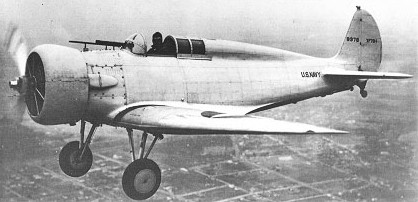
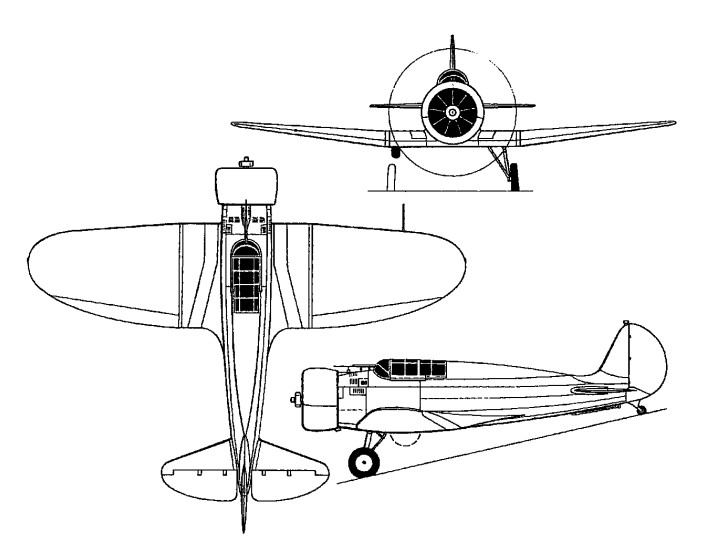
Designed to meet the requirements of a US Navy specification issued on 6 December 1932, the XF7B-1 (Model 273) was the first all-metal cantilever low-wing monoplane single-seat fighter with a retractable undercarriage, and powered by a Pratt & Whitney SR-1340-30 engine rated at 550hp at 3050m. The XF7B-1 featured a fully-enclosed cockpit and was flown for the first time on 14 September 1933. Armament comprised two 7.62mm machine guns. After initial evaluation, the XF7B-1 was returned to its manufacturer to have split flaps and a longer-chord engine cowling fitted. Subsequently the enclosed cockpit gave place to an open cockpit. The US Navy considered that the XF7B-1 offered inadequate view and too high a landing speed for shipboard operation, and the sole prototype was scrapped after, in March 1935, the fighter was inadvertently stressed to 12.1g (although the designed load factor was only 9.0) when the pilot pulled out of a 668km/h dive too abruptly following collapse of the windscreen.
Engine: Pratt & Whitney SR-1340-30, 550hp at 3050m Take-off weight: 1656 kg / 3651 lb Empty weight: 1262 kg / 2782 lb Wingspan: 9.73 m / 31 ft 11 in Length: 8.41 m / 27 ft 7 in Height: 2.26 m / 7 ft 5 in Wing area: 19.79 sq.m / 213.02 sq ft Max. speed: 375 km/h / 233 mph Range: 1207 km / 750 miles
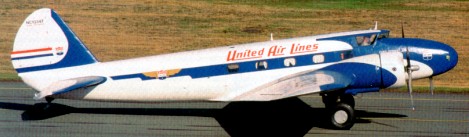
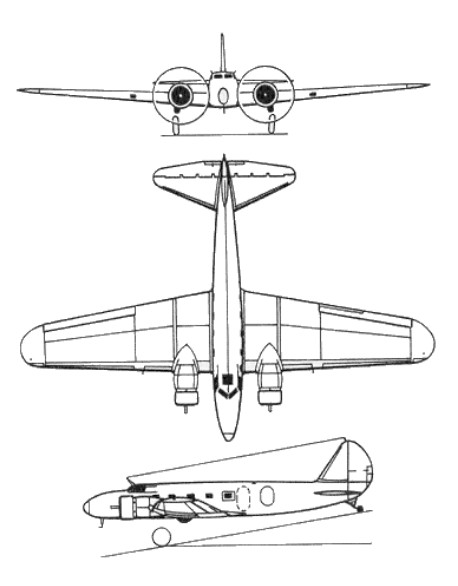
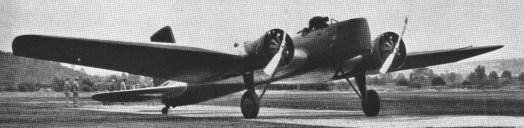
Derived via the design of the Model 200 Monomail and Model 215 bomber, each of which had a cantilever monoplane wing, Boeing flew the prototype of a new civil airliner which was identified by the company as the Boeing Model 247 on 8 February 1933. A streamlined low wing monoplane, powered by two 550 hp Pratt & Whitney radial engines, it had retractable landing gear and was the first transport aircraft to have a de icing system for wings and tail unit. Variable pitch propellers gave maximum efficiency for take off and cruising flight, and control surface trim tabs enabled the pilot to ‘balance’ the aircraft so that an automatic pilot could control the machine for long periods. It was also the first twin-engined monoplane airliner able to climb with a full load on the power of only one engine. With accommodation for a pilot, copilot, stewardess and 10 passengers, sixty examples of the Model 247 were ordered ‘off the drawing board’ to re-equip the Boeing Air Transport System, shortly to become a major limb of United Air Lines, and another 15 were ordered subsequently for companies or individuals.
The Boeing 247 entered service with United Air Lines in March 1933, with a trans-continental flight time of under 20 hrs. The Boeing 247 entered service with National Air Transport (one of the companies under the United Air Lines umbrella) on June 12, 1933. United took delivery of 59 of the 61 247s built, plus 10 of the 13 improved 247-Ds; earlier 247s were modified to this standard. The sole 247-A was used by the United Aircraft Corp as an executive aircraft.
United bought the 60 Boeing 247’s for $4,500,000.
One built for Roscoe Turner and Clyde Pangborn (to compete in the England-Australia ‘MacRobertson’ air race of 1934) was provided with fuselage fuel tanks instead of the standard airline cabin equipment, and introduced NACA engine cowlings (to reduce drag) and controllable-pitch propellers with optimum settings for take-off and cruising performance. These improvements were incorporated retrospectively on most airline Model 247s, thus elevating them to Model 247D standard.
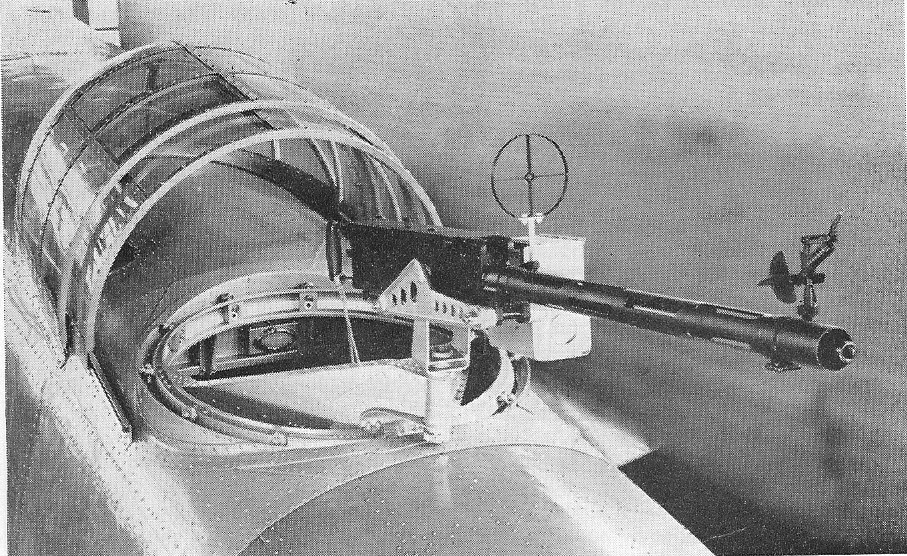
In the 1936 a Chinese Purchasing Commission approached Boeing for a variant of the Boeing 247D to be built. Designated Model 247Y, the militarised variant had an upper rear gunner position, forward-firing guns in the nose, plus under wing bomb carriers. Kept highly secret, only the one is believed built.
Boeing 247-Y 12 Feb 1937 at Boeing Seattle
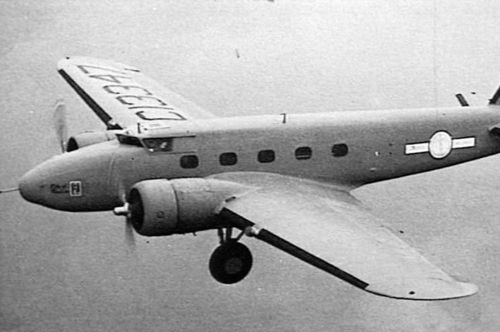
When the USA became involved in World War II in late 1941, these Model 247Ds remained in airline use, and 27 of them were impressed for service with the USAAF under the designation C-73. It had been anticipated that they could be used for the carriage of cargo and troops, but it was discovered that the cabin doors were too small for this purpose. Instead, they were deployed to ferry aircrew and, later in the war, were used for training. In service they were provided with 447kW Pratt & Whitney R-1340-AN-1 Wasp radials. When no longer required in late 1944, they were returned to civil airline service.
NC13347 Boeing 247D, serial n°1729 of United Air Lines
247 Engines: 2 x 550 hp Pratt & Whitney Wasp Length: 51.3 ft / 16.25 m Wing span: 74 ft / 22.6 m Weight empty: 8,340 lb / 3,780 kg Crew: 2 Pax cap: 10 Max cruise: 171 mph / 275 kph Ceiling fully loaded: 18,500 ft / 5,650 km
247D Engines: 2 x Pratt & Whitney R-1340 Wasp S1H1-G, 550 hp, 410kW Props: Hamilton Standard hydromatic Wing span: 74 ft 0 in / 22.56 m Wing area: 77.6 sq.m / 835.28 sq ft Length: 51 ft 4 in / 16.25 m Height: 12 ft 1.75 in / 3.7 m) Empty weight: 4148 kg / 9145 lb Max TO wt: 13,650 lb / 6197 kg Max level speed: 202 mph / 324 kph Cruise speed: 304 km/h / 189 mph Ceiling: 7740 m / 25400 ft Range: 1199 km / 745 miles Crew: 3 Pax cap: 10
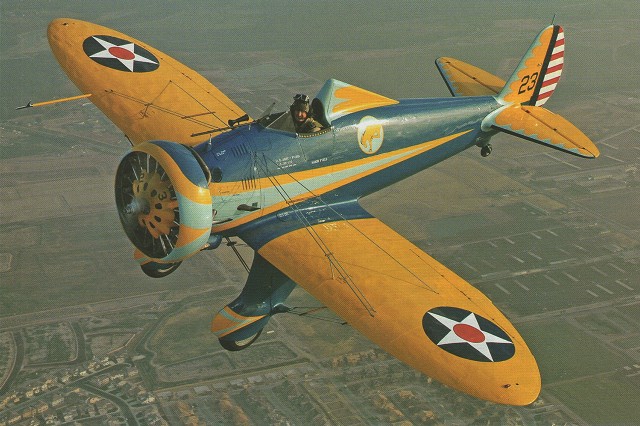
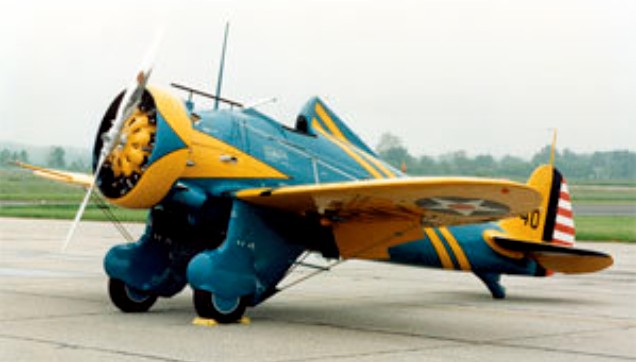
The Model 248 would form the basis for the P-26, and Boeing created a combat aircraft. A low-wing monoplane with the wing centre section built into the fuselage and also mounting the fixed undercarriage. The wing was fabric-covered and wire-braced and armament would consist of two machine-guns.
After examination, USAAC officials decided that the Model 248 incorporated what they wanted, but there was no budget for a new aircraft. In order to create flying prototypes, the Air Corps and Boeing devised that Boeing would build the airframes at company expense while the Air Corps would supply Boeing with such items as engines, propellers, armament, instruments and other equipment. In a normal military aircraft contract, these items would be supplied to the manufacturer as government furnished equipment (GFE).
This arrangement was mutually advantageous – Boeing could build a new design without going bankrupt while the Air Corps would get a new fighter to test virtually free.
Boeing Project Engineer Robert Minshall started work on the Model 248 during September 1931. The aircraft was given the military designation XP-936. Assigned by Wright Field, this designation meant that the Model 248 was the 936th experimental design (military or civil) to be evaluated by Wright Field. A contract for the first three XP-936 aircraft was signed on December 5, 1931.
Since the aircraft was not being developed to strict military guidelines, Boeing was given a free hand, which meant that the aircraft could be designed and built in a much shorter time period. Construction began in January 1932 and Boeing designers moved into the production areas where drawings could be quickly converted to hardware.
The first XP-936 was completed in little more than 70 days. In order to save more time, the aircraft was not fitted with armament, and test pilot Les Tower took the new aircraft into the air on March 10, 1932.
Flight testing also proceeded at a rapid pace (all structural stress testing was still on paper) and the aircraft showed better performance that the P-12F biplane. After limited flight testing, the aircraft was accepted by the USAAC on April 25 at Wright Field, where more advanced testing by a number of Air Corps pilots would take place.
The three XP-936s should have carried civil registrations. However, they were delivered in the military style paint of the day with XP-936 painted on the airframes, apparently in an effort to make the civil aviation authorities think they were in fact military aircraft.
The second XP-936 had been selected for structural testing. These test aircraft were usually non-flying examples, but this example flew from the outset and was delivered by air to Wright Field. Departing Boeing Field on April 22, the aircraft was flown by Lt. L.H. Dawson – another odd procedure since the aircraft was still Boeing property and probably should have been flown by a company test pilot. Once at Wright, the airframe was statically tested (probably to destruction) and it is very unlikely that the second XP-936 ever flew again.
For the third XP-936, the Air Corps determined that this example would be service-tested by USAAC pilots. Accordingly, the machine went to Selfridge Field in Michigan, departing Boeing on May 6. Once again, the aircraft was flown by a USAAC pilot – Maj. G. Brower and it went to the Ist Pursuit Group where pilots from the group’s three squadrons put the XP-936 through a rigorous flight schedule.
On June 15, 1932, the three prototypes were officially taken over by the Air Corps with the signing of a purchase contract. Army officials noted that the aircraft was an improvement over previous pursuits, but noted their opinion in cautious language since funding was in such short supply.
The three aircraft were given the military designation of XP-26. While test flying the aircraft, 1st PG pilots noted some negative aspects that would have to be corrected, including slow throttle response, long take-off and landing roll, and high take-off and landing speeds. Boeing felt it could make changes in a timely manner and the Air Corps managed to get funding for the new P-26 added to the 1932 Fiscal Year Budget.
The three XP-936 prototypes were essentially handbuilt, so a more economical way of building the fighter was required. Because the P-26 had few straight lines its fuselage had to be covered using long horizontal aluminium strips, beginning at the bottom of the fuselage, each strip overlapping slightly and thus producing a “shiplap” effect.
Stress analysis being a new art, most builders incorporated excessive strength. The P-936’s wing was good for +12g and -4g. When the wing was loaded while inverted it withstood 5g without failure. The flying wires reached +14.25g before failing. The Boeing 109 aerofoil was used.
The wing comprised a centre section integral with the fuselage and carrying the undercarriage and a bomb rack, and two removable outer panels based on two spars of builtup flat sheet aluminium. A generous number of ribs of built-up rolled hatsections and short aluminium tubes contributed to the wing’s strength. A thin sheet-aluminium skin was riveted to the wing structure. The XP-936s had brazier-head (flattishdomed) rivets, but production aircraft had flush riveting to reduce drag. Most of the skinning was anodised to protect against corrosion.
The XP-936’s tailplane began to fail at 90 per cent of its design load (which was 2531b/sq.in), and had to be greatly reinforced. The fin was tested to 130 per cent of its design load (189.61b/sq.ft), Unlike the wing, the tail was of unbraced cantilever design, the all-metal units being built in the spar-and-rib style. Aluminium channel was built into a hinge-line spar, and there was also a diagonal spar. There was no solid leading edge; the upper and lower skins were joined by flush riveting. The ribs did not act as compression members, but were essentially spacers for the aluminium skins.
The control surface hinge lines were channel spars, and pressed aluminium diagonal ribs carried the top and bottom aluminium skins, which were riveted together at the trailing edge. The elevators incorporated the first use in the USA of trim tabs to adjust longitudinal trim in flight. Each aileron had a groundadjustable aluminium trim tab.
The removable welded -steel -tube engine mounting was fixed to the first fuselage bulkhead. Hydropress dies were used to form the smoother panels ahead of the firewall.
The welded steel-tube undercarriage incorporated a rigid ‘V’ structure attached to the wing root spars that also provided an anchor for the flying wires. Boeing-built oleopneumatic shock struts were used. Each leg held just the inboard axle end, allowing easy removal of the wheel and tyre, The undercarriage was faired with aluminium, and the wheel spats were press-formed from aluminium sheet and attached to the shock strut so that the spat moved with the strut. The undercarriage could become unstable with the flying wires loosened or removed, so a spreader bar was added between the undercarriage legs.
Fuel was carried in a main tank in the fighter’s belly, holding 55 US gal, plus removable 26 US gal tanks in each wing root. There was an 8 US gal oil tank in front of the first bulkhead. The cylinders were encircled by a Townend ring to reduce drag.
The two 0.30in-calibre Browning machine-guns could be changed for a 0.30in gun on the port cockpit floor and a 0.50in gun to starboard. The smaller-calibre weapons had 500 rounds each, but only 200 rounds were provided for the 0.50in gun. A Type A-3 underfuselage munitions rack carried a range of light ordnance.
Once contracts were in place and construction on the P-26A had started, few problems were encountered and production gathered pace. By June 1934 all 111 production examples had been delivered.
The first production run averaged out at $9,999 for each aircraft, but this did not include the government furnished equipment (GIFIE) such as engines, radios and armament. The rapid delivery also meant that problems inherent with the design had not really been rectified.
While squadrons were getting used to the type, the global financial and political situation was changing. American expenditure on military aircraft had risen from $25m for the fiscal year 1925 to $69m for FY 1931, and increasing political tensions around the world had led to an arms race. During 1935, the Italian leader Benito Mussolini had given orders to attack Ethiopia while Hitler made his new Luftwaffe public.
XP-936
In the USA the new Roosevelt administration was backing drastic social reforms to ease the nation out of the grips of the Great Depression, and also allocating unprecedented funds for military aviation. The Baker Board recommended that the Air Corps increase its inventory to 2,320 aircraft while a General Headquarters Air Force (GHOAF) was established for operations not dependent on ground forces. Officially begun in March 1935, the GHOAF had been structured so that its aircraft could be concentrated for a military attack in any direction.
The GHOAF comprised all the attack, bomber and fighter units in the USA, but excluded observation units and five PGs deployed overseas. Between June 1932 and January 1940, total Air Corps strength consisted of 15 Groups. The general staff in charge of operations saw little use for additional aircraft and rarely expended all the funds assigned. Into all this planning came the force of Peashooters.
The aircraft went to the l st, 17th, and 20th PGs. For the pilots, their only training came in the form of reading extremely condensed pilot’s notes. Tactics related mainly back to lessons learned during World War One.
One major design problem became apparent on February 22, 1934, when Lt Frederick Patrick was killed when his P-26A, serial 33-46, tipped over during a forced landing. The aircraft received little damage but the headrest broke off and Patrick’s neck was broken. The fleet was grounded while Wright Field and Boeing worked on a fix. A new headrest, some 8 in higher, that could resist a 27,6001b vertical load, was developed and installed on 33-56, which had yet to be delivered. All aircraft at the factory were thus modified and deliveries resumed on March 27. All other aircraft were modified in the field, work being completed by May 21.
The aircraft’s tailplane was easily damaged by rocks and gravel when operating from rough fields, so sheet rubber was added to the lower leading edge of the unit, leading to speculation that the P-26 was fitted with de-icers. It wasn’t.
Pilots converting from biplane fighters found the Peashooter’s landing speed – 82 mph. – to be disconcertingly high. The National Advisory Committee for Aeronautics (NACA), Boeing and the Air Crops worked on the problem and developed four different types of flaps which were tested in the wind tunnel at Langley Field, Virginia, using 33-56 as a guinea pig. It appears that the least effective unit was chosen by Wright Field, installed on 33-28 which, when flight tested, crashed because the flaps blanked out the tail surfaces during approach (which NACA had predicted).
Boeing developed a flap system that was complex and expensive to produce. These were tested on the first of the export variant, the Model 281, which was sent to Wright Field for testing. These flaps brought the landing speed down to 73 mph and the Air Corps accepted the design. In May 1935, Boeing began to receive the P-26 fleet for flap fitting. The first unit to arrive was the 17th PG from March Field, California. This unit had been redesignated as an attack group and would soon give up the Peashooters for more effective equipment. All the P-26s had been fitted with flaps by November 1935.
Pilots who undertook high-g manoeuvres found that certain aircraft were developing skin wrinkles between the tail and cockpit. Boeing recommended a strengthening of the fuselage. Part of the skin was removed so that structural modifications could be made. Also, a new tailwheel assembly was added to improve ground handling.
Although the P-26 was used mainly for daylight operations, pilots complained about exhaust glare in flight during night or twilight conditions. Accordingly, the exhaust system was modified to prevent this problem. Also, pilots found that the pitot tube on the starboard wing would vibrate heavily in flight. Boeing reduced the size of the tube, but this gave inaccurate airspeed readings and a final fix was accommodated by adding a more rigid pitot tube.
Once in service, the P-26 demonstrated a problem that could not be fixed, however. The narrow undercarriage, high centre of gravity and spongy shock absorbers resulted in many nose-overs. The remedy was to issue bulletins to pilots on how to avoid this occurrence.
With the aircraft distributed to the three Groups, the usual flying took place with units practicing tactics, formation flying, cross-country flights and participating in war games. The P-26 was quickly eclipsed by the Seversky P-35 and Curtiss P-36 and Peashooters began to go to second and third-line units.
During 1938, the 18th PG received at least 42 P-26s for the defence of Hawaii. Although these machines were theoretically phased out by the time of the Japanese attack on Hawaii on December 7, 1941, at least a dozen were present at Wheeler Field. One account states that none of these aircraft received damage; another proclaims that several were destroyed or damaged.
The Peashooter apparently did not take any part in the defence of Pearl Harbor, and those remaining may have been retained as hacks or advanced trainers. Thus, the service life of the Peashooter was brief and while the aircraft introduced new features it was also a design that was obsolete from the start. It was also the last production fighter design built by Boeing.
Boeing decided to create an export variant of the P-26A as the Boeing Model 281. This was essentially a standard P-26A airframe with equipment added per the customer’s order. Reasoning that these aircraft would be operated off fields more primitive than the American military, Boeing made a study on how to reduce the aircraft’s comparatively high landing speed. The first Model 281 (c/n 1959, carrying American civil registration X12771), made its first flight on August 2, 1934. The aircraft was painted in standard Air Corps colours of Olive Drab and Chrome Yellow. After several flights, Boeing installed split trailing-edge flaps which reduced the landing speed. The Air Corps took note and accordingly had their P-26As retrofitted.
At this time, there was a great deal of upheaval in China as various factions fought for control – all the while being watched by Japan. Using company money, Boeing sought out further interest from the Chiang Kaishek government. Meanwhile, the Model 281 was tested with revised wheel fairings more suited to primitive environments and the aircraft was tested with Goodyear Airwheels for use on undeveloped fields.
An order for ten Model 281s for China was finally received, and much of the purchase money was raised by the Chinese community in America. Deliveries of the Model 281 were made between December 2, 1935, and January 5, 1936.
The Chinese 281s were dismantled after test flights and then sent by ship to China where they were reassembled and test-flown. The aircraft were based at Chuying airfield, near Nanking. By this time, invading Japanese forces had begun to overwhelm Chinese forces, and Nanking was an inviting target for “Nell” bombers operating from Taipei on Formosa (now Taiwan).
It is not known if the Japanese were aware of the ten Model 281s based at Nanking, or whether some of them were being flown by mercenary pilots. On August 20, 1937, a force of “Nell” bombers set forth to attack Nanking, all with inadequate defensive armament and without fighter escort (the fighters simply did not have the range). As the bombers arrived over Nanking, they were met by the 281s. Six of the Mitsubishis were destroyed and one of the 281s received light damage. The Japanese seemed to be willing to accept the losses and kept sending the bombers to attack Chinese targets. After securing bases on the mainland, the bombers were able to conduct raids deep into China.
Although records are incomplete, it appears that the Boeings continued to score successes. However, lack of spare parts and the introduction of Japanese fighters into combat meant that when Nanking fell on December 13, 1937, none of the Boeings was airworthy.
During this troubled period, Spain also took interest in the Model 281 and X12275 (c/n 1962) was shipped across the Atlantic and reassembled for test flying at Barajas airfield near Madrid on March 10, 1935. A contract had originally been signed by the Direccion General de Aeronjutica on January 16, 1935, with Boeing and an individual named Alfonso Albeniz. The fighter was demonstrated to the Spanish by company test pilot Les Tower with Boeing vice-president Erik Nelson in attendance.
The Spanish liked the Model 281, but they did not like the price. Accordingly, during June 1935, the Spaniards contracted with Hawker Aircraft in the UK for 50 Fury biplane fighters to be built under licence by Hispano-Suiza.
The Model 281 did not return to Seattle but remained at Barajas. When the Spanish Civil War started on July 17, 1936, the 281 was flown to Cuatro Ventos airfield near Madrid. The aircraft had arrived in Spain with no armament and no synchroniser gear so the Spaniards modified the aircraft to mount two British Vickers machine-guns in pods under the wings, after which the Republican Boeing began flying combat missions.
American mercenary pilot Eugene Finnick described the Boeing as “an old rattletrap”. However, the Boeing kept operating and by mid-October 1936 it was one of only three operational fighters left at Getafe. On October 21, it was shot down in a battle with three Fiat CR.32s over the airfield. Pilot Ramon Puparelli escaped by parachute, but the combat career of the sole Spanish 281 was most definitely over.
Sometime later, the Spanish embassy in Paris paid Wilbur Johnson (a Boeing representative) $20,000 for the aircraft.
In addition Panama and Guatemala received ex-USAAC P-26. The ones left by the US army to the Guatemalan Air Force were sold for $1 each as PT-26; that is, trainers, to allay political misgivings. They were very manoeuvrable, and were named “mosquitos” locally, because the peculiar sound made by their motors. They were still in service by 1954.
In total, only 136 P-26s were built.
The Model 224 would later be refined into the Model 264 and the Air Corps would eventually acquire three as the P-29.
Replica: WAR aircraft P26 Peashooter Mayocraft Inc P26 Peashooter
Variants: P-936 USAAC experimental designation for first three Model 248 aircraft. Two flown, one used for static testing
P-26 Designation applied to P-936 on June 15, 1932. USAAC serials 32-412-414
YIP-26 Service test designation for P-936
XY1P-26 Applied in August 1932 as an apparent paperwork combination of the above designations
Y.26 Standard designation applied to the first aircraft
P-26A First production order for 111 examples. USAAC serials 33-28-138
P-26B Two of the 25 aircraft added to the above order fitted with fuel-injection engines and wing flaps. USAAC serials 33-179 and 33-180
P-26C 25 aircraft added to the P-26A order with minor differences. After about a year of service, all were modified to P-2B standard. USAAC serials 33-181, 33-183-203
Model 281 Export version of P-26A to China and Spain. Boeing c/ns 1959-1962,1965-1972
RP-26 Designation applied on October 22, 1942, to surviving USAAC P-26s to indicate they were obsolete and restricted from combat action
ZP-26 Order issued on December 11, 1942, regarding P-26As too old to fit into the RP designation
PT-26A Paperwork designation applied for political reasons to the examples supplied to Guatemala
Specifications:
XP-936 Engine: Pratt & Whitney R 1340-1, 525 hp Wingspan: 27 ft 5 in Length: 23 ft 9 in Height: 7 ft 6 in Wing area: 149.512 sq.ft Max take off weight: 2789 lb Weight empty: 2120 lb Fuel: 50-106 USG Max. speed: 227 mph at 6000 ft Cruising speed: 193 mph Landing speed: 73.5 mph Ceiling: 27800 ft Climb: 2230 fpm Crew: 1
Boeing P-26A Peashooter Engine: 1 x Pratt and Whitney R-1340-27, 600hp. Length: 23.82ft (7.26m) Wingspan: 27.95ft (8.52m) Height: 10.40ft (3.17m) Empty Weight: 2,273lbs (1,031kg) Maximum Take-Off Weight: 3,012lbs (1,366kg) Fuel: 52-107 USG Maximum Speed: 227mph (365kmh; 197kts) Cruise: 199 mph Landing speed: 82.5 mph Maximum Range: 360miles (579km) Rate-of-Climb: 2,360ft/min (719m/min) Service Ceiling: 27,395ft (8,350m) Armament: 2 x 7.62mm machine guns Accommodation: 1
Boeing 281 Engine: 1 x Pratt and Whitney R-1340-33, 600hp. Length: 23.82ft (7.26m) Wingspan: 27.95ft (8.52m) Height: 7 ft 10.5 in Empty Weight: 2,354lbs Gross weight: 3039 lb Maximum Take-Off Weight: 3,390 lb Fuel: 55-107 USG Maximum Speed: 235mph at 6000 ft / 215 mph at SL Cruise: 210 mph Landing speed: 68 mph Maximum Range: 360miles (579km) Rate-of-Climb: 2,360ft/min (719m/min) Service Ceiling: 28,200 ft Armament: 2 x 7.62mm machine guns Accommodation: 1
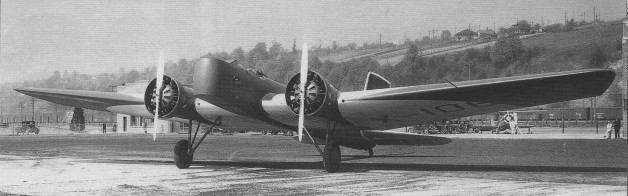
In 1930 Boeing began the private-venture development of a bomber aircraft based on the Model 200 Monomail. The resulting prototypes and service evaluation bombers were scaled-up versions of this aircraft. They differed by having twin-engines, installed in nacelles at the wing leading edge, and by adaptation of the fuselage to cater for the crew and weapons.
Y1B-9A
To provide the crew accommodation, the fuselage was extended forward of the wing. A bomb-aimer/gunner was accommodated in the nose and immediately behind him, within the fuselage, was a radio operator’s position. Aft of the radio operator were two cockpits in tandem, for pilot and co-pilot, with a fourth open cockpit, just aft of the wing trailing edge, for the rear gunner. A bombload totalling 1025kg could be divided between an internal bomb bay and underwing racks.
Y1B-9
First flying, on 13 April 1931, was the Boeing Model 215, powered by two 429kW Pratt & Whitney R-1860-13 Hornet radials. This was tested by the USAAC under the initial designation XB-901 (Experimental Bomber), and satisfactory conclusion of testing resulted in the procurement of this aircraft under the designation YB-9. At the same time the then incomplete Boeing Model 214 was contracted under the designation Y1B-9, plus five additional service test aircraft with the designation Y1B-9A (Model 246). The Model 214, powered by 447kW Curtiss V-1570-29 Conqueror inline engines, was flown for the first time on 5 November 1931, and following further tests, the Model 214 was re-engined with a supercharged version of the Pratt & Whitney Hornet. This power-plant was chosen also for the Y1B-9As, the first of which was flown on 14 July 1932. The Y1B-9A differed externally from the earlier prototypes in having modified vertical tail surfaces, and had internally a number of equipment and structural changes to meet service requirements. Subsequent testing, and evaluation against the Martin Model 123, resulted in the Martin aircraft entering service as the B-10. This came as a great disappointment to the Boeing company, which had produced this bomber with performance superior to most contemporary fighter aircraft.
Boeing 215 / XB-901 / YB-9 Engines: 2 x Pratt & Whitney R-1860-13 Hornet radials, 429kW
Boeing 214 / Y1B-9 Engines: 2 x Curtiss V-1570-29 Conqueror inline, 447kW re-engined with 2 x 447kW Pratt & Whitney SR-1860-11 Hornet supercharged radial piston
Boeing 246 / Y1B-9A Engine: 2 x Pratt & Whitney SR-1860-11 Hornet, 447kW / 600 hp Take-off weight: 6495 kg / 14319 lb Empty weight: 4056 kg / 8942 lb Wingspan: 23.42 m / 76 ft 10 in Length: 15.77 m / 51 ft 9 in Height: 3.66 m / 12 ft 0 in Wing area: 88.63 sq.m / 954.00 sq ft Max. speed: 299 km/h / 186 mph / 163kt Cruise speed: 266 km/h / 165 mph Ceiling: 6325 m / 20750 ft Rate-of-Climb: 900ft/min (274m/min) Range: 869 km / 540 miles Armament: 2-4 x 0.30 caliber machine guns Bombload: 2,260lbs Accommodation: 4 or 5
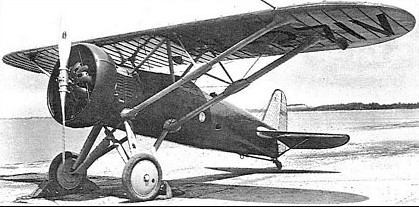
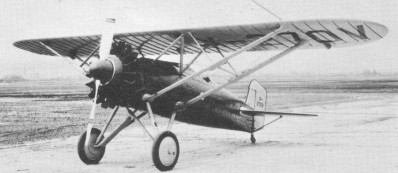
During 1929, work began as a private venture on two prototypes of a single-seat parasol fighter monoplane, one (Model 202) being intended for the USAAC and the other (Model 205) having arrester gear for US Navy evaluation. The Models 202 and 205 featured a semi-monocoque metal fuselage and metal wings, with smooth, non-stressed metal skinning. Provision was made for the standard twin 7.62mm gun armament and the Model 205 could carry a single 227kg bomb or five 13kg bombs.
Model 202 XP-15
The Model 202 had a Pratt & Whitney SR-1340D Wasp rated at 450hp at 2438m and the Model 205 had an SR-1340C rated at 480hp at sea level. The Model 202 was flown in January 1930, and was unofficially assigned the designation XP-15 when evaluated by the USAAC. During evaluation it was fitted with a ring cowling and revised vertical tail surfaces, but was rejected by the USAAC and eventually crashed on 7 February 1931 after propeller failure. The similar Model 205 was assigned the designation XF5B-1, and underwent modifications identical to those applied to the Model 202. Flown in February 1930, the XF5B-1 was used for experimental purposes for three years, no production being undertaken.
Model 205 XF5B1
Model 202 / XP-15 Engine: Pratt & Whitney SR-1340D Wasp, 450hp at 2438m Take-off weight: 1245 kg / 2745 lb Empty weight: 931 kg / 2053 lb Wingspan: 9.29 m / 30 ft 6 in Length: 6.40 m / 20 ft 12 in Height: 2.84 m / 9 ft 4 in Wing area: 14.61 sq.m / 157.26 sq ft Max. speed: 298 km/h / 185 mph
Model 205 / XF5B-1 Engine: Pratt & Whitney SR-1340C, 480hp
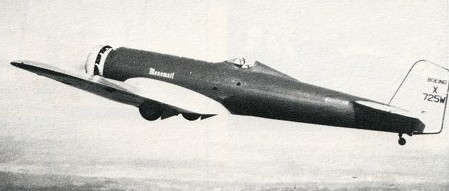
A cantilever low-wing monoplane of all-metal construction, the Boeing Model 200 Monomail benefited by the cantilever wing eliminating drag-inducing struts and bracing wires. The a semi-monocoque fuselage structure provided a more streamlined shape, the semi-retractable tailwheel landing gear ensured that most of the main unit structure was retracted within the wing, and the Pratt & Whitney Hornet B radial engine was surrounded by an anti-drag cowling. It retained an open cockpit for the pilot, seated well aft, and the forward cargo/ mail compartments.
First flown on 6 May 1930, the Monomail was used for a number of tests and experimental flights before entering service on Boeing Air Transport’s San Francisco – Chicago route in July 1931. The aircraft did not achieve a single order beyond the prototype.
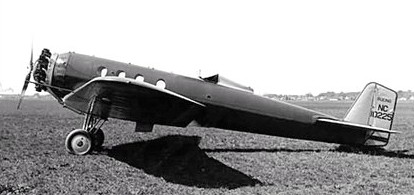
Generally similar to the Model 200 Monomail, this single aircraft had a fuselage lengthened by 0.2m and cargo/mail capacity reduced from 1043kg to 340kg, to provide accommodation for six passengers in an enclosed cabin; first flown on August 1930, and entered service with Boeing Air Transport
221 Monomail
Boeing Model 221A: designation applied to the Models 200 and 221 following fuselage ‘stretches’ to provide accommodation for eight passengers; both saw service on the Cheyenne-Chicago route of Boeing’s newly-formed United Air Lines
The advanced design of this aircraft led to development of the Model 214 and Model 215 experimental bombers, and two variants of this basic civil design.
Boeing Model 200 Engine: 1 x 429kW Pratt & Whitney Hornet B radial Take-Off Weight: 3629 kg / 8001 lb Empty Weight: 2158 kg / 4758 lb Wingspan: 18.02 m / 59 ft 1 in Length: 12.56 m / 41 ft 2 in Max. Speed: 254 km/h / 158 mph Cruise Speed: 217 km/h / 135 mph Ceiling: 4265 m / 14000 ft Range: 853 km / 530 miles
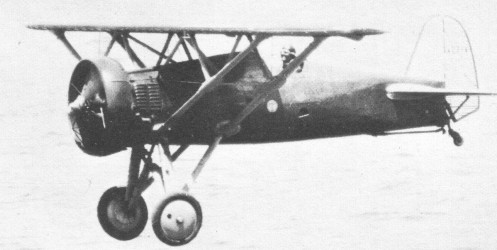
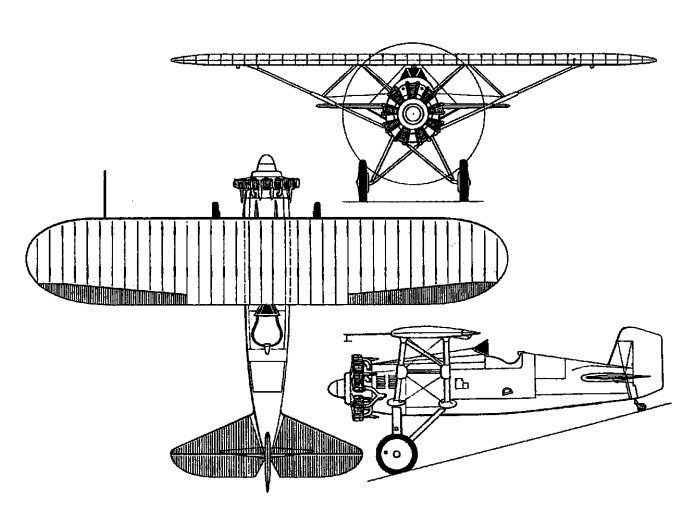
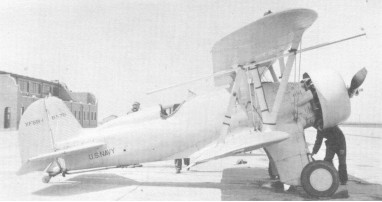
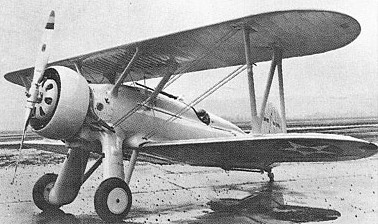
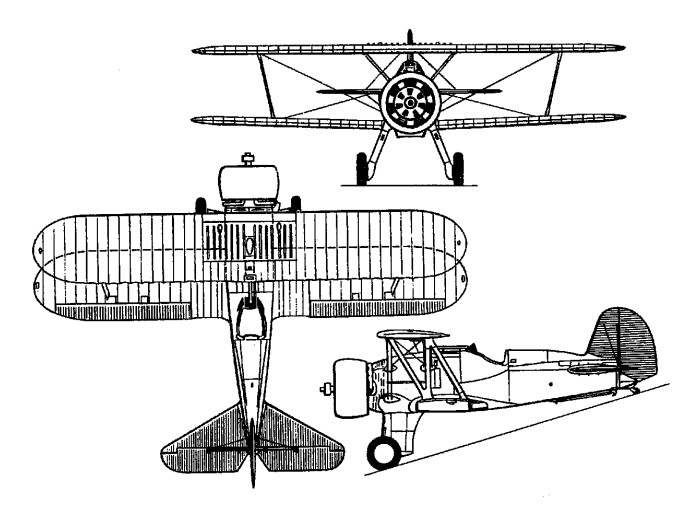
The last Boeing biplane fighter, the Model 236 single-seat shipboard fighter was designed around the 14-cylinder twin-row Pratt & Whitney R-1535 Twin Wasp Junior engine rated at 625hp at 1676m. Of all-metal construction with fabric-covered wings, the Model 236 was assigned the designation XF6B-1 by the US Navy and flew on 1 February 1933. Armament was two 7.62mm guns and provision was made for a single 227kg bomb or two 52kg bombs, and on 21 March 1934, the prototype was assigned the new “bomber-fighter” designation of XBFB-1. The engine installation and undercarriage were refined during the test and evaluation programme, but no production was undertaken.
Engine: Pratt & Whitney R-1535 Twin Wasp Junior, 625hp Take-off weight: 1680 kg / 3704 lb Empty weight: 1038 kg Wingspan: 8.69 m / 28 ft 6 in Length: 6.74 m / 22 ft 1 in Height: 3.22 m / 10 ft 7 in Wing area: 23.41 sq.m / 251.98 sq ft Max. speed: 322 km/h / 200 mph Range: 845 km / 525 miles