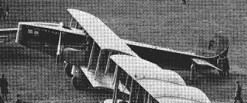
The Breguet 280T was operated by Air Union circa 1929.
The Breguet 280T was operated by Air Union circa 1929.
Louis Breguet, founder of Societe Anonyme des Ateliers d’Aviation Louis Breguet in 1911, was a French pioneer of rotary-wing flight. The aircraft built by the Breguet brothers lifted a man off the ground on September 29,1907, but did not constitute a free flight. BU3 biplane bomber prototype of 1915 built under subcontract by Edouard and Andre Michelin as Breguet-Michelin BUM. Improved SN3 entered production with Michelin 1916 as BUC. Breguet 14 tractor biplane of 1917 was a significant French wartime bomber. Its successor, the Breguet 19 of 1921, remained in service until 1936. One specially prepared Breguet 19 (Question Mark), flown by Costes and Bellonte, made first east-west aircraft crossing of North Atlantic September 1930. Built Short Calcutta flying-boat under license during 1930s as Breguet Bizerte. Breguet elected not to be included in nationalized industry 1936; his factories were, however, incorporated.
Les Mureaux, CAMS, and part of Breguet formed SNCAN in 1938.
Regained some independence in 1939 through purchase of former Latecoere factories. Avions Marcel Dassault became major stockholder June 28,1967. Anglo-French company Societe Europeenne de Production de I’Avion Ecole de Combat et d’Appui Tactique (SEPECAT) formed between British Aircraft Corporation and Breguet Aviation 1966 to design and develop tactical support/advanced trainer. Built four 941 unpressurized cargo/passenger transports, which used deflected slipstream technique to give STOL capability, for French Air Force trials. Breguet Type 1150 Atlantic maritime patrol aircraft selected by NATO, with prototypes ordered 1959; production aircraft built internationally by Belgium, France, Germany, Netherlands, and U.S.A..

Avions Marcel Dassault had merged with Breguet Aviation on 14 December 1971 to become Dassault Breguet Aviation.
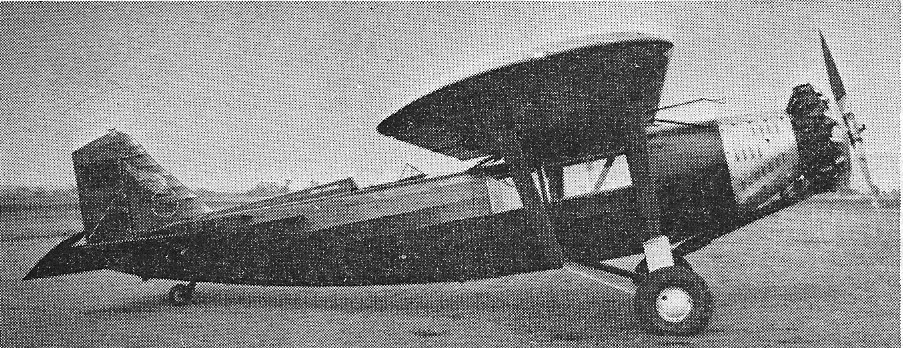
The early 1930s Breese Aircraft Model R-6-C was re-modelled by Russel H. Lawson of Portland, carrying four passengers in the cabin, with the pilot in the open, rear cockpit.
Engine: Wright R-975 Whirlwind, 330 hp
Circa 1920, Breese built a 226.19 cu.in three-cylinder radial air-cooled aero engine. The engine produced 40hp@1400rpm and had a dry weight of 163 lb.
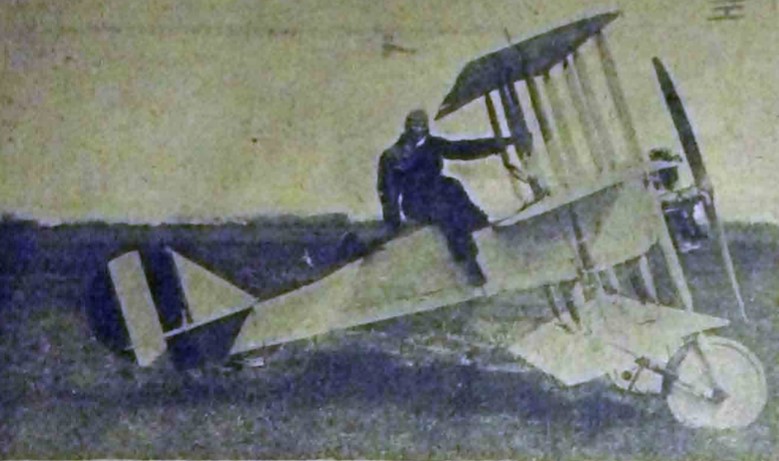
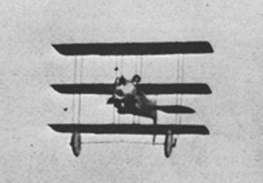
The Pensuti 2 was a very compact, low-powered triplane flown in about 1918. Its first flight, piloted by Lt. Lodovico Montegani, was delayed by the death of its designer and Caproni test pilot Emilio Pensuti in an unrelated aircraft crash. Designed to do in the air “what bicycle [sic] does for the man on the road”, it was categorised post-World War I as a small sporting aeroplane.
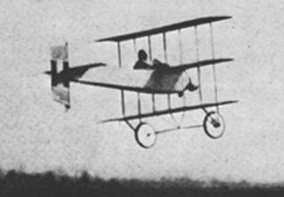
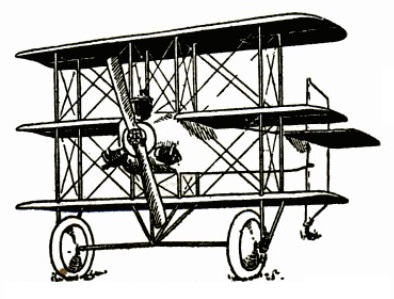
The single-seat triplane had unswept rectangular wings, each with a full span of only 4 m (13 ft 1 in). These were mounted without stagger, each wing braced to the one below by two pairs of vertical, parallel interplane struts, one pair out beyond mid-span and the other from the fuselage sides. The central wing was attached to the upper fuselage and the other two held well clear of it by the struts. There were ailerons on each wing.
The Pensuti had a simple rectangular cross-section fuselage, with the open cockpit at the wing trailing edge. A three cylinder, inverted Y configuration Anzani air-cooled engine of 26 kW (35 hp) in the nose drove a two-blade propeller. The triplane had a fixed undercarriage of wide track, with a single wheel at each end of a single axle with its extremities attached to extensions of the outer interplane struts. Its cruciform tail had horizontal surfaces mounted on the top of the fuselage; the vertical surface was trapezoidal and extended equally above and below the fuselage. A small tailskid was carried on its lower tip.
A second aircraft with a redesigned tail, Anzani 10-cylinder radial engine and other modifications was built at the Breda factory in Milan as the Breda-Pensuti B.2, (regn. I-BADZ). It gained the second prize at the Italian low-powered aircraft competition held in the summer of 1920 in Milan.
The Italian Air Force used them for quick recon flights for the infantry. The Pensuti 2 remained in service until 1923.
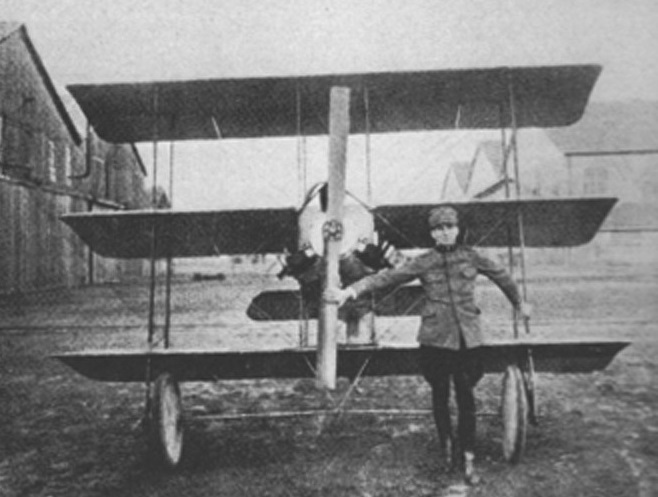
‘Ba.1’ has been applied to the B.2.
Possibly a variant with an 80 hp Breda V-8 was also built.
Powerplant: 1 × Anzani Y 3-cylinder, 26 kW (35 hp)
Propeller: 2-bladed
Wingspan: 4.0 m (13 ft 1 in) all wings
Length: 3.80 m (12 ft 6 in)
Height: 2.40 m (7 ft 10 in)
Gross weight: 230 kg (507 lb) in flight with pilot
Maximum speed: 95 km/h (59 mph, 51 kn)
Stall speed: 40 km/h (25 mph, 22 kn)
Rate of climb: 1.1 m/s (220 ft/min)
Take-off and landing distances: 20 m (65 ft).
Crew: one
Designed by Ing Generale Gaetano Arturo Crocco and Ing Giulio Cesare Costanzi who worked for the Italian military the 1929 Breda CC.20 trimotor monoplane bomber had a 42m span and IF Asso A.500 power. One prototype was built.
CC.2000 was an alternative designation for the CC.20 (based on total installed horsepower).
Built in the 1930s, the Breda CC.3000 trimotor monoplane was a more powerful derivative of the CC.20.
A 1922 modification to the original Tebaldi-Zari fighter prototype.
Modifications were a long span/narrow chord upper wing, different stagger, and removable lower wings.
Engine: Hispano-Suiza HS 42 V-8, 1300 hp
Armament: 2 x 7.7mm Vickers
The 1919 Breda M.1 was an enclosed-cabin airliner conversion of surplus Ca.44 bomber, aka Ca.57.
A twin-engined, twin-boomed biplane 8 passenger airliner, with a 23.40m span.
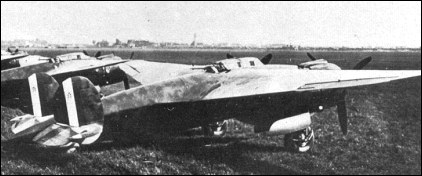
Initially, the prototype (MM.302) was flown with a single fin and rudder assembly, but poor stability necessitated the adoption of a rather cumbersome twin fin and rudder arrangement which marred the Ba 88s otherwise good aerodynamic form. The 1936 prototype was powered by two 900-h.p. Isotta-Fraschini K.14 radials and was one of the fastest aircraft in its class at the time of its appearance. A hybrid structure with stressed metal skin, shoulder-wing monoplane, the Lince had a structure of steel tube with a light metal outer skin.
Modified in 1937, the Breda Ba 88 Lince prototype, in December of that year, established several international records (with a load of 2,205 lb. flying 62 miles (100 km.) at 344.5 mph, and 621 miles (1,000 km.) at 326.3 mph).
Production orders for the Ba 88 were placed for the Regia Aeronautica and assembly lines were established by both Breda and 1.M.A.M. (Meridionali) with deliveries commencing late in 1938.
Regarded as an aeroplano di combattimento, suitable for attack, long-range reconnaissance or bombing operations, the Ba.88 then had its military equipment and weapons installed. Immediately, performance and flight characteristics fell off dramatically, but by then production orders were already in place. Bombs could be carried either in a bomb bay or semi-externally in recesses under the belly, and the Ba.88 could carry a 1000kg bomb load and four machine guns, three firing forward and a flexible gun in the rear cockpit. A window in the floor aided the pilot in aiming the bombs.
The production version featured considerable redesign and was powered by two 1,0000h.p. Piaggio P.XI R.C.40 radials which provided a maximum speed of 304 mph. Eight Ba.88 bicomando two-seat trainer version were built, with a raised instructor’s seat.
The first unit to receive the Ba 88 was the 7th Gruppo, which arrived in North Africa in September 1940.
On 16 June 1940, just after Italy’s declaration of war on France and her allies, the twelve Ba.88 aircraft from the Regia Aeronautica’s 19° Gruppo Autonomo made bombing and machine-gun attacks on the principal airfields of Corsica; three days later nine Ba.88s made a repeat attack. Analysis of these operations showed that the Ba,88 had only limited value, and any remaining doubts were settled when Ba.88s of the 7° Gruppo Autonomo joined action in Libya against the British. Fitted with sand filters, the engines overheated and failed to deliver their designed power. Attacks on targets at Sidi Barram had to be aborted in September 1940, the aircraft failing to gain sufficient altitude or maintain formation, and reaching a speed less than half that claimed by the manufacturers. The Ba 88 being taken out of production after only 105 aircraft had been built. Eighty-one by Breda and twenty-four by IMAM Meridionali.
In 1938 a Ba.88 bis was proposed with two Alfa Romeo 135 engines for the Caccia Combattimento competiton. It was not proceeded with.
By mid-November 1940 most surviving Ba.88s had been stripped of useful equipment and were scattered around operational airfields as decoys for attacking British aircraft.
In 1941 Agusta substituted two 840-h.p. Fiat A.74 R.C.38 radials for the Piaggios, increased wing span by 2.00m and fuselage length, and began the construction of a small series under the designation Ba 88M as ground-attack aircraft. Nose armament was increased to four 12.7mm machine-guns, and dive brakes were installed. Only three aircraft of this type were completed. These Breda Ba.88Ms were delivered to the 103° Gruppo Autonomo Tuffatori (independent dive-bombing group) at Lonate Pozzolo on 7 September 1943. They were flight-tested by Luftwaffe pilots, but that was the last heard of the Breda Ba.88.
A total of 149 were built.
Breda Ba.88 Lince
Engine: 2 x Piaggio P.XI RC 40, 986 hp
Length: 35.4 ft / 10.79 m
Height: 10.171 ft / 3.1 m
Wingspan: 51.181 ft / 15.6 m
Wing area: 358.872 sq.ft / 33.34 sq.m
Max take off weight: 14883.8 lb / 6750.0 kg
Weight empty: 10253.3 lb / 4650.0 kg
Max. speed: 265 kts / 490 km/h
Service ceiling: 26247 ft / 8000 m
Wing load: 41.41 lb/sq.ft / 202.0 kg/sq.m
Range: 871 nm / 1614 km
Armament: 3x MG 12,7mm BredaSAFAT, 1x MG 7,7mm Breda SAFAT, 1000kg Bomb. int. / 3x200kg Bomb. ext.
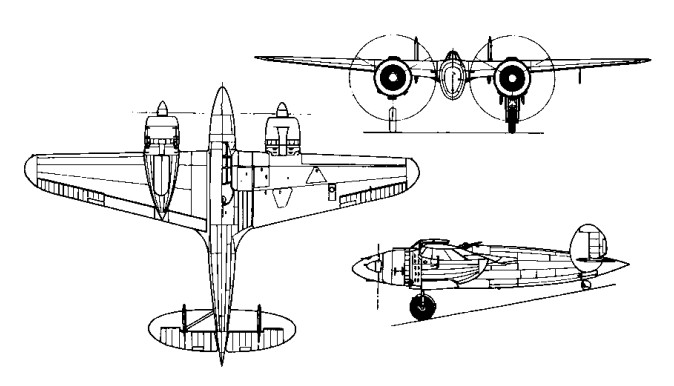
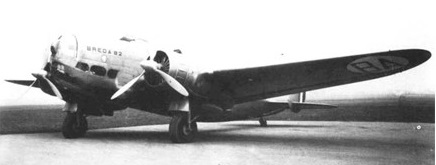
In response to the competition organized by the Italian Air Ministry in 1934 for a Terrestrial Bomber Fast, Breda developed the model “82” consisting of a very compact medium bomber. The construction was all-metal, and powered by two radial Fiat A.80 RC 41 1000 Hp engines.
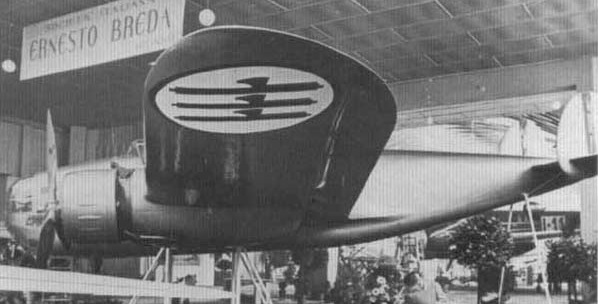
Its development was slow and not without its difficulties, but it was brought out at the Air Show in Milan in 1937, but now the military thought that his was dated. Continuous trouble with the engines made that flight tests would start in 1939, but the competition decided on the Fiat BR.20 and now focused on three-engine medium bombers.
Engines: 2 x Fiat A.80 R.C.41, 1,000 hp
Wingspan: 20.80m
Wing area: 66.00 sq.m
Length: 13.80 m
Height: 4.00 m
Empty weight: 6840 kg
Max weight: 10040 kg
Useful load: 3200 kg
Max speed: 425 km/h at 4000 m
Ceiling: 9940 m
Time to 4000 m: 12 min 14 sec
Time to 5000 m: 15 min 15 sec
Armament: 2 x Breda – SAFAT 12.7 mm machine guns
Bombload: 1000 kg
Crew: 4-5 men

