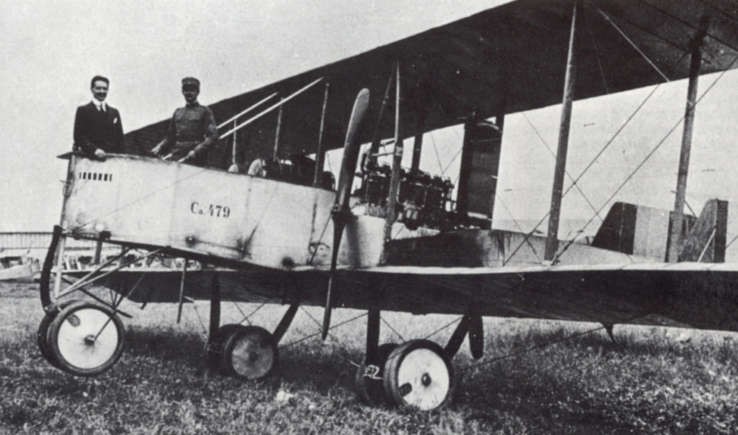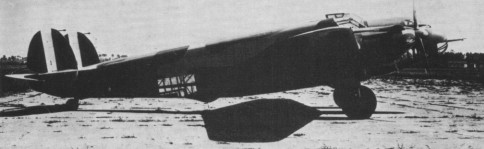
Caproni Ca.135 / SABCA S.45

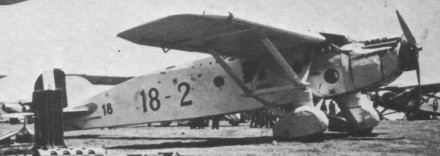
Ca.135 Tipo Spagna

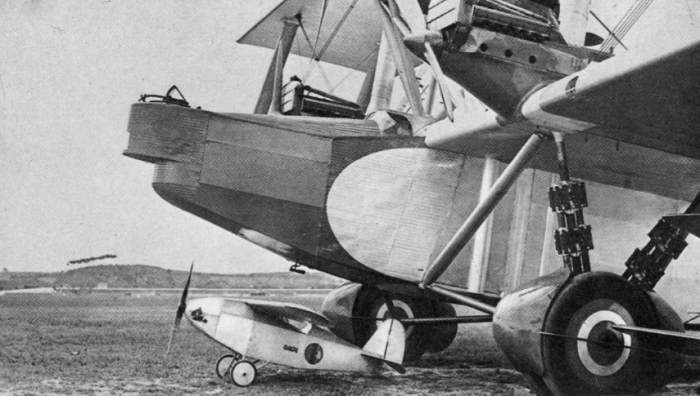
Designed in mid¬ 1934 by Ing Cesare Pallavicino, the Ca 135 was a mid wing, twin tailed monoplane. The prototype, powered by two 836 hp Isotta-Fraschini Asso XI RC 40 engines, was built by Caproni Bergamaschi and flew for the first time on April 1, 1936.
Carrying a four man crew, the Ca 135 was armed with a single 12.7 mm (0.5 in) Breda-SAFAT machine gun in the nose, another in a ventral position, and one or two similiar guns in a Breda dorsal turret.
The Isotta-Fraschini Asso XI RC 40 was retained for the initial production version, and 32 were delivered to the Regia Aeronautica’s 330 and 340 Gruppi Bombardied from June 1938, and a further six (known as Tipo Peru) to the Peruvian air force in 1938 39.
The Regia Aeronautica Ca 135s were employed chiefly as bombing trainers, but those of the Hungarian air force (delivered in 1940 41) were used for bombing attacks in the Balkan campaign during the latter part of 1941, and on the southern part of the Eastern Front during the following year.
The maximum bombload, carried internally, amounted to 1862 kg (4105 lb) on the Ca 135 Asso, reducing to 1600 kg (3527 lb) on the Fiat and Piaggio engined versions. Two torpedoes could be carried instead of bombs.
Eight examples were completed of the Ca 135 S (Tipo Spagna), which differed in having 1000 hp Fiat A.80 RC 41 engines. These were intended for the Italian Legion fighting in the Spanish Civil War, but the first three were lost during delivery and the remaining five were delivered to the Regia Aeronautica.
The principal production version was the Ca 135 bis, of which 68 were ordered with 1000 hp Piaggio P.Xl RC 40 radial engines: 32 for the Regia Aeronautica and 36 (designated Ca 135 bis U) for the Hungarian air force. All 68 went to Hungary, the Regia Aeronautica making good the defi¬ciency by having 32 Asso engined Ca 135s refitted with the Piaggio engines. Total pro¬duction amounted to 115, includ¬ing the prototype.

(SABCA) made a marketing agreement with the Italian company Caproni, with SABCA selling some of Caproni’s military aircraft in certain markets, including the Caproni Ca.135, Ca.310 and the Ca.312, which were to be designated SABCA S.45bis, S.46 and S.48 respectively.

Ca.135 bis
Span: 18.80 m (61 ft 8.25 in)
Length: 13.70 m (44 ft 11.5 in)
Gross weight: 9500 kg (20944 lb)
Maximum speed: 428 km/h (266 mph)
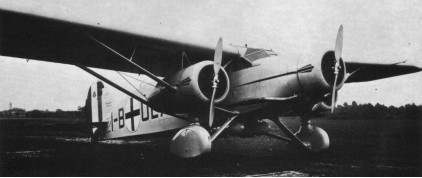
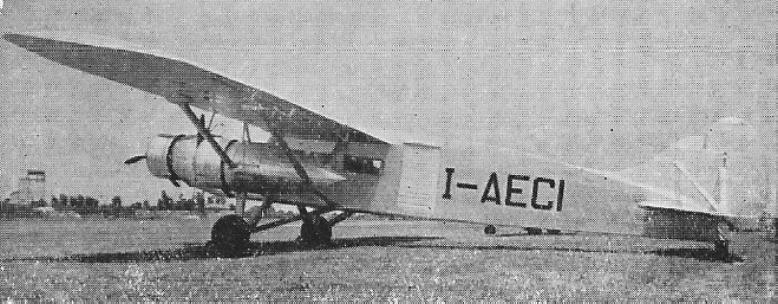
Caproni Ca.133 / Ca.142 / Ca.148

Ca.133S

An improved version of the Ca.101, the Ca.133 introduced a number of drag-reducing features, including long-chord engine cowlings, faired undercarriage legs and spatted wheels. The design of the tail unit was also improved. The Ca 133 used three 450‑hp Piaggio Stella, RVII C 14 radial engines, installed in NACA cowlings and driving two‑blade metal propellers.

The transport payload (it was built for both civil and military transport use) was increased even­tually to 18 passengers, compared with only eight in the Ca 101. In the bomber role, the maximum internal/external bombload was still restricted to 500 kg (1102 lb), and the defensive armament of 4 7.7‑mm (0.303‑in) machine‑guns remained basically unaltered.

The Ca 133 made its operational debut in Ethiopia in 1936. On 6 March 1936, a Ca.133 made the first photo-reconnaissance sortie over the Ethiopian capital, Addis Ababa, in support of Italian operations. About 10 served with the Nationalist forces in the Spanish Civil War, and others were used as paratroop transports when Albania was invaded in 1939. Several squadrons of the Regia Aeronautica re­mained equipped with these aircraft when Italy entered the Second World War, but after early heavy losses in North Africa they were mostly removed to the Eastern Front or allocated to ambulance or other transport duties, designated respectively as Ca 133 S (Sanitaria) and Ca 133 T (Trasporto). Less official designations, bestowed as a result of the aircraft’s flying qualities, included the nicknames Caprona (she‑goat) or Vacca (cow). Nevertheless, some Ca 133s survived to serve, after the Italian surrender in 1943, with both the Co‑Belligerent Air Force and the Aviazione della RSI.

Out of 419 Ca.133s produced for the Regia Aeronautica, 329 were Ca.133T transports and 21 Ca.133S ambulance aircraft.

One additional example was built with retractable landing gear, the Ca 142.

The 18‑passenger civil transport version, the Ca 148 (106 built), had a number of improvements including a modified fuselage and a strengthened landing gear for operation in East Africa. The Ca.148 differed from the Ca.133 in having Piaggio d’Ascanio variable-pitch propeller. Loaded weight was increased to allow a normal load of 7716 lb. The cabin can accommodate 16 passengers, and a crew of two. The structure is of welded steel-tube with metal and fabric covering.  Many of these were impressed for war service, operat­ing also with Luftwaffe transport units; and several survived to serve with the post-war Italian air force.

Ca.148

Engines: 3 x 460hp Piaggio Stella P.VII C.16 7-cylinder radial engines
Max take-off weight: 6700 kg / 14771 lb
Wingspan: 21.24 m / 69 ft 8 in
Length: 15.36 m / 50 ft 5 in
Height: 4.00 m / 13 ft 1 in
Max. speed: 265 km/h / 165 mph
Ceiling: 5500 m / 18050 ft
Range: 1350 km / 839 miles
Crew: 3
Armament: 4 x 7.7mm machine guns, 1200kg of bombs

Ca.148
Engines: 3 x Piaggio Stella VII R.C, 460 hp
Wing span: 69 ft 8 in
Wing area: 700 sq.ft
Length: 50 ft 4 in
Height: 13 ft 1 in
Empty weight: 8580 lb
Loaded weight: 14,700 lb
Max speed: 174 mph at 5575 ft
Ceiling: 21,320 ft
Range: 838 mi

Caproni Ca.113

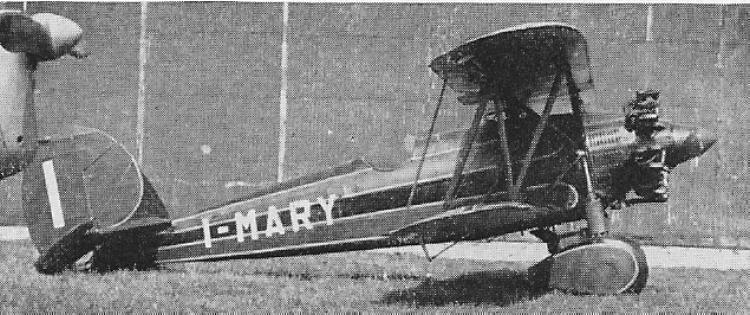
The Caproni Ca.113 two-seat advanced training and aerobatic biplane was produced in the early 1930s. Th wings were wood with fabric covering, and the fuselage and tail assembly had welded steel-tube frame0work covered with fabric. Differentially-controlled ailerons were fitted on the upper plane and small auxiliary balance surfaces were attached to the bottom planes. A special carburetter was fitted for inverted flying, and the type participated in a number of pre-war competitions.

Engine: Piaggio Stella VII, 370 hp
Wing area: 290.5 sq.ft
Wing span: 34 ft 5 in
Length: 23 ft 11 in
Height: ft 11 in
Empty weight: 1870 lb
Loaded weight: 2420 lb
Max speed: 155 mph
Time to 6560ft: 3.5 min
Ceiling: 24,600 ft
Range 186 mi
Seats: 2

Caproni Ca.111

Ca.111 bis RC

The Ca 111 was a derivative of the Ca 101, and its prototype was converted from a Ca 101, the main difference being the substitution of a single 750 hp Isotta Fraschid Asso 750 RC engine in the nose, in place of the tri motor arrangement of the earlier aircraft. Carrying a crew of two to four, it was armed with up to four machine guns in dorsal, ventral and two beam positions, and could also carry a light bombload internally and/or externally.
A total of 152 was built for the Regia Aeronautica, in three main versions: the Ca 111 bis (750 hp Fiat A.80 engine), Ca 111 bis RC (Asso 750 RC engine), and a twin float torpedo bomber version of the latter designated Ca 111 bis Idro.
The landplane models gave widespread support to the Italian ground forces during the Ethiopian campaign of 1935 36, and some remained in service after Italy’s entry into the Second World War in 1940, when they were used as transports or for anti-partisan nuisance raids in the Balkan theatre of opera¬tions. One Ca 111 still survived at the time of the Italian surrender in September 1943.

Ca 111 bis
Engine: 750 hp Fiat A.80 engine

Ca 111 bis RC
Engine: Asso 750 RC, 970 hp.
Prop: 4 blade.
Wing span: 64 ft 7.5 in (19.68 m).
Length: 50 ft 2.25 in (15.30 m).
Wing area: 664.13 sq ft (61.70 sq.m)
Gross weight: 11,795 lb (5,350 kg)
Max speed: 186 mph (300 kph).
Range: 1,245 miles (2,000 km).
Accommodation: Crew of 3-4.

Ca 111 bis Idro
torpedo bomber version
Undercarriage: twin float

Caproni Ca.100 / KN-1

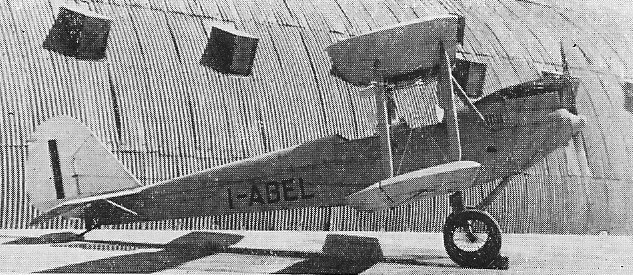
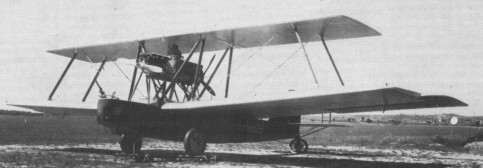
The Ca 100 has a lower wing of noticeably greater span than the upper wing, and about 700 aircraft were built from 1929. The type was bought by civil as well as military operators, and was flown with an assortment of engines including the original Gipsy, 63-kW (85-hp) Fiat A.50, 67-kW (90-hp) Blackburn Cirrus Minor, 86-kW (115-hp) Isotta Fraschini Asso 808, and 108-kW (145-hp) Colombo S.63.

90 hp Cirrus

The Ca 100bis is a touring model powered by a 130 hp de Havilland Gipsy. Built by Macchi, the Ca 100 Idro was a twin-float seaplane trainer, and there was also a bomber trainer with a 97-kW (130-hp) radial engine and provision for a quartet of light bombs. The type was built under licence in Bulgaria as the KN-1, and also in Peru.

Gallery

Ca 100
two-seat primary trainer.
Engine: l x de Havilland Gipsy, 63kW (85hp).
Span: 10m (32ft l0in).
Length: 7.30m (23ft 1.25in).
Max T/O weight: 680 kg (1,499 lb).
Max speed: 102mph at sea level.
Operational range: 435 miles.

Ca 100
Engine: Cirrus, 90 hp
Wingspan: 32 ft 10 in
Length: 23 ft 10 in
Height: 8 ft 11 in
Empty weight: 882 lb
Loaded weight: 1587 lb
Max speed: 102 mph
Cruise: 87 mph
Ceiling: 14,763 ft
Range: 435 mi

Caproni C.A.90 PB

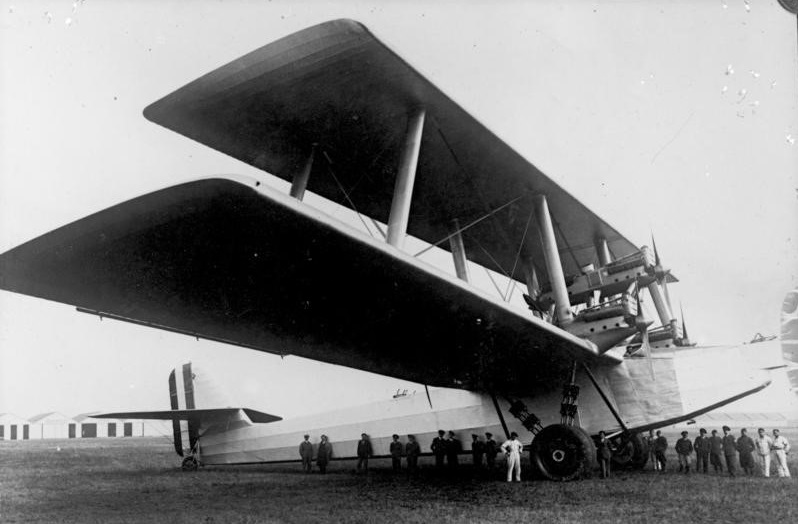
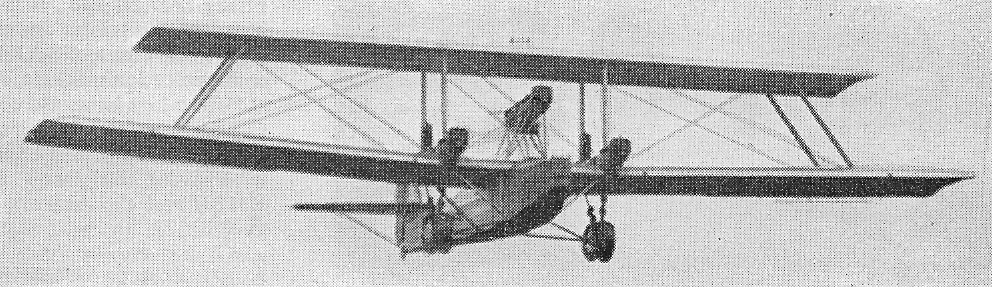
The Caproni Ca.90 was a heavy bomber biplane built by the Italian company Aeronautica Caproni in the late 1920s; while winning some world records relating to the transport of loads at high altitudes, it was built in a single specimen and remained in the prototype stage.

At the time of its construction, the Ca.90 was the largest land aircraft built up to then, a record it held until 1934, surpassed only by the construction of the Soviet Tupolev ANT-20.

The structure of the Ca.90 was made entirely of steel tubes while the upholstery was in canvas, except in the bow section which was instead covered in corrugated sheet of duralumin. The fuselage, with a rectangular section, housed at the bow end a position for a machine gunner, below which was that of the bomber observer; immediately behind these positions was arranged a first part of the fuel tanks which was followed by the cockpit with dual controls with the two pilots arranged side by side. Other fuel tanks were arranged behind the pilots, followed by the compartments for the bomb launchers and three other positions for the machine gunners (two dorsal and one ventral).

The configuration of the wing planes was of the inverted sesquiplana type, characterized by the significantly greater opening of the lower wing than the upper one (almost 12 metres). The lower wing rested on the upper part of the fuselage and was connected to the upper wing plane by two pairs of uprights integrated by diagonally arranged and crossed metal cables. In the central part of the upper wing plane there was a cockpit position, armed with machine guns. The empennage was of the monoplane and cruciform type.

The landing gear was fixed, with double wheel main elements, of the interrupted axle type; supported by two legs equipped with oil-pneumatic shock absorbers and by two connecting struts with the lower part of the fuselage, it was integrated at the rear by a single-wheel, adjustable, elastically sprung element.

The engines were six Isotta Fraschini Asso 1000: they were liquid-cooled 18-cylinder W engines, each capable of delivering the power of 1,000 HP. They were arranged in groups of two, in tandem, in a push-pull configuration: two groups rested on the lower wings, in correspondence with the undercarriage attachments, while the third group was suspended between the two wing planes, supported by a steel tube frame. The front engines drove a two-bladed propeller, the rear ones a four-bladed type.

Armed with seven machine guns, the Ca.90 was designed to carry up to 8,000 kg of bombs, even if the transportable load could vary according to the flight range required for the type of mission.

Taken in the air on 13 October 1929, although employed by the Regia Aeronautica in the ambit of the 62nd Squadron “Experimental Heavy Bombardment”, it was unable to fully express its potential: despite the conquest of some world records, it was not commercially successful and was built in a single copy. In essence it was the Air Ministry under the leadership of Italo Balbo that rejected the project, as Balbo was not a supporter of large-scale aerial bombing. Later Caproni attempted to commercialize the Ca.90 in the United States by starting a joint venture with the Curtiss Airplane and Motor Company, but this project also failed due to the great depression.

On February 22, 1930, piloted by Domenico Antonini, it won the endurance and climb-to-altitude records with a payload of 10 000 kg flying for 1 h and 31 min and reaching the maximum altitude of 3 231 m (a second, more recent source reports the maximum altitude of 3 256 m).

The operational use of the Ca.90 with the Regia Aeronautica was limited to the 62nd Squadron “Sperimentale Bombardamento Pesante” (also called “Squadriglia Bombardieri Giganti”) with the Italian air force.

From the Ca.90 project, a seaplane version was developed, called Ca.91.

Engines: 6 x Isotta Fraschini Asso 1000, 1000 hp
Wingspan Upper: 34,90 m / 114 ft 6 in
Wingspan Lower: 46,60 m / 153 ft 2.5 in
Length: 26,95 m / 89 ft 9 in
Height: 10,80 m
Wing area: 496,60 sq.m
Empty weight: 15 000 kg
MAUW: 30 000 kg / 66,140 lb
Max speed: 205 km/h / 130 mph
Endurance: 7 h 00 min
Range: 2796 mi
Ceiling: 4 500 m
Bombload: 8 000 kg

Caproni Ca.97

Powered by a licence built Alfa Romeo (Bristol) Jupiter of 515 hp, the Ca 97 was one of a family of civil and military high wing seaplane transports of 1928 33. The 97 was normally equipped with three 7.7 mm (0.303 in) Breda-SAFAT machine guns and external racks for a small bombload, but it could carry a crew of up to six or cargo internally.

Span: 16.0 m (52 ft 5.75 in)
Length: 10.8 m (35 ft 6 in)
Gross weight: 2595 kg (5720 lb)
Maximum speed: 220 km/h (138 mph)

Caproni Ca.73 / Ca.82 / Ca.88 / Ca.89

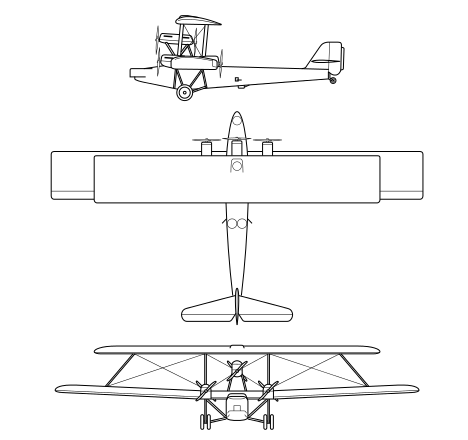
Developed in 1925 from Caproni’s earlier Ca 66, the Ca 73 was a large two bay biplane having with the lower wing mounted on top of the fuselage and the much shorter span upper wing supported above it by struts. The tail unit was biplane horizontal surfaces and a single fin and rud¬der. The power plant, mounted centrally between the wings, was two 400 hp Lorraine engines mounted in tandem, driving a tractor propeller at the front and a pusher propeller at the rear. The Ca 73 carried nose, dorsal and ventral single machine guns for defence and its bombs were attached to the fuselage sides beneath the lower wing.

Subsequent versions included the Ca 73 bis (400 hp Lorraines) and Ca 73 ter (490 hp Isotta Fraschini Asso engines); the latter was later redesignated Ca 82, and carried its bombs attached directly to the lower wing.

Caproni also produced developed versions designated Ca 88 (originally Ca 73 quater) and Ca 89, of which the latter had a cockpit windscreen, glazed bomb aiming panels in the nose, a dorsal turret, and a retractable ventral gun. In over eight years’ service, the Ca 73 series served also as paratroop trans¬ports and ambulance aircraft.

Span: 25.00 m (82 ft 0.25 in)
Length: 15.10 m (49 ft 6.5 in)
Gross weight: 5000 kg (11023 lb)
Maxi¬mum speed: 175 km/h (109 mph)

Ca.88
Engines: 2 x I.F.Asso 500
Wingspan: 25 m
Length: 15.20 m
Weight: 5700 kg
Max speed: 195 kph
Ceiling: 5500 m

Caproni Ca.60

Caproni’s Ca.60 had three sets of triplane wings arranged in tandem on top of a hull. Eight 400-hp Liberty engines, four pushing, four pulling, were supposed to make the thing fly, and provision was made for engineers to walk along the extended nacelles to attend the motors in flight.

This craft was launched on Lake Maggiore on 21 January 1921 in the presence of the American Ambassador to Italy, his country having supplied its engines. The first trial hop in March confirmed that the craft was unstable longitudinally. Test pilot Semprini, with sandbags representing a load of 60 passengers, managed to coax the aircraft to 20 m (66 ft) before its nose dipped and dived into the lake and broke up. Semprini was fished out and the wreck was salvaged for rebuilding. A fire conveniently destroyed its remains before the work was completed, whereupon Count Caproni decided that enough was enough.

Engines: 8 x Liberty 400-hp.

Caproni 260hp / Caproni 300hp / Ca.1 / Ca.2 / Ca.30 / Ca.31 / Ca.32 / Caproni 350hp

Caproni Ca.1 Heavy Day Bomber

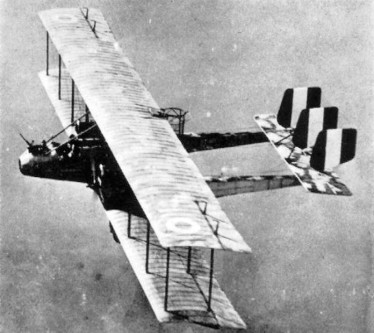
The “Societa de Aviazone Ing Caproni” bureau (better known simply as “Caproni”) proved something of a pioneer in the field, resulting in their first impressive attempt sometime in 1913 as the “Caproni 260hp”. This version sported a “pusher” engine and a pair of “pusher” engines – these 80 hp Gnome rotary engines all being mounted in-line along a central fuselage nacelle. The three man crew sat in the forward part of the nacelle, and two slender fuselage booms carried the triple rudder tail unit. The two pusher systems drove propellers mounted at the tail booms via a tractor arrangement. Prior to the first flight, in October 1914, the two forward engines were re installed with direct propeller drive.

In the post-war years, these respective systems came to be designated as the Ca.30 and Ca.31.
After a period of evaluation, it was determined that the new larger bomber platforms were wholly underpowered. Caproni set to achieve better performance from his “giant” and moved the puller engines to the tips of each tail boom, keeping the pusher system in its centralized nacelle approach from earlier. This allowed each wing-mounted engine to directly drive its propeller more efficiently. The French-based Gnome rotary engines were then replaced with Italian FIAT A.10 inline types and produced the new company designation of “Caproni 300hp”.

Ca.1

A contract was signed for 12 Caproni 300HP bombers powered by three 74.5kW Fiat A.10 engines. First flight occurred in late 1914. A further 150 were delivered during the next two years. These aircraft were also known as Ca.1s and were followed by nine Ca.350HP machines (with the third engine replaced by a 112kW Isotta Fraschini) designated Ca.2.
The Ca.1 featured a wide-span, four-bay, biplane wing assembly. At the center of the wings was fitted the crew nacelle containing the four crew and the third engine. The primary engines were fitted ahead of the twin booms extending aft in a “puller” function arrangement. The third engine on the central nacelle operated in a “pusher” format. The crew consisted of two pilots, a forward gunner and a rear gunner – all fielded in tandem positions. The forward gunner sat in the forward-most compartment. Distinctly, the rear gunner stood in an open air, cage-like pulpit behind the upper wing assembly and ahead of the pusher engine at rear. The twin booms extended aft into a tailplane. The tailplane held three vertical tail fins. The undercarriage was a fixed tricycle featuring two single-wheeled main landing gear legs and a single-wheeled nose landing gear, all supported by struts. The rear of the empennage was supported by a tailskid fitted to the extreme end. Construction was mainly wood covered in fabric.
Bombs were suspended under the central nacelle and there were 2 x 6.5mm FIAT-Revelli machine guns used for defense. These machine guns were fitted to the front gunner tub and the rear gunners pedestal cage.
The 3 x Fiat A.10 6-cylinder, liquid-cooled in-line engines delivered up to 100 horsepower output each. This supplied the massive aircraft with speeds of up to 75 miles per hour as well as a range equal to 344 miles. Her service ceiling was listed at approximately 13,000 feet. Her empty weight ranged in at about 7,200lbs with a gross weight tipping the scales at 8,800lbs. Wingspan was nearly 23 feet with an overall running length of 36 feet plus. She stood 12 feet high.
This revised development led to the Italian Army and the first Italian bomber force. The aircraft was designated officially as the Ca.1 by the Italian Army and production increased by the middle of August 1915. A total of 162 were delivered up to December 1916.
Their first true sortie in Italian Army service occurred on August 20th, 1915, in an attack on Austrian targets at an airfield in Aisovizza. Most Ca.1s were committed to such attacks, primarily against the Austro-Hungarian Empire and the new bomber eventually served in some fifteen total Italian air squadrons during the war effort. Three of these Italian squadrons were known to have operated out of France with another stationed for action out of Libya.

A modified version (for which no post war designation seems to have been allotted) was the Ca 2, in which the ‘pusher’ A.10 engine was replaced by a 150 hp Isotta Fraschini V-4B. Only nine of these were completed.

1910 Caproni Ca.2

In the post-war years, the Ca.1 was redesignated Ca.32. The Ca.1/Ca.32s that survived were refurbished to be used as passenger airliners. These could transport up to six passengers in relative comfort and fell under the Caproni designation of Ca.56.
The Caproni Ca.2 (“Caproni 350hp”) was a minor variation (improved engines) on the strengths of the Ca.1 platform. Development ultimately led to the definitive Ca.3 bomber platform.

Caproni Ca.1 / Ca.32
Engines: 3 x FIAT A.10 6-cylinder, 100 hp
Length: 36.25ft (11.05m)
Wing span: 74.61ft (22.74m)
Height: 12.14ft (3.70m)
Maximum Speed: 75mph (120kmh; 65kts)
Maximum Range: 342miles (550km)
Service Ceiling: 13,123ft (4,000m; 2.5miles)
Armament: 2 or 4 x 6.5mm FIAT-Revelli machine guns
Up to 1,874lbs of external ordnance
Accommodation: 4
Hardpoints: 4
Empty Weight: 7,280lbs (3,302kg)
Maximum Take-Off Weight: 8,818lbs (4,000kg)

Ca.2
Span: 34’5″
Length: 32’4″

Caproni Ca 30