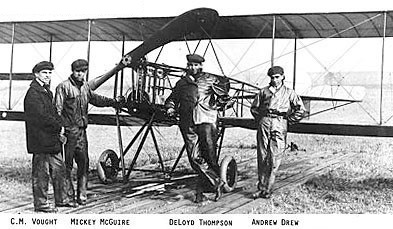
Chance Vought Corp / Lewis and Vought Corp

Chance Vought with others and an early design, unidentified, possibly an exhibition machine for DeLloyd Thompson

Lewis and Vought Corporation of Long Island, New York, built training aircraft in 1918 to designs of Chance M. Vought, for U.S. Army.

Chance Vought Article

Lewis & Vought Corporation was renamed Chance Vought Corporation after First World War. From 1922-1926 produced UO-1 observation float biplanes (developed from VE-7/9) and FU-1 catapult fighter seaplanes for U.S. Navy, followed in 1927 by O2U observation landplanes for same customer, first of several Vought designs to bear the name Corsair. Moved to East Hartford, Connecticut, in about 1930, where until 1935 it continued the Corsair series with 03U observation biplanes and similar SU scouts, again for U.S. Navy.
Became Chance Vought Division of United Aircraft Corporation in 1934, initially continuing production at East Hartford of O3U/SU Corsairs. These were followed by Vought SBU two-seat scout-bomber, designed in 1932 and produced for U.S. Navy between 1935-1937.
In 1928, Boeing Airplane and Transportation Corporation went public and the stock sold quickly. Encouraged, Boeing formed the United Air¬craft and Transport Corporation, which included Boeing Airplane Company, Pratt & Whitney, Chance Vought, Sikorsky, Hamilton Propeller, Pacific Air Transport and Boeing Air Transport.
In 1934, Boeing was informed by the U.S. Government that he was violating the new antitrust laws. He resigned as chairman, sold out his stock and the corporation was divided into three new companies –United Air Lines to handle air transport, United Aircraft Corporation to take over the eastern manufacturing firms and Boeing Airplane Company to manage Western operations.

From 1936 concentrated primarily upon manufacture for the US Navy, major programs including the SB2U Vindicator scout-bomber, OS2U Kingfisher observation aircraft, and F4U Corsair single-seat naval fighter. Of the massive production of the wartime Corsair, which continued until 1952, Vought alone built more than 7,700.

Joined with Sikorsky Division of UAC in April 1939 to form Chance Vought and Sikorsky Aircraft Division of United Aircraft Corporation. Vought and Sikorsky were reconstituted in January 1943 as separate manufacturing divisions of UAC, so that Sikorsky could concentrate on helicopter development and Vought on combat aircraft, primarily the F4U and OS2U. On 1 July 1954 the company became independent of UAC, under the new name of Chance Vought Aircraft Inc. Chance Vought moved headquarters to Stratford, Connectictut. Vought-Sikorsky products at this time included the Sikorsky-designed VS- 43 and VS-44 flying-boats and the historic VS-300, the world’s first fully practical helicopter, from which the production R-4 and R-5 and later designs were developed. After the war, Chance Vought Aircraft Division moved to Dallas, Texas, in 1948-1949, and produced its first jet fighter for the US Navy, the F6U Pirate. Became Chance Vought Aircraft Inc. after becoming separate and independent from UAC on July 1,1954. Main product during this stage of its history was the unorthodox F7U Cutlass, in production 1952-1955 for the U.S. Navy. Deliveries began also in 1957 of the F-8 (originally F8U) Crusader, development and production of which continued as the LTV F-8 after further company metamorphoses into Chance Vought, Chance Vought & Sikorsky VS-44A Excalibur flying-boat, Chance Vought F7U Cutlass carrier-based fighter Corporation (from December 31,1960), and a merger on August 31,1961 with Ling-Temco Electronics Inc. to form Ling-Temco-Vought Inc.

Within the latter structure, Vought became, successively, the Aerospace Division of LTV, then Vought Aeronautics Company (Division of LTV Aerospace Corporation). Corsair II production under the name of the Vought Corporation. In 1964 in combination with Hiller-Ryan developed the XC-142A VTOL transport with swivelling wings. LTV Electro-systems developed the L450F quiet reconnaissance aircraft in 1970.

Since January 1, 1976 it has continued its activities as Vought Corporation, a subsidiary of the LTV Corporation.

Undertook considerable subcontract work, including on B-2 and many transport aircraft. Teamed with Argentina to propose Pampa 2000 for JPATS program, but not selected. Took name Vought once again in 1992. Became LTV Aircraft Products Group in 1986 and LTV Aerospace and Defense Company 1990. Following 1992 sale of 49 percent stock in LTV to Northrop and Carlyle Group, became Vought Aircraft Company, finally merging as a division of Northrop Grumman in 1994 after remaining stock purchased, becoming Northrop Grumman’s headquarters for its Commercial Aircraft Division.
Chamberlin, Clarence Duncan

Born in Ohio, 1893. Died October 30, 1976.

Clarence Duncan Chamberlin, born in Ohio in 1893, first began flying while working at an aerial sign-towing company, then won his wings in 1918 after enlisting in the Aviation Section of the Signal Corps. After a tour of barnstorming he became a dealer in surplus aircraft sales, as well as a company pilot for Wright Corp.

When 1927 a $25,000 prize was offered in to the first pilot to cross the Atlantic in solo flight, Chamberlin was eager to try. That spring Charles Levine’s powerful Wright-Bellanca WB-1 Columbia proved it could endure the time barrier of an ocean flight when Chamberlin and Bert Acosta remained aloft for 51 hours over Roosevelt Field. Unfortunately, Levine was still puttering with the plane and arguing with his pilot and Giuseppe Bellanca when Charles Lindbergh landed in Paris on May 12.

However, on June 4 he and Levine flew non-stop to Germany, and his trip of some 43 hours and 3,905 miles later—which bettered Lindbergh’s distance record—landed on a small field near Eisleben. There they refueled with 20 gallons of fuel brought by a local farmer, and using a quart-size coffee pot to fill the tank, then headed for Berlin, but got lost and landed east of the city at Kottbus, where they received a small but tumultuous welcome. They did finally land at Tempelhof Airport the next afternoon to a crowd of more than 100,000 cheering Berliners.

He designed his own line of Crescent monoplanes, and flew one in the 1929 Air Races, then acquired a diesel-powered Lockheed Vega, in which he set a world altitude record of over 19,000 feet in 1932. He next formed Chamberlin Airline between New York and Boston, but when it seemed doomed for failure, he used its four Curtiss Condors for a barnstorming group during the next five years, plus having his own flight school and aircraft dealerships. When war clouds threaten in Europe, he opened a series of aviation trades schools vital for the war effort. After the war, he served briefly as sales manager for Bellanca Aircraft Corp for a time.

In 1939 he acquired the Rover rights from Jean Roché while in Jersey City NJ.

CFA D-6 Cri Cri

Compagnie Française d’Aviation (usually known as CFA) was established in 1936 as a division of the Salmson engine company to handle the mass-production of the Salmson D-6 Cri Cri light aircraft.

D.6 Cri-Cri
Engine: 60 hp Salmson 9 Adr

D.6-3
Engine: 85 hp Salmson 5 AP-01

CFA / Compagnie Frangaise d’Aviation

France
Compagnie Française d’Aviation (usually known as CFA) was a French aircraft manufacturer of the 1930s and 40s. It was established in 1936 as a division of the Salmson engine company to handle the mass-production of the Salmson Cri Cri light aircraft.

Manufacturing was interrupted by World War II, but was revived on a small scale thereafter. By 1951, their CFA D.7 Cricri Major design and its derivatives were thoroughly outdated, and the company was dissolved at this time.

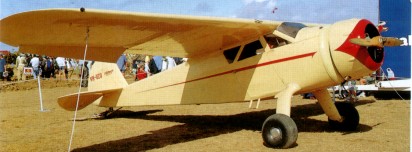
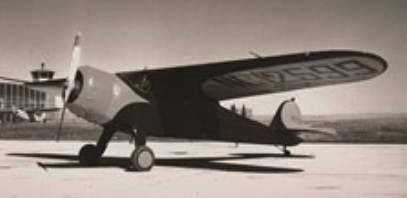
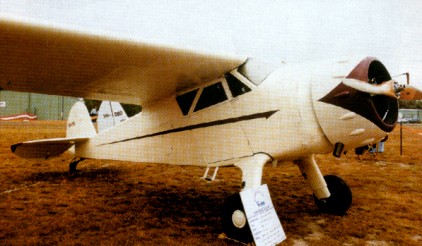
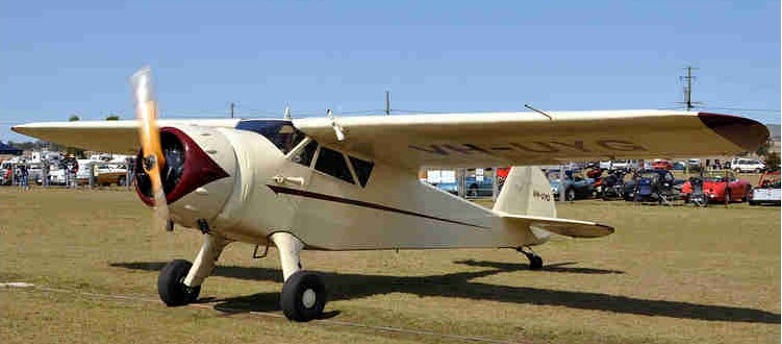
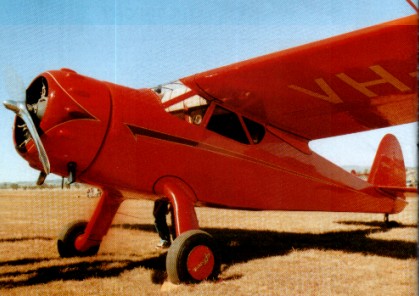
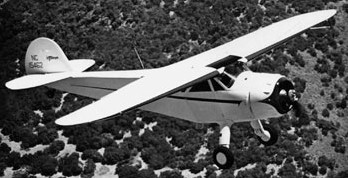
Cessna C-145 Airmaster

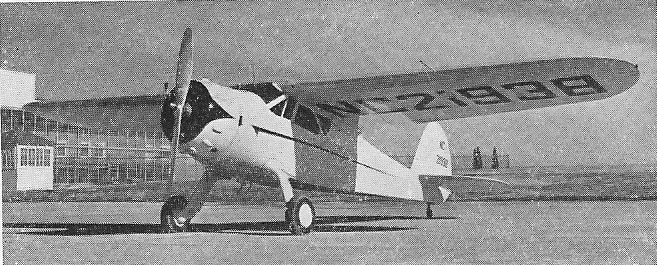
The C-145 Airmaster was basically a modified C-34 featuring revised flaps and a wider gear. In 1932, the Airmaster was made available with the 165-hp Super Scarab, and the line continued in production until 1942. Forty-two were built.

Engine 145-hp Warner Scarab radial
Wingspan: 34 ft 2 in
Length: 24 ft 8 in
Gross wt. 2,450 lb.
Empty wt. 1,380 lb.
Top 162 mph.
Cruise 150 mph at 8200 ft
Stall 50 mph.
Initial climb rate 1,000 fpm.
Range 472-785 miles.
Ceiling 18,000 ft.
Seats 4.

Cessna C-38 Airmaster

C-38 Airmaster

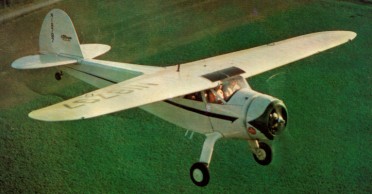
A prototype of the C-38 is unveiled on October 11, 1937. It becomes the first Cessna airplane to be called the Airmaster. The 1938 Model C-38 again featured minor improvements, with some of the previously optional equipment fitted as standard; airframe changes included the provision of wider track landing gear and a large under-fuselage flap which served as an airbrake to reduce landing speed. It was very fast for its horse¬power – 140 to 150 mph with a 165 hp Warner, and it was the first of the small business planes with enough performance to be practical in instrument flying. Since the Airmaster came on late in the era, after suitable instruments and radios became available, most of them were equipped for weather flying and were instrumental in leading the way to really practical use of airplanes for business transportation.
Production of the C-38 amounted to 16 aircraft.

C-38
Engine: 1 x Warner Super Scarab radial, 108kW
Take-off weight: 1066 kg / 2350 lb
Empty weight: 621 kg / 1369 lb
Wingspan: 10.41 m / 34 ft 2 in
Length: 7.52 m / 24 ft 8 in
Height: 2.13 m / 6 ft 12 in
Wing area: 16.81 sq.m / 180.94 sq ft
Max. speed: 261 km/h / 162 mph
Cruise speed: 230 km/h / 143 mph
Ceiling: 5485 m / 18000 ft
Range: 885 km / 550 miles

Cessna C-37 / UC-77C

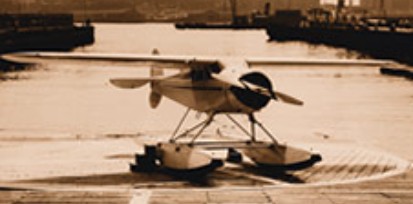
The C 34 success was followed by an improved version of the 34, the C 37, introduced in 1935. When equipped with Edo floats, it becomes the first Cessna model to receive seaplane approval.
The Model C-37, introduced during 1937, brought in minor improvements to the furnishing of the cabin, which was widened by 12.7cm, and was fitted with electrically operated wing trailing-edge flaps. Some 46 C-37s were built, and one impressed in 1942 was designated UC-77C.

C-37 Airmaster

Gallery

Engine; Warner Super Scarab, 145 hp @ 2050 rpm.
TBO; 600 hrs.
Fuel; 80/87.
Propeller; Hartzell Fixed Pitch.
Undercarriage; Fixed, Tailwheel.
Max Ramp Weight; 2300 lbs.
Gross Weight; 2300 lbs.
Max Landing Weight; 2300 lbs.
Empty Weight (std); 1400 lbs.
Useful Load (std); 900 lbs.
Payload (full std fuel); 690 lbs. (full opt fuel); 585 lbs.
Usable Fuel; Standard; 35 US Gal. Optional; 52.5 US Gal.
Wingspan; 34 ft 2 in.
Length; 24 ft 8 in.
Height; 7 ft 3 in.
Wing Area; 182 sq ft.
Wing Loading; 12.6 lbs/sq.ft.
Power Loading; 15.9 lbs/hp.
Seating; 4.
Cabin Doors; 1.
Baggage Capacity; 48 lbs.

Cessna C-34 / UC-77B

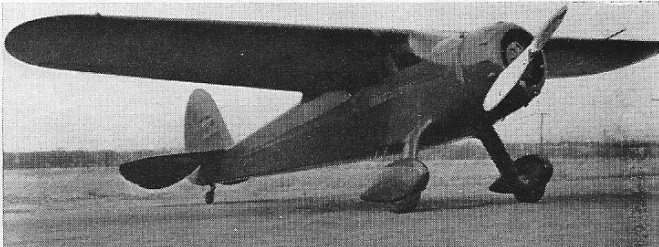
In 1933, Cessna was back in business again, this time with an improved version of the AW, featuring an improved landing gear and a 145-hp engine. This first model, designated the C-34, was possibly the most efficient airplane in its class, and nearly 100 were built.

The first production C-34 is sold in 1935.

C-34

Dwane Wallace, the nephew of Clyde Cessna, as a plant manager at no salary had the opportunity to design, build, test, fly, sell and race the company’s products. Wallace designed the C 34, a high-wing, four place cabin monoplane with a 108kW / 145 horsepower Warner Super Scarab engine. The airplane retained the fully cantilevered wing of earlier Cessnas but added flaps.

In June 1935 the prototype Model C-34 first flew, piloted by George Harte. It was capable of achieving a maximum speed of 261km/h. Wallace flew the C-34 for more than 4,000 hours in its first five years, including a trip to Mexico where it reportedly averaged 17 miles per gallon.

C-34

Among its racing wins was the Detroit News Trophy for “The World’s Most Efficient Airplane.” Eldon Cessna first won the race in 1931 in a Cessna model AW, after which was shut down due to the depression. However, four years later, it was restarted in 1935, and Cessna test pilot George Harte won the race, followed by another Cessna win in 1936. This triple-win meant that Cessna was allowed to keep the trophy permanently, and the C-34 was designated the world’s most efficient aircraft.

Forty-two were built, two being impressed for USAAF under the designation UC-77B.

Gallery