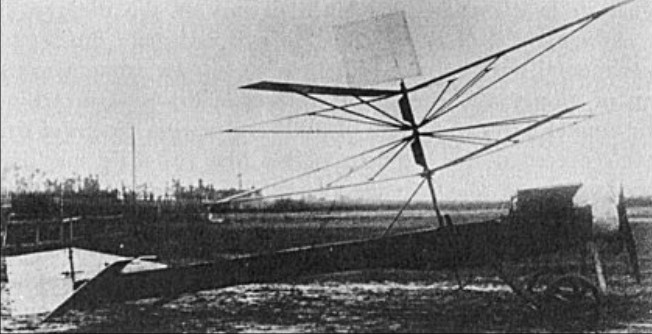
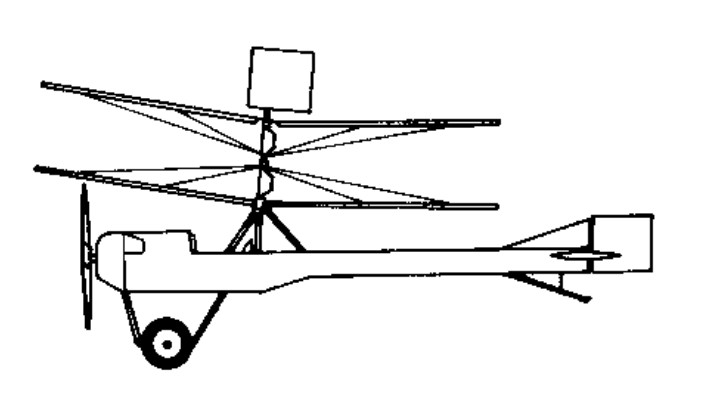
For this prototype built at Madrid in 1920, La Cierva used the fuselage of a Deperdussin, a French monoplane of pre-World War I vintage, on which were mounted two contra-rotating four-bladed rotors. The C.1 had a vertical surface above the rotor to give lateral control. This model never flew, since it proved impossible to control: the lift from the two rotors was unbalanced because of mutual interference.
In 1919 Cierva produced a large three-engine bomber that, piloted by Captain Julio Rios Argiieso, crashed in its initial flight when the aircraft stalled. Pondering the crash, Cierva’s brilliant insight was to see the wing differently – he reasoned that stall could be effectively eliminated if the wing itself moved independently of the aircraft. The rotor, a moving, stall-proof wing, was placed on top of a fuselage, and he patented the name” Autogiro”.
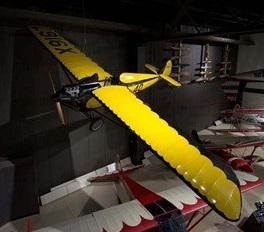
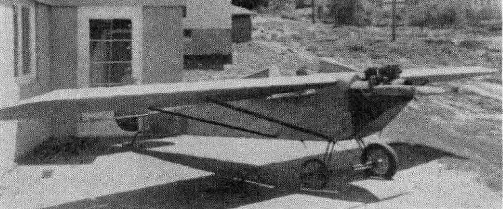
The Church Midwing was originally advertised as “the sportiest, safest, best-looking airplane in the light, single seat class,” and sold as a home-built kit.
Like the first Church aircraft, built by James Church in 1928, the Church Midwing has a Heath fuselage, which is wire-braced and bolted. The Midwing lacks a windscreen, providing the pilot protection from windblast with a cowling, which extends from the firewall to the instrument panel. The instrument panel itself consists only of a tachometer, and oil pressure and temperature gauges.
1955
Gene Chase acquired the fuselage, stabilizer and elevator, Church wings with ailerons, windshield cowling, and a set of plans in the 1960’s. Working from those plans, which are copies of the original set drawn by James Church, Gene began a five-year restoration process. Gene’s restored Midwing made its first appearance at EAA during the 1970 Oshkosh fly-in. It made its first flight at the Ottumwa Fly-In in September of that year, witnessed by the plane’s creator, James Church. On May 29, 1972, James Church visited Gene Chase in Tulsa and flew the plane; he notes in the plane’s log book that this was, “my first flight in one of my Mid-Wings since 1941 (31 years ago).”
Ultralight replica: RagWing Aircraft RW4 Midwing Sport
Engine: Heath-Henderson 83ci, 27 hp @ 2,700 r.p.m. Length: 16 ft. 9 in. Span: 26 ft. 8 in. Wing area: 110 sq. ft. Chord: 4 ft. 6 in. Empty Weight: 367 lbs. Gross Weight: 584 lbs. Fuel capacity: 4 ½ USgals. Oil capacity: 6 quarts Fuel consumption: Approx. 2 g.p.h. @ 2,500 r.p.m. Top speed: 90 m.p.h. (est.) Cruising speed: 70 m.p.h. (est.) Landing speed: 28 m.p.h. (est.)
Chrislea was based originally at Heston, Middlesex, in 1936, building joint designs of R. C Christophorides and B. V. Leak. In 1938 one L.C.1 Airguard was built, a two-seat, low-wing cabin monoplane for Civil Air Guard. Company transferred to Kentish Town shortly before Second World War, undertaking subcontract work for aircraft industry. Moved again in 1947 to Exeter Airport, where during 1948-1950 a series of four-seat lightplanes were constructed: Series 1 CH.3 Ace, Series 2 CH.3 Super Ace, and Series 4 CH.3 Skyjeep. The first of these high-wing cabin monoplanes was flown in August 1946, but high operating costs and unacceptable control system affected sales of the Ace and Super Ace; more conventional system used on 1949 Skyjeep. Total production (all three types) about 26 aircraft. In 1952 assets acquired by C. E. Harper Aircraft Ltd and all surviving models were scrapped.
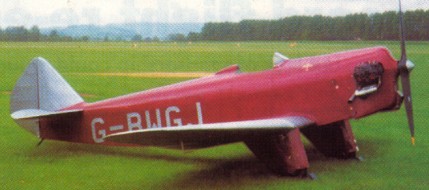
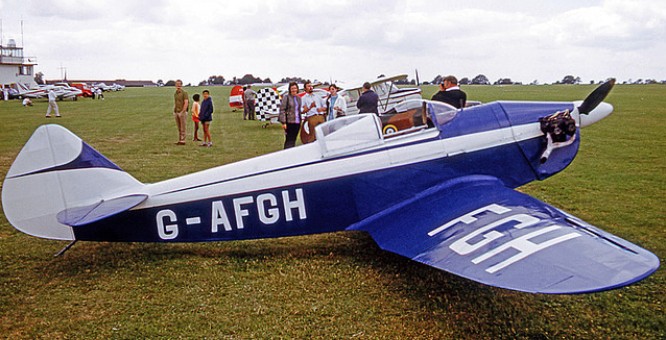
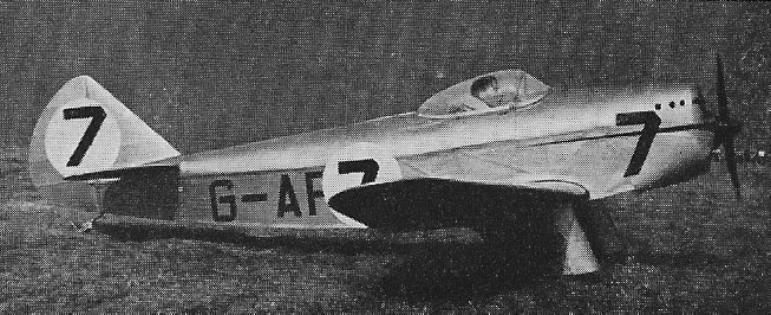
A single-seat light aircraft designed by Hon Andrew W. H. Dalrymple and A. R. Ward. A low wing open-cockpit wooden monoplane with fixed “trousered” landing gear and Carden-Ford engine, first flown April 1937.
Founded at Chilton, near Hungerford, Berkshire, in 1937 to build D.W.1 single-seat light aircraft designed by Hon Andrew W. H. Dalrymple and A. R. Ward, both former de Havilland students.
A low wing open-cockpit wooden monoplane with fixed “trousered” landing gear and Carden-Ford engine, first flown April 1937. Three D.W.1 s built, followed by one faster D.W.1 A, first flown July 1939. Design of D.W.2 only half finished when Second World War began and it was never completed.
During the war company did subcontract work for MAP and aircraft industry generally. Dalrymple died in a flying accident in December 1945, and company reregistered on June 5,1946 as Chilton Aircraft Company Ltd.
The death of Dalrymple in a flying accident on Christmas Day 1945 brought an end to the aeronautical activities.
Prototype Olympia single-seat sailplane built 1947; rights in this sold to Elliotts of Newbury Ltd. in 1952. Company began work in electrical industry.