The E.36 (or BH.36) was a two seat general purpose military biplane powered by a 600 hp Hispano-Suiza 12Nbr engine. Armament was two forward firing machine guns, and another in the rear position, and can carry 800 kg of bombs.
The E.36 (or BH.36) was a two seat general purpose military biplane powered by a 600 hp Hispano-Suiza 12Nbr engine. Armament was two forward firing machine guns, and another in the rear position, and can carry 800 kg of bombs.
Ceskomoravska-Kolben-Danek, maker of aero engines from 1915, including several marketed under the name Praga. Began aircraft construction in 1931, subsequent products including the Praga E.40 two-seat training biplane and E.45 single-seat fighter biplane, and a family of two/four-seat light cabin monoplanes designated E.114 Air Baby, E.115, E.210, and E.214. Factory overrun by German invasion, but operated by Germany as Bb’hmisch- Muhrische Maschinenfabriken AG. (Bohemian-Moravian Engineering Works). Reestablished postwar under new title of Zavody Letecke Praga, producing, inter alia, updated models of the E.114 and E.210/211.
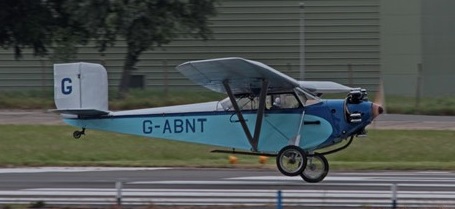
Designed by H.D.Boultbee in 1928 the C.A.C. Mk I Coupe, a two-seat, high-wing cabin monoplane tourer, was built at Burton-on-Trent, near Hull. Initially powered by an 85 hp ABC Hornet engine, the prototype G-AAIL was first flown in July 1929 and was demonstrated publicly at Heston that same month.
A factory was set up at Hedon to produce the improved Coupe II powered by a 100 hp Genet major radial engine. Two aircraft were built in 1930, G-ABFI and G-ABFJ, and two more, G-ABNT and G-ABPW, in 1931. Customers were hard to find and a sixth was never completed.
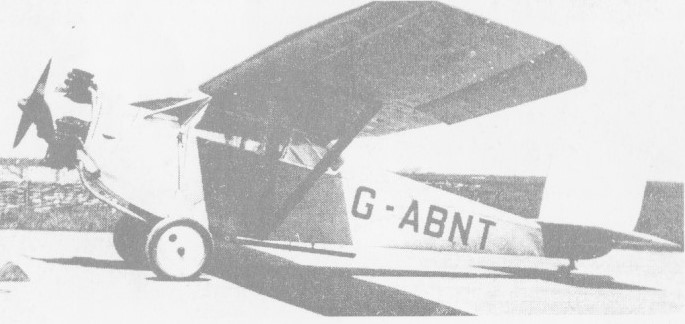
G-ABNT cn 0.2.3 was first registered to Civilian Aircraft on 10 September 1931. It was not sold until February 1933 when it was delivered to S.B.Cliff at Woodley. After moving to Whitchurch it was re-sold to G.O.Rees at Pengham, Cardiff in October 1933. G-ABNT was stored at Carmarthan from 1939 until early 1978 when it was purchased by P.A.Mann, who moved it to Biggin Hill for restoration.
Coupe II
Engine: Armstrong Siddeley Genet Major I, 100 hp
Wingspan: 35 ft 6.5 in
Length: 19 ft 4 in
AUW: 1500 lb
Max speed: 110 mph
UK
The Civilian Aircraft Company Ltd was formed at Burtonon- Trent by Harold D. Boultbee, formerly assistant chief designer of Handley Page Ltd. Its sole product was the C.A.C. Mk I Coupe, a two-seat, high-wing cabin monoplane tourer built at Hedon, near Hull, and flown July 1929. A novel design for its time, there were initial difficulties and only five were built. Last four designated Mk II Coupe (uprated Armstrong Siddeley Genet Major engine); company closed in 1933.
Cirrus engines were originally built by ADC Aircraft until Cirrus Aero Engines Limited was formed in 1927.
The company became Cirrus Hermes in 1931 when it was bought by the Cirrus-Hermes Engineering Company and later became the Cirrus Engine Section of Blackburn & General Aircraft Limited in 1934, and operated as a separate division until production ended in the post-World War II era.
Cirrus’s first product was the 90 hp (67 kW) Cirrus I, which passed its 50 hour type rating in 1925. It was the first air-cooled inline engine, a design that proved extremely popular for light aircraft. The basic layout was quickly copied by a number of other manufacturers. Later versions named the Cirrus II, and Cirrus III were produced each with slightly greater displacement, and power.
After purchase by Hermes the Cirrus Hermes I, II, III & IV were produced ranging in power from 105 hp to 140 hp depending on type. The later Cirrus engines were designed to run inverted.
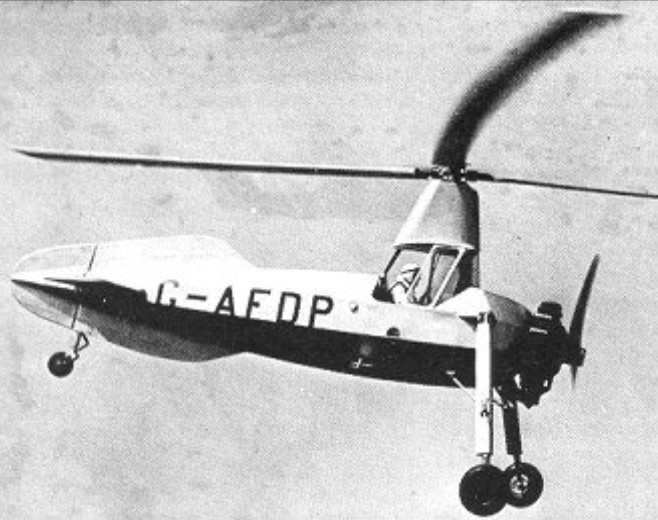
The C.40 autogiro was built under licence by British Aircraft Manufacturing Co. A small batch was produced for the Fleet Air Arm in 1938-39.
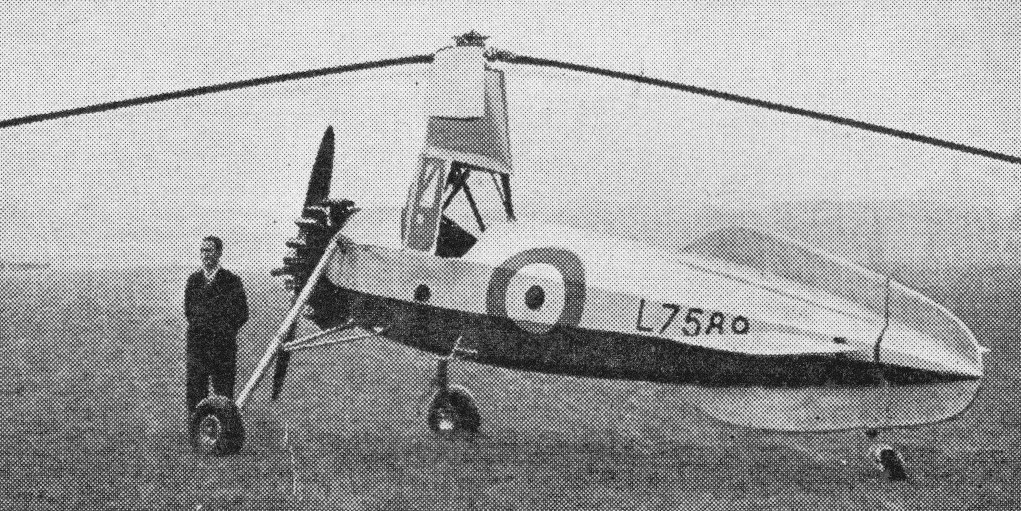
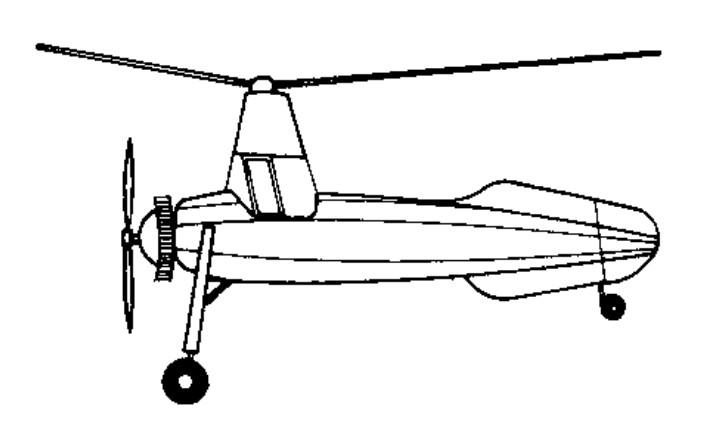
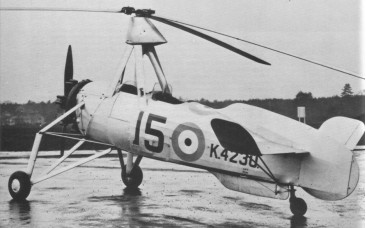
The Cierva C.30A marked a major step forward in rotorcraft development, being the first production autogiro in which the engine was geared directly to drive the rotor blades for take-off. The degree of direct control was increased still further by having the control column, which acted directly on the rotor, suspended from the pylon so that the rotor head could be tilted in any direction to produce the manoeuvre desired. The new-style control system was first installed in G-ABXP, a Cierva C.19 designated Mk.V with a 100hp Genet Major I engine. This was basically a C.19 Mk.IV modified to have a clutch and transmission shaft, a tilting rotor head and (later) a small, fixed tailplane.
Cierva C.30 Rota / Avro 671 Rota Article

The prototype C.30 (G-ACFI) differed chiefly in having a tripod rotor pylon and dihedral on the tailplane tips; the fuselage was modified by Airwork from a standard Cierva C.19, and assembly was undertaken by National Flying Services at Hanworth, where G-ACFI made its maiden flight early in April 1933. Take-off run of the C.30 was about 30 yards (27.43m), while the landing was achieved in about 3 yards (2.74m) with the rotor blades autorotating. Another 1933 prototype was G-ACKA, the first C.30P, with 140hp Genet Major 1A, folding rotor blades and other improvements.
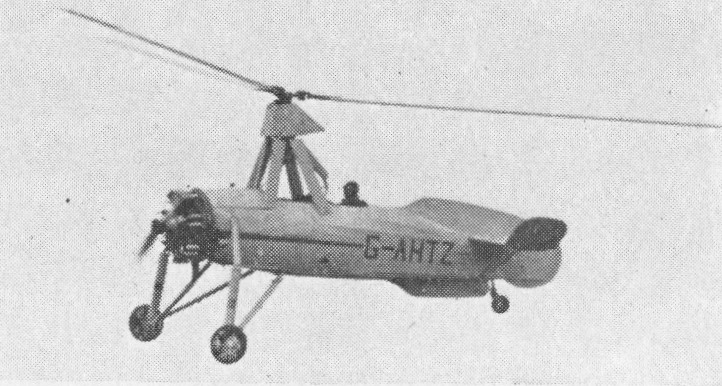
First customer for the production C.30A was the Royal Air Force, for whom the type was built by Avro and given the name Rota. One twin-float Sea Rota and ten standard Rotas with wheeled undercarriages were completed to Specification 16/35, and were delivered to the School of Army Co-operation at RAF Old Sarum from December 1934. By the outbreak of the Second World War they had been allocated for use by a highly secret unit engaged on ground radar calibration duties. One other military C.30A was K4775, a Civet Major-engined machine sent to the Royal Aircraft Establishment in 1935 for blade-flexing tests.
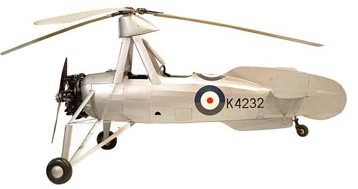
Nearly 150 were built under licence in the UK (Avro and Airwork), Germany (Focke-Wulf) and France (Lioré-et-Olivier). Airwork produced the C.30 and C. 30P, and Avro the C.30A and C.30P. The C.30A was built by A. V. Roe as the Avro Type 671 Rota for RAF and civil market.
The C-30A was the most widely produced Cierva autogyro design. Avro built the type under licence, as the Avro Type 671 Rota.
Avro production of C.30 types was in the region of seventy aircraft, three of which were C.30P’s. Thirty-seven C.30A’s appeared on the pre-war British civil register, and others were completed for customers in Europe, India, China, Australia and South Africa. In Britain the C.30A, like the C.19 before it, was used for traffic reporting duties at major sporting and similar events, and one aircraft (G-AGUT) was used for filming the 1936 F.A. Cup Final.
During 1933 the C.30 prototype, G-ACFI, was converted for jump-start trials with a modified rotor head, and in 1936 a perfected form of this was fitted to G-ACWF when it made the first genuine vertical take-off by an autogiro, by keeping the engine and rotor system engaged throughout the take-off sequence. This machine was, in effect, the prototype for the C.40, five of which were ordered for the R.A.F. as the Rota II to Specification 2/36. These were built by the British Aircraft Manufacturing Co., having side-by-side seats, wooden semi-monocoque fuselages and 175hp Salmson 9NG engines. Two of the original five Rota II’s were diverted to civilian customers, replacements being built in 1938-39. The R.A.F. C.40’s served with No.1448 Flight (later 529 Squadron). On the outbreak of World War 2 over a dozen civil C.30A’s were impressed for military service; these and the surviving Rota I’s were allocated singly to R.A.F. radar stations in the United Kingdom for calibration duties.
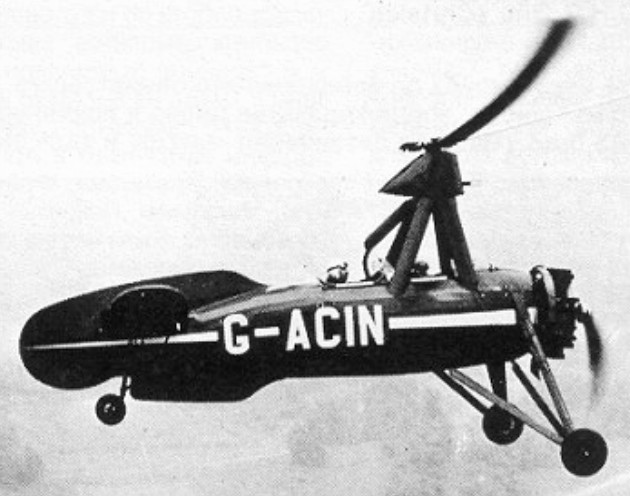
C.30A G-AHMJ was used by Fairey Aviation in the 1940’s for research that led to the Fairey Gyrodyne design. After retirement, it was moved to the rear of TS Broke, North Hyde Road, Southall, Middlesex, in the care of the Sea Cadet unit based there. In the early 1950’s it was aquired by the Shuttleworth Trust and restored in the 1970’s to it’s wartime camouflage scheme and serial number as an Avro Rota. It is now in the Fantacy of Flight Museum in Florida.
Concerning license manufacture of the type by Focke-Wutf, it is to be noted that Focke-Wulf did not obtain rights to produce the C 30 under license in 1933 as has claimed. License negotiations began in February 1935, initially with the “Hamburger Flugzeugbau G.m.b.H”, however these collapsed for financial reasons. Focke-Wulf entered the negotiations in July 1935. The start of license construction by Focke-Wulf was delayed on account of currency exchange difficulties until December 1935, when the exchange rate was guaranteed for 36 examples of the C 30.
Preliminary shipboard trials with the C 30 autogiro began on November 10, 1936 at E-Stelle See (Naval Test Station) Travemünde. The trials ended unsatisfactorily as a result of the type’s inadequate performance, its less than satisfactory handling characteristics in gusts and the poor view offered the pilot during deck landings on small platforms. Further development of the C 30 for military use was therefore abandoned.
C.30A
Engine: 1 x Armstrong Siddeley Civet 1, 140 hp
Main rotor diameter: 37 ft
Rotors: 3-blade
Fuselage Length: 19 ft. 8.5 in
Loaded weight: 1,900 lb Empty weight:
Max speed: 100 m.p.h
Ceiling: 8,000 ft
Range: 250 miles at 85 m.p.h
Seats: 2
C.30A
Engine: 1 x Armstrong Siddeley Genet Major IA, 104kW
Main rotor diameter: 11.28m
Length: 6.01m
Height: 3.38m
Max take-off weight: 816kg
Empty weight: 553kg
Max speed: 177km/h
Cruising speed: 153km/h
Range: 459km
Avro Rota Mk I.
Engine: Armstrong Siddeley Genet Major 1A, 140 hp
Length : 19.718 ft / 6.01 m
Rotor diameter: 41.995 ft / 12.8 m
Max take off weight: 1799.3 lb / 816.0 kg
Max. speed: 96 kt / 177 km/h
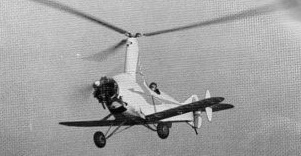
The Cierva C.25 was an autogyro with the Comper Swift fuselage and 85 hp Pobjoy engine. The decision to do ahead with the design was made in March 1931.

C.25 autogiro was built under licence by Comper.
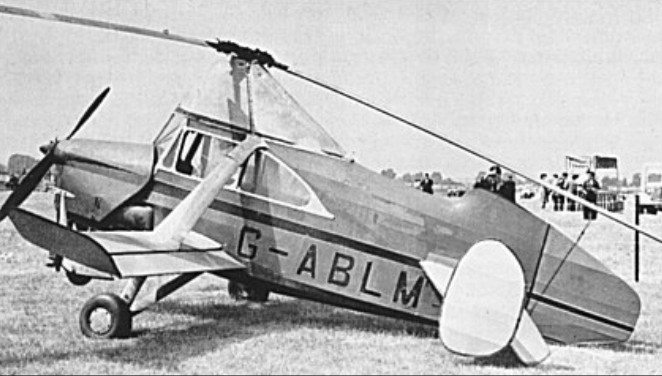
The C24 was built by de Havilland’s at Stag Lane on a De Havilland DH.80 Puss Moth’s fuselage and first flown in September 1931. It was modified in October 1931 to have a two-blade rotor in place of the three-blades fitted for the first flight and a dorsal fin.
It was certificated in April 1932 and extensively demonstrated that summer, having been re-designated the C26.
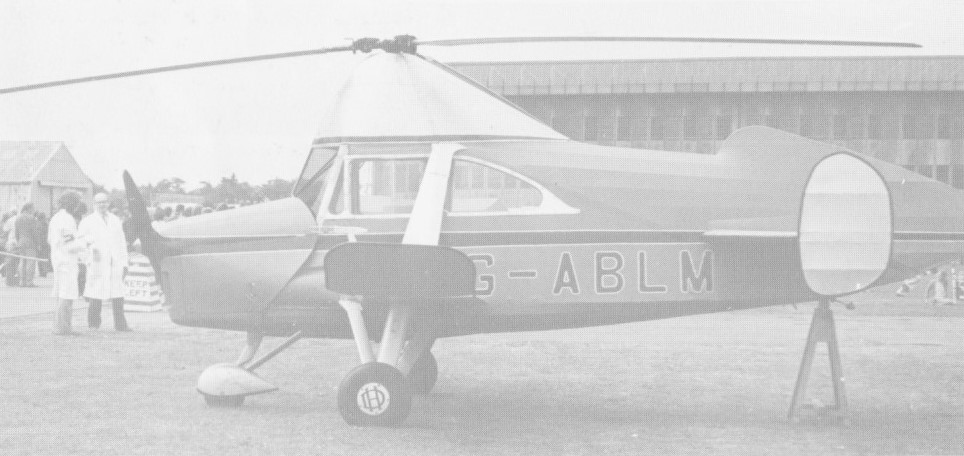
It was stored by the Science Museum until restored as the C.24 by the Mosquito Museum on loan from the Science Museum.
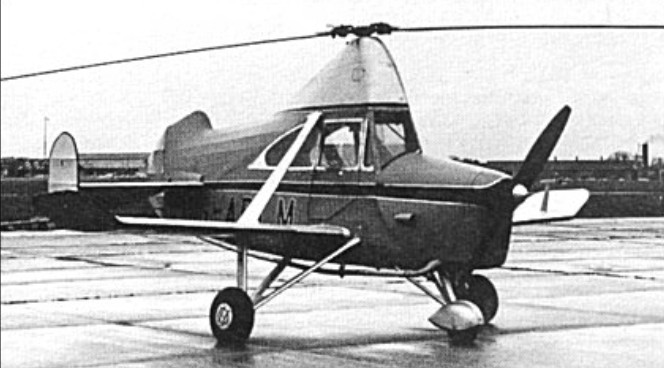
Engine: de Havilland Gipsy III, 120 hp
Rotor diameter: 34 ft
Length: 18 ft 9 in
AUW: 1800 lb
Max speed: 115 mph
Cierva developed progressively more sophisticated designs with a means to tilt the rotor head and altering the pitch (angle) of each individual rotor blade, called collective and cyclic control.
The Mk.III had a modified tail and rudder assembly to enable steep tail wheel first touchdowns.
Making use of Pitcairn’s prerotator, achieved a “jump takeoff” capacity with the C19MkIV in 1931-32 The rotor would be spun up at zero pitch and then “snapped” into a positive angle, causing the aircraft to “jump” into air.
Focke-Achgelis, the German aircraft company, became licensed by Cierva to manufacture his patented components. For a number of years before the outbreak of World War II, Focke-Achgelis produced the C-19 Autogyro, and they drew heavily from the knowledge and experience gained from Cierva’s design to rapidly advance the development of their FA-61 helicopter.
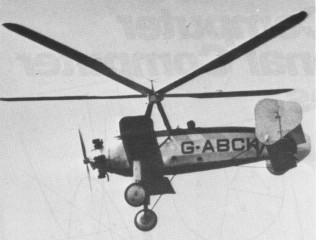
The Cierva C.30A marked a major step forward in rotorcraft development, being the first production autogiro in which the engine was geared directly to drive the rotor blades for take-off. The degree of direct control was increased still further by having the control column, which acted directly on the rotor, suspended from the pylon so that the rotor head could be tilted in any direction to produce the manoeuvre desired. The new-style control system was first installed in G-ABXP, a Cierva C.19 designated Mk.V with a 100hp Genet Major I engine. This was basically a C.19 Mk.IV modified to have a clutch and transmission shaft, a tilting rotor head and (later) a small, fixed tailplane.
C-19 Mk.III
Seats: 2