two-seat aerobatic training/ touring biplane (1934)
Inter-Wars
CMASA / Costruzioni Meccaniche Aeronautiche SA
Italy
Costruzioni Meccaniche Aeronautiche SA; previously SA Industrie Aeromarittime Gallinari; established 1922 at Marina di Pisa as Societa di Costruzioni di Pisa to license-build Dornier Wal flying-boats. Title CMASA adopted in 1930; became subsidiary of Fiat same year. Production included G.8 two-seat aerobatic training/ touring biplane (1934); M.F.4 radial-engined flying-boat (1933); M.F.5 (development of Wal); M.F.6 two-seat fighter/reconnaissance floatplane; M.F.10 two-seat fighter/reconnaissance shipborne flying-boat (1935); BGA twin-engined floatplane/bomber (1936); and twin-engined, twin-float R.S.14 reconnaissance seaplane. The latter was the most successful, serving throughout Second World War. Assisted also in production of Fiat fighters in late 1930s/early 1940s. Activities suspended on Italian Armistice (September 1943). The C.S. high-speed monoplane and J.S.54 six-engined civil flying-boat were then under development, but never produced.
Cloudcraft Junior
A small sailplane, known as the Junior, was being developed by Mr Dickson in 1931 but it, presumably, remained as a project only due to the Cloudcraft company closing down towards the end of 1931.
Cloudcraft Phantom
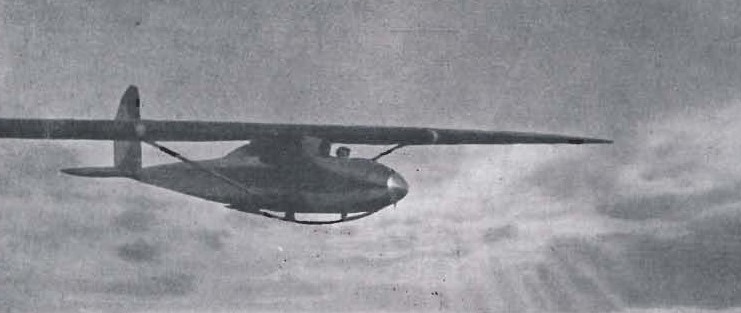
A single-seat high performance sailplane designed by Roger Dickson, the Phantom featured conventional wooden construction, all-moving tailplane.
The wing section was the R.A.F.34 modified, semi-cantilever wing, with one strut on each side. No flaps or airbrakes were fitted. The undercarriage was a main skid and tail skid.
The prototype first flew on 11 June 1931, at Dunstable. The 1931 price was £300, ex-works.
The Phantom sailplane was designed and built by the company but this just about exhausted all the financial resources, and after the last advertisement had appeared in the 17 July 1931 issue of ‘Sailplane and Glider’ magazine the Cloudcraft Glider Co was declarad bankrupt.
Wingspan: 15.54 m / 51 ft 0 in
Length: 7.62 m / 25 ft 0 in
Wing area: 18.58 sq.m / 200 sq.ft
Aspect ratio: 13
Empty weight: 112.03 kg / 247 lb
AUW: 184.61 kg / 407 lb
Wing loading: 9.95 kg/sq.m / 2.04 lb/sq.ft
Max L/D: 26
Seats: 1
Cloudcraft Glider Co
Roger S. Dickson, who was a member of the design staff of the Supermarine Aviation Works Ltd, Woolston, Southampton, founded the Cloudcraft Glider Co as a spare time interest.
The Cloudcraft company was at Osborne Road, Southampton and produced in 1930 and 1931 a primary glider designed by Dickson. The Dickson Primaries were also built in great numbers by individuals and gliding clubs, although they were also offered for salt through the aviation department of Selfridges of Oxford Street, London.
The Phantom sailplane was designed and built by the company but this just about exhausted all the financial resources, and after the last advertisement had appeared in the 17 July 1931 issue of ‘Sailplane and Glider’ magazine the Cloudcraft Glider Co was declarad bankrupt.
The Cloudcraft company closed down towards the end of 1931.
Clergêt Blin et Cie
Cleone Motors Co
St Louis MO.
USA
In 1929 Cleone Motors Co built a 25 hp two-cylinder horizontally opposed, air-cooled engine.
Clement 1919 triplane
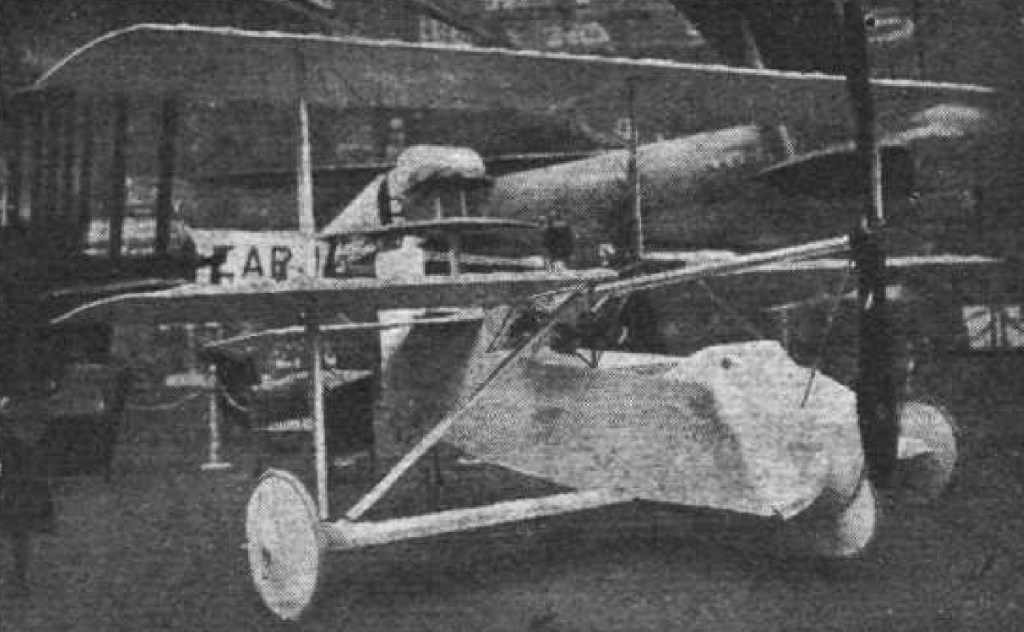
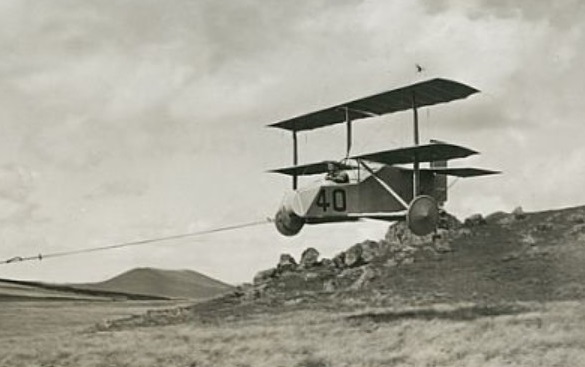
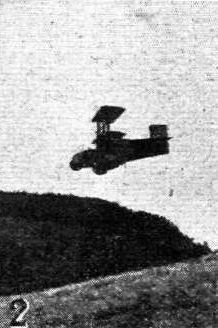
Louis Clement built a small triplane in 1919. It had a span of 18 ft, and the lower wing was shorter than the others. The landing wheels were mounted at the tips. Power was a 35 hp Anzani engine.
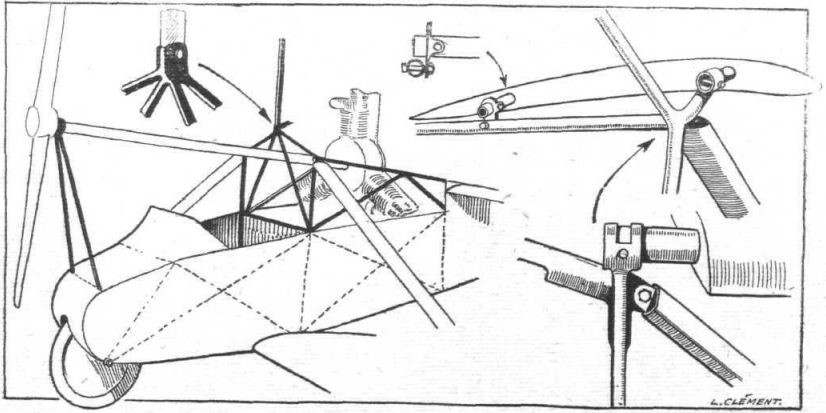
It was first presented at the Paris Aero Salon in 1919 with an Anzani engine behind the pilot on top of the aft fuselage, transmitting power through an extension shaft to the propeller on the normal front position. One could say it was the ultra-light of the time.
The Clement triplane was made of a rather complex tubular metal construction it was also braced outside with a number of wires.
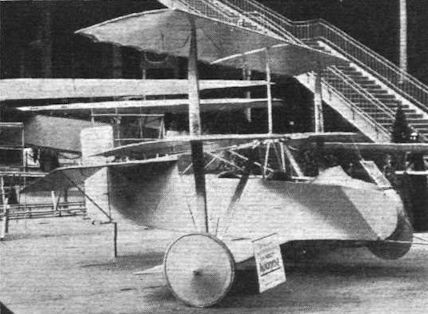
It reappeared in the Salon in 1921 without the engine.
Clarke Cheetah
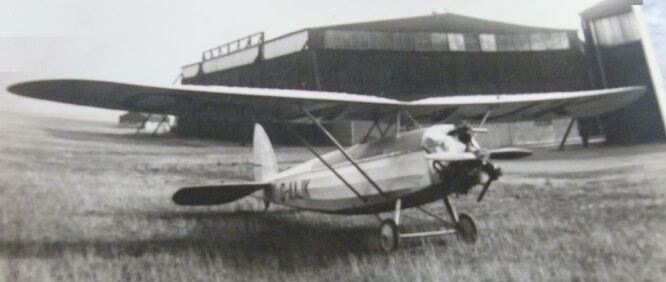
The Clarke Cheetah was a single seat biplane designed in 1929 by J.Clarke with diagonal interplane struts. Powered by a Blackburn engine, it used the lower wings of the Halton Mayfly G-EBOO.
First flown at Brough in 1929 as G-AAJK cn.1.
It was converted in 1930 to a parasol monoplane configuration by A.C.Thomas and partners.
It was broken up in 1937 and donated its wing to the Martin Monoplane G-AEYY.
Wingspan: 29 ft 0 in
Clark F-46A
Production of prototype Clark F-46A three/four-seat monoplane used the developed Duramold process of constructing fuselages in molded halves of a plastic compound material, joined along top and bottom centerlines, at Fairchild’s Hagerstown, Maryland factory.

