The Akaflieg Darmstadt D 36 Circe was designed by Dipl Ing Klaus Holighaus.
Inter-Wars
Darmstadt University Aviation Soc D-22
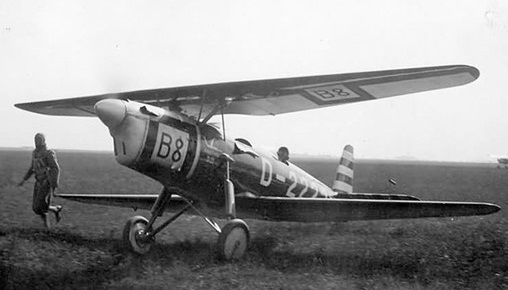
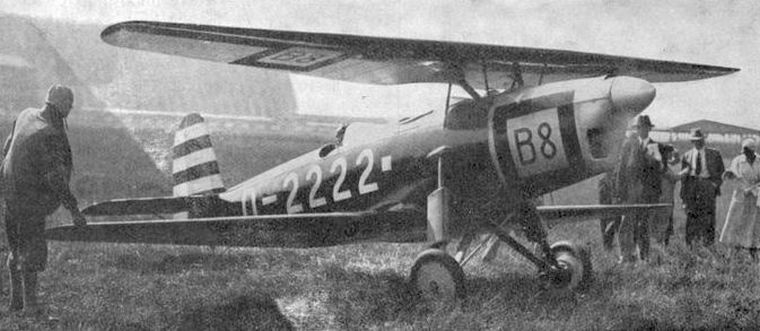
The Darmstadt D-22 was an all-wood sport biplane designed and built in Germany in 1931 by the Akademische Fliegergruppe of Darmstadt University of Technology, a group of aerodynamical engineering students. A development of the Darmstadt D-18 designed by F. Fecher, the D-22 was a slightly enlarged, more streamlined and more powerful German sports-plane built to compete in the 1932 Coupe Deutsch de la Meurthe.
The D-22 had an unorthodox configuration, being a cantilever biplane, with an upper wing placed low, just above the fuselage and ahead of its lower wing. The design emphasized aerodynamics and lightness and the aircraft was small with a streamlined silhouette.
The D-22 boasted an oval cross-section fuselage skinned with plywood and fabric on parts of the single-spar wings. This could, as was required by the rules of the competition, be dismounted and folded rearwards. The crew of two sat in tandem in open cockpits each with its own with windshield. The landing gear was fixed with a tail skid. The engine was mounted in the fuselage nose and drove a two-bladed fixed-pitch propeller.
Propulsion was from a 75.7 kW (101.5 hp) Argus As 8 4-cylinder inverted air-cooled, in-line piston engine driving a 2-bladed fixed-pitch propeller which powered the D-22 to a top speed of 230 km/h (140 mph, 120 kts).
Two were constructed. One was allocated G-ABPX and was known to have a Gipsy III engine.
One was allocated D-2222.
The trial was to be run in two 1,000 km stages separated by a 90-minute refuelling stop and was limited to aircraft with an engine capacity not exceeding eight litres. The starting point of the race was still at Étampes. Suzanne Deutsch de la Meurthe offered one million Francs in prize money while Ministère de l’Air (Air Ministry) offered another three million.
Only one, a D-22A flew in the cup. Not having flaps or slats, she was severely handicapped in the landing trials, eventually finishing 35th out of 43 contestants. However, after this she improved her score after a rally around Europe, where she took the 4th place with a cruise speed of 205 km/h (127 mph; 111 kts). In the maximum speed trial, the D-22A was beaten only by the five Heinkel He 64s, reaching 230.7 km/h (143.4 mph; 124.6 kts). As a result, she eventually finished 17th overall.
Sold in 1933, she competed for several more years in various events.
Wingspan: 24 ft
Length: 21 ft 6 in
DAR DAR-10F
The DAR 10F was the only Bulgarian designed military aircraft to have seen service. It was a trim but conservative light bomber with an 840/960 hp Fiat A74RC38 radial, and with spatted wheels and a crew of two under a glasshouse canopy.
The gun armament was heavy: two 20 mm (0.79 in) MG FF cannon in the wings and two 7.92 mm (0.312 in) MG 17 in the top decking, all firing ahead, and an MG 15 in the rear cockpit. In spite of this the 10F could still carry up to 500 kg (1102 lb) of bombs. Darjaviia Aeroplanna Rabotilnitza flew the prototype in 1941 and a small but unknown number entered Bulgarian service.
Span: 12.65 m (41 ft 6 in)
Length: 9.83 m (32 ft 3 in)
Gross weight: 3420 kg (7540 lb)
Maximum speed: 454 km/h (282 mph)
DAR Rilski Orel
1935 Bulgarian single seat training parasol sailplane.
Wingspan: 15.82m
3 assembled –
Albatross
Chuchuliga (Lark)
Rilski Orel (Rilski Eagle)
Rilski Orel gained 1936 Olmpic gold.
DAR Zdravka Toprakchiev
1926 Bulgarian parasol sailplane
Hermann Winter, one assembled, named after Mjr Toprakchiev, a Bulgarian national hero.
DAR Zdravka Vekilski
1926 Bulgarian parasol single seat sailplane
Herman Vinter assembled one. Named after a Bulgarian national hero, Lt Vekilski.
DAR / Darjavna Aeroplanna Rabotilnitza
State Aircraft Works, Bojouristhe, Sofia. Aero department of Ministry of Railways, Posts, and Telegraphs. Subject to Versailles limitations, but by 1932 had produced DAR-4, three engined transport for state airline. Of several subsequent designs, only the DAR-10F of 1941 reached production.
Daimler-Benz DB 602
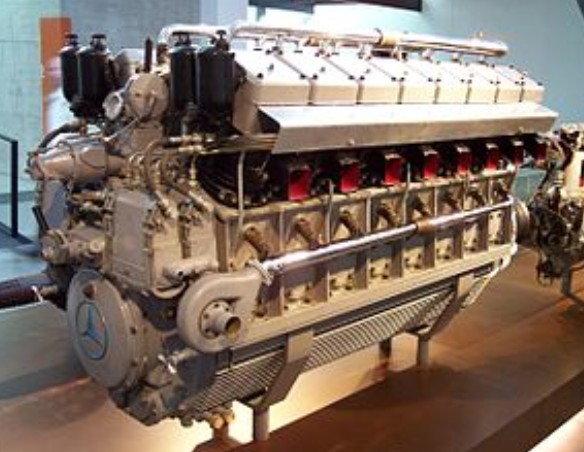
The Daimler-Benz DB 602 was a German diesel cycle aero engine first run in 1933. It was a liquid-cooled upright V16, and powered the two Hindenburg class airships, LZ 129 Hindenburg and LZ 130 Graf Zeppelin. These engines, under designation MB 502, powered four Schnellboots of 1933 series S10…13 (three engines on each). Then, the engine was modified into V20 MB 501 of 2000 hp that had a variety of applications.
Applications:
LZ 129 Hindenburg
LZ 130 Graf Zeppelin
Schnellboot 1933 series S10…13
Specifications:
DB 602
Type: 16-cylinder liquid-cooled 50° V16 aircraft diesel engine
Bore: 175 mm
Stroke: 230 mm
Displacement: 88.5 L (5,401 in³)
Dry weight: 1,976 kg (4,356 lb)
Fuel system: Fuel injection
Cooling system: Liquid-cooled
Power output: 984 kW (1,320 hp)
Specific power: 808 kW (1,100 hp)
Power-to-weight ratio: 0.5 kW/kg (0.3 hp/lb)
Daimler-Benz DB 600
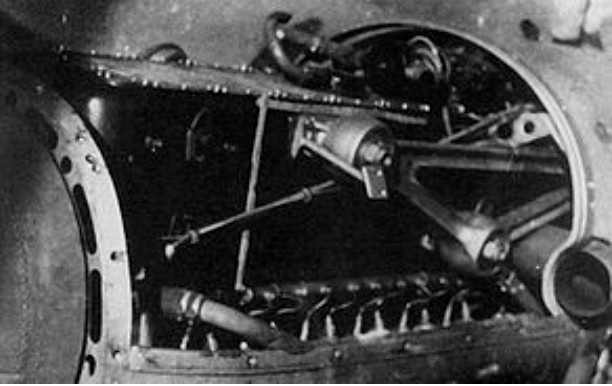
The Daimler-Benz DB 600 was a German aircraft engine designed and built before World War II as part of a new generation of German engine technology. It was a liquid-cooled inverted V12 engine first flown in December 1935, and powered the Messerschmitt Bf 110 and Heinkel He 111 among others. Most newer DB engine designs used in WW2 were based around this engine. The decision by the RLM to concentrate on manufacturing aircraft engines using fuel injection systems rather than carburettors meant that the DB 600 was quickly superseded by the otherwise similar DB 601. Later DB series engines grew in bore, stroke, and horsepower, including the DB 603 and DB 605, but were generally similar to the pattern created with the DB 600.
Variants:
DB 600A
Up to 1,000 PS (810 kW) at 2350 rpm at sea-level.
Reduction Gearing: 1.55
DB 600B
Up to 1,000 PS (810 kW) at 2350 rpm at sea level
Reduction Gearing: 1.88
DB600C
Up to 850 PS (634 kW) at 2350 rpm at 13,120 feet (3999 m)
Reduction Gearing: 1.55
DB600D
Up to 850 PS (634 kW) at 2350 rpm at 13,120 feet (3999 m)
Reduction Gearing: 1.88
DB600G
Up to 950 PS (708 kW) at 2350 rpm at 13,120 feet (3999 m)
Reduction Gearing: 1.55
DB600H
Up to 950 PS (708 kW) at 2350 rpm at 13,120 feet (3999 m)
Reduction Gearing: 1.88
Applications:
Arado Ar 197 V1. 1937 prototype – naval variant of Arado Ar 68.
Dornier Do 17 S-0 Three pre-production aircraft.
Focke-Wulf Fw 57
Focke-Wulf Fw 187 V6.
Heinkel He 60C One test aircraft.
Heinkel He 111 V5: DB 600A, B-1, B-2: DB 600C, G-4: DB 600G, G-5: DB 600C, J-1: DB 600C
Heinkel He 112 V7, V8.
Heinkel He 114 Three He 114 B-2 exported to Romania.
Junkers Ju 90 V1.
Henschel Hs 128 V1. Twin engine, pressurised cockpit, high-altitude research aircraft.
Messerschmitt Bf 109 V10 through V14. Prototypes.
Messerschmitt Bf 110 V1, V2, V3. Prototypes.
Messerschmitt Bf 162 V1, V2.
Specifications:
DB 600C
Type: Twelve-cylinder liquid-cooled supercharged 60° inverted Vee aircraft piston engine
Bore: 150 mm (5.91 in)
Stroke: 160 mm (6.30 in)
Displacement: 33.93 l (2,070.5 in3)
Length: 1,720 mm (67.72 in)
Width: 712 mm (28.03 in)
Height: 1,000 mm (39.37 in)
Dry weight: 575 kg (1,268 lb)
Valvetrain: Two intake and two sodium-cooled exhaust valves per cylinder actuated via a single overhead camshaft per bank
Supercharger: Gear-driven single-stage single-speed centrifugal supercharger
Fuel system: Four two-barrel carburetors
Fuel type: 87-octane gasoline
Oil system: Dry sump with one pressure and two scavenge pumps
Cooling system: Liquid-cooled, ethylene glycol
Reduction gear: Spur, 0.53:1
Power output: 773 kW (1,050 PS or 1,036 hp) at 2,400 rpm for takeoff
Specific power: 22.8 kW/l (0.5 hp/in³)
Compression ratio: 6.8:1
Specific fuel consumption: 302-315 g/(kW•h) (0.50-0.52 lb/(hp•h))
Oil consumption: 7-11 g/(kW•h) (0.18-0.28 oz/(hp•h))
Power-to-weight ratio: 1.34 kW/kg (0.82 hp/lb)
Czerwiński and Jaworski CWJ
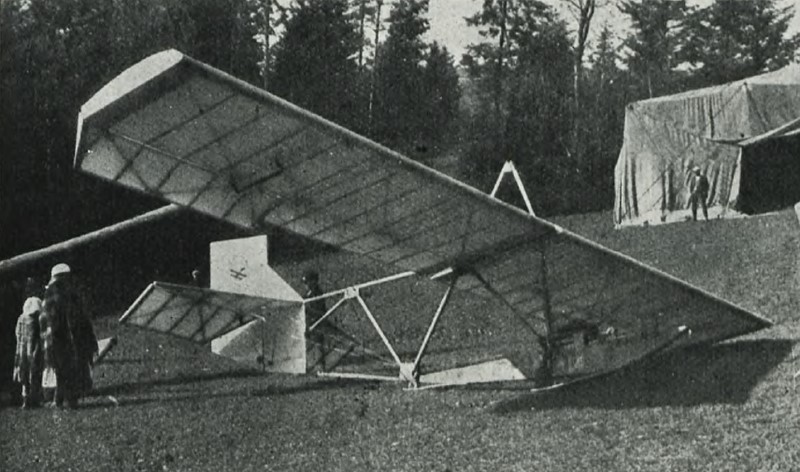
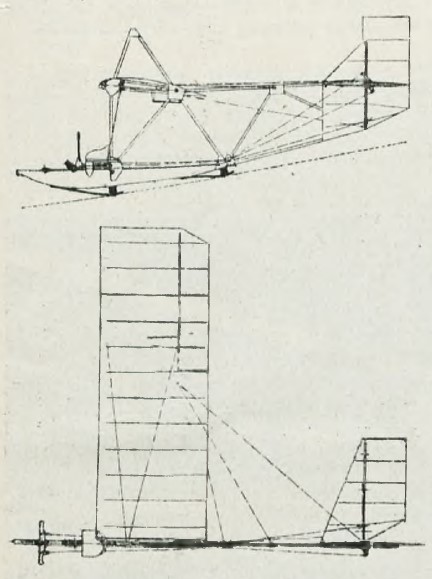
ZASPL, the Aviation Association of students of the Lwów Technical University, was the oldest aviation organization in Poland. Revived after World War I, by 1926 it had workshops in Lwów which began building the glider designs of ZASPL member Wacław Czerwiński. The successful Czerwiński CW III, a 1929 open frame introductory glider, had shown the utility of the type for basic training but it was expensive and ready for development. In response, Czerwiński and Władysław Jarworski designed the CWJ (a fusion of their initials) to fill the national gliding clubs’ needs.
The fuselage of the CWJ was essentially an uncovered pine Warren girder, though the rear part of the lower longeron or chord was upward-curved. The unprotected pilot’s seat was forward of the wing on a pine fuselage box which reached back to about mid fuselage. The box also carried twin sprung landing skids. The CWJ’s two part, twin spar wing was rectangular in plan. Mounted on the upper fuselage longeron, it was wire braced from above via an inverted-V cabane and from below to the lower longeron. Short ailerons reached the tips.
At the rear a broad fin occupied the gap between the upper and lower longerons and had a short, triangular extension above. An almost rectangular rudder ran upwards from the bottom of the fin, extending well above it. The tailplane, mounted on the upper longeron, was triangular in plan. It carried elevators which were rectangular apart from cut-outs for rudder movement.
The CWJ first flew in October 1931, tow-launched by a car.
An improved version, the CWJ-bis Skaut (Scout) made its first flight on 3 August 1933 at Czerwony Kamień, the base of the Lwów Aeroclub Gliding School. It had a wing increased in span by 900 mm (35 in), a corresponding 11% increase in wing area and had washout at the wingtips which improved aileron response. The wire wing bracing of the CWJ was replaced by pairs of parallel struts and the fuselage box was strengthened. The empennage was also modified; the fin now had a triangular, rather than straight, leading edge and at some later time the top of the rudder was made almost semi-circular. A few had ply-covered cockpits. Early tests showed the sought-after improvement in handling.
Shortly after its successful early tests, early orders from both the government and LOPP took the CWJ into production. Design drawings were also produced for amateur builders and some parts and materials were made available from ZAPL. According to Cynk about eighty examples of the CWJ and CWJ-bis were built in all, including about twenty of the latter, though samalotypolskie.pl says that there were one hundred altogether, eighty of them CWJs. They were used by clubs across Poland and were easy to transport, tough, could be car-launched and were stable in flight though with limited performance. By about 1938 both variants had been retired, displaced by the newer, better performing Kocjan Czajka and Kocjan Wrona.
CWJ
Wingspan: 8.75 m (28 ft 8 in)
Wing area: 13 m2 (140 sq ft)
Length: 5.59 m (18 ft 4 in)
Height: 2.21 m (7 ft 3 in)
Empty weight: 80 kg (176 lb)
Gross weight: 150 kg (331 lb)
Stall speed: 42 km/h (26 mph, 23 kn) minimum speed
Maximum glide ratio: 12 maximum at 50 km/h (31 mph; 27 kn)
Rate of sink: 1.3 m/s (260 ft/min) minimum
Crew: One