Day, Charles Healy

Born at Salamanca NY, December 29, 1884. Died at Pacific Palisades CA, May 26, 1955.

Charles Healy Day built his first aircraft in 1909, working with Glenn L Martin. Day is credited with developing the technique of using laminated wood to make propellers, thus increasing their strength. In 1910 he built and flew the nation’s first tractor biplane, an aircraft of his own design. He worked off and on with Martin until 1915, when he was made vice-president and chief design engineer of the Sloane Airplane Company, soon to become the Standard Aircraft Corporation. There he designed and built several aircraft leading to the famous Standard J-1 used extensively for pilot training in World War I, flying the mail, and for barnstorming in the 1920s. The J-1’s large forward cockpit held two passengers to double the pilot’s revenue per flight. It was also the aircraft used by Otto Timm in 1922 to give a young Charles Lindbergh his first taste of flying.

In the early 1920s, Day worked as an aviation consultant, and for a short time with Elektron Metals Corporation of America, developing and promoting the use of magnesium alloys in the US aircraft industry. For two years he was a consultant on light metals to the German Chemical Trust, then in 1926 he teamed up with Ivan Gates, of the Famous Gates Flying Circus, to form the Gates-Day Aircraft Company in Paterson NJ, reorganized in 1928 as the New Standard Aircraft Corporation. During that time, Day designed his most famous and enduring aircraft, the GD-24, which evolved into the D-25 and many variants, all of which had a huge front cockpit capable of carrying up to five passengers or a big load of bootleg whiskey. Needless to say, it became a mainstay of barnstormers and smugglers. The last variant of the design was built in 1942 by White Aircraft Corporation for the Department of Agriculture, and a few are still flying today.

In 1931 Day resigned his position as president of Standard Aircraft, built a small open-cockpit trainer he called the Day Model A and with his wife, Gladys, flew it around the world—excepting oceans, where it went more logically by boat. Then in 1934, after a couple of years of consulting, he accepted an offer from Chiang Kai-Shek, head of the Canton Government in China, to organize and operate an aircraft factory at Shiuchow. He got the factory up and operating in minimum time, but by 1937 it was being targeted by Japanese bombers. To defend against the bombings, Day moved his manufacturing equipment into bamboo sheds, scattered several miles into the forest. Operating under those primitive conditions, he was able to continue production of the Fushin trainer, Curtiss Hawks under license, and Russian I-15 pursuits. Practically all of the 400 employees of that factory had no previous experience with aircraft and had to be trained by Day and his staff.

In 1940, after many harrowing experiences, the factory was cut off from supplies needed to continue operation, and the Days left China. Back in New York, he was a recognized aircraft production expert. That, coupled with his recent experiences in China, put him in great demand for the lecture circuit. He wrote articles and made several speeches on the Japanese Air capabilities. Late in 1940, he became Supervisor of Aircraft Production, Department of Munitions and Supply, Ottawa, Canada.

After Pearl Harbor he was commissioned a major in the Army Air Corps and was stationed at Wellston Air Depot, now Robins AFB, GA. He resigned his commission in November 1942 to head the Glenn L Martin Modification Center at Omaha, where he remained until 1945. By that time he was having some health problems, but continued working as an aviation consultant until his death at his home.
Davis D-1

D-1W

Walter C. Davis was a former WWI pilot who had been working in his family’s business, the Davis Automobile Company of Richmond, Indiana, when it was sold in 1928. Redirecting his talents back to flying, he purchased the production rights to the Vulcan V-3 and began work on the first Davis aircraft in March 1929. He hired Vulcan test pilot, Pat Love, and engineer Dwight Huntington and opened his factory in Richmond, Indiana.

Huntington’s slight re-design of the aircraft included adding the gently curved leading edge to the vertical stabilizer. Davis then set up dealers in California, Dayton, Boston, Seattle, Salt Lake City and Pittsburgh. Air racing success continued in 1929 and all seemed well. The advent of the Great Depression ultimately led to the demise of Davis Aircraft, but the company struggled on.

Davis D-166 – N647N

In December 1929, two new models were engineered with different engines, the D-1 with a 65 hp LeBlond and the D-1K with the 100 hp Kinner K-5. Both models were certificated, but sales lagged. Davis countered by aggressively pursuing direct sales to buyers and attended trade shows in St. Louis, Detroit and New York. He added the D-1-66 (later D-1-85) with an 85 hp LeBlond engine and cut prices, but then lost the entire finished inventory of planes to a fire.

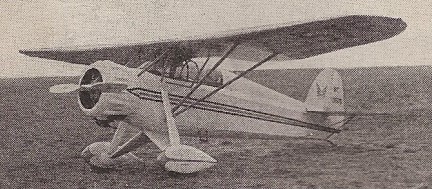
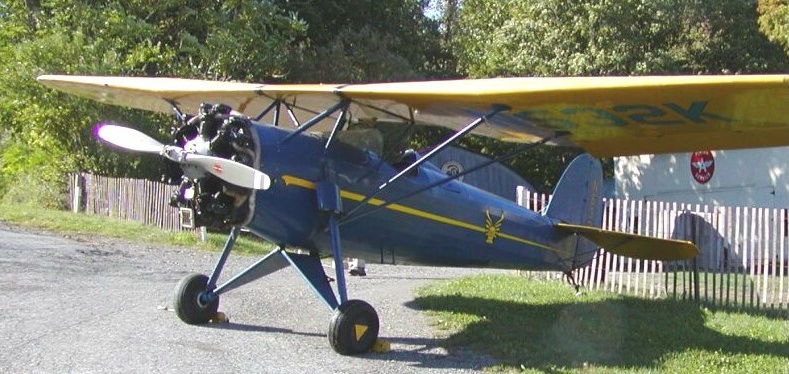
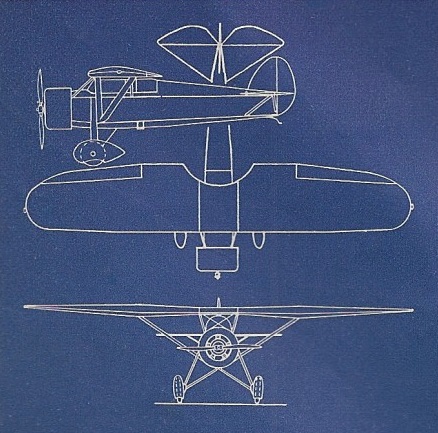
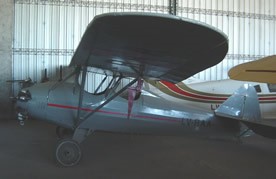
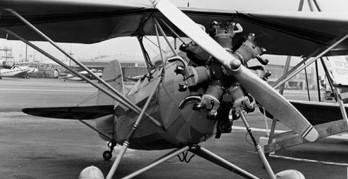
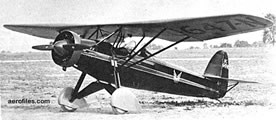
The D-1 is a parasol-winged aircraft of mixed construction with a two-spar wing and a rectangular welded steel-tube fuselage, the whole being covered by fabric. There are tandem open cockpits and it is fitted with a fixed tailwheel undercarriage which is attached by struts to the fuselage top and bottom. The wing is braced by struts from the lower fuselage. Various engines of between 60 to 125 hp (45 to 93 kW) have been fitted.

Produced 1929-1930, the D-1 was used by sporting pilots and by private pilot owners for leisure flying. Davis Aircraft Corp. produced three models of the D4 series. The first two models were the D-1-85 with an 85 hp Le Blond engine and the D-1-K with a 100 hp Kinner engine. The third model, the D1-W was equipped with a 125 hp Warner Scarab seven-cylinder radial air-cooled engine. The Dl-W features complete dual controls for its tandem seats.

In September 1930, Art Chester bought a Davis D-1-85 parasol, and flew it to victory in the 25 mile event at the September 1930 National Air Races. A late model D-1W “The Whistler II” was built in 1933 for Davis with a canopy. It was raced in the 1934 Miami air race by Art Davis winning the category at 133.478 mph. NC150Y which was destroyed in a crash at the 1932 Nationals. It was later owned by movie star Richard Arlen, and restored to become a Grand Champion antique.

D-1-W 

Unfortunately, the commercial market for airplanes just wasn’t there and in 1932 Davis turned to the production of lawn mowers. A few additional planes left the factory in 1933 but they were apparently made up from existing parts inventory or airframes returned to the factory for various reasons. They received new serial and registration numbers. Most Davis aircraft were sold ($2,965 with a 60hp LeBlond in 1929) in the United States but at least one went to Argentina. Fourteen examples remained in 2001 in various states of airworthiness and several were still airworthy in 2011.

Gallery

Variants:

D-1
23 built
Engine: 60 hp (45 kW) LeBlond 5D
Span: 30 ft 2 in
Length (overall): 19 ft 10 in
Gross Weight: 1,334 lb
Useful Load: 495 lb
Baggage: 20 lb
Fuel: 20 gal
Oil: 2 gal
High Speed: 101 mph
Cruise Speed: 85 mph
Landing Speed: 38 mph
Range: 350 sm
Type Data: ATC 256
Year of Introduction: 1929
Price (1929): $3,285
Price (1930): $2,995

D-1
Engine: LeBlond 70 5DE, 70 hp
Span: 30 ft 2 in
Length (overall): 19 ft 10 in
Gross Weight: 1,334 lb
Useful Load: 495 lb
Baggage: 20 lb
Fuel: 20 gal
Oil: 2 gal
High Speed: 101 mph
Cruise Speed: 85 mph
Landing Speed: 38 mph
Range: 350 sm
Type Data: ATC 256
Year of Introduction: 1929
Price (1929): $3,285
Price (1930): $2,995

D-1
Engine: LeBlond 70 DE, 70 hp
Span: 30 ft 2 in
Length (overall): 19 ft 10 in
Gross Weight: 1,334 lb
Useful Load: 495 lb
Baggage: 20 lb
Fuel: 20 gal
Oil: 2 gal
High Speed: 101 mph
Cruise Speed: 85 mph
Landing Speed: 38 mph
Range: 350 sm
Type Data: ATC 256
Year of Introduction: 1929
Price (1929): $3,285
Price (1930): $2,995

D-1-66
4 built
Engine: 85 hp (63 kW) LeBlond 5DF
Span: 30 ft 3 in
Length (overall): 21 ft 6 in
Gross Weight: 1,380 lb
Useful Load: 526 lb
Baggage: 47 lb
Fuel: 20 USgal
Oil: 2-1/2 USgal
High Speed: 112 mph
Cruise Speed: 97 mph
Landing Speed: 40 mph
Range: 360 sm
Type Data: ATC 317
Year of Introduction: 1930
Total Production: 4
Price (1930): $3,395
Price (1931): $2,795

D-1-85
Engine: 1 × LeBlond, 85 hp

D-1-K
11 built
Engine: 100 hp (75 kW) Kinner K-5
Span: 30 ft 3 in
Length (overall): 19 ft 10 in
Gross Weight: 1,461 lb
Useful Load: 536 lb
Baggage: 27 lb
Fuel: 25 USgal
Oil: 2-1/2 USgal
High Speed: 130 mph
Cruise Speed: 100 mph
Landing Speed: 40 mph
Range: 400 sm
Type Data: ATC 272
Year of Introduction: 1930
Total Production: 11
Price (1930): $3,995 to $4,185
Price (1932): $2,295

D-1-L
prototype of the D-1-166 (1 built)
Engine: 90 hp (67 kW) Lambert R-266

D-1-W
(8 converted from D-1-K)
Engine: Warner Scarab, 125 hp (93 kW)
Length: 20 ft 4 in (6.20 m)
Wingspan: 30 ft 2 in (9.19 m)
Height: 7 ft 3 in (2.21 m)
Empty weight: 925 lb (420 kg)
Gross weight: 1,461 lb (663 kg)
Maximum speed: 142 mph (229 km/h; 123 kn)
Cruise speed: 122 mph (106 kn; 196 km/h)
Stall speed: 46 mph (40 kn; 74 km/h)
Initial climb rate 1,360 fpm.
Range: 480 mi (417 nmi; 772 km)
Service ceiling: 14,800 ft (4,511 m)
Crew: one
Capacity: one passenger

D-1-W
Engine: Warner Super Scarab SS-50A, 145 hp
Propeller: Sensenich Model 86CA-69
Wing span: 30 ft. 3 in
Wing area: 145 sq. ft
Airfoil: Goettigen 387 modified
Length: 21 ft. 6 in
Height: 7 ft. 3 in
Empty weight: 1134 lb
Weight loaded: 1471 lb
Baggage: None
Fuel: 30 USgal
Oil: 3 USgal
Maximum speed: 142 mph
Cruising speed: 123 mph
Landing speed: 46 mph
Initial rate of climb: 1,270 fpm
Service ceiling: 19,000 ft
Normal range: 480 mi
Starter: Eclipse Y-150
Type Data: Memo 2-394

D-1W

Davis Aircraft V-3 / Vulcan Aircraft V-3

Davis V3 – N867H

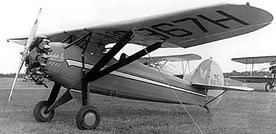
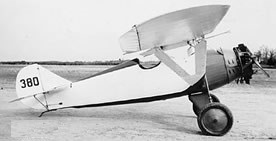
Vulcan Aircraft updated the engine of the American Moth from a 60 hp Detroit Air-Cat to a Warner radial and the aircraft became the Vulcan V-3. It finished second in the National Air Races “A” Division, New York to Los Angeles Derby. Later it took first in the Los Angeles to Cincinnati race at 90.3 mph. Shortly after these achievements, William Burke died leaving the company’s future in doubt.

Davis V3 – LV-RAA

Walter C. Davis was a former WWI pilot who had been working in his family’s business, the Davis Automobile Company of Richmond, Indiana, when it was sold in 1928. Redirecting his talents back to flying, he purchased the production rights to the Vulcan V-3 and began work on the first Davis aircraft in March 1929.

Davis V3 – NX380

Davis Aircraft Corp

Founded at Richmond, Indiana, by Walter C. Davis to take over Vulcan Aircraft Company. Production of American Moth continued as Davis V-3, and the D-1 series of fast parasol-wing two-seaters began in 1929.
Davis Aircraft manufactured seven different Davis models in its life, and a total of approximately 60 aircraft. These aircraft included the Davis D-1 (23 aircraft), the D-1-66 (4 aircraft), the D-1-K (11 aircraft), the D-1-L (aka D-1-85 – 1 aircraft), the D-1-W (8 aircraft converted from D-1-K’s), the 1929 racer (1 aircraft) and the V-3 (22 aircraft).

Dassy DA 1 / DA 2

DA 1

In 1929 Georges Dassy built a low wing monoplane designed by Glymes who also worked
at SABCA (Belgian Public Limited Company of Aeronautical Constructions). G. Dassy, like many
other Belgian manufacturers, made their prototype in the context of the so-called “subsidy” program to encourage a national aeronautical industry.

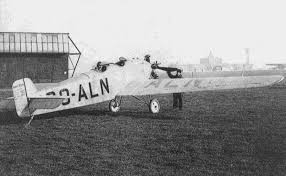
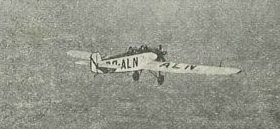
This prototype – the Dassy DA 1 – performed its first flight in August 1930 registered OO-ALN.

The Dassy DA1 was powered with a Renard engine and entirely made of spruce wood coated with plywood

OO-ALN was sold to the pilot builder and director of the national aviation school, Jef Guldentops, in September 1930, which used it either at Haren or at its Leefdaal aerodrome (Tervuren) until 1940.

The registration was cancelled in April 1946, because presumed destroyed during the war.

The DA 1 allowed the development of the Dassy DA 2 two-seater tandem monoplane, adaptable
easily into a three-seater.

Dassy DA 1
Engine: Renard 5-cyl, 120 hp at 1580 rpm
Engine weight: 130 kg
Wingspan: 11.50 m
Wing area: 14 m²
Length: 6.40 m
Height: 2.30 m
Empty weight: 420 kg
Maximum weight: 725 k
Maximum speed: 194 km / h
Cruising speed (80% of power): 175 km / h
ROC: 250 m / min
Ceiling: 7,000 m
Range: 1,000 km

Dassy, Georges

Georges Dassy was an important mechanic whose the workshops were in Schaerbeek (Brussels). He obtained a contract of the Military Aeronautics in 1927 for the overhaul and repair of engines plane, activity he continued until the explosion of the war.

Pilot and avid aviation, Georges Dassy built in 1929, a monoplane aircraft.

D’Ascanio Helicopter

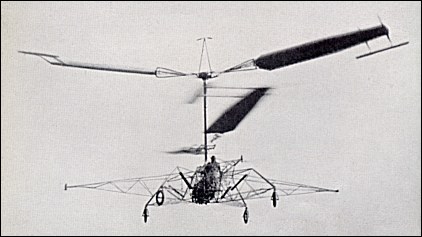
In 1928 in Italy, Corradino D’Ascanio built a helicopter with two 13m counter-rotating coaxial rotors, each with a trailing elevator which could be used to vary the rotor blade angle of attack. Two small propellers at the ends of extra arms were used for additional control. Powered by a 95hp Fiat engine, the craft set three Federation Aeronautique Internationale (FAI) world records on October 8, 1930: an altitude of 18m, a distance of 1078m, and endurance of 8 minutes and 45 seconds.
D’Ascanio worked for the Piaggio company, and designed also the Vespa scooter.

Engine: 1 x Fiat A-505, 95-100hp
Rotor diameter: 13-15m
Take-off weight: 800kg
Achieved height: 18m
Achieved endurance: 8min 45s