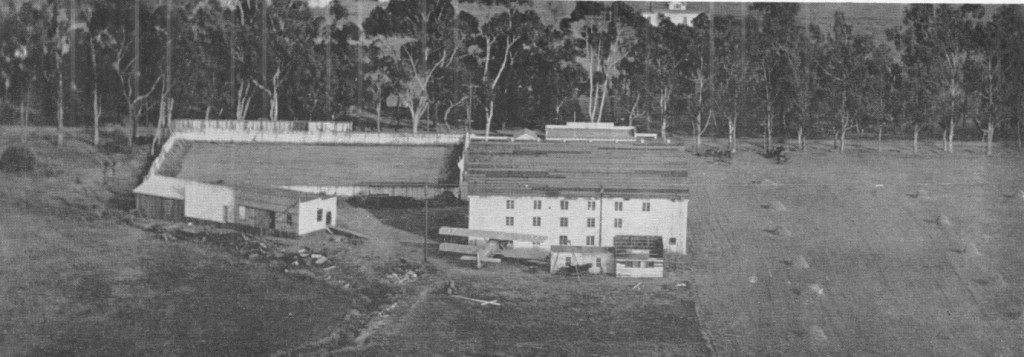
Donald Douglas, the son of a bank cashier in Brooklyn, came to Los Angeles in 1915 with a degree from the Massachusetts Institute of Technology. By 1922 he had established a factory with a capital of $350 in an abandoned motion-picture studio in Santa Monica, where he built torpedo plane for the US Navy. Two years later he had signed for his first export order, to Norway.
Douglas Aircraft, Santa Monica, California, 1920s
The Davis-Douglas Cloudster of 1920, Donald W. Douglas’s first design, was followed in 1921 by the DT torpedo- bomber for the U.S. Navy, the largest single-engined aircraft in the U.S.A. at the time. Four modified DTs, known as Douglas World Cruisers, made the first round-the-world flight in 1924, with Army crews. The Douglas Aircraft Company was formed in 1928, and in July 1929 a former Douglas engineer, Jack Northrop, set up the Northrop Aircraft Company and produced an all-metal low-wing dive-bomber, the XBT-1/A-17.
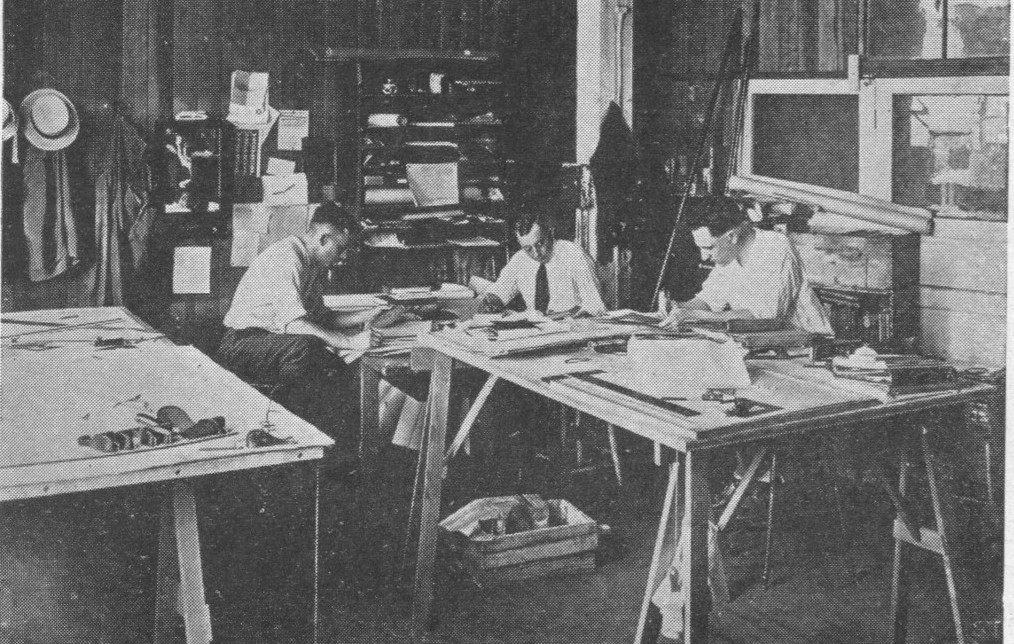
Donald Douglas, at left, working on the Cloudster design.
With the help of designer Jack Northrop, Lockheed built the F1, but it was turned down by the Navy. In 1923 Northrop left to take a job with Donald Douglas, and later founded his own corporation.
Northrop and Douglas merged in 1937 (Douglas with a majority stockholding), and in 1938 it became Douglas-El Segundo. The dive-bomber design progressed, via the Douglas TBD Devastator of 1934, to become the U.S. Navy’s first monoplane, and was followed by the Dauntless SBD. Ultimate Douglas development of the single-engined piston-engined attack-bomber was the 1945 Skyraider, which served in many roles until 1968, both in Korea and Vietnam. Last single-engined military designs by Douglas were the small delta-wing F4D Skyray jet fighter (first flown January 1951) and highly successful A4D Skyhawk jet attack-bomber (first flown June 1954 and 2,960 built up to 1979; current programs around the world keep substantial numbers of Skyhawks operationally capable with foreign forces).
The first twin-engined Douglas design appeared in 1925; the T2D for the U.S. Navy. The B7 of 1930 was the first of a series for the U.S. Army, and was followed by the B-18 in 1935. The most famous twin, however, was the DB-7/A-20 Boston (and nightfighter Havoc), which first saw action in June 1940. A total of 7,385 was built, of which 3,125 went to Russia. The A-26/B-26 Invader of 1945, developed from the A-20, served in Korea and Vietnam, and the Boston/Havoc concept was taken into the jet age by the Skywarrior and Skynight. A version of the former became the B-66 Destroyer, Douglas’s (and the USAF’s) last conventional light-attack bomber.
In 1933, under pressure from United Airlines’ Boeing 247, Transcontinental & Western Air turned to Douglas to provide a competing aircraft. The first DC-1 (Douglas Commercial) appeared in prototype only, but 131 DC-2s followed in 1932-1936. The first commercial orders were in 1933 for 40 DC-2 for the new Trans World Airways. A wide-bodied sleeper version, the DST, led to the DC-3 in 1936, which was to be the most famous airliner of all time. In 1940 the USAAC ordered it as the C-47 transport. Douglas built 9,255 of the 10,125 produced, and in 1961 1,000 were still in military use, and 600 civil DC-3s remained in operation in the U.S.A. in 1974. Douglas, consulting five airlines, developed a four-engined version, the DC-4, in 1941. The Army commandeered all civil DC-4s on U.S. entry into the war, and 1,162 military C-54s were built. After the war many reverted to DC-4 status, to be succeeded by the DC-6 and DC-7.
At Santa Monica, the Douglas company had made 29,000 aircraft during World War 2, but produced 127 in 1946.
Douglas temporarily lost its lead in transport when Boeing produced the Model 707, but then produced the very effective DC-8 and DC-9 jet.
Military transport design continued with the big C-124 Globemaster in 1950, and C-133 Cargomaster of 1957, a heavy strategic freighter capable of carrying all the thencurrent IRBMs or ICBMs. In 1947 Douglas went supersonic with the jet D-558-1 Skystreak and D-558-2 rocket Skyrocket, built for NASA. The latter held the world speed record in 1953 at 1,981km/h and achieved Mach 2.01 at 19,810m in 1953. The later X-3 research aircraft was intended for flight at up to Mach 3. There was a brief involvement with executive jets with the PD-808 Vespa-jet, production being transferred from El Segundo to Rinaldo Piaggio before, in 1967, the company merged with McDonnell Aircraft to become McDonnell Douglas.
Douglas files bankruptcy and was forced to sell at a knocked down price to McDonnell of St. Louis, which had been making handsome profits out of its F-4 Phantom, supplied to the air force in Vietnam.
Poland Founded in Warsaw in 1933 to take over assets and liabilities of RWD, the aeronautical section of Warsaw Technical High School, which had been building to the designs of Rogalski, Wigura and Drzwiecki, initially in the school workshops, later those of the government. Production continued under the RWD name until 1939.
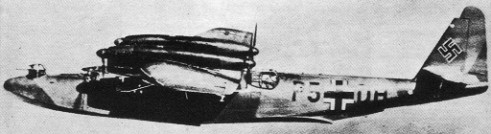
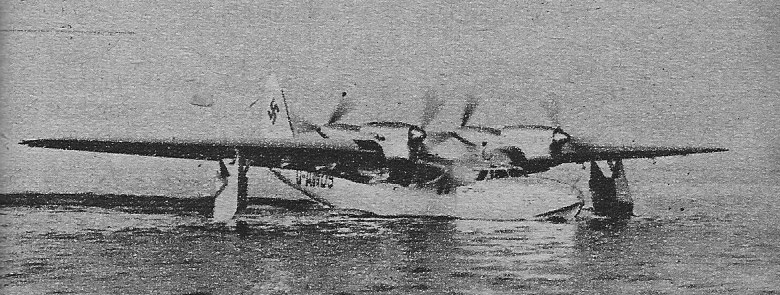
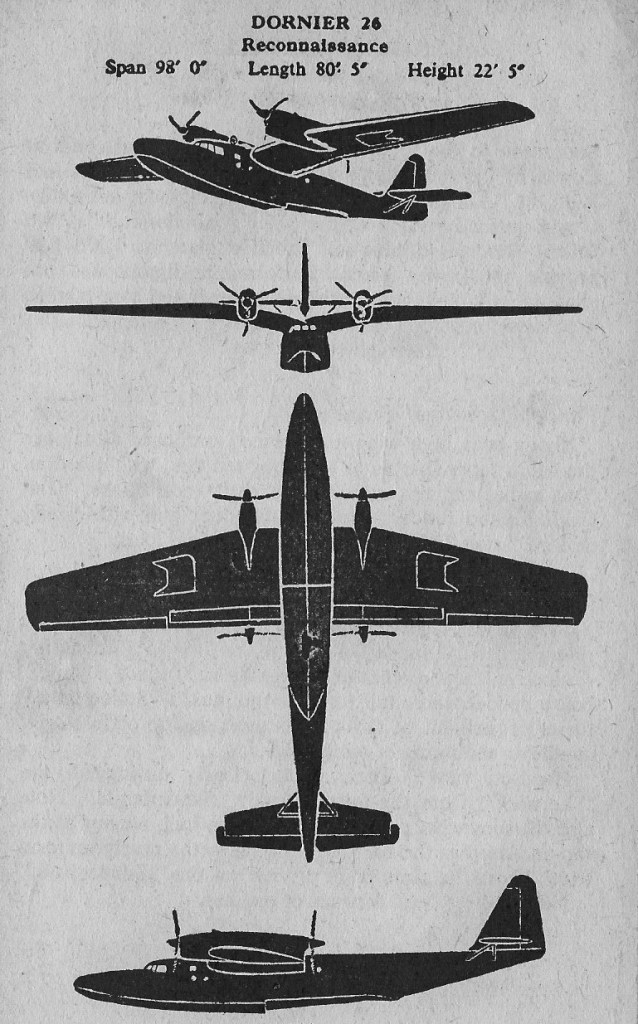
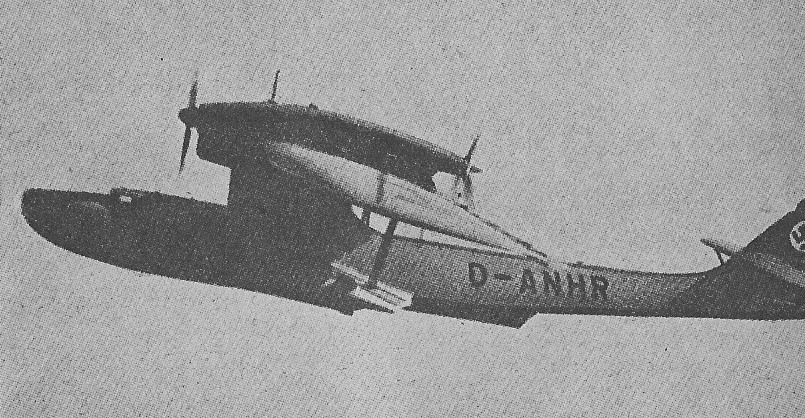
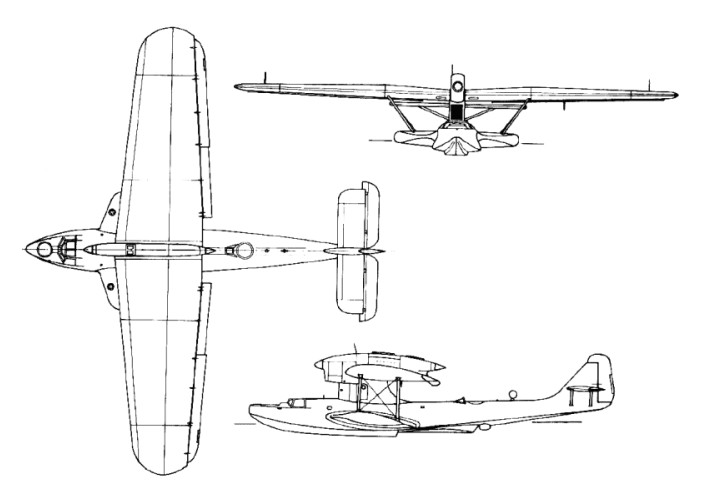
The Do 26 was originally produced for Lufthansa as a mailplane capable of flying non stop between Lisbon and New York. A complete break with previous Dornier flying boat designs, the Do 26 VI, which flew for the first time on May 21, 1938, used a cantilever wing housing retractable stabilizing floats and four 600 hp Jumo 205C diesel engines in tandem pairs. The forward engines drove normal tractor propellers, but the rear pair drove pushers by means of extension shafts which could be raised through 10 degrees to keep the three-blade metal propellers clear of spray during takeoff. The V2, with 800 hp 205D engines, was completed by early 1939, and together with the V1 underwent extensive trials with Lufthansa. Three Do 26s, stressed for catapult launching from support ships, had been ordered by Deutsche Lufthansa in 1937, and the first of these was flown on 21 May 1938. Two of the three were completed before the outbreak of World War II and delivered to the airline under the designation Do 26A. They were never used as intended, across the North Atlantic, and made just 18 crossings of the South Atlantic.
The four passenger B series prototype, the V3, was still under construction at the start of the Second World War in September 1939 and was taken over by the Luftwaffe along with three eight-passenger C series prototypes, the V4, V5 and V6.
The Luftwaffe ordered the last four to be adapted as Do 26D dual role long range maritime reconnaissance aircraft, with a 20mm (0.79 in) MG 151 cannon in a powered bow turret, two glazed blisters amidships each mounting a single MG 15 machine gun, and a third MG 15 below the rear hull. Along with the V2 prototype, the four converted machines were used during the invasion of Norway on supply and communications operations in and out of the narrow fjords. On May 28, 1940, two Do 26s were shot down by Hurricanes of 46 Squadron, RAF, in Rombaksfjord while attempting to land. No further Do 26s were built. After the operations in Norway the remaining Do 26s were withdrawn from front line service. They continued to operate on communications tasks until the lack of spares and servicing problems necessitated their withdrawal from service.
The V1 and “A” model had 205E engines. The sole “B” model, which was destroyed by RAF Hurricanes early in the war, had 205Ea engines and the “C” model had 205D engines.
Do 26 V6 Engines: 4 x Jumo 205C, 440kW / 600 hp Wingspan: 30.0 m / 98 ft 5 in Length: 24.5 m / 80 ft 5 in Height: 6.9 m / 22 ft 8 in Wing area: 120.0 sq.m / 1291.67 sq ft Gross weight: 22 500 kg (49 604 lb) Empty weight: 10200 kg / 22487 lb Maximum speed: 324 km/h (201 mph) Cruise speed: 310 km/h / 193 mph Ceiling: 4600 m / 15100 ft Range w/max.fuel: 9000 km / 5592 miles Crew: 4
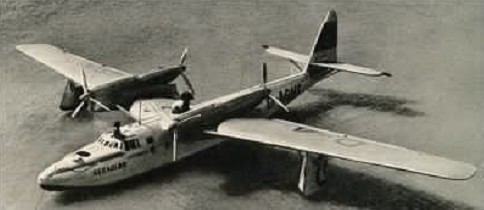
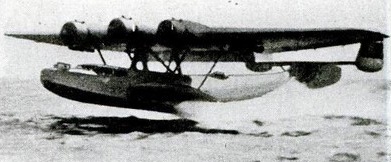
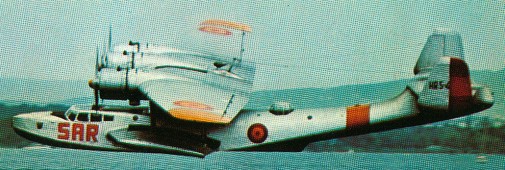
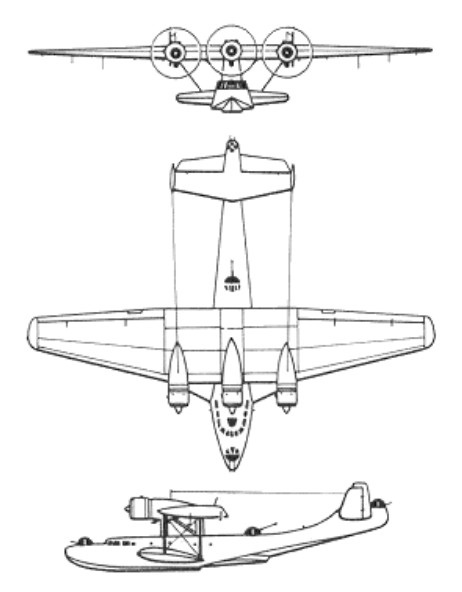
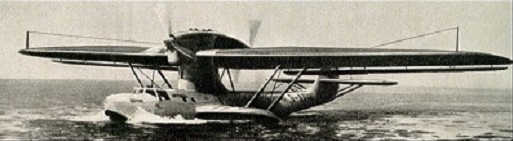
Broadly similar in design and layout to the Do 18, the Do 24 had three radial engines mounted separately on the wing leading-edge, and twin fins and rudders. At the prompting of the Netherland’s Marine Luchtvaartdienst, in 1935 Claudlus Dornier set about developing a replacement for the WAL seaplanes which was already thirteen years old and totally obsolete.
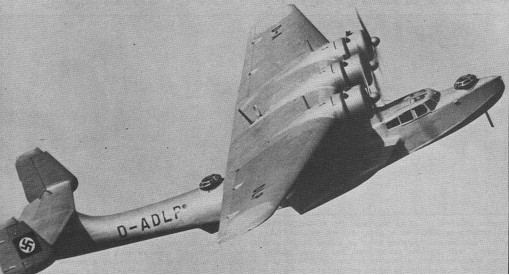
Working to Dutch specifications Dornier installed, Wright R-1820 Cyclones in the Do 24 V3 and V4, temporarily shelving the Jumo 205-powered V1 and V2. D-ADLP, the V4, was used for open sea trials at Bodensee and proved to be a. typically tough Dornier airplane. Plans were made to build 60 Do 24Ks under license in the Netherlands, but following diversion of part of the funding to buy additional Martin 139s (export versions of the B-10 medium bomber) this order was cut to 48 planes. When Germany invaded Holland in 1940, 25 Do 24Ks were captured in various stages of completion and were used for air-sea rescue work in the North Sea and English Channel. The seaplane was evaluated at Erporoblingsstelle-See Travemunde and was judged to be so suitable for this mission that production was resumed in Holland, BMW-Bramo Fafnir radials replacing the American Wrights with the result that the machine was redesignated Do 24T, additional aircraft being built in occupied France as well.
The first of three prototypes to fly, on July 3, 1937, was the Do 24 V3 (D-AYWI), pow-ered by 875-hp Wright Cyclone R-1820-F52 engines. This aircraft, plus the V4 and ten similarly-powered Do 24K-1s were delivered to the Dutch navy, and apart from the Jumo 205C-engined V1 and V2 were the only German-built examples.
Production continued with 28 Dutch-built Do 24K-2s, powered by 1000-hp R-1820-G 102 engines, and carrying revised armament and up to 1250-kg (110-lb) bombs. Twenty-five of these were delivered to the Dutch East Indies. The other three, and eight partially-built K-2s, were captured in 1940 and completed to Luftwaffe standards as Do 24N-1 air/sea rescue aircraft. From this the major ASR/transport version, the Do 24T-1, was developed with 1000-hp Bramo 323R-2 engines. Armament consisted of a 20-mm (0.79-in) Hispano cannon in a dorsal turret and single 7.9-mm (0.311-in) machine-guns in the bow and stern positions. One hundred and eighty of these were built (110 in Holland and 70 by CAMS in France).
Of the 294 Do 24s built (including prototypes) only 37 saw service with the Dutch East Indies navy, for whom it was originally designed in 1935.
By contrast, some 222 were employed by the Luftwaffe.
Do-24T-3
Forty-nine Dutch-built Do 24T-2s were sold to Spain, and in 1944 Spain also purchased 12 generally similar Dutch-built Do 24T-3s, powered by three 1,000 hp BMW engines. These were used to provide an air-sea rescue service in the Mediterannean, the Spanish machines picking up downed crews of any nationality. Only 48 of the French-built T-Is reached the Luftwaffe, the remainder being ‘liberated’ and used as transports by Flottille 917 Tr of the French Aetonavale starting in December 1944 with the first two.
The Dutch East Indies Dorniers operated for some time against Japanese shipping in the southwest Pacific; those of the Luftwaffe saw action in the Baltic, English Channel, Mediterranean and the Black Sea.
Engines: 3 x BMW Bramo 323, 735kW Max take-off weight: 18400 kg / 40565 lb Empty weight: 10600 kg / 23369 lb Wingspan: 27.0 m / 88 ft 7 in Length: 21.9 m / 71 ft 10 in Height: 5.8 m / 19 ft 0 in Wing area: 108.0 sq.m / 1162.50 sq ft Max. speed: 340 km/h / 211 mph Cruise speed: 255 km/h / 158 mph Ceiling: 5900 m / 19350 ft Range w/max.fuel: 4800 km / 2983 miles Range w/max.payload: 2400 km / 1491 miles Armament: 4 machine-guns, 1 x 30mm cannon, 600kg of bombs Crew: 6
Do 24T-1 Span: 27 m (88 ft 7 in) Length: 22.05 m (72 ft 4 in) Gross weight: 16 200 kg (35715 lb) Maximum speed: 332 km/h (206 mph)
Do 24T-3 Engines: 3 x BMW-Bramo, 1000hp. Wing span: 88 ft 7 in (27 m). Length: 72 ft 2.5 in (22 m). Height: 18 ft 10.5 in (5.75 m). Max TO wt: 39,249 lb (17,800 kg). Max level speed: 211 mph ( 340 kph).
The Do 13 was first flown on February 13, 1933, with the same powerplant as its predecessor. Substitution of Junkers type ‘double wing’ trailing edge flaps, similar to those of the Ju 52/3m, gave it improved landing characteristics, and when the Sh 22 engines were replaced by a pair of 750 hp 12-cylinder liquid cooled BMW VIUs, driving four blade propellers, the bomber was redesignated Do 13C. After further attempts to overcome deficiencies in the wing structure, it was ordered into series production by the Luftwaffe as the Do 23. Two hundred and twenty-two Do 11s were reordered as Do 13Cs, but after about a dozen of these had been delivered, they were found to be even less satisfactory than the Do 11 C and D, and production was halted while the airframe was restressed and modified. Production was resumed after the first flight, on September 1, 1934, of the Do 13e prototype for the production Do 23F, with BMW VId powerplant. This was quickly followed by the Do 23G, which became the principal service version and returned to the BMW VIU engine. All unfulfilled orders for the Do 11 and 13 were transferred to the Do 23 contract, deliveries of which began in spring 1935, and had totalled just over 200 when production ended in late 1935. The Do 23 was not destined for a long service life. From mid 1936 it began to be replaced by the Do 17, Ju 88 and He 111. It was then relegated to second line duties, including training. Although obsolete by the outbreak of the Second World War, a small number did continue in service with Minensuchstaffeln during the early war years, equipped with a large degaussing ring for clearing British mines from around the German coast.
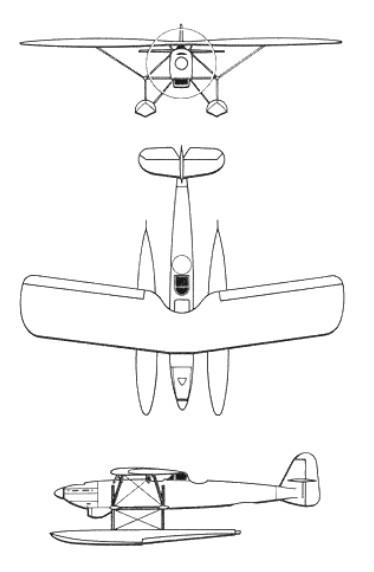
Developed in 1934 at the Altenrhein factory, the Do 22 all metal, fabric covered, except for the metal-skinned forward fuselage, parasol monoplane first appeared as a twin float seaplane. Two prototypes were built. The Do 22 was powered by a 775¬hp Hispano-Suiza 12Ybrs engine driving a three-bladed propeller. The Do 22 carried a crew of three, the rear cockpit providing accommodation for a gunner, and a radio operator whose position in the front half of the cockpit was protected by a glazed canopy. Four 7.92mm MG 15 machine-guns were fitted, one in the forward fuselage above the engine, one in a ventral position and two in the rear cockpit. There were racks on the underside of the fuselage for a single 800 kg (1764 lb) torpedo or four 50 kg (110 lb) bombs. Approximately 30 were built at Friedrichshafen in Germany and the first production aircraft was flown on 15 July 1938. Orders were not received from the Luftwaffe, but some were produced at Friedrichshafen for export to Latvia (Do 22 Kl), Greece (12 Do 22Kg) and Yugoslavia (12 Do 22Kj). The Do 22L (a landplane model registered D OXWD) flew on March 10, 1939. The Do 22 fought on both sides during the Second World War. Of the 12 delivered to the Yugoslavian navy, eight escaped to Egypt in April 1941 and served under No 230 Squadron RAF in the Mediterranean; and four Do 22K1 from the Latvian order were sold to the Finnish air force in 1941.
Engine: 1 x Hispano-Suiza 12 Y 21, 670kW Wingspan: 16.2 m / 53 ft 2 in Length: 13.1 m / 42 ft 12 in Height: 4.8 m / 15 ft 9 in Wing area: 41.3 sq.m / 444.55 sq ft Empty weight: 2850 kg / 6283 lb Max take-off weight: 3700-4000 kg / 8157 – 8819 lb Max. speed: 350 km/h / 217 mph Cruise speed: 310 km/h / 193 mph Ceiling: 8500 m / 27900 ft Range w/max.fuel: 1600 km / 994 miles Range w/max.payload: 800 km / 497 miles Crew: 3 Armament: 2-3 machine-guns
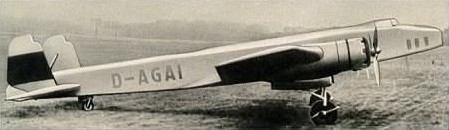
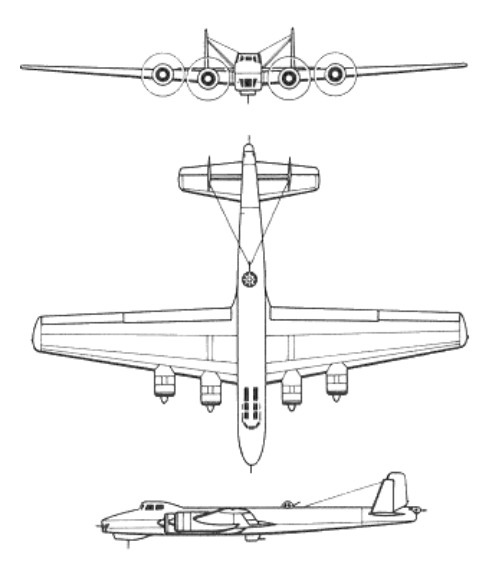
As early as 1934 the Luftwaffe began to think about a long range heavy bomber, and in 1935 a specification for the ‘Ural Bomber’ was issued to Junkers and Dornier. Both Dornier and Junkers completed preliminary studies for such an aircraft, and each received in late 1935 an order for three prototypes under the respective designations Dornier Do 19 and Ju 89. A mid-wing cantilever monoplane, largely of metal construction, the Do 19 had a rectangular-section fuselage; a tail unit with braced twin fins and rudders mounted on the upper surface of the tail-plane, at approximately mid-span on each side; tailwheel landing gear, with all three units retracting; and powerplant comprising four Bramo 322H-2 radial engines, mounted in nacelles at the wing leading edges. Accommodation was provided for a crew of nine, consisting of pilot, co-pilot/navigator, bomb-aimer, radio operator and five gunners. The intended hydraulically-operated two man dorsal and ventral turrets, combined with the overweight aircraft, would have left the bomber severely under-powered. The Do 19 V1 prototype flew for the first time on 28 October 1936, but by then an event had occurred which was to bring development of the long-range strategic bombers to an end. Using lighter turrets and Fafnir 323A-1 engines, a revised design showed an estimated range of 2000 km (1240 miles) and a top speed of 370 km/h (230 mph), but by this stage there were doubts about the usefulness of the ‘Ural Bomber’ and the ability of the aircraft industry to produce it without reduc¬ing the supply of other warplanes. On 3 June 1936 Generalleutnant Wever had lost his life in an aircraft crash and his successor, Generalleutnant Albert Kesselring, concluded that the Luftwaffe’s more urgent requirements were increased numbers of fighters and tactical bombers of greater capability. The Do 19 V2, which was almost ready to fly, and the incomplete Do 19 V3 were both scrapped; the Do 19 V1 saw limited use as a military transport following conversion for such a role during 1939.
Do 19 V1 Engines: 4 x BMW “Bramo 322”, 480kW Span: 35 m (114 ft 10 in) Length: 25.45 m (83 ft 6 in) Height: 5.8 m / 19 ft 0 in Wing area: 162.0 sq.m / 1743.75 sq ft Empty weight: 11000 kg / 24251 lb Gross weight: 18500 kg (40785 lb) Maximum speed: 315 km/h (196 mph) Cruise speed: 250 km/h / 155 mph Ceiling: 5500 m / 18050 ft Range w/max.fuel: 1600 km / 994 miles Crew: 4-5
The 1935 Do 18 was originally produced as a transatlantic mail-carrying flying-boat and used on the South Atlantic service of Deutsche Luft-Hansa. Evolved as a civil and military successor to the Dornier Wal, the first of five Do 18 prototypes (registered D AHIS) flew on March 15, 1935, powered by two 540 hp Junkers Jumo 5 engines. These five prototypes were delivered to Deutsche Luft¬hansa. It was available in two forms as the Do 18E and Do 18F, with an AUW of 10,000kg and 11,000kg and with larger wings. A total of about 160 was eventually built during 1936 40, the major Luftwaffe versions being the Do 18D (about 75 built) and Do 18G and H (71 built).
The Do 18D 1, D 2 and D 3 differed in equipment only and were delivered from mid¬-1936. By the autumn of 1939 they equipped single Staffeln of five Kustenfliegergruppen (coastal aviation groups). Powered by 600 hp Jumo 205C engines, they were only lightly armed with single bow and dorsal 7.9 mm (0.311 in) MG 15 machine guns, and could carry two 50 kg (110 lb) bombs beneath the starboard wing. Do 18Ds took part in many early wartime campaigns, among them Poland, Norway and the Battle of Britain.
On 27 March 1938 a Do.18 catapulted from the ship Westfalen, anchored off the English coast, and flew 5245 miles / 8440 km non-stop to Caravelas, Brazil, to set a new endurance record for seaplanes.
The Do 18G-1, which entered service from mid 1939, had 880 hp Jumo 205D engines, a 13 mm (0.51 in) MG 131 in the bow, a 20 mm (0.79 in) MG 151 in a power operated dorsal turret, and provision for rocket assisted takeoff.
On Sunday 8 October 1939: During a patrol flight over the North Sea, a Lockheed Hudson coastal reconnaissance plane of 224 Sqn became the first English aircraft to shoot down a German plane, a Dornier Do.18 flying boat.
The Do 18H 1 was a six seat unarmed trainer version. Both the Do 18D and the Do 18G had been withdrawn from first line service by autumn 1941, but some G 1s were converted to Do 18N 1s for air/sea rescue duties. One Do 18 was redesignated Do 18L when its two 447kW Junkers Jumo 205 were replaced by 671kW BMW 132N. Do 18 were also operated as reconnaissance and search-and-rescue aircraft by the Luftwaffe, more than 70 being built for this purpose, plus a number of Do 18H trainers.
Do-18E Engines: 2 x Jumo 205, 440kW Max take-off weight: 10000 kg / 22046 lb Empty weight: 6260 kg / 13801 lb Wingspan: 23.7 m / 77 ft 9 in Length: 19.3 m / 63 ft 4 in Height: 5.4 m / 17 ft 9 in Wing area: 98.0 sq.m / 1054.86 sq ft Max. Speed: 260 km/h / 162 mph Cruise speed: 240 km/h / 149 mph Ceiling: 4200 m / 13800 ft Range w/max.fuel: 5100 km / 3169 miles Range w/max.payload: 2600 km / 1616 miles Crew: 4
Do 18G-1 Span: 23.70 m (77 ft 9 in) Length 19.25 m (63 ft 2 in) Gross weight: 10759 kg (23719 lb) Maximum speed: 267 km/h (166mph)
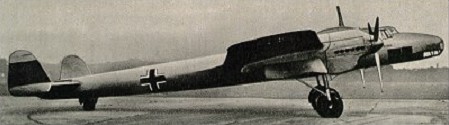
Designed originally from an outline specification drawn up in July 1932 which referred to a “high-speed passenger transport and mailplane” as a six-passenger plane for Deutsche Luft Hansa’s European route network. From the outset the Do 17 was in fact a dedicated medium bomber and reconnaissance aircraft.
The first prototype, the Do 17c, shortly afterwards to be re-designated Do 17V1, was flown on 23 November 1934, powered by a pair of 660 hp BMW VI 12 cylinder liquid cooled V type engines, this having a single fin-and-rudder tail assembly whereas the second prototype, the Do 17 V2 (formerly Do 17a), was fitted with a twin fin-and-rudder assembly for comparison. The V2 flying on 18 May 1935.
Three prototypes were completed for DLH, each of them having a single fin and rudder; but their slimness was also their commercial undoing, the very narrow fuselage making it extremely difficult for passengers to reach their seats. Following its rejection by DLH, the Do 17 design languished for a time, until the RLM (Reichsluftfahrtministerium, or German aviation ministry), seeking a new medium bomber for the Luftwaffe, was persuaded to evaluate the Dornier aircraft for this role.
The RLM ordered further prototypes, beginning with the Do 17 V4, which flew in the late summer of 1935. These were generally similar to the first three prototypes, except for having twin fins and rudders (to make the aircraft a more stable bombing platform) and a decrease of 0.55 m (1 ft 9A in) in overall length. They carried a crew of three, and had an all metal fuselage, metal and fabric covered wings, and fully retractable mainwheels and tailwheel. All were broadly similar, except for the installation of 775 hp Hispano Suiza 12 Ybrs liquid cooled V type engines in the Do 17 V5 and a defensive armament of a single hand operated 7.9 mm (0.311 in) MG 15 machine gun in the cockpit of the Do 17 V7.
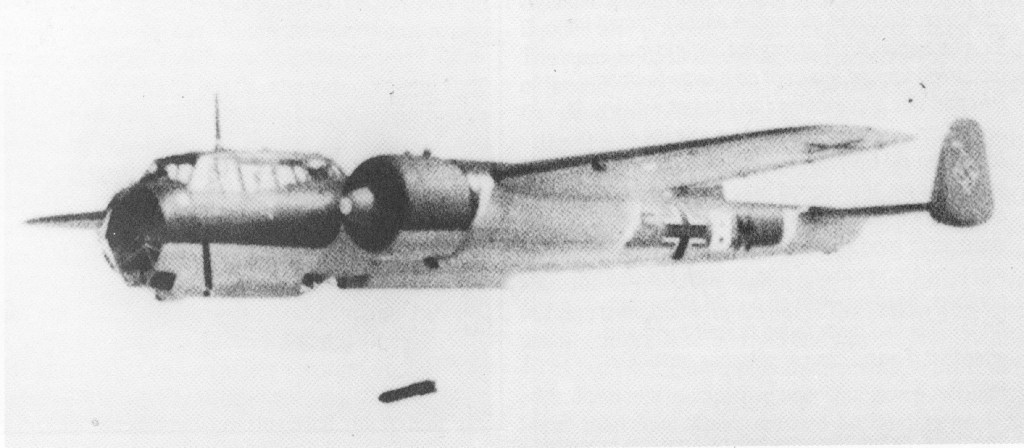
The Do 17 was a highly advanced design for the early 1930s, grouping all crew members in the forward fuselage and it was faster than virturally any single-seat fighter then existant. Preparations for the large-scale production of the Do 17 at Dornier’s Manzell, Allmansweiller and Löwenthal factories were underway by early 1938, when plans were also being fprmulated for additional productiom by Henschel at Berlin-Schönefeld, Siebel at Halle and by the Hamburger Flugzeugbau.
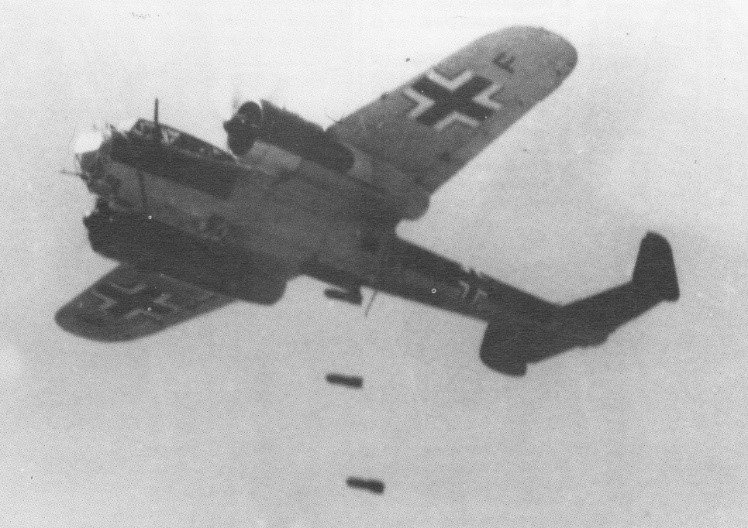
The first version to go into production, towards the end of 1936, was the Do 17E-1 bomber, based on the Do 17 V9, which had a further reduction of 0.90 m (2 ft 111 in) in the length of the nose. The Do 17E-1, powered by two 750 hp BMW VI 7.3 engines, carried a short range internal bombload of 750 kg (1653 lb) and had a defensive armament of two MG 15 machine guns, one above the fuselage and one below.
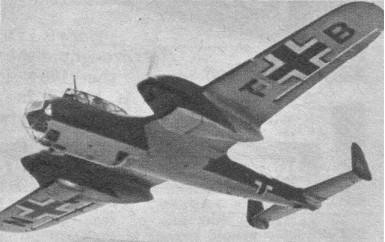
Do 17
In parallel production was the Do 17F 1, a photographic reconnaissance counterpart to the E 1 with two cameras and an extra fuel tank installed in the bomb bay. Both versions were in squadron service with Luftwaffe units by the summer of 1937, the Do 17E-1 initially equipping the I. Gruppen of KG 153 and KG 155 while the F 1 went to the long-¬range reconnaissance group Fernatifklarungsgruppe 122. During 1937 38 the Do 17E and F were included among the types of Luftwaffe aircraft selected to equip units of the Condor Legion sent by Germany to fight on the Nationalist side in the Spanish Civil War. Here their performance made them virtually immune from interception by their opponents’ fighters.
The principal shortcomings of the Do 17 revealed over Spain were its limited warload and its poor defence against attack from below and to the rear, and the Do 17M did little to remedy these defects.
General re-equipment of the Do 17E-mounted Kampfgruppen was held in abeyance pending availability of the much improved second generation Do 17Z which was following the Do 17M by less than a year and utilised most of the gigs and tooling employed by the earlier model.
The Do 17P reconnaissance equivalent production was launched in 1938 by Henschel, Hamburger Flugzeubau and Siebel, a total of 330 being built for the Aufklärungsgruppen.
In July 1937, at about the time these first production models were reaching their first squadrons, an international military aircraft competition was staged at Dijbendorf, near Zilrich in Switzerland. One of the competitors was the French Dewoitine D 510, generally considered at that time to be the best single seat fighter in service anywhere in Europe. This fast and manoeuvrable little fighter was totally out-classed by an example of the Do 17, a twin engined bomber even though this was not revealed at the time. The Do 17 concerned was a specially stripped down prototype, the Do 17 V8, fitted with DB 600A engines specially boosted to give 1000 hp each. The Do 17 V8’s performance had many side effects, not least on fighter design thinking in countries both inside and outside Europe. A more direct result was an expression of interest in the Do 17 itself from the Yugoslav government, which eventually placed an order for 20 of the German bombers. These export examples were designated Do 17K, and at the request of the customers were powered by Yugoslav built 980 hp French Gnome Rhone 14 N radial engines. The ‘pure’ bombers were designated Do 17Kb 1; reconnaissance models were designated Do 17Ka 2 and Ka 3, the latter doubling also in the bombing and attack roles. In addition to those supplied from German production, manufacture of the Do 17K was also undertaken under licence, in 1939 40, by the Drzavria Fabrika Aviona (state aircraft factory) at Kraljevo, near Belgrade. The additional available power gave the Do 17K a useful increase in both speed and range, notwithstanding an improved internal bombload (in the Kb 1) of 1000 kg (2205 lb) and an armament increased to three 0.312 in (7.92mm) FN Browning machine guns and one 20mm (0.79 in) Hispano cannon. Seventy Do 17Ks were still in service with the Yugoslav air force when the country was invaded by Germany in early April 1941. Later that month two of them escaped to Greece with a consignment of gold bullion. Losses during the fighting in Yugoslavia were fairly heavy, but those Do 17Ks that survived were passed on in early 1942, after the occupation, to the newly created Croatian air force. The improvements in weapon capacity and performance exhibited by the Do 17K had, in fact, been evolved for two generally similar versions for the Luftwaffe, the Do 17M bomber and Do 17P reconnaissance bomber, the increased power being derived respectively from a pair of 900 hp supercharged Bramo 323AA or 865 hp BMW 132M radial engines. In 1938 these began gradually to replace the Do 17Es and Do 17Fs in service, and by September 1938 combined production of the Do 17E, F, M and P series totalled 580. Three experimental models to be evolved during 1937 38 were the Do 17L, Do 17R and Do 17S. The Do 17L (two prototypes only) was a four seat pathfinder version with 900hp Bramo 323AA engines. The two Do 17R prototypes were testbeds, one powered by 950 hp Daimler Benz DB 600G engines and the other by 1100 hp DB 601As. The Do 17S (three built, first flight early 1938) was a high-speed reconnaissance version with DB 600G engines and a crew of four. None of these went into production, but between them the R and S series led to the Do 17U, of which 15 were produced in 1938 and distributed among nine Karripfgruppen (bomber groups) for pathfinder duties. The Do 17U carried a crew of five and was powered by 950 hp DB 600A engines.
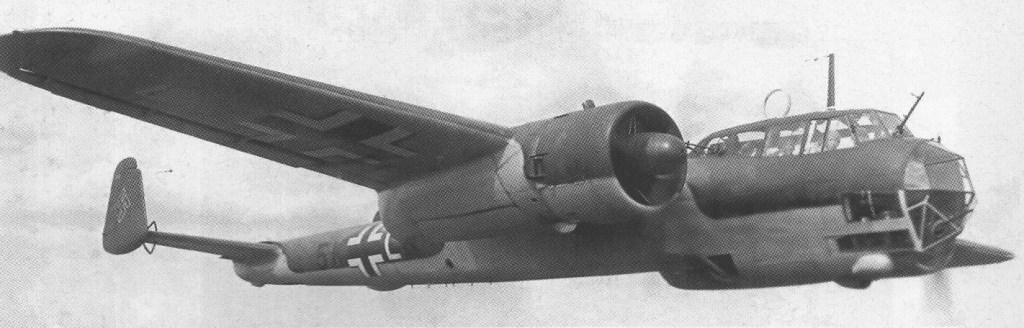
Dornier Do.17Z
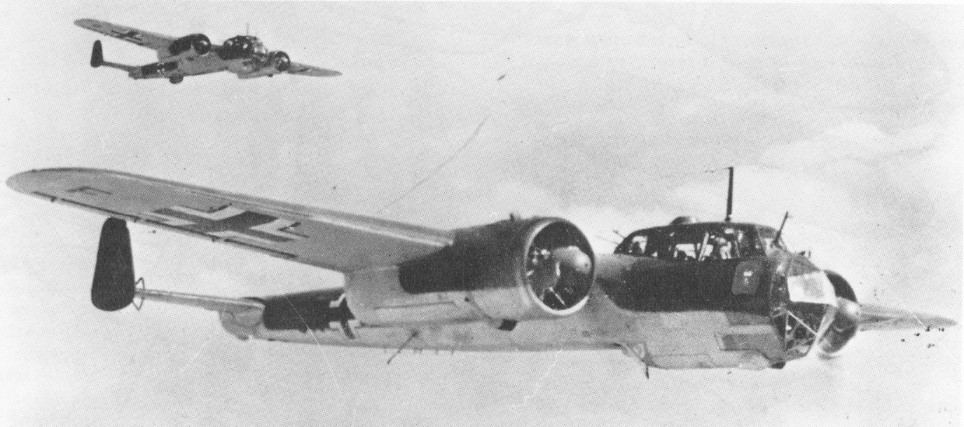
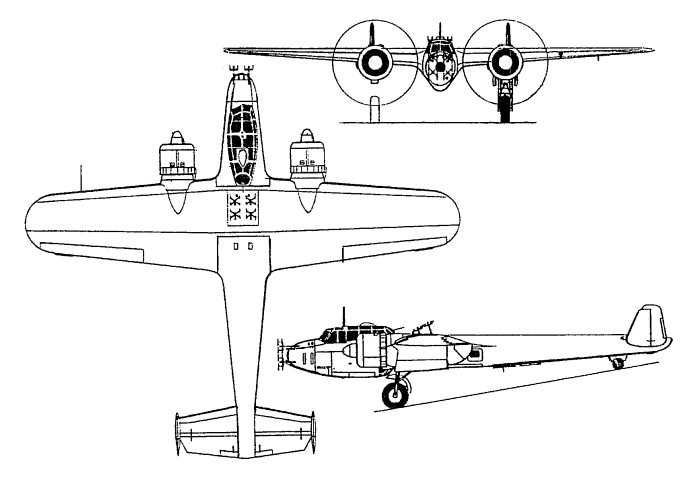
The final version in the Do 17 production series, and the one produced in the greatest quantity, was the Do 17Z. The Do 17Z, the design of which begun early 1938, featured an entirely new forward fuselage, A progressive development of the Do 17S/Do 17U, it appeared in late 1938 and broke away from the Do 17’s earlier ‘Flying Pencil’ image by adopting as standard the deeper, more angular and more extensively glazed nose section first seen on the Do 17S.
Do 17Z
This permitted a heavier defensive armament (which the Do 17 now needed) of up to six MG 15 guns, five of them aimed manually. The Do 17Z series carried a crew of four or five, and were powered at first by Bramo 323A 1 and (from the Z 2) by 1000 hp Bramo 323P series engines.
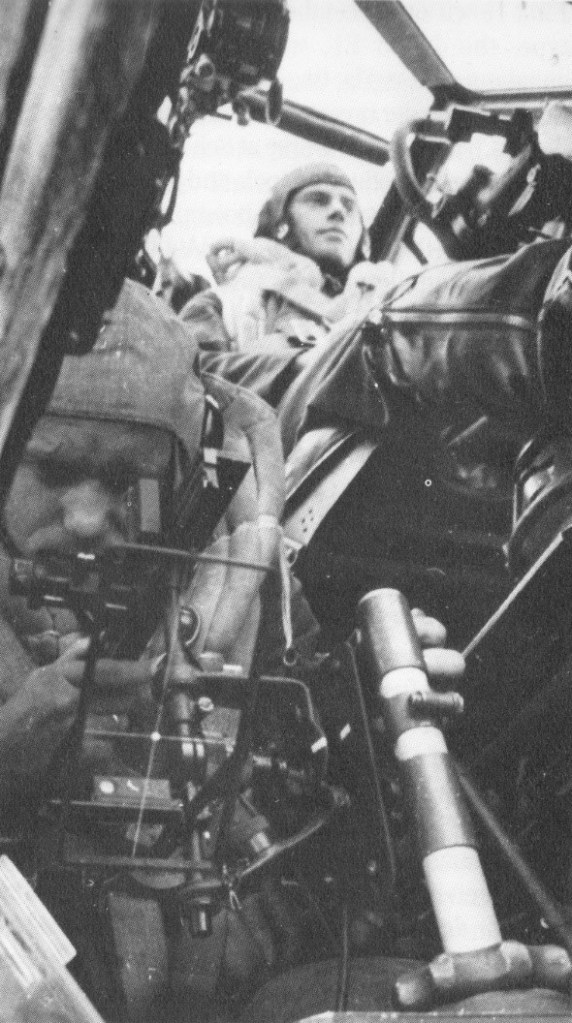
The downward-firing MG 15 machine gun which was poked through a hatch in the floor of proceeding Do 17 versions had too limited a field of fire to provide protection from below and to the rear. Crew accommodation had always been cramped thus, for the Do 17Z, the cockpit roof raised and fully glazed. The nose containing the bombardier’s station was extensively glazed with a series of small, flat panels, and the lower part was bulged and extended aft to a point just forward of the wing leading edge, terminating in a position for an aft-firing MG 15 machine gun.
Do 17Z bombardier station
Approximately 525 examples of the Do 17Z were built, of which the Do 17ZA (delivered from January 1939) and the Do 17Z 2 (the most numerous sub type) were bombers, the Do IV 3 (22 built) a recon-naissance model, the Do 17ZA a dual control training version of the Z 2, and the Do IV 5 a version of the Z 2 for rescue duties.
The pre-series Do 17Z-0, which appeared late in 2938, was a four-seat bomber, defensive armament comprising three 7,0mm MG 15 guns – one on a pillar-type mounting at the rear of the flight deck, a second protruding through the starboard panels of the windscreen and the third on a hemispherical mounting firing below the fuselage. This armament was augmented on the production Do 17Z-1 by a fourth MG 15 protruding through the nose cone. Appearing before the end of 1938, the Do 17Z-1 was under-powered by its two 900 hp BMW-Bramo 323A-1 radial engines when carrying a full 2205 lb / 1000 kg bombload. Bombload wasreduced to 1100 lb / 500 kg, but was restored to the full load early in 1939 with the appearance of the Do 17Z-2 with 1000 hp Bramo 323P engine with two-speed superchargers. Restoration of the full bombload dictated some reduction in fuel load reducing penetration with maximum load to 205 mi / 330 km.
Do 17Z-2
Lacking the load carrying capability of the He 111 and the speed of the Ju 88, production was tapering off by the end of 1939 and terminated during early summer of 1940 after about 500 were delivered.
The Do 17Z-2 was to perform the first operational sortie of WW II when aircraft of III/KG 2 took-off from Heiligenbeil, East Prussia, 45 minutes after the official outbreak of war, to bomb approaches to the rail bridge at Dirschau, a major link across the Polish Corridor.
Equipping nine Kampfgruppen of KG 2, KG 3, KG 76 and KG 77, the Do 17Z-2 was in the forefront when the first attacks on channel convoys took place in July 1940, and the Kommodore of KG 2, Oberst Fink, was assigned the title of Kanalkampfführer with the task of clearing the channel of British shipping, his Do 17Z-2s providing the principle component of the battle group entrusted with this mission. On Adler Tag the Do 17Z-2s of KG 2 bombed Eastchurch as the sole Kampfgeschwader failing to receive Goering’s postponement order, losing four aircraft in the process.
The Do 17Z-2s of KG 3 bombed Eastchurch and Rochester two days later, and on the 16th those of KG 76 attavked West Malling, following up this mission with attacks on Biggin Hill and Kenley on the 18th. The incursions over Britain of the Do 17Z rapidly revealed the deficiencies of its defensive armament, fotward maintenance units first adding two MG 15 machine guns which could be fired laterally from the radio operator’s position and then another pair to provide a total of eight defensive machine guns.
The Dornier bomber possessed good manoeuvrability and its structural integrity enabled it to undertake shallow diving attacks at speeds in excess of 270 mph / 590 kph, but it carried no armour protection for its crew. Attrition remained high and by mid-September the numerical importance of the Do 17 began to dwindle.
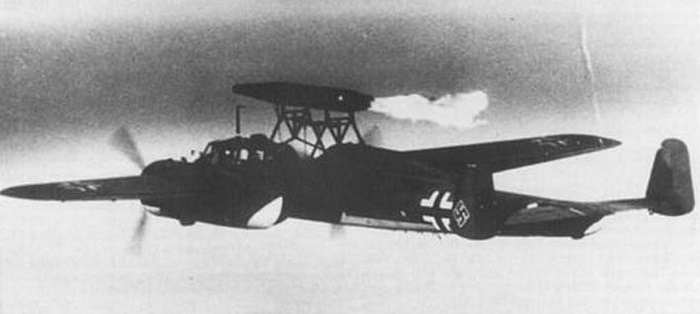
Dornier Do17/Z testbed for Lorin ramjet
Luftwaffe strength returns showed a total of 493 Do 17s on charge on December 2, 1939. Of these, 352 were Do I7s (mostly Z¬2s), 12 were Do 17Rs, 41 were Do 17Ms, and 83 were Do 17Ps. The P and Z models were thus the principal versions encountered during the early attacks on Poland, France, the Low Countries and Britain in 1939 40. They performed reliably and effectively and, despite a fairly high rate of attrition, were popular with their crews. The Do 17 “Flying Pencil” was the first type of German aircraft shot down by an RAF single-seat fighter during the war (a Hurricane of No 1 Squadron on 30 October 1939). Dornier 17 production ended in July 1940 after approximately 1200 of all models had been built. Only one Geschwader (wing), KG2, used the 17Z for more than a year after the invasion of the Soviet Union.
When it became necessary to find improvized night fighters to counter RAF raids on German held targets, a small number of Do 17Zs were converted to this role. After trials in 1939 with a Do 17Z 6 K= I (screech owl) prototype, nine more Z 3s were converted in 1940 to three seat Do 17Z 10 Kauz II night fighters, with a battery of two 20 mm (0.79in) MF FF cannon and four 7.9 mm (0.312 in) MG 17 machine guns in a ‘solid’ nose. Operating with Nachtjagdgeschwader 1 in Holland, the Do 17ZA0 scored its first ‘kill’ on the night of October 18/19, 1940.
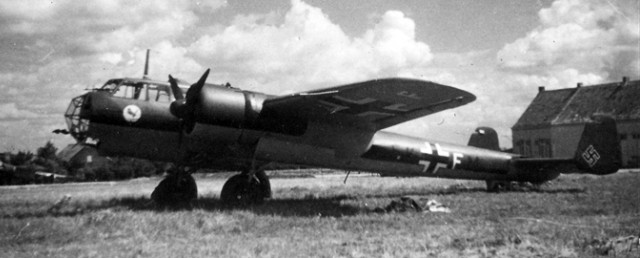
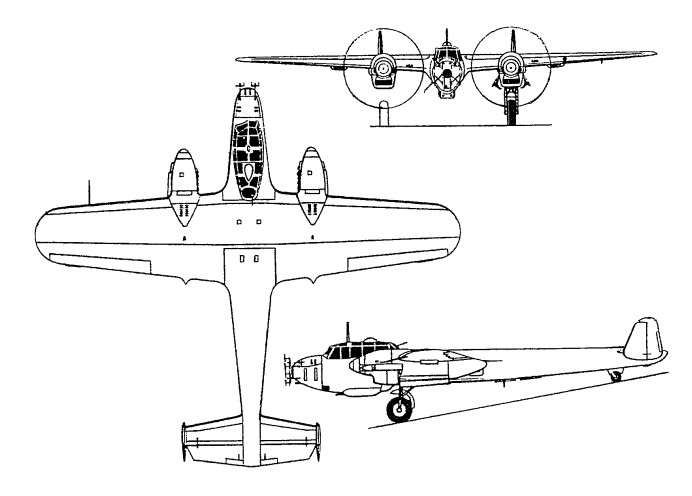
In 1938, in the hope of attracting further foreign orders for the bomber, Dornier took two of the pre production Do 17Z Os and used them as export demonstration aircraft under the new RLM type number Do 215. Redesignated Do 215 V1 (with Bramo 323 engines) and Do 215 V2 (with 980 hp Gnome-Rhone 14 N radials), the latter was demonstrated to Yugoslavia, but without securing any orders. The only order forthcoming was from Sweden, which was shown the Do 215 V3, another former Do 17Z 0 refitted with 1075 hp DB 601A inverted V engines. Eighteen of these were ordered for the Swedish air force in mid 1939 as Do 215A 1s, but were not completed before the war. Only three Do 215B 1s had been completed by the end of 1939, but production continued in parallel with the radial engined Do 17Z, and ninety two Do 215B-1s and B 4s were delivered to the Luftwaffe in 1940, production being completed in 1941 with a further six machines.
Do.215B-1
The first of the batch was flown in December 1939, and all were taken over by the Luftwaffe, with minor modifications, as Do 215B 0s or B 1s. Delivered in early 1940, they were followed into production by two generally similar Do 215B 3s for the Soviet Union (the B 2 was not built); and then by the principal Luftwaffe model, the Do 215B 4 (similar to the B 1, and also with 1100 hp DB 601Aa engines, but fitted with different cameras); and the Do 215B 5. This final Do 215B version, some 20 of which were converted on the line from Do 215B 4s, was produced in the latter half of 1940 as a night fighter/intruder aircraft, and had a ‘solid’ nose similar to that of the Do 17Z 10 in which were installed four MG 17 machine guns and two 20 mm (0.79 in) MG FF cannon. The Do 215B 4 differed from the B-1 solely in the type of cameras installed, an RB 50/30 camera being mounted beneath the ventral gun position, and an RB 20/30 camera being mounted on the crew entry hatch. In addition to the cameras, twenty 110 1b (50 kg) bombs could be carried. Two slightly modified machines designated Do 215B 3 were exported to the Soviet Union during the winter of 1939 40.
Do.215
Several Do 215B-1 airframes were converted to Do 215B 5 night fighter configuration and delivered to NJG.2 during late 1940 for operation from Gilze Rijen in the Netherlands, these undertaking intruder sorties against RAF bomber bases. In July 1941 Nachtjagdgeschwader 1 in Holland was the first operational Luftwaffe aircraft to carry the early Telefunken FuG 202 Lichtenstein BC airborne interception radar. Oberleutnant Ludwig Becker of NJG 1, later to become one of the Luftwaffe’s leading night fighter pilots, made the first ‘kill’ using this equipment on August 9, 1941. The Do 215B 5 was fitted with a solid nose housing one 20 mm MG FF cannon and four 7.9 mm. MG 17 machine guns.
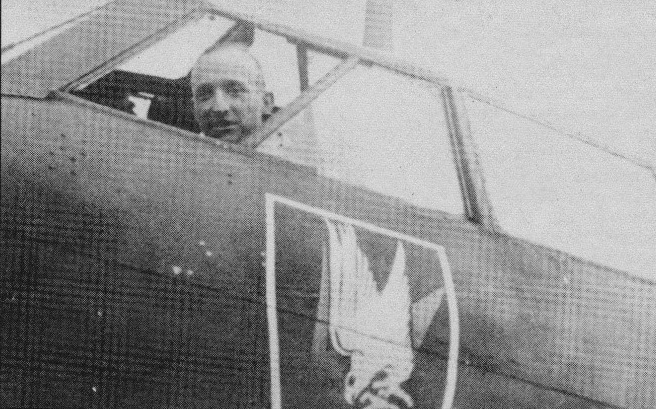
Hauptmann Becker in his Do 17Z-6
In all, 101 Do 215Bs were built before production ended in January 1941. By this time mainstream development of the Do 17/215 bomber concept was well under way in the more advanced form of the Dornier Do 217, the first examples of which had entered service towards the end of the previous year. After 1942, virtually no Do 215s remained in service with first line units, those which survived being reallocated mostly to test and development work. The Do 17, however, following its replacement by the Do 217 in 1942, found a new career as a glider tug and continued in the role to the end of the war.
Do-17 Engine: 2 x BMW Bramo 323P, 770kW Max take-off weight: 8890 kg / 19599 lb Empty weight: 5230 kg / 11530 lb Wingspan: 18.0 m / 59 ft 1 in Length: 15.8 m / 51 ft 10 in Height: 4.6 m / 15 ft 1 in Wing area: 55.0 sq.m / 592.01 sq ft Max. Speed: 410 km/h / 255 mph Cruise speed: 376 km/h / 234 mph Ceiling: 9000 m / 29550 ft Range w/max.fuel: 2000 km / 1243 miles Armament: 4 x 7.9mm machine-guns, 1000kg of bombs Crew: 4
Do.17E Engines: 2 x BMW VI, 750 hp.
Do 17E-1 Span: 18 m (59 ft 1 in) Length: 16.25 m (53 ft 3.75 in) Gross weight: 7040 kg (15,520 lb) Maximum speed: 355 km/h (220 mph)
Do 17Z Engines: 2 x Bramo Fafnir, 1000 hp Top speed: 255 mph Cruise: 216 mph Range: 750-1000 mi Wingspan: 59 ft 0 in Length: 53 ft 0 in
Do 17M-1 Span: 18 m (59 ft 1 in) Length: 16.10 m (52 ft 9.75 in) Gross weight 8000 kg (17,637 lb) Maximum speed: 410 km/h (255 mph)
Do 17Z 2 Span: 18 m (59 ft 1 in) Length: 15.79 m (51 ft 9.75 in) Gross weight: 8590 kg (18,938 lb) Maximum speed: 360 km/h (224 mph) Armament: 2 x 7.92mm MG 15 mg
Do.215 Engines 2 x 1,075 hp Daimler Benz DB 601 A. Length: 51.75 ft (15.75 m). Wing span: 59.1 ft (18m). Weight empty: 12,730 lb (5,770 kg). Max bomb load: 2,200 lb (1,000 kg) Max speed: 300 mph (480 kph). Ceiling: 29,000 ft. (8,800m) fully loaded. Range: 1,860 miles (3,000 km). Range: 900 sm with 2200 lb bombs. Crew: 4. Armament: 4 x mg.
Do 215A-1 Engines: 2 x 1,075 hp Daimler Benz DB 601A. Max speed: 289 mph (465 kph) with a 2,200 lb (1000 kg) bomb load. Max cruise: 257 mph (413.5 kph). Normal range: 965 mls (1553 km). Service ceiling: 31,170 ft (9500 m).
Do 215B-1 Engines: 2 x 1,075 hp Daimler Benz DB 601Aa. Max speed: 239 mph (385 kph) at sea level, 289 mph (465 kph) at 13,123 ft (4 000 m). Tactical radius with max bomb load: 236 mls (380 km). Max ferry range: 1,522 mls (22450 km). Wing span: 59 ft 0in (18.00 m). Length: 52 ft 0 in (15.80 m) Height: 15 ft 1 in (4.60 m). Wing area, 592 sq.ft (55.0 sq.m). Crew: 4. Armament: four 7.9 mm MG 15 mg. MTOW: 19,400 lb (8 800 kg)
Do 215B-3
Do-215B-4 Engines: 2 V-12 Daimler-Benz DB 601Aa with 1100hp/820kW Max speed: 239 mph (385 kph) at sea level, 289 mph (465 kph) at 13,123 ft (4 000 m). Climbing Rate: 1000m in 2min, 18sec Operational Altitude: 9000m Weight empty: 5775kg MTOW: 19,400 lb (8 800 kg) Wing span: 59 ft 0in (18.00 m). Length: 52 ft 0 in (15.80 m) Height: 15 ft 1 in (4.60 m). Wing area, 592 sq.ft (55.0 sq.m). Tactical radius with max bomb load: 236 mls (380 km). Max ferry range: 1,522 mls (22450 km). Armament: One or two 7,92mm Machine Guns in the Nose, two 7,92mm MG in the front glass, two 7,92mm MG in each of the side windows, one 7,92mm MG on the back of the cockpit, one 7,92mm MG in the belly. Max Bomb load: 1000kg Crew: 4.
Do 215B-5 Engines: 2 x 1,075 hp Daimler Benz DB 601Aa. Wing span: 59 ft 0in (18.00 m). Length: 52 ft 0 in (15.80 m) Height: 15 ft 1 in (4.60 m). Wing area, 592 sq.ft (55.0 sq.m). MTOW: 19,400 lb (8 800 kg).