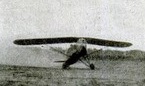
Ensner Mk.1       

The Ensner Mk.1 was designed and built by F.G.Ensner, a member of the Thames Valley Gliding Club. A single-seat light sailplane built at West Drayton, Middlesex, UK.

It was built to carry out full scale tests of various aerofoil sections at low speeds. It was conventional wooden construction, with circular cross-section fuselage and parallel chord wing.

It was first flown from Fairey’s Great West Aerodrome on 26 June 1932. Only one was built and no C of A was issued.

Wing span: 7.62 m / 25 ft 0 in
Length: 4.11 m / 13 ft 6 in
Empty weight: 45.36 kg / 100 lb
Max L/D: 20

English Electric Wren

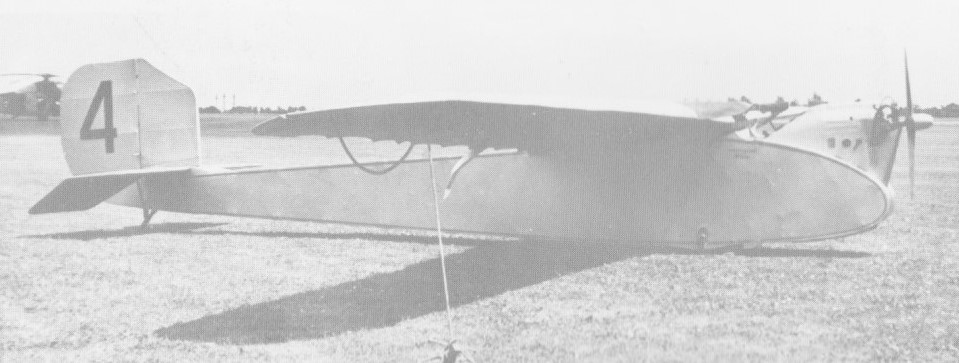
Intent on encouraging British aviation progress, the Daily Mail offered a prize of £1,000 in 1923 for a ‘motor glider’ competition. The Duke of Sutherland offered £500 for the longest flight on one gallon of petrol in an aero¬plane with an engine of not more than 750 CC. capacity. So the Royal Aero Club organised a Light Aeroplane Competition at Lympne in Kent. Joint winners of the main prize were Walter Longton in the English Electric Wren and Jimmy James in W. S. Shackleton’s A.N.E.C. Both covered 87.5 miles on one gallon of petrol.

The Wren was designed by W.O.Manning and one example was flown in the competition. Joint winners of the main prize were Walter Longton in the English Electric Wren and Jimmy James in W. S. Shackleton’s A.N.E.C. Both covered 871 miles on one gallon of petrol. Later registered G-EBNV it was subsequently operated from Sherburn-in-Elmet. It did not fly after 1929 and was stored.

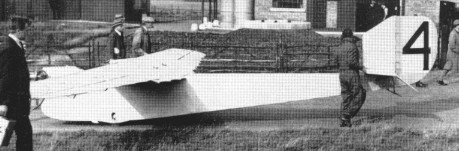
c/n 3 was built in 1923 at Lytham St Annes and carried the competition number 4. It was not registered and unknown if it actually flew in the competition. Acquired post-war by the Shuttleworth Trust it was stored until the 1950s when it was rebuilt by apprentices at English Electric. In the rebuild parts of G-EBNV were utilised, and it first flew again in January 1957.

Engine: ABC Scorpion, 3 hp
Wingspan: 37 ft
Length: 24 ft 3 in
AUW: 420 lb
Max speed: 50 mph

English Electric Ayr         

Ayr flying-boat

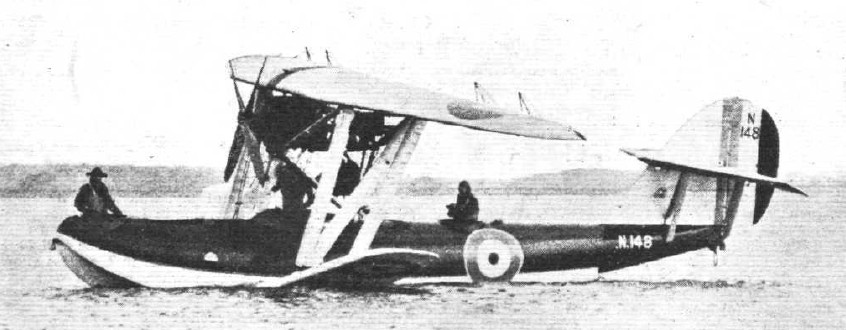
While the company were working on the Kingston they decided to experiment with a design for a small flying boat. The aircraft was a single-engined biplane flying-boat named the Ayr and was built in 1924. The hull was designed by Linton Hope, who had designed the Kingston hulls. An unusual feature was the lower wing, or stub wing mounted low down on the hull. It was designed to carry bombs underneath the stub-wings, these would have been underwater when the aircraft was afloat. During trials the aircraft rolled to the right and refused to become airborne.

Engine: 1× Napier Lion IIB 12-cylinder ‘broad arrow’ piston engine, 450 hp (336 kW)
Length: 40 ft 8 in (12.40 m)
Wingspan: 46 ft 0 in (14.02 m)
Height: 13 ft 8 in (4.12 m)
Wing area: 466 sq ft (43.3 m²)
Empty weight: 4,406 lb (2,003 kg)
Loaded weight: 6,846 lb (3,112 kg)
Maximum speed: 127 mph (110 knots, 204 km/h)
Service ceiling: 14,500 ft (4,400 m)
Armament: 2 x 0.303 in (7.7 mm) Lewis machine guns
Crew: 3

English Electric

Though this company became part of British Aircraft Corporation in 1960, its origins date back to 1911 at its Coventry Works (Coventry Ordnance Works Ltd.), where quantity production of other manufacturers’ designs was undertaken during First World War. After the Armistice development centered on the Kingston flying-boats, following the lines of the Cork, a product of the Phoenix Dynamo Manufacturing Company Ltd., which was then also part of English Electric. Original features manifest in Ayr flying-boat and Wren ultralight monoplane (1923), but aircraft work ceased in the mid-1920s. In 1938 it was resumed, with contracts for the Handley Page Hampden (followed by the Halifax). In May 1944 an order was placed for de Havilland Vampire jet fighters. Over 1,000 Vampires built before production got under way on company’s own Canberra, the first British jet bomber and the first to serve with the RAF. Canberra production continued for ten years, totaling over 1,300 examples, including 403 license-built Martin B-57s for the USAF. Numerous variants developed, notably for reconnaissance; other countries using the type included Ecuador, France, Peru, Rhodesia, Sweden, and Venezuela. Many records broken (e.g. London-Cape Town December 1953). Lightning twin-jet single-seat fighter of 1952 was RAF’s first supersonic fighter (in level flight); entered service December 1959. Much development of this type was undertaken by British Aircraft Corporation, but two-seat version emanated from English Electric.
British Aircraft Corporation was formed out of Bristol, English Electric, Vickers-Armstrong and Hunting Aircraft Ltd, in 1960.
England 1922 Glider        

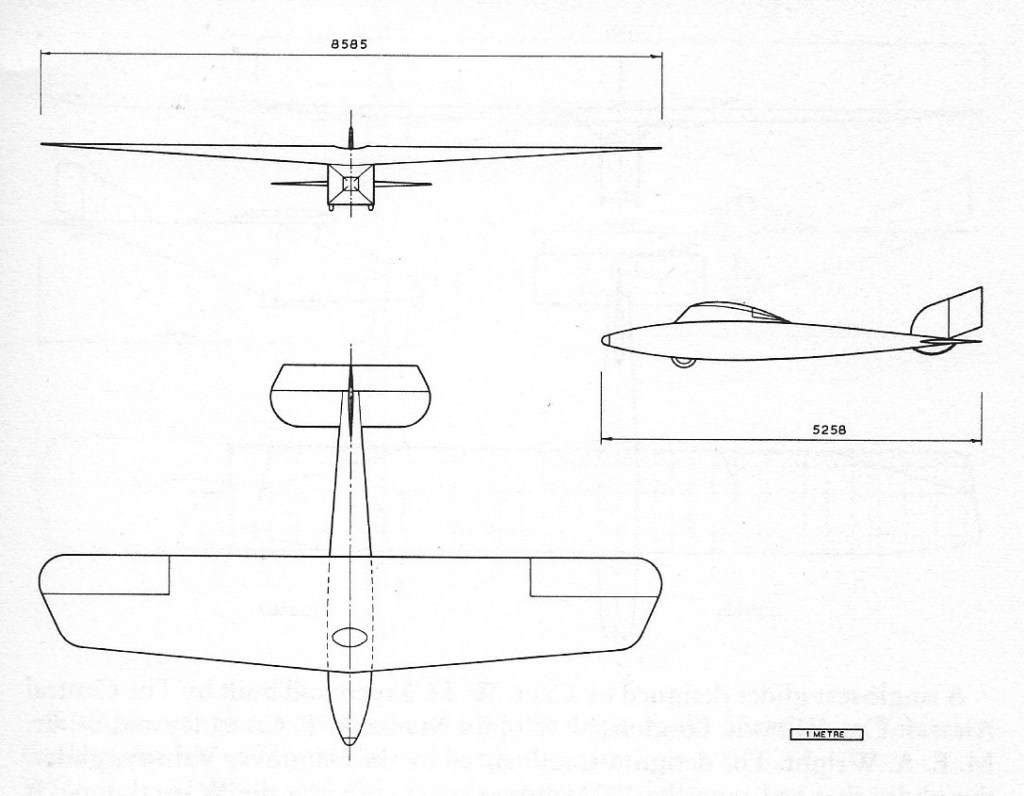
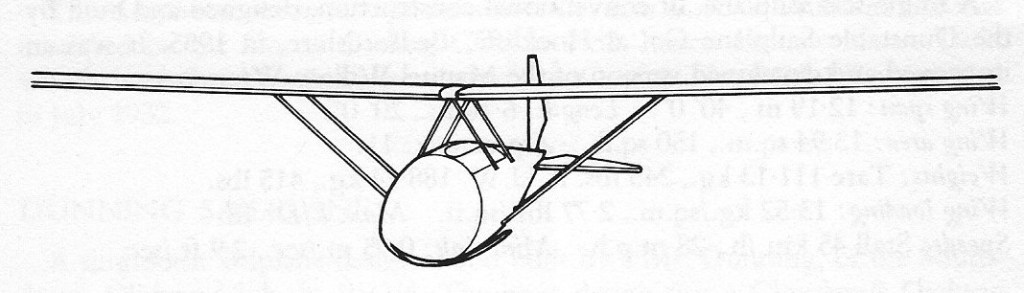
A single seat glider designed by E.C. Gordon England and built by George England (1922) Ltd, Walton-on-Thames, Surry, UK. Of wooden construction, only one was built, and flown in the 1922 Itford competitions, as No.13, by the designer, but it crashed during the stormy weather on 21 October 1922.

The undercarriage was twin mainwheels plus twin tail skids. The cantilever wings had no airbrakes or flaps.

The glider may have later been used at a gliding club at the RAF Staff College, Andover.

Wingspan: 8.58m / 28 ft 2 in
Length: 5.26m / 17 ft 3 in
Wing area: 12.08 sq.m / 130 sq.ft
Aspect ratio: 6
Empty weight: 45.36 kg / 100 lb
AUW: 117.94 kg / 260 lb
Wing loading: 9.76 kg/sq.m / 2.0 lb/sq.ft

Engineers Aircraft Corp EAC-1

A lightweight side-by-side two-seat monoplane. Powered by a Wright-built version of the British Gipsy four-cylinder in-line air-cooled engine, an example, N39V, was exhibited at the New York show in 1930, priced at $3,800-5,000.

Folding wings allow storage in a 20 ft x 11 ft space.

In the experimental stage in 1930, the Engineers Aircraft Corp of Stamford, Conn, led by Major Thomas G. Lanphier, aide to Col. Chas. A. Lindbergh, were preparing to go into production.

Engine: Wright-Gipsy, 90-100 hp
Wingspan: 30’0″
Top speed: 120 mph
Cruise: 100 mph
Landing speed: 45 mph
Seats: 2