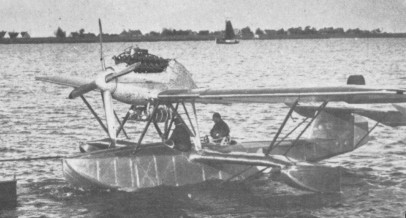
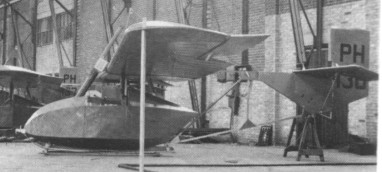
The light B.II reconnaissance seaplane made its maiden flight on December 15th, 1923. With its Rolls-Royce Eagle VIII engine of 360 hp a cruising speed of 175 kph was reached. The B.II could be operated from warships, and one example was tested by the Naval Air Service.
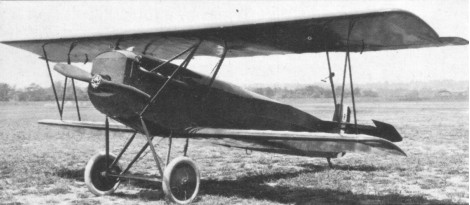
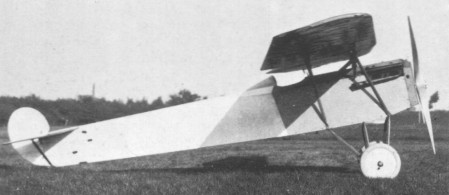
After the Armistice in 1918, Anthony Fokker returned to Holland and began to develop a new series of fighter designs originating from the D.VII of First World War. The first to appear, in prototype form only, was the D.IX, powered by a 300 hp Wright Hispano engine and was armed with two machine guns, flown for the first time in 1921, maximum speed was 220 kph. The prototype had a streamlined fuel tank built around the wheel axle, (like the C.I), but this tank was later removed upon delivery as PW 6 to the US Army Air Services. The sole prototype of the DI X was purchased for evaluation by the US Army Air Service and shipped to the USA in 1922, being assigned the designation PW-6. As evaluated by the USAAS, the aerofoil-section fuel tank was deleted, but the PW-6 was not considered to offer a sufficient advance over the D VII to warrant further development. Of typical Fokker construction in employing a welded steel-tube fuselage and wooden wings each having two box spars, the D IX featured an aerofoil-shaped fuel tank between the main wheels as first tested by the V 36. Only one was built. The D.IX was used as the design basis for the D.XI.
Max take-off weight: 1253 kg / 2762 lb Empty weight: 874 kg / 1927 lb Wingspan: 8.99 m / 29 ft 6 in Length: 7.09 m / 23 ft 3 in Height: 2.74 m / 8 ft 12 in Wing area: 22 sq.m / 236.81 sq ft Max. speed: 223 km/h / 139 mph Cruise speed: 188 km/h / 117 mph Range: 471 km / 293 miles
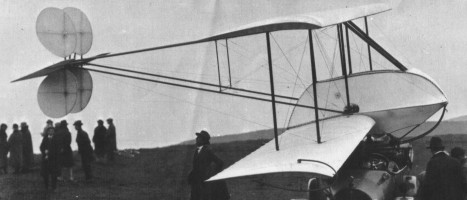
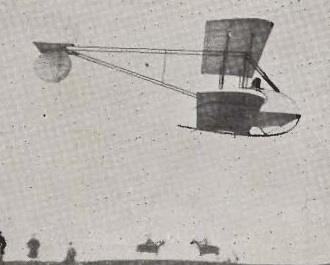
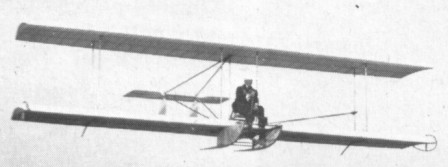
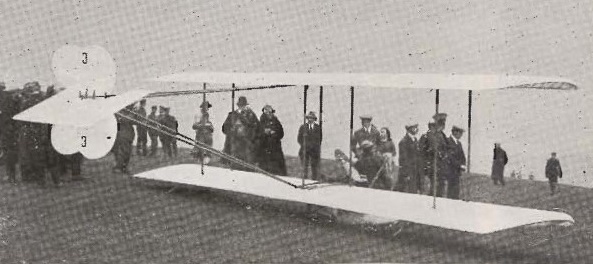
Fokker made the headlines in August 1922 when he participated in the Rhon gliding competition with his FG.1 and FG.II, single and two seat gliders. At the start he made a few modest hops, but it soon became obvious that this type of flying was no problem to him either. With the FG.II he made the first passenger carrying glider flight in the world.
Fokker made the headlines in August 1922 when he participated in the Rhon gliding competition with his FG.1 and FG.II, single and two seat gliders. At the start he made a few modest hops, but it soon became obvious that this type of flying was no problem to him either.
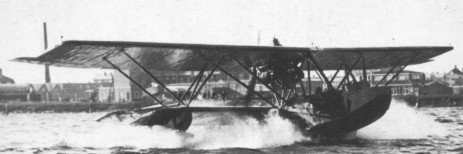
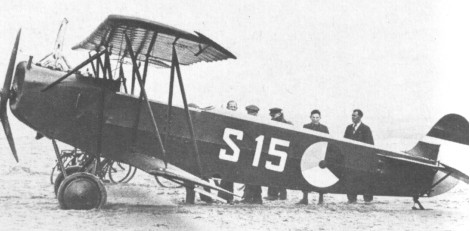
Unlike the S.II, the S.III trainer had the seats in tandem. The Naval Air Service bought 18 of these aircraft and built one themselves. Two were sold to the Danish Air Force.
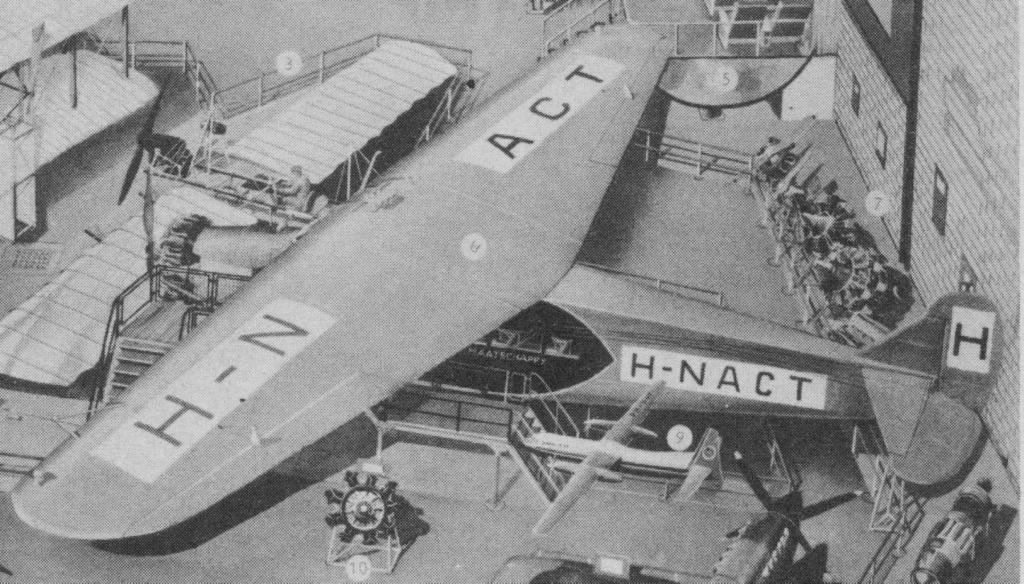
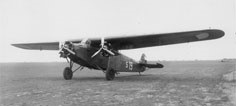
In April 1924 the F.VII made its maiden flight. The F.VII and its derivatives were to revolutionise air transport. Slowly, but steadily, the F.III’s capacity had become inadequate for the rapidly expanding air traffic, and KLM in particular was pushing for a larger successor. On December 10th, 1923, KLM signed a temporary contract for three F.VIIs, with an option on another three later on. The order would be confirmed if the prototype proved satisfactory during practical use. In 1924 the first F.VII went into service with KLM, the first, H-NACC, made the first flight from Amsterdam to Batavia, Java. Five in total were built in 1924-25.
Ever since the end of World War One plans had existed for a flight to the Dutch East Indies, and during the design of the F.VII the requirements for such a flight had been taken into account. In particular, the undercarriage was strongly constructed to allow for the bad landing fields expected along the route. The F.VII had a Rolls-Royce Eagle engine, and its cabin could accommodate eight passengers. A separate luggage compartment was provided, and also a toilet.
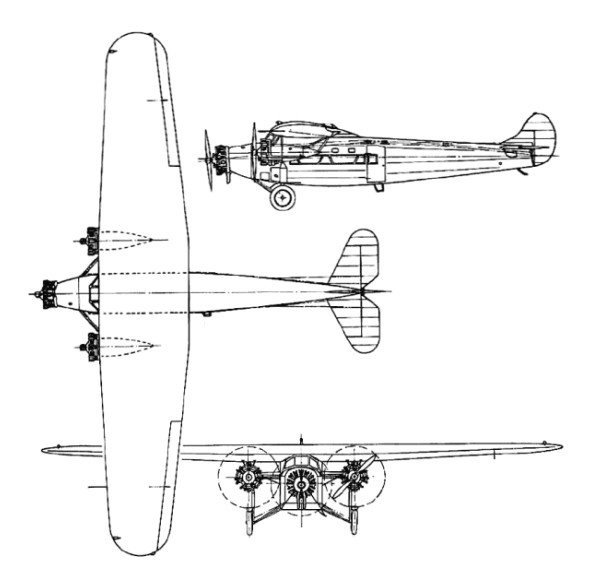
The improved version, with rounded wingtips, ailerons moved inboard from the wing tips, and a simplified undercarriage, was designated F.VIIA, and was 22 km/hr faster than the F.VII and more manoeuvrable. The Fokker F.VIIA flew on 12 March 1925 with a 298kW Packard Liberty engine. Following a demonstration tour of the United States, a number of orders were secured and further orders came from European operators. Almost 50 single-engined F.VIIAs were built, some of which were converted later to F.VIIA-3m standard with three engines.
1925 Fokker F.VIIa
Early in July 1925 Fokker cabled Platz in Amsterdam to say that a three engined F.VII was to be built. Platz executed this order in eight weeks. To avoid extra testing and design, he suspended the additional engines be¬neath the wing of an F.VIIA. After a demonstration for KLM, the F.VIIA/3m, as it was later called, was shipped to the USA, where Fokker flew the aircraft from New York to Detroit on September 26th.
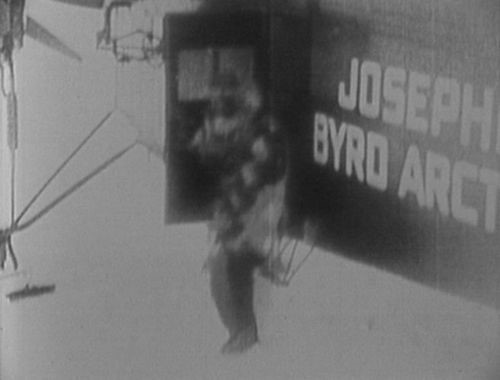
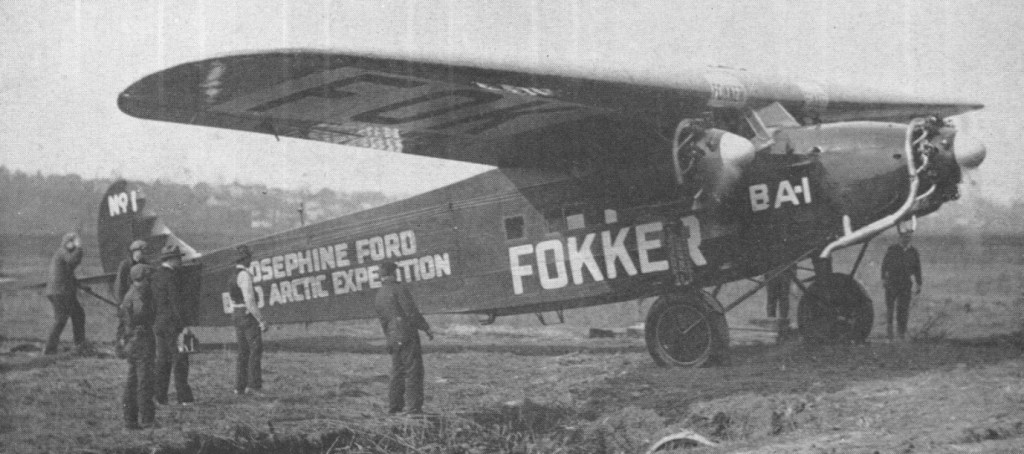
After the Ford Reliability Tour Fokker made the F.VIIA/3m prototype available to the Army Air Corps for testing from Wright Field. After this military goodwill tour, the aircraft was flown to Detroit to be inspected by Edsel Ford, who purchased it. He then made the aircraft available to Lt Commander Richard Byrd, who used it to become the first to fly an aircraft over the North Pole on the 9th May 1926, naming the Fokker F.VIIa/3M Josephine Ford.
Fokker F.VIIa/3M Josephine Ford.
Josephine Ford
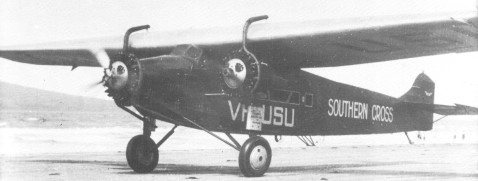
The first trans-Pacific crossing was in 1928 by the Fokker tri-motor “Southern Cross”. Unable to find afequate funding in theit own country, WW-1 Australian RAF pilots Charles E. Kingsford-Smith and C.T.P. Ulm, backed by Californian Capt. G. Allen Hancock, purchased a battered Fokker Detroiter without engines or instruments from Arctic explorer Sir George Hubert Wilkins. After modifications to strengthen fuselage and landing gear for extra fuel, and after obtaining Wright Whirlwind J-5C 200hp engine with US Navy help, now named “Southern Cross” they attemped to break the world endurance record in January 1928. “Smithy” and Lt. G.R. Pond flew for 50 hours, missing the record by two hours.
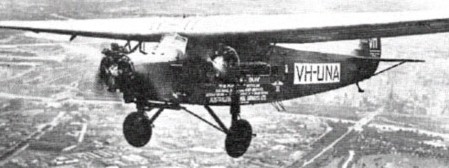
The Southern Cross left Oakland, California, on 31May 1928 headed for Australia. Crew were pilots Smithy and Ulm, navigator Harry W. Lyons, and radio operator James W. Warner. Oakland to Honolulu – 2408 miles, 27 hr 25 min; Hawaii to Suva, Fiji – 3144 miles, 34 hr 30 min; Fiji to Brisbane – 1795 miles, 21 hr 35 min. Total distance 7400 miles averaging 88.1 mph for 83 hr 15 min flying time, arriving at Brisbane on 9 June. In 1929 Smithy and Ulm made a record flight from Australia to England. After overhaul at the Fokker factory in Amsterdam, the Southern Cross made an east to west Atlantic crossing in 31 hr 30 min in June 1930. The flight continued to Oakland, California becoming the first globe circling aircraft. It then pioneered air mail routes and barnstormed until retirement in 1935. It was refitted and flown in the late 1940s for filming the movie “Southern Cross”. It is now on display at Canberra National Museum, Australia.
F.VIIb-3m
Seven were built by Curtiss as RA-3. American military designation for the F.VIIB/3m was C-2.
The Royal Dutch East Indies Army took over two F.VIIB/3ms, equipped with Titan engines, from the Royal Dutch East Indies Airlines Company. They also used five F.VIIB/3ms with Lynx engines. Sabena relied on a fleet of Fokker F.VIIb/3ms until they were replaced by Savoia-Marchetti S.73s.
One was supplied to the RAF, the only example known to have been used by the military in World War II was the 12th production F.VIIA which, after a chequered career in the Netherlands and Denmark, was presented to the Finnish Red Cross and operated in military markings in the Continuation War which began in 1941. Those operated by the Netherlands and Polish air forces were destroyed at an early stage of the German invasion of these two nations.
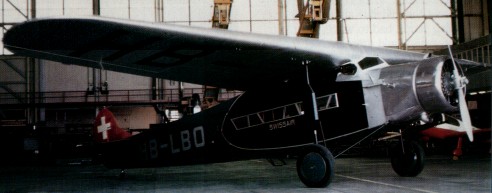
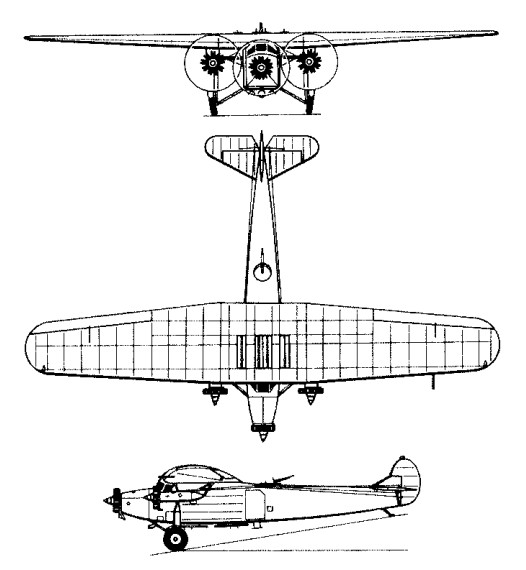
The Fokker F.VIIb-3m one of two aircraft, both of which had crashed, and its wing had been united to the other aircraft, a single-engined F.VIIA. This hybrid had also crashed, and eventually the wing of the tri-motor, and the fuselages of both machines, had been shipped back to the Seattle Boeing factory, where the Tri-motor wing and fuselage were reunited, and the rear fuselage, fin and rudder redesigned to give greater stability. The reconditioned aircraft was re-designated Fokker F.VIIb-3m, and was sold, with Wright J4 engines and no instruments, to Kingsford-Smith, who eventually had it fitted with the later Wright Whirlwind J5 engines, and crossed the Pacific in it in June 1928, with Charles Ulm as co-pilot. The high cantilever thick-section wing consisted of two wooden box spars and plywood ribs, the whole being skinned with plywood. The fuselage and tail unit were welded steel-tube structures, covered mainly with fabric. Narrow chord ailerons were fitted to the main wing. The prototype Trimotor was used by Admiral Byrd on the first flight over the North Pole in May 1927.
Licence-production was also undertaken in Belgium, Italy, Poland and the UK (as the Avro Ten). Approximately 184 were built. The F.VIIb-3m was also licence built as the Avro 618 Ten circa 1929.
Avro 618 Ten
The Avia F-VIIb /Fokker VII.B/3M/ monoplane was built under licence as the first transport plane from 1931. It was tested in the Scientific Aeronautical Institute as a bomber as the S-19, and as a transport by the Czechoslovak Air Liners Comp.
F.VIIA Passengers: 10 Engine: 1 x Gnome Rhone Jupiter, 298kW Wingspan: 19.3 m / 63 ft 4 in Wing area: 58.5 sq.m / 629.69 sq ft Length: 14.35 m / 47 ft 10 in Height: 3.9 m / 12 ft 10 in Empty weight: 1950 kg / 4299 lb Max take-off weight: 3650 kg / 8047 lb Max. speed: 185 km/h / 115 mph Cruise speed: 155 km/h / 96 mph Ceiling; 2600 m / 8550 ft Range: 1160 km / 721 miles
VIIa/3m Engines: 3 x 215 h.p. Armstrong Siddeley Lynx. Length 47.9 ft. (14.6 m.) Wingspan 63.25 ft. (19.3 m.) Weight empty 4,730 lb. (2,145 kg.) Crew: 2. Pax cap: 8. Max cruise: 106 mph (170 kph). Ceiling: 15,500 ft (4,700 m) fully loaded. Range: 500 miles (800 km).
F.VIIb-3m Engines: 3 x Wright Whirlwind J5. Span 63 ft. 4 in. Length 49 ft. 2 in Height 12 ft. 9 in Wing area 630 sq. ft Weight empty 5,380 lb Loaded 9,000 lb Max. speed 122 m.p.h Ceiling 12,500 ft.
Avro 618 Ten Engine: 3 x 240hp Armstrong Siddeley Lynx IVB or IVC Take-off weight: 4812 kg / 10609 lb Empty weight: 2733 kg / 6025 lb Wingspan: 21.72 m / 71 ft 3 in Length: 14.48 m / 48 ft 6 in Height: 3.89 m / 13 ft 9 in Wing area: 71.72 sq.m / 771.99 sq ft Max. speed: 185 km/h / 115 mph Cruise speed: 161 km/h / 100 mph Ceiling: 4877 m / 16000 ft Range: 644 km / 400 miles
Avia F-VIIb / S-19 Engines: 3 x Walter Castor, 240 hp Props: three-blade composite Wingspan: 21.7 m Length: 14.5 m Empty weight: 2750 kg Top speed: 208 kph Service ceiling: 5000 m Range: 800 km Bombload: up to 800 kg Armament: three machine guns Undercarriage: Fixed
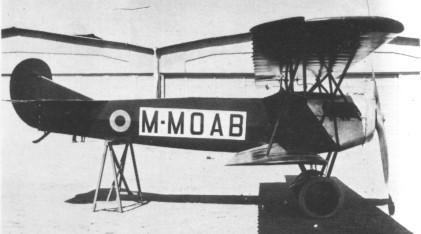
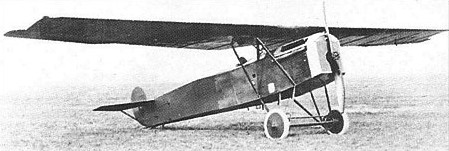
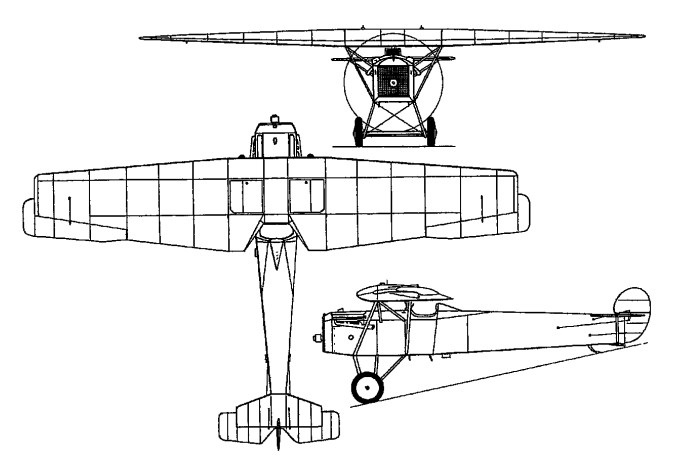
Evolved from design work undertaken in Germany for the V.37 during the closing stages of World War I, the F VI single-seat parasol fighter monoplane powered by a 300hp Wright (Hispano-Suiza) H-2 water-cooled engine was of mixed construction, with a one-piece plywood-covered wooden wing and a welded steel-tube fuselage. Two examples were ordered for evaluation by the US Army Air Service and were delivered in 1921, designation PW-5. Although the first of these crashed on 13 March 1922 as a result of a wing failure, a further 10 PW-5s were supplied to the USAAS that year. Armament comprised either two 7.62mm guns or one 12.7mm and one 7.62mm gun, and provision was made for small bombs to be carried on a rack beneath the fuselage.
Engine: 300hp Wright (Hispano-Suiza) H-2 Max take-off weight: 1218 kg / 2685 lb Empty weight: 878 kg / 1936 lb Wingspan: 12.02 m / 39 ft 5 in Length: 7.94 m / 26 ft 1 in Height: 2.74 m / 8 ft 12 in Wing area: 22.95 sq.m / 247.03 sq ft Max. speed: 232 km/h / 144 mph