Centre Hall PA.
USA
Circa 1929-41 built aircraft
Centre Hall PA.
USA
Circa 1929-41 built aircraft
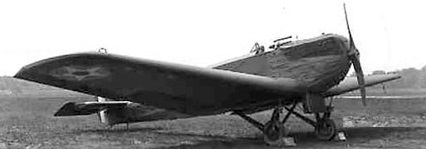
The Gallaudet DB-1 Army Day Bomber AS64238 of 1923 was so overweight it was used for ground tests only. It was an open cockpit, low wing monoplane.
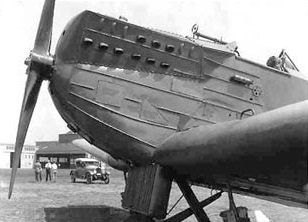
The DB-1B AS64239 was a new and modified biplane design. It flew on 1 August 1923, but displayed enough bad habits to warrant rejection by the military.
DB-1
Engine: 700hp Engineering Division W-1A-18
Wingspan: 67’0″
Length: 44’0″
Useful load: 1953 lb
Max speed: 144 mph
Cruise: 128 mph
Range (est): 900 mi
Seats: 2
DB-1B
Wingspan: 66’7″
Length: 42’0″
Useful load: 5340 lb
Seats: 2
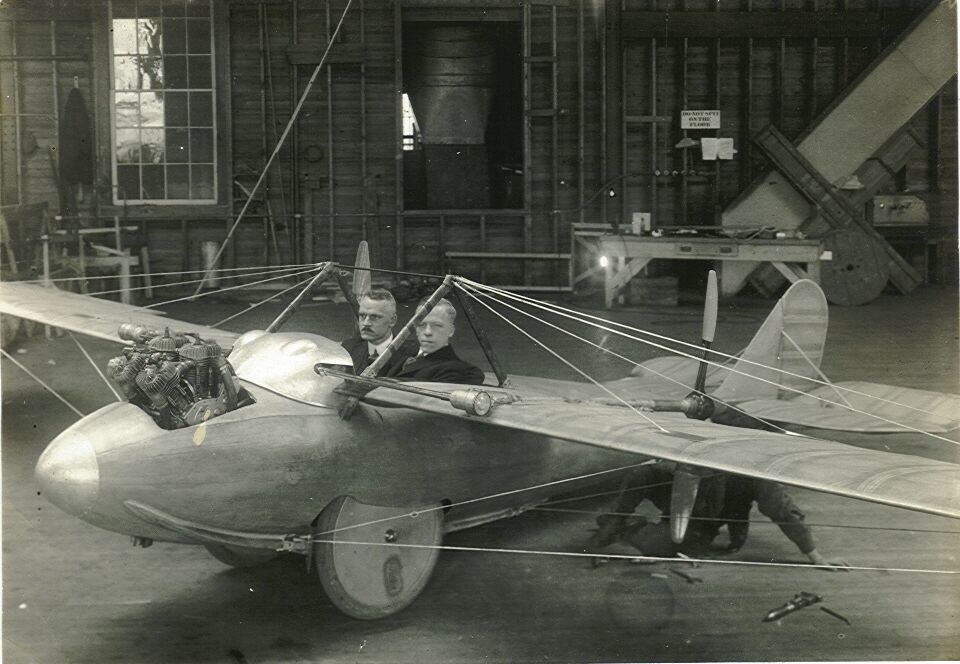
Gallaudet took advantage of the tremendous public fascination with flight and came up with an unusual twin-pusher prop sport plane with a pair of 18 horsepower engines called the Chummy Flyabout.
The little two-seater, built in the Warwick factory, was priced at $3,500, a hefty sum for the day. A 1919 glossy marketing brochure suggested the plane could “be flown to the golf or country club and landed on the fairways.” Readers were tempted with “the joy of flying is to be had for the asking” and “weekend trips to neighboring estates.” Owners could fly “around the ranch or commute to the office by air.” A newspaper advertisement offered the plane as an alternative to courting by automobile and suggested “imagine calling for your young lady in a Flyabout and soaring above the clouds.”
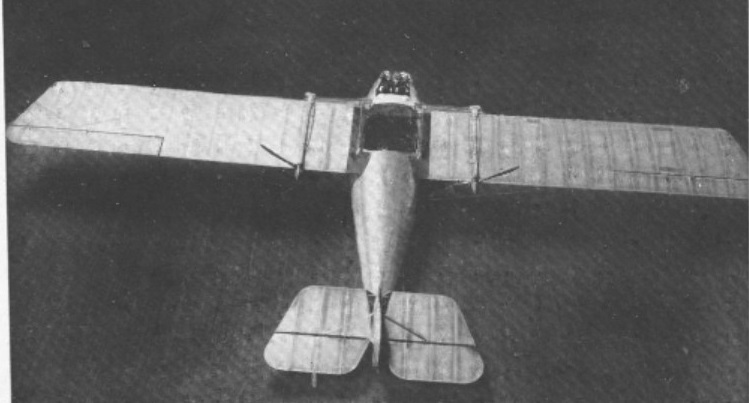
The Chummy was only eighteen feet, seven inches in length, with a 33-foot wingspan. The cockpit was a tight fit for two adults. The Chummy Flyabout was a two-seat biplane, powered with two 18 hp Indian motors driving pusher propellers. Either or both of the air-cooled engines could power the twin 48-inch props through complicated shaft and bevel transmissions. The whole plane weighed only 600 pounds empty (the literature does not indicate how much weight it could carry).
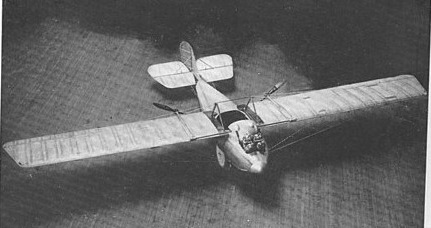
Gallaudet’s company even offered to provide plans for a complete aviation club, including flying lessons, hangars, fuelling station, tools, and a support staff. But only a handful of the little planes were ever built.
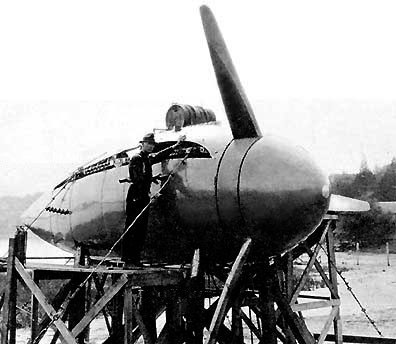
Circa 1920, the Gallaudet Multi-Drive 1200hp experimental engine involved three 400 hp Libertys geared to one prop.
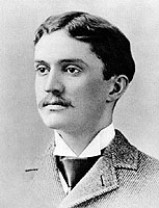
Edson Gallaudet was a grandson of Thomas Hopkins Gallaudet, specialist in education of the deaf and co-founder of what evolved into Gallaudet University in Washintgon, D.C. He earned a Ph.D. in electrical engineering in 1896 and was a physics instructor at Yale from 1897 to 1900.
The Gallaudet Kite of 1898 was built by Edson Fessenden Gallaudet, an engineer (PhD) and then working as a physics instructor at Yale, this hydro-bike kite was built to test wing-warping controlled by a system of gears and rods. Its wingspan was 11 and ½ feet, its length just over eight feet.
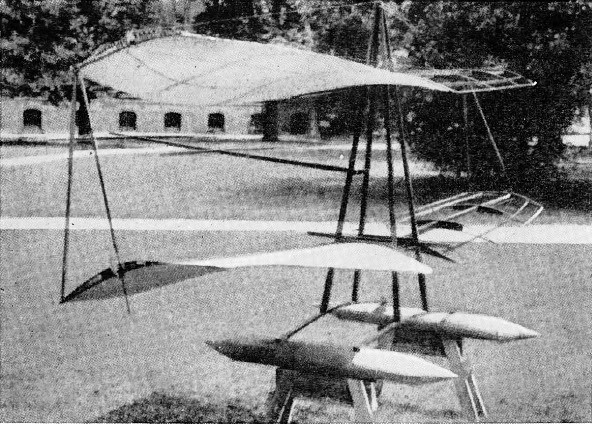
The original is currently on display at the Early Flight Gallery in the National Air and Space Museum.
Gallaudet worked for several engineering firms from 1900 until 1908. Then he founded Gallaudet Engineering Company in Norwich, Connecticut, and evidently wasted no time. His first airplane came a year later, with others to follow.
1908: (Edson) Gallaudet Engr Co Inc, Norwich CT., USA
His 1912 A-1 Bullet was a sleek monoplane of pusher layout. The motor, a 100-hp Gnome rotary, was enclosed in the fuselage and drove its three-blade rear-mounted prop through a lengthy driveshaft.
In 1916, Gallaudet’s D-1 floatplane optimized ship-catapult launching with its uniquely positioned propulsion. Dual Duesenberg 125-hp 4-cylinder engines were side by side amidships in the D-1’s fuselage. A four-blade propeller was in the middle as well, driven by a 6:5 spur gear and seemingly splitting the fuselage in two.
The U.S. Army bought four of its D-2 variants. A pair of D-4s followed, with the observer given the forward cockpit for a better view. The D-4 swapped dual Duesenbergs for single Liberty power. A prototype crashed in flight testing; the second one was accepted by the U.S. Navy for observation duties.
Gallaudet then turned his company’s attention to constructing Curtiss HS-2L flying boats, many serving in anti-submarine patrols during World War I.
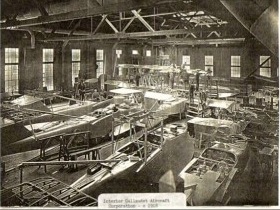
Following delivery of the D-1 in January 1917, the firm reorganized as Gallaudet Aircraft Corporation, and moved to Greenwich, Rhode Island. Later built 5-seat biplane tourer, the Liberty Tourist, and rebuilt 25 DH-4s for U.S. Army.
A 1919 catalog for the Gallaudet Aircraft Corporation lists the Chummy Flyabout. This was a two-place land-based monoplane, again with Gallaudet-unique propulsion. Two Indian motorcycle engines, each producing from 18 to 20 hp, were mounted in the nose and drove a pair of pusher props.
Later, in 1923, Gallaudet designed and built an aircraft of all-metal construction.
Gallaudet retired in 1924, keeping scientific memberships and a low profile until his death at age 74 in 1945. His company evolved into Consolidated Aircraft, renowned for the B-24 Liberator heavy bomber and PBY Catalina flying boat.
Registered NX18237, the 1938 Gallatin A was a single place, open cockpit, low wing monoplane, powered by a 37hp Aeronca E-113.
It suffered a wing failure on its second flight and crashed, killing its designer, Oscar Gallatin.
Wingspan: 22’0″
Length: 15’0″
The 1935 Gallatin was a single place, open cockpit, low wing monoplane, powered by a 35hp Gallatin engine. Registered N14810
Circa 1935 airplane builder
Milwaukee & Waukesha
WI.
USA
A 1927 single place open cockpit monoplane. Initially powered by a Harley-Davidson engine, replaced by an Anzani in 1930. One was built, registered N216 c/n 2.
Wing span: 26’0″
Length: 22’0″
New York NY.
USA
Circa 1927 built an aircraft

