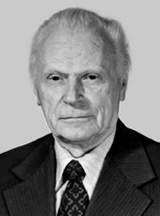
Pyotr Dmitrievich Grushin (Russian: Петр Дмитриевич Грушин) was born in Volsk, Saratov Governorate, Russian Empire on January 2 (15), 1906.
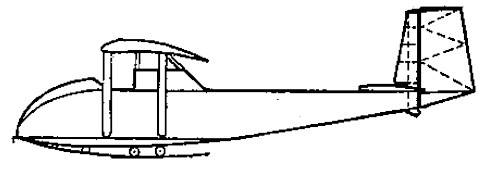
He began his aeronautical construction activity while still a student at the Moscow Aviation Institute (MAI) with the Stal-MAI model that was developed between 1931 and 1934. His diploma work consisted of the project of a light aircraft, developed in 1932 jointly with Dmitr Babad and Afanasiev Marakazov and named ” Brigadny “. This project was presented in the contest developed by the OSOAVIAJIM on October 13, 1932, obtaining the first prize.
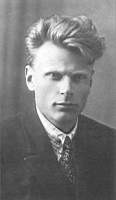
Grushin in 1932 as a student at the MAI.
After graduating as a mechanical engineer in aeronautical construction, Grushin remained at the MAI, being appointed from 1933 as main builder of the KB MAI.
Between 1934 and 1940 he worked on various developments including the Oktyabrionok light aircraft, the development of a “blind” cockpit for training flights, an experimental steam engine for the Polikarpov U-2, the ground attack aircraft Sh -Tandem and the BB-MAI light bomber.
In 1940 Grushin was transferred to Factory No.135 in Kharkov as the main builder of the OKB JAZ. The IDS escort aircraft project, also known as Gr-1 (Grushin – 1), stands out in this period.
After the evacuation of 1941 Grushin went to work at Factory No.21 as a senior engineer in Semyon Lavochkin ‘s construction bureau, later being appointed as his replacement.
At the end of 1953 Grushin became head of the Special Construction Bureau No.2 (OKB-2) which since 1967 has been renamed KB “Fakel”. The first major work of this bureau was the development of the 1D (V-750) missile. for the S-75 anti-aircraft system developed by the OKB-1, which entered service with the PVO in December 1957. For the development of this missile on June 25, 1958, Grushin was awarded the title of Hero of Socialist Labor and the Order of Lenin.
Anti-aircraft systems developed by Grushin saw service in Vietnam, Egypt, Syria, and Cuba.
Piotr Grushin died in Moscow on November 29, 1993, at the age of 87.
The former OKB-2, which since 1967 was called KB Fakel today bears the name of Grushin: OAO Bureau of Machine-Building Fakel academician PD Grushin.
In 1987 Grushin gave 140,000 rubles from his private funds to build the “Comprehensive” House of Young Technicians in the city of Khimki, Moscow district, where he lived and worked from 1953 until his death.
A bust of Grushin was erected in his hometown of Volsk, in the Saratov District.
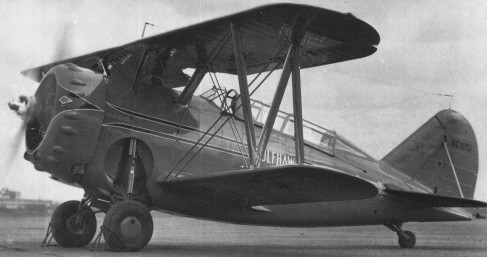
Virtually a two seat adaptation of the F3F-2 fighter, the G-32 Gulfhawk III was sold to Gulf Oil in May 1938 as a high speed transport. NC1051 was drafted into the USAAF in 1942, and designated UC-103.
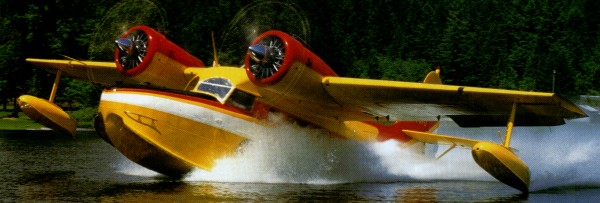
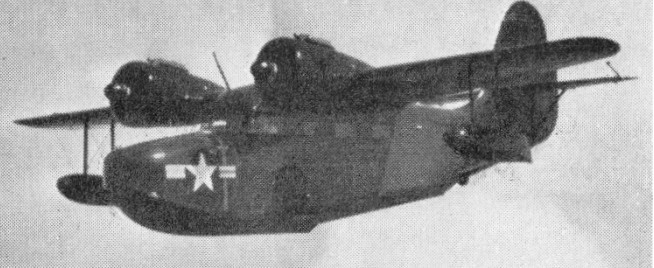
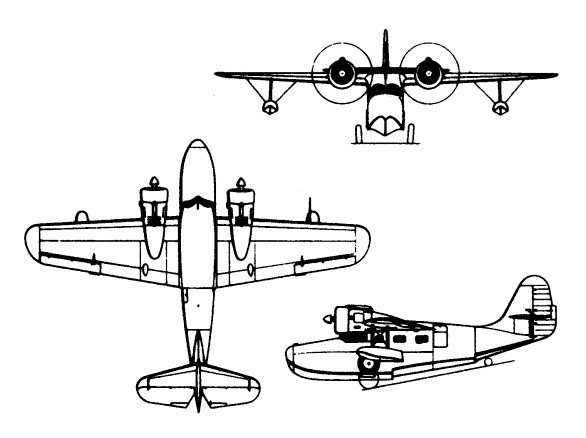
The G-21A eight-seat commercial amphibian first flew on 29 May 1937 and was Grumman’s first aircraft produced for the private and commercial market. Proving successful, 20 were delivered prior to 1 October 1938. The G-21 was adopted by the US Navy, under the designation JRF, first entering service in 1939, and by the US Navy as the JRF-5. However most of the 300 or so aircraft built went into military service, The US Navy initially received JRF-1s and the US Coast Guard JRF-2s in 1939-40. The series included JRF-1A aircraft, fitted for target towing and photography and JRF-3 fitted with anti-icing equipment and autopilot for use in northern waters by the US Coast Guard. The JRF-4 was a development of the JRF-1, and JRF-5 (OA-9) for the USAAF and fitted for photography. The JRF-6B was a navigational trainer. The JRF-5s also served with the RCAF and the JRF-5 and -6 with the RAF as the Goose.
JRF-5 Goose
Production of the JRF ceased in September 1945, but the type continued to serve as a general/utility amphibian with the US Navy and Coast Guard. More than 300 of the G-21A Goose series with 450 hp Pratt & Whitney engines were built just before and during World War II. Large numbers of’ these amphibians were still used by the U S Navy and Coast Guard for an-sea rescue and transport duties in 1955. After the war McKinnon Enterprises began a conversion programme, replacing the original 335kW Pratt & Whitney R-985-AN-6 engines with four 253kW Lycoming GSO-480s and incorporating other refinements to produce executive transports. This programme was superseded by the turboprop-powered G-21C, D and G Turbo-Goose conversions, initiated in 1966. The turboprop version is powered by two 680 shp / 507kW Pratt & Whitney Aircraft of Canada PT6A turboprop engines. Other improvements include retractable wing floats and increased fuel capacity.
Grumman G 21 A / JRF Goose Engine: 2 x Pratt&Whitney R-985-AN6 Wasp Junior, 450 hp Length: 38 ft 4 in / 11.68 m Height: 15 ft / 4.57 m Wingspan: 49.016 ft / 14.94 m Wing area: 375.018 sq.ft / 34.84 sq.m Max take off weight: 7955.6 lb / 3608.0 kg Weight empty: 5426.5 lb / 2461.0 kg Max. speed: 174 kts / 323 km/h / 201 mph Cruising speed: 166 kts / 307 km/h Service ceiling: 21,000 ft / 6400 m Cruising altitude: 5003 ft / 1525 m Wing load: 21.32 lb/sq.ft / 104.0 kg/sq.m Range: 556 nm / 1030 km Fuel capacity 220. Crew: 2 Seats: 4-6
JRF-5 Goose Engines: two 450 h.p. Pratt and Whitney R-985-N-6 Span: 49 ft Weight: 8,500 lb Max Speed: 180 mph Maximum range: 800 miles approx Crew: 2-6
McKinnon Turbo Widgeon G-21E Engines: 2 x P&WAC PT6-27, 715 hp. Wing loading: 33.1 lb/sq.ft. Pwr loading: 7.3 lb/hp. Max TO wt: 10,500 lb. Empty wt: 6635 lb. Equipped useful load: 3507 lb. Payload max fuel: 0 lb. Range max fuel/ cruise: 1131 nm/5.8 hr. Service ceiling: 20,000 ft. Max cruise: 174 kt. Stall: 73 kt. 1.3 Vso: 95 kt. ROC: 2000 fpm. SE ceiling: 12,000 ft. Min field length – land: 1500 ft. Fuel cap: 3956 lb. Seats: 10.
McKinnon G-21G Turbo Goose Engines: 2 x Pratt -Whitney Canada PT6A-27, 507kW / 680 shp Wingspan: 15.49 m / 50 ft 10 in Length: 12.06 m / 39 ft 7 in Wing area: 35.08 sq.m / 377.60 sq ft Max take-off weight: 5670 kg / 12500 lb Empty wt: 6635 lb Equipped useful load: 5507 lb. Payload max fuel: 1551 lb. Fuel cap: 3956 lb Wing loading: 33.1 lb/sq.ft. Pwr loading: 9.19 lb/hp. Max. speed: 391 km/h / 243 mph Max cruise: 174 kt. Stall: 73 kt. 1.3 Vso: 95 kt. ROC: 2000 fpm. Service Ceiling: 6095 m / 20000 ft SE ceiling: 12,000 ft. Min field length – land: 1500 ft. Range max fuel/ cruise: 1131 nm/5.8 hr. Seats: 13
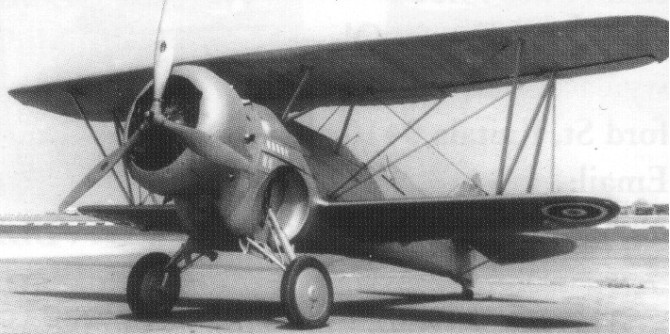
In 1931 the XFF-1 prototype two-seat carrier-based biplane fighter flew for the first time. It was of advanced design with enclosed cockpits (the canopy made up of telescoping sections) and a landing gear that retracted into well-type recesses in the forward fuselage sides.
On 6 March 1931 Grumman signed a contract to supply, for $73,975, one XFF-1 (experimental fighter, Grumman, model 1). Not a cent was to be paid until the XFF-1 had been accepted by the customer. Grumman hired Bill McAvoy from the NACA to make the first flight on 29 December 1931, powered by a 575 hp Wright R¬1820E Cyclone. It soon clocked 195 mph in level flight. Later, with a 750 hp R 1820F Cyclone, it achieved 323 km/h (201 mph).
In August 1932 Grum¬man flew the XSF-1 scout, with one of the fixed guns replaced by 45 gal of extra fuel, and this reached 207 mph. 33 SF 1s were ordered with revised internal equipment and R 1820 84 engines. These also served in the Lexington, with Scout Squadron VS 3B.
But the break¬through came just before Christ¬mas 1932, when everyone was about to be laid off because there were insufficient funds to pay the wages: the navy ordered 27 FF-ls. Deliveries of 27 FF 1s, with 559kW R 1820 78 engines, began to VF 5B (Lexing¬ton) in June 1933. Armament comprised two 0.30 in (7.62 mm) Browning machine guns in the upper front fuselage, with another in the rear cockpit, and there was provision for one 45.36 kg (100 lb) bomb beneath each lower wing.
FF-1
In 1934 similar but R-1820-84-powered SF-1 scouts were delivered. FF-1s and SF-1s totalled 60 aircraft and in 1933 these equipped fighter Squadron VF-5B aboard USS Lexington, and from then on the company never looked back. In 1935-36 the 25 surviv¬ing Fifis (the FF had to be called that) were modified with the cock¬pits arranged for dual-control pilot training. All FF 1 s and SF 1 s were withdrawn from front¬line service by the end of 1936, but served with reserve units (the former as FF 2 train¬ers) until late 1940.
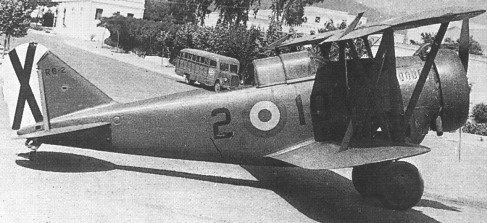
Can Car’s entry into the aviation industry was in 1936 when the company obtained a licence to assemble the Grumman FF 2 (redesignated G 23 in Canada), a two seat, carrier based, naval biplane fighter, which had first flown in 1931. It combined a duralumin stressed skin fuselage and tail with wings consisting of metal ribs and spars covered with fabric. It was also the first of its kind to have retractable undercarriage. The G 23 was already close to being obsolete by the time assembly started and there could have been no obvious market among the major aviation powers, who already possessed higher performance biplanes or were developing faster low wing monoplane fighters. By mid 1938, 42 G 23s had been assembled at the company’s plant in Fort William, Ontario, one each for Nicaragua (The prototype Grumman G 23 was sold in Nicaragua and returned to the USA in the 1960s) and Japan and the remaining forty for Turkey. Thirty -four of the latter had been shipped when complaints were received from representatives of the Spanish Nationalists that Spain, not Turkey, was the final destination of these aircraft. The GE-23s were assembled in Barcelona and pushed into service as ground-attack and reconnaissance aircraft. Despite its retractable landing gear, the GE-23 was only marginally faster but considerably less agile than the CR.32 flown by the Italians and Nationalists, and only nine survived destruction in the air or on the ground to fall into Nationalist hands at the end of the war.
GE-23
An additional ten G 23s were built and, with the exception of one sent to Mexico, these were offered to the Royal Canadian Air Force (RCAF) along with the remaining six from the ‘Turkish’ order. The RCAF was at first reluctant to accept the aircraft and the offer had to be made three times before the desperation produced by war forced them to take the G 23 into service as the Goblin in mid 1940. For a time, these fifteen obsolete aircraft formed the country’s main fighter force on the east coast, but by April 1942 all of the Goblins had been scrapped.
Other G 23s survived a bit longer than that. Several of the Spanish machines were taken over by the Nationalist forces at the end of the Civil War and the last was only scrapped in 1955.
FF-2
A single seat derivative of the FF-1, the XF2F-1 was flown by Paul Hovgard on 18 October 1933. Though a very tricky aircraft, needing (for example) care not to stall/spin off too tight a turn in the circuit, the single-seater had the outstanding speed range of 65 mph up to 230. The engine was the 14-cylinder Pratt & Whitney R-1535-72 Twin Wasp Junior, rated at 700 hp. The navy placed its biggest order since 1918: 55 F2Fs. These were delivered in 1935, and not only out-performed everything in the Army Air Corps but probably any other fighter in service anywhere. Even so, it was still tricky, and after designer Bill Schwendler had suggested improvements the navy ordered that these should be incorporated in the last of the 55, to be called the XF3F-1.
F2F-1
Corsair V93S in Royal Thailand Air Force
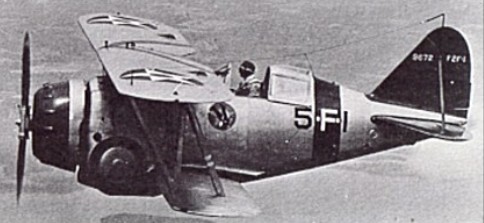
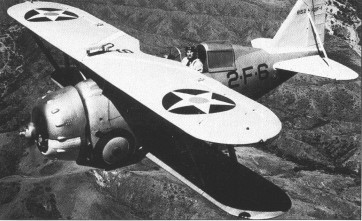
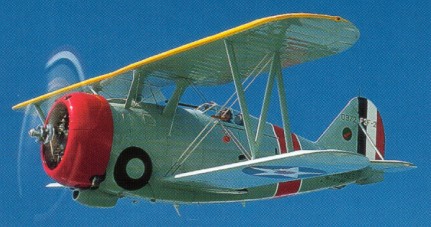
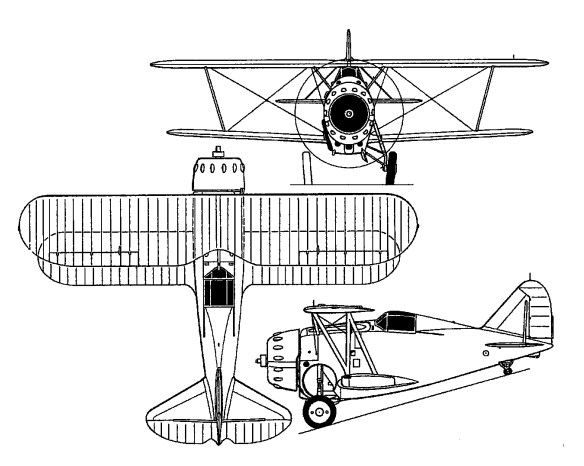
After de¬signer Bill Schwendler had suggested improvements to the F2F the navy ordered that these should be incorporated in the last of the 55, to be called the XF3F-1. This had a greater span, longer fuselage, bigger cockpit and other changes. During tests the pilot made a long vertical dive and then pulled out violently. He was aiming for 9 g. but calculations afterwards showed he actually pulled 14 g leading to fatal break-up. But after a small ventral fin had been added under the tail of a second prototype the navy placed another record order, for 54 F3F-ls, priced at over $lm. The F3F-1, powered by the 484kW R-1535-72, was good, and it carried one 0.5-in gun, one 0.3-in and two 116-lb bombs, but it could do with a bigger engine. The upshot was that on 23 March 1937 the navy placed another record order: 81 F3F-2s, priced at $1,674,310. These were powered by the 850-hp Wright Cyclone, turning a Hamilton propeller with three controllable-pitch blades. Grumman had to farm out the wings and tails to rival Brewster, but when fitted with the Cyclone R-1820-22 rated at 950 hp and the result was an order for 27 F3F-3s. They were so good the last did not come off the line until May 1939.
FF-1 Engine: Wright R-1820-78, 750 hp. Seats: 2. Wingspan: 36 ft 6in. Length: 7.47 m (24 ft 6 in) Gross Weight: 2110 kg (4655 lb) Maximum speed: 333 km/h (207 mph). Armament: 3 x 0.3 in mg, 200 lb underwing bomb load.
FF-2 Engine: 1 x Wright R-1820-78, 552kW Max take-off weight: 2190 kg / 4828 lb Empty weight: 1474 kg / 3250 lb Wingspan: 10.52 m / 34 ft 6 in Length: 7.47 m / 24 ft 6 in Height: 3.38 m / 11 ft 1 in Wing area; 28.80 sq.m / 310.00 sq ft Max. speed: 333 km/h / 207 mph Ceiling: 6400 m / 21000 ft Range: 1428 km / 887 miles Armament: 3 x 7.62mm machine-guns Crew: 2
F2F-1 Engine: 1 x Pratt-Whitney R-1535-72 Twin Wasp, 485kW / 700 hp Max take-off weight: 1745 kg / 3847 lb Empty weight: 1221 kg / 2692 lb Wingspan: 8.69 m / 28 ft 6 in Length: 6.53 m / 21 ft 5 in Height: 2.77 m / 9 ft 1 in Wing area: 21.37 sq.m / 230.02 sq ft Max. Speed: 383 km/h / 238 mph Cruise speed: 225 km/h / 140 mph Range: 1585 km / 985 miles Armament: 2 x 7.62mm (0.3 in) machine-guns, 200 lb underwing bomb load. Crew: 1
GE-23 Engine: 1 x Wright R-1820-F52, 596.5kW (800hp). Span: 10.515m (34ft 6in). Length: 7.467m (24ft 6in). Max T/O weight: 2190 kg (4,828 lb). Max speed: 216 mph at 7,000 ft. Operational range: 921 miles. Armament: 3 x 7.62-mm (0.3-in) mg.
F3F-1 Engine: Pratt & Whitney R-1535-72, 700 hp. Armament: 1 x 0.5 in & 2 x 0.3 in mg, 232 lb underwing bomb load. Seats: 1.
F3F-2 Engine: Wright Cyclone R-1820-22, 850 hp. Wing span: 32 ft. Armament: 2 x 0.3 in mg, 200 lb underwing bomb load. Seats: 1.
F3F-3 Engine: Wright Cyclone R-1820-22, 950 hp / 708kW Wingspan: 9.75 m / 31 ft 12 in Length: 7.06 m / 23 ft 2 in Height: 2.84 m / 9 ft 4 in Wing area: 24.15 sq.m / 259.95 sq ft Max take-off weight: 2175 kg / 4795 lb Empty weight: 1490 kg / 3285 lb Max. speed: 425 km/h / 264 mph Cruise speed: 241 km/h / 150 mph Ceiling: 10120 m / 33200 ft Range: 1577 km / 980 miles Crew: 1 Armament: 2 x 7.62mm machine-guns
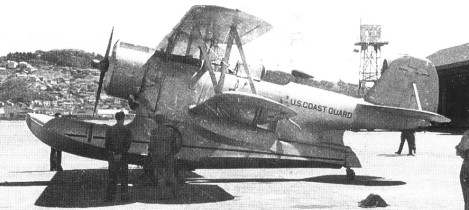
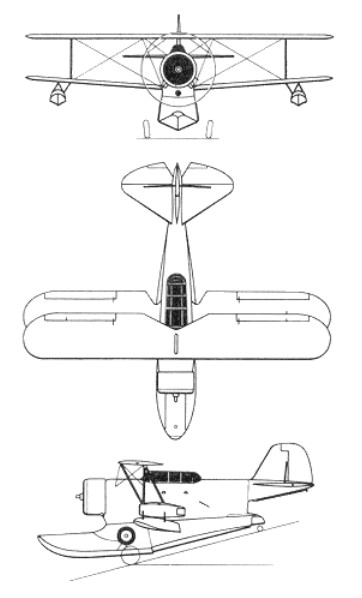
The J2F was an equal-span single-bay biplane with a large monocoque central float which also housed the retractable main landing gear, a similar design to the Leroy Grumman-designed landing gear first used for Grover Loening’s early amphibious biplane designs, and later adopted for the Grumman FF fighter biplane. The aircraft had strut-mounted stabilizer floats beneath each lower wing. A crew of two or three were carried in tandem cockpits, forward for the pilot and rear for an observer with room for a radio operator if required. It had a cabin in the fuselage for two passengers or a stretcher.
The Duck’s main pontoon was blended into the fuselage, making it almost a flying boat despite its similarity to a conventional landplane which has been float-equipped. This configuration was shared with the earlier Loening OL, Grumman having acquired the rights to Loening’s hull, float, and undercarriage designs. Like the F4F Wildcat, its narrow-tracked landing gear was hand-cranked.
Production of this general utility amphibian began in 1933 when the first prototype flew, and production continued until 1945. In all, nine series of the Duck were built.
The J2F-1 Duck first flew on 2 April 1936, powered by a 750 hp (559 kW) Wright R-1820 Cyclone, and was delivered to the U.S. Navy on the same day. The J2F-2 had an uprated Wright Cyclone engine of 790 hp (589 kW). Twenty J2F-3 variants were built in 1939 for use by the Navy as executive transports with plush interiors. Due to pressure of work following the United States entry into the war in 1941, production of the J2F Duck was transferred to the Columbia Aircraft Corp of New York. They produced 330 aircraft for the Navy and U.S. Coast Guard. If standard Navy nomenclature practice had been followed, these would have been designated JL-1s, but it was not, and all Columbia-produced airframes were delivered as J2F-6s.
The first appeared for the Navy in 1933 as the JF-1, powered by a 521.6kW Pratt & Whitney R-1830 Twin Wasp engine. This was followed by the JF-2 Coast Guard version, powered by a 559kW Wright Cyclone radial, and the JF-3.
The amphibian was originally used for photography, target-towing, scouting, and rescue work. Although the Duck is normally flown as a two-seater in tandem fashion, a folding floor in the rear cockpit gives access to a lower compartment for use in rescue work and the like; the lower compartment could house either two extra crew members or a stretcher.
A number of JF-2s were also delivered to Argentina.
By the beginning of 1941 about 115 JF and J2F-1 (company designation G-15) to J2F-4 Ducks were in service as general/utility amphibians for photographic, target-towing, scouting and rescue work. The J2F was an improved version of the earlier JF Duck, with its main difference being a longer float.
These were followed by J2F-5s and J2F-6s. The J2F6 was by far the most common. It featured aerodynamic improvements over the previous models, including a long-cord engine cowling.
The J2F-6 was produced in 1944 by the Columbia Aircraft Corporation of Valley Stream, Long Island, under licence from Grumman, bringing the total number of JF/J2Fs built to over 600.
J2F-6
J2Fs of the utility squadron of US Patrol Wing 10 were destroyed at Mariveles Bay, Philippines, by a Japanese air raid on 5 January 1942. The only Duck to survive the attack had a dead engine but had been concealed at Cabcaben airfield during the Battle of Bataan, to be repaired afterwards with a cylinder removed from a destroyed J2F-4 submerged in Manila Bay. Following repairs the J2F-4 departed after midnight on 9 April 1942, overloaded with five passengers and the pilot, becoming the last aircraft to depart Bataan before the surrender of the Bataan to the Japanese only hours later. Among its passengers was Carlos P. Romulo (diplomat, politician, soldier, journalist, and author), who recounted the flight in his 1942 best-selling book I Saw the Fall of the Philippines (Doubleday, Doran & Company, Inc., Garden City, New York 1943, pp. 288–303), for which he received the Pulitzer Prize for Correspondence.
Several surplus Navy Ducks were converted for use by the United States Air Force in the air-sea rescue role as the OA-12 in 1948.
The Argentine Naval Aviation received four new-build Grumman G-15s (equivalent to J2F-4s) in 1939, to supplement the eight Grumman G-20s (export version of the Grumman JF-2) received in 1937. In 1946–1947, 32 ex-US Navy Ducks (consisting of one J2F-4, 24 J2F-5s, and 7 J2F-6s) were acquired, with the last examples remaining in use until 1958.
The Colombian Navy operated three examples from 1948.
The Mexican Navy operated three ex-U.S. Navy J2F-6s from 1950–1951.
The Peruvian Navy operated one ex-USN example from 1961–1964.
In the United States the United States Army Air Forces, United States Coast Guard, United States Marine Corps, and United States Navy all operated the J2F.
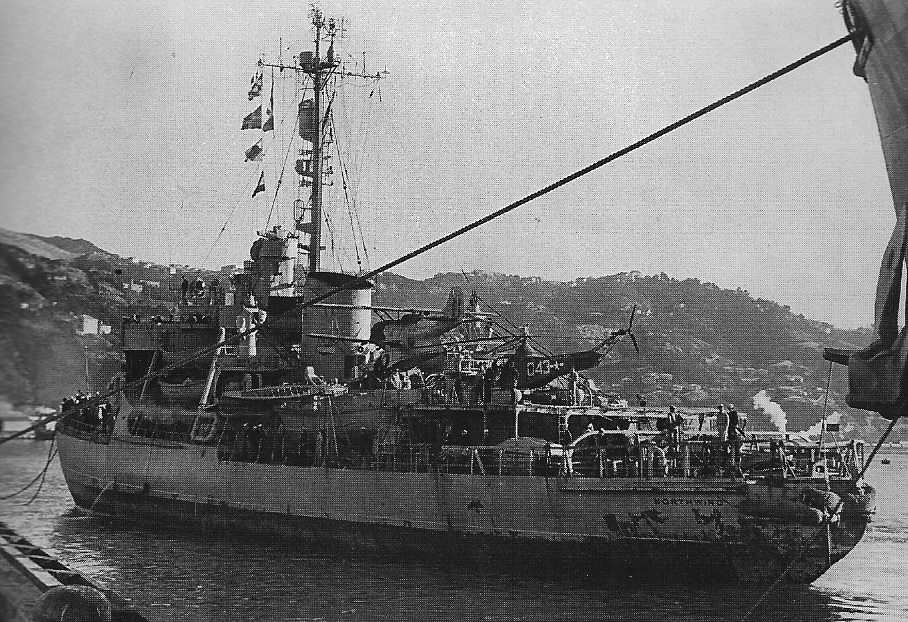
USCG Northwind March 1947 Wellington New Zealand – Grumman J2F-6 Duck & Sikorsky HNS-1
A Grumman J2F-6 Duck was owned and operated by Kermit Weeks at Fantasy of Flight in Polk City, Florida.
The United States Coast Guard worked with North South Polar, Inc. to recover a J2F-4 Duck, serial number V-1640, downed in a storm on a Greenland glacier on 29 November 1942. Two Coast Guard airmen were lost along with a rescued U.S. Army Air Forces passenger from a downed B-17 searching for a downed C-53 with five on board. The three men of the Duck are presumed to still be entombed at the site. North South Polar, under the auspices of the Coast Guard team, located the aircraft in August 2012 resting 38 feet beneath the surface of the ice sheet.
Variants:
J2F-1 Initial production version with 750 hp R-1820-20 engines, 29 built.
J2F-2 United States Marine Corps version with nose and dorsal guns and underwing bomb racks, 21 built.
J2F-2A As J2F-2 with minor changes for use in the United States Virgin Islands, nine built.
J2F-3 J2F-2 but powered by an 850 hp R-1820-26 engine, 20 built.
J2F-4 J2F-2 but powered by an 850 hp R-1820-30 engine and fitted with target towing equipment, 32 built.
J2F-5 J2F-2 but powered by a 1,050 hp R-1820-54 engine, 144 built. Engine: 1 × Wright R-1820-54 nine-cylinder radial engine, 900 hp (670 kW) Wingspan: 39 ft 0 in (11.9 m) Wing area: 409 ft² (38 m²) Length: 34 ft 0 in (10.37 m) Height: 13 ft 11 in (4.25 m) Empty weight: 5,480 lb (2,485 kg) Loaded weight: 7,700 lb (3,496 kg) Maximum speed: 190 mph (304 km/h) Cruise speed: 155 mph (248 km/h) Stall speed: 70 mph (112 km/h) Range: 780 mi (1,255 km) Service ceiling: 20,000 ft (6,100 m) Rate of climb: ft/min (m/s) Crew: two (pilot and observer) Capacity: two rescued airmen Armament: 1 × Browning .30 cal machine gun (7.62 mm) on flexible mount in rear cockpit Bombload: 650 lb (295 kg)
J2F-6 Columbia Aircraft built version of the J2F-5 with a 1,050 hp R-1820-64 engine in a long-chord cowling, fitted with underwing bomb racks and provision for target towing gear; 330 built.
OA-12 Air-sea rescue conversion for the United States Army Air Forces (and later United States Air Force, OA-12A).
As an ensign in the Navy, Leroy Randle Grumman had worked with Albert and Grover Loening on a Navy monoplane contract. Upon resigning his naval commission in 1920, Grumman joined the Loenings as test pilot for their Air Yacht amphibians, and over the next several years, he took over full responsibility for the company’s aircraft design. The Loenings sold out their company in 1929 and backed Grumman in a venture of his own incorporated in 1929 at Farmingdale, New York. With their investment of $30,000 making up almost half of the initial capital, Grumman and five other engineers opened the Grumman Aircraft Engineering Corporation in an abandoned garage in Baldwin, Long Island. Contractor to U.S. Navy and Coast Guard. Built FF-1 (first flown 1931) and SF-1 two-seat biplane fighters with retractable landing gear, followed by single-seat F2F (first flown October 1933) and F3F (delivered 1936), plus all-metal amphibian as the JF-1 (first flown May 1933), later known as the Duck. In 1936 Grumman moved to Bethpage, Long Island, NY. Subsequent production, mainly for the U.S. Navy and Marine Corps, included F4F Wildcat fighter (first Grumman monoplane, first flown September 1937), TBM Avenger torpedo-bomber (first flown August 1941), F6F Hellcat fighter (delivered from 1943), F7F Tigercat twin-engined carrier fighter-bomber (first flown December 1943) and F8F Bearcat fighter (first flown August 1944) during Second World War, plus Widgeon and Goose (delivered from 1939) amphibians. By 1943 his staff had grown from six to 25,000 employees. Postwar aircraft included the antisubmarine Guardian (first flown December 1945), Albatross amphibian (first flown October 1947), F9F Panther as its first jet fighter (first flown November 1947), and F11F Tiger day jet fighter (first flown July 1954 in original F9F-9 form). Grumman’s entry into specialized electronic warfare aircraft began in December 1952 with the first flight of its S2F Tracker (later S-2), though this was a carrierborne antisubmarine aircraft. From Tracker were developed variants for carrier transport operations; the C-1 Trader and, more importantly, the WF (later E-1) for airborne early-warning, with an over-fuselage radome (first flown March 1957) and based on the S-2A. Such was the success of the E-1 concept that the much improved E-2 Hawkeye was developed, which first flew in October 1960 (originally as W2F-1) and remains in production in 1999 by Northrop Grumman, itself leading to the C-2 Greyhound transport derivative (first flown November 1964). Grumman also developed the OV-1 Mohawk for the U.S. Army for observation, first flown April 1959 and also using the successful twin-turboprop engine layout. In April 1960 Grumman flew the A2F-1, which in production form became the A-6 Intruder twin-jet carrier borne long-range and low-level strike aircraft, finally withdrawn from service in the late 1990s. Intruder itself spawned an electronic warfare variant, the EA-6 Prowler, first flown May 1968 and still in service in 1999. The final fighter to carry the Grumman name was the F-14 Tomcat, designed as a carrier based variable-geometry long-range type armed with super-long-range Phoenix air-to-air missiles (first flown December 1970, entering service with the U.S. Navy from 1972 and exported to Iran for land-based operations from 1976). Grumman merged with American Aviation to form Grumman American. By the time Tomcat had flown company had been divided (1969) into Grumman Aerospace and other individual corporations via the Grumman Corporation holding company. American Aviation Corporation became part of Grumman American Aviation Corporation in 1973. In May 1994 Grumman and Northrop merged to form Northrop Grumman.
Deutscher Aero-Lloyd, the air transport company, built a high-wing training monoplane designed by Dr Ing K. Grulich in 1925. Designated S.1, it could have either 75 hp or 100 hp Siemens engine.
Germany Deutscher Aero-Lloyd, the air transport company, built a high-wing training monoplane designed by Dr Ing K. Grulich in 1925. Designated S.1, it could have either 75 hp or 100 hp Siemens engine.