In 1934, Nagler brought out his Heliogyro which had a 90hp Pobjoy radial air-cooled engine, a two-blade rotor and a pusher propeller. The engine could drive the rotor for hovering, when torque was balanced by a vertical surface, or the propeller could be driven for forward flight leaving the rotor to generate lift by autorotation. This single-seat aircraft was tested in Great Britain in 1937.
Inter-Wars
Hafner
Raoul Hafner was a young engineer who had started the design of his first aircraft in Austria in 1929. This, the R.I helicopter, flew at Aspern Airport. Vienna, in 1930 and was followed by the R.II in1931. Hafner then came to England where he designed and flew, with some success, his A.R.III gyroplane, a jump start autogyro. There then followed a series of design projects, several of which were tendered to the requirements of the earliest Air Ministry specifications for helicopters.
Haerens F.F.9 Kaje
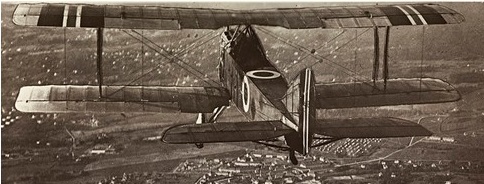
F.F.9 Kaje was the last in a series of own constructions in wood and canvas at Hærens Flyvemaskinfabrik at Kjeller. Designed and built by the Norwegian Army Air Service’s aircraft manufacturer Haerens Flyfabik, work on the FF9 Kaje trainer aircraft started in 1921. The aircraft body was designed in Norway, designed by Einar Sem-Jacobsen while the wing was licensed by German construction (Göttingen profile). The wings were made of wood paneling fabric covered.
The prototype was ready for test flight in November 1921.
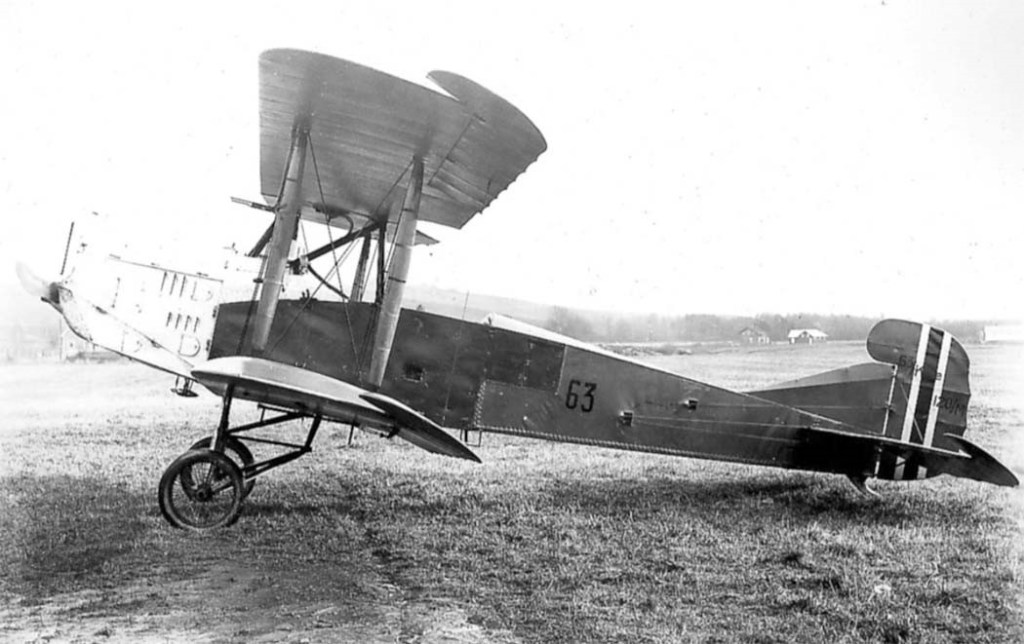
The aircraft replaced older school aircraft and became a robust and reliable machine with good flight characteristics. Until June 1924, the designation was for the aircraft type F.F.9, when it was decided that the aircraft should be referred to as “Kaje”.
It was built in three series: the Kaje I of which ten were built in 1921 and 1922, the Kaje II of which four were built in 1925 and five Kaje III in 1926. The models differed slightly in wing profile, wingspan and rudder surfaces, based on experience with the previous model.
Although primarily used as a training plane and for reconnaissance, the aircraft could also carry arms and was tested with radio equipment.
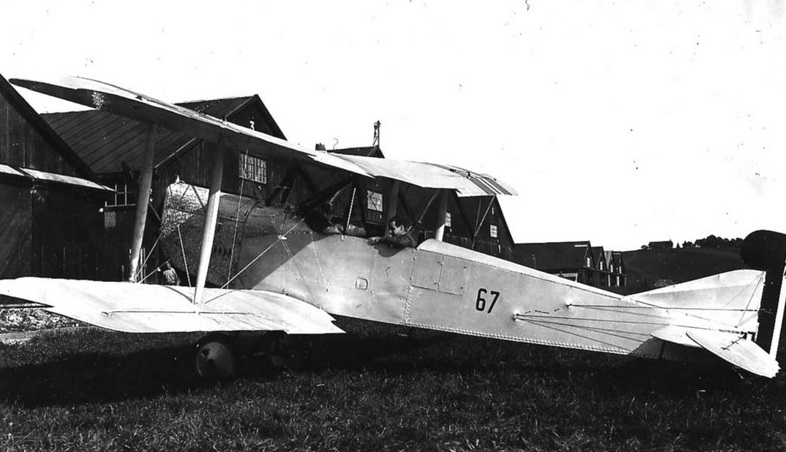
The aircraft was in use with the Norwegian Army Air Service from 1922 to 1935. A preserved example is at the Norwegian Aviation Museum in Bodø.
Variants:
Kaje I
Ten built.
Kaje II
Four built.
Kaje III
Engine: 1 × Marabini 6-cyl, 89 kW (120 hp) (license built Mercedes D.II)
Length: 8.4 m (27 ft 7 in)
Wingspan: 9.5 m (31 ft 2 in)
Height: 3.23 m
Max weight: 1060 kg
Maximum speed: 132 km/h (82 mph; 71 kn)
Range: 375 km (233 mi; 202 nmi)
Service ceiling: 3,200 m (10,500 ft)
Crew: two
Five built.
Kaje III
Engine: 1 × Marabini 6-cyl, 89 kW (120 hp) (license built Mercedes D.II)
Wing span: 10.37 m
Length: 8.10 m
Height: 3.30 m
Max T O weight: 1080 kg
Maximum speed: 135 km / h
Haerens FF.6
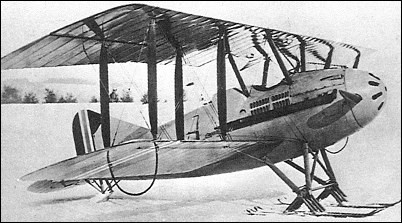
Acquisition from Spain of five 150hp Hispano-Suiza eight-cylinder Vee-type engines prompted the Norwegian Army Flying-Service (Haerens Flyvevaesen) to order the design of a single-seat fighter around this power plant.
Design was begun by Ing Hellesen at the Kjeller Flyfabrikk in the autumn of 1919, by which time the requirement had changed to that of a two-seat fighter-reconnaissance aircraft. Of wooden construction with a plywood monocoque fuselage and designated FF 6 by the factory and T.2 by the Army, the prototype was flown in 1921.
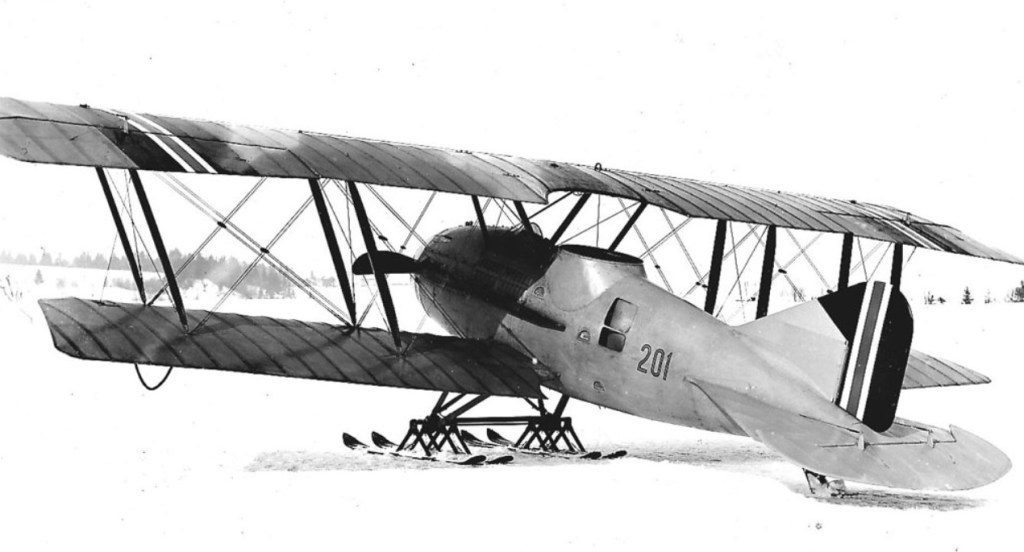
It immediately displayed unacceptable characteristics which were exacerbated by the fact that the Hispano-Suiza engine was found to develop only 103hp. A max speed of only 100km/h was attained compared with an anticipated maximum of 132km/h. Further development was therefore abandoned after the first test flight.
Engine: 150 hp Hispano-Suiza 8
Wingspan: 11.75 m / 39 ft 7 in
Length: 7.25 m / 24 ft 9 in
Height: 3.57 m / 12 ft 9 in
Haerens FF.4 Svane (Swan)
The Hærens Flyvemaskinfabrikk Aircraft FF.4 was an improved version of earlier series of 1920 Farman developments. Five were planned, but the prototype proved a failure.
Hackenberger 1A
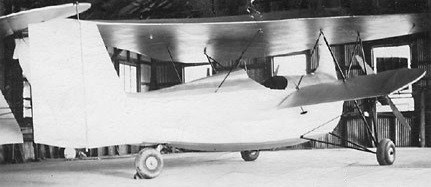
The Hackenberger 1A is an evolution of the model H. Similar in its design, but larger and more streamlined.
Built in 1935, the single place 1A extremites of the elevator had twin stabilizer/rudders.
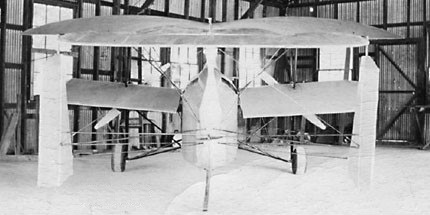
Those rudders were actually braced onto the rear of the fuselage and only a single strut balanced the elevator above the stabilizers. The fuselage curved upwards at both ends, connecting to the leading and trailing edges of the parasol. Somehow the angle of the elevator was varied at its joining with the parasol/fuselage.
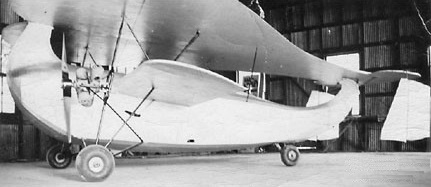
Registered N13974 c/n 2, power was two 20hp Irwin Meteormotors, changed to 40hp Continentals in 1938.
Hackenberger H / Helioplane
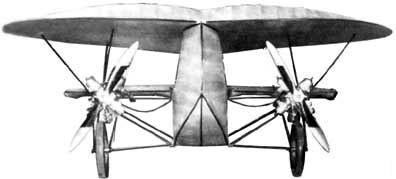
A 1930 twin-engine flying pancake-type with heart-shaped parasol wing built by A L. Hackenberger.
The Hackenberger H, or Helioplane, was powered by two 4-cyl “Scroggies”.
The aircraft was registered NX18966 c/n 5H-1 (as H) as a single seater.
Hackenberger, A.L.
1930
San Antonio TX.
USA
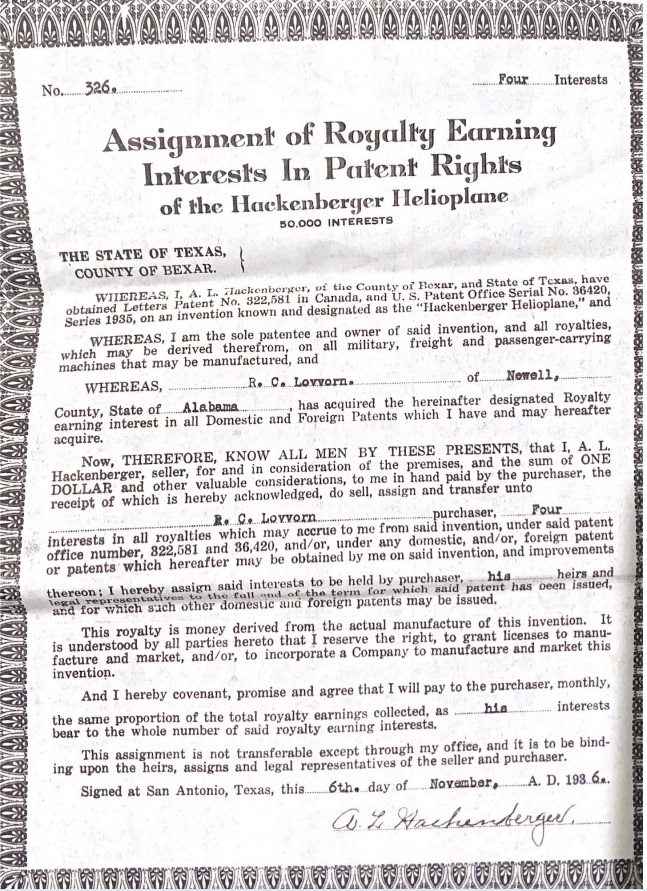
1938
Las Vegas NV.
USA
Airplane builder
Gwinn Aircar
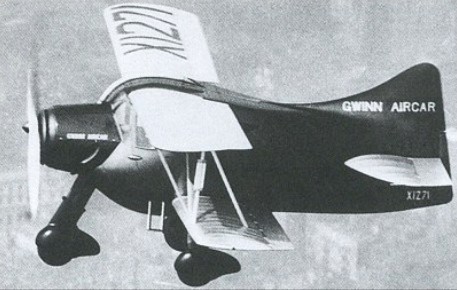
The first Aircar was completed in 1937 when it also received its Approved Type Certificate.
The test pilot for the Air Car was Richard K. Benson. During one flight he inadvertently got the Air Car into a spin and at about 10,000 feet and was able to recover at about 1000 feet. Saving the airframe got him a $10,000 reward from Gwinn.
Engine: 2 x Pobjoy Niagara II.
Seats: 2.
Top speed: 118 mph.
Cruise: 103 mph.
Landing speed: 41 mph.
Gwinn
Formed at Buffalo in 1935 by Joseph M. Gwinn Jr., a former chief engineer with Consolidated Aircraft Corporation. First product, in 1937, was Gwinn Aircar, a two-seat cabin biplane with tricycle landing gear, claimed to be stall- and spin-proof.

