Hopfner HS.528

HS.528a

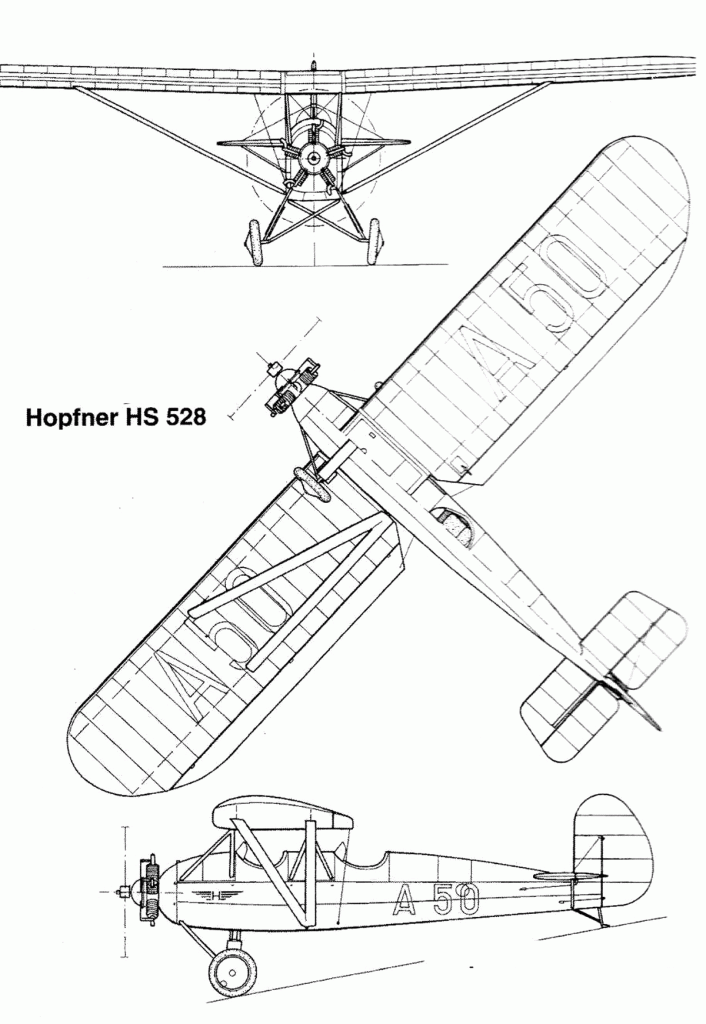
The Hopfner HS-5/28 was a conventional, parasol-wing monoplane utility aircraft built in Austria. It had seating for two occupants in tandem, open cockpits. The landing gear was of fixed, tailskid type with divided main units.

First flying in July 1928, two examples were built with Walter NZ60 engines as HS.528 (HS.5/28) A-50 and A-60 (later received the registration number OE-DLD). The aircraft flew until 1936 in Motorfliegergruppe Wien Nr. 51.

HS.528

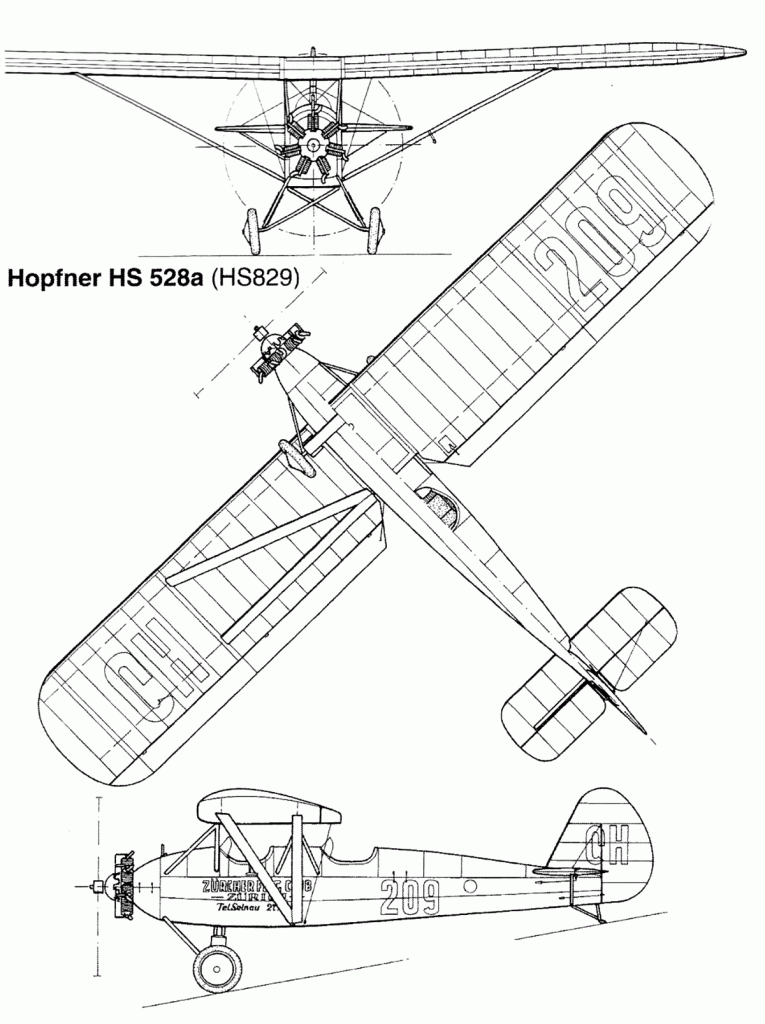
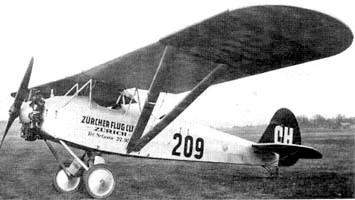
Following were two more with the more powerful NZ85, HS.528a (HS.5/28a), one rebuilt HS.528, for the Swiss aeroclub use. The first of the aircraft (the reconstructed A-50, the on-board number CH-231) was delivered to the customer in November 1928, and the second (CH-209) – in March next year. The latter was used until 1934 in the Zurich Aviation Club.

One HS.528a (HS.5/28a) was later 1 rebuilt as an improved version, the HS.829.

HS-5/28a
Engine: 1 × Walter NZ85, 63 kW (85 hp)
Wingspan: 11.26 m (36 ft 11 in)
Wing area: 18.5 m2 (199 ft2)
Length: 7.40 m (24 ft 3 in)
Height: 2.55 m (8 ft 4 in)
Empty weight: 400 kg (880 lb)
Gross weight: 650 kg (1,430 lb)
Maximum speed: 150 km/h (96 mph)
Range: 1,200 km (750 miles)
Crew: One pilot
Capacity: 1 passenger

Hopfner HS.8/29 / HS.829

HS.8/29

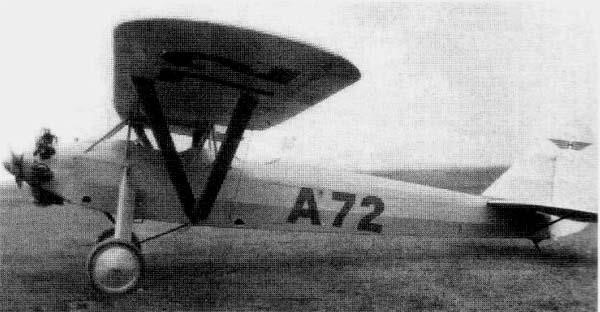
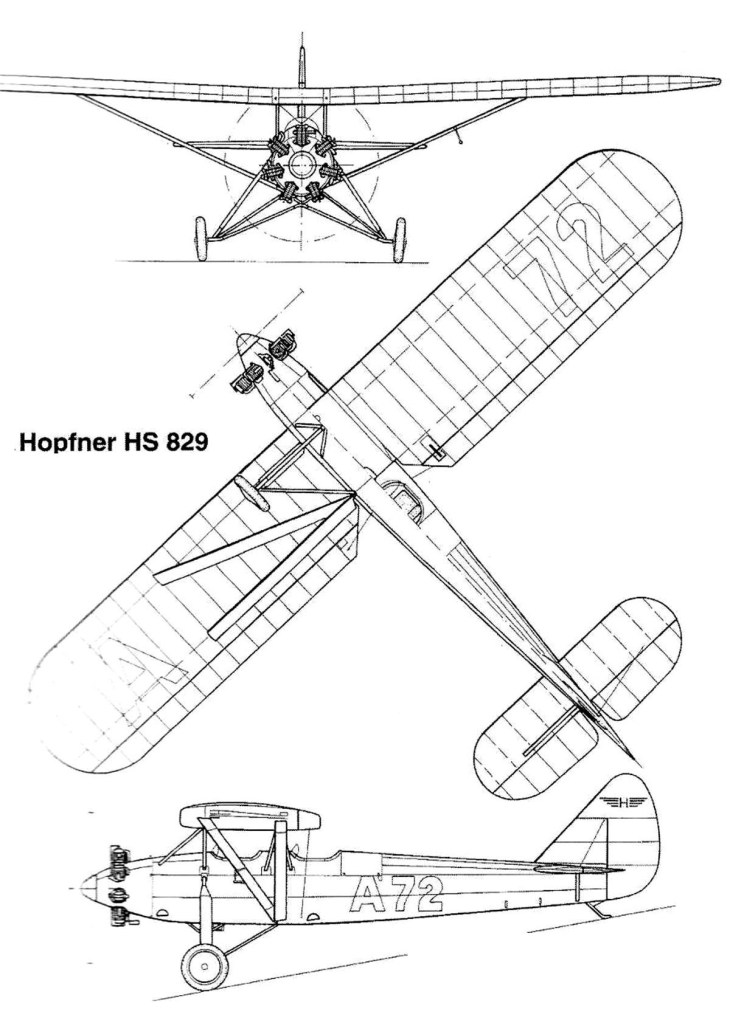
An improved version of the two-seater training / sports Hopfner HS.528 received the designation HS.829 and was equipped with a Walter motor of 85 or 110 liters capacity.

The HS-8/29 was a utility aircraft built in Austria in the late 1920s. It used a modernised version of its predecessor’s airframe, being a conventional, parasol-wing monoplane with seating for two occupants in tandem, open cockpits. The landing gear was of fixed, tailskid type with divided main units.

HS.8

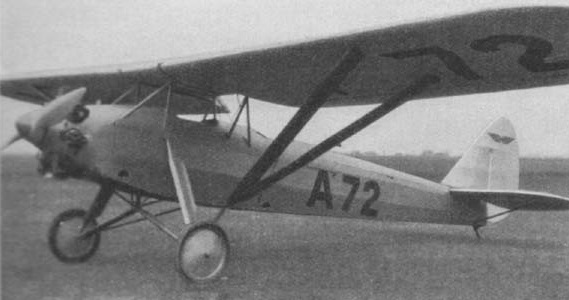
The prototype aircraft (A-72), equipped with a Walter NZ85 engine 85 hp, took off in 1929. After successful tests, a small batch of 5 aircraft equipped with a Siemens Sh 14A engine with 110 hp was produced. In 1930, another batch of 9 aircraft was ordered.

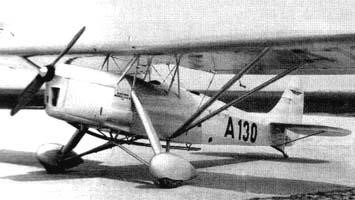
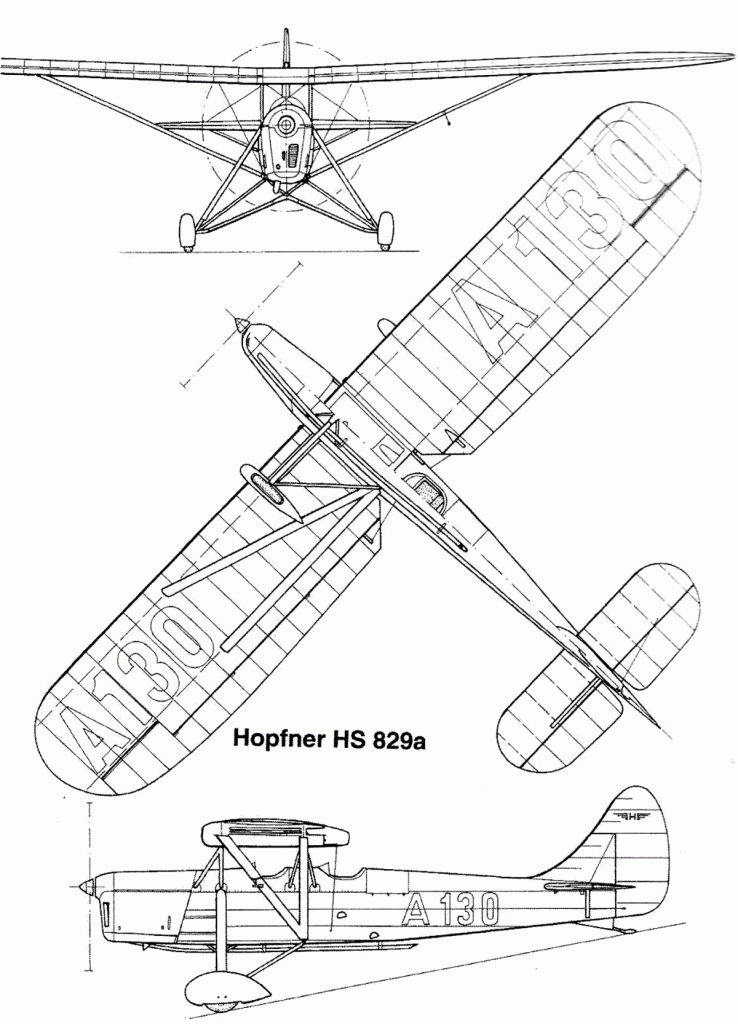
In 1932 a version of the airplane (A-130) was released with a de Havilland Gipsy III engine with 120 hp. The only example of the aircraft, designated HS.829a (HS.832), was transferred to the Austrian flying club, where it was used until February 1935.

Once again, the upgraded unit received the designation HS.932.

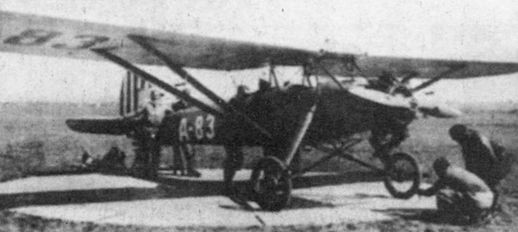
Hopfner HS.829 A-83 was operated in 1930 at the Tilag Fliegerschule Flight Training School in Graz.

Werk.Nr 21 Registration A-49, OE-DRH, D-ODDH was delivered to Max Olbrich. After “Anschluss” it was delivered to the Depot (Zeugamt) in Erding/Bayern and used for spare parts.

HS.829
Engine: Siemens Sh 14a, 110 hp
Span: 11.26 m
Wing area: 18.0 sq.m
Length: 7.70 m
Height: 2.40 m
Empty weight: 470 kg
Loaded weight: 763 kg
Max speed: 175 km/h
Cruising speed: 155 km/h
Range: 550 km
Crew: 2

HS 829

Hopfner HV.428 / HV.4/28 / HV-8/29GR

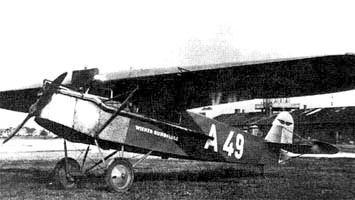
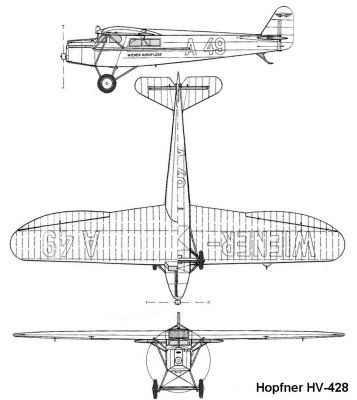
In 1928, Theodor Hopfner began designing a new light passenger aircraft, designated Hopfner HV.4 / 28. The aircraft retained the power plant from its predecessors – one Hiero engine with a power of 230 hp. The passenger capacity of the aircraft also did not change – one passenger was located near the pilot, and three more were in the cabin.

The first flight of the aircraft (board number A-49) took place on July 25, 1929. The Hopfner HV-4/28 saw heavy use by the airline that year.

In 1929, it received a major refurbishment that included a change or powerplant from the original Heiro to a Gnome et Rhône 9A Jupiter engine and was sold to a private owner under the new designation HV-8/29GR. This aircraft was still flying at the time of the Anschluß, after which it received a new German registration.

Hopfner HV-4/28
Engine: 1 × Hiero 6, 170 kW (230 hp)
Wingspan: 16.20 m (53 ft 2 in)
Wing area: 42.0 sq.m (452 sq.ft)
Length: 11.00 m (36 ft 1 in)
Height: 3.30 m (10 ft 10 in
Empty weight: 1,390 kg (3,060 lb)
Gross weight: 1,970 kg (4,340 lb)
Maximum speed: 125 km/h (78 mph)
Cruising speed: 108 km/h
Endurance: 6 hours 30 min
Crew: One pilot
Capacity: 4 passengers

Hopfner HV-3/27 / HV-327

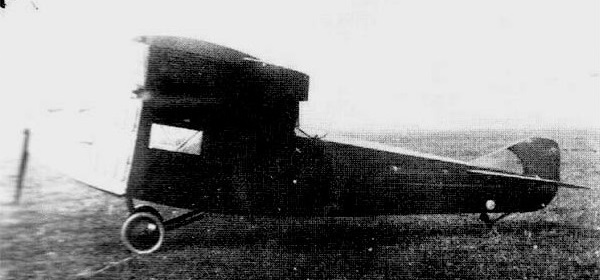
The Hopfner HV-3/27 (also written as HV.3/27) development of the HV-2 was a small airliner built in Austria. It was a conventional, single-engine high-wing cantilever monoplane with a fully enclosed cabin and fixed undercarriage.

A single example was built in 1927 and used by Hopfner’s own airline until 1934.

Engine: 1 × Heiro, 170 kW (230 hp)
Wingspan: 16.40 m (53 ft 10 in)
Wing area: 36.0 sq.m (388 sq.ft)
Length: 10.50 m (34 ft 5 in)
Height: 3.30 m (10 ft 10 in)
Empty weight: 1,380 kg (3,040 lb)
Gross weight: 2,080 kg (4,580 lb)
Endurance: 6 hours
Crew: One pilot
Capacity: 4 passengers

Hopfner HV-2

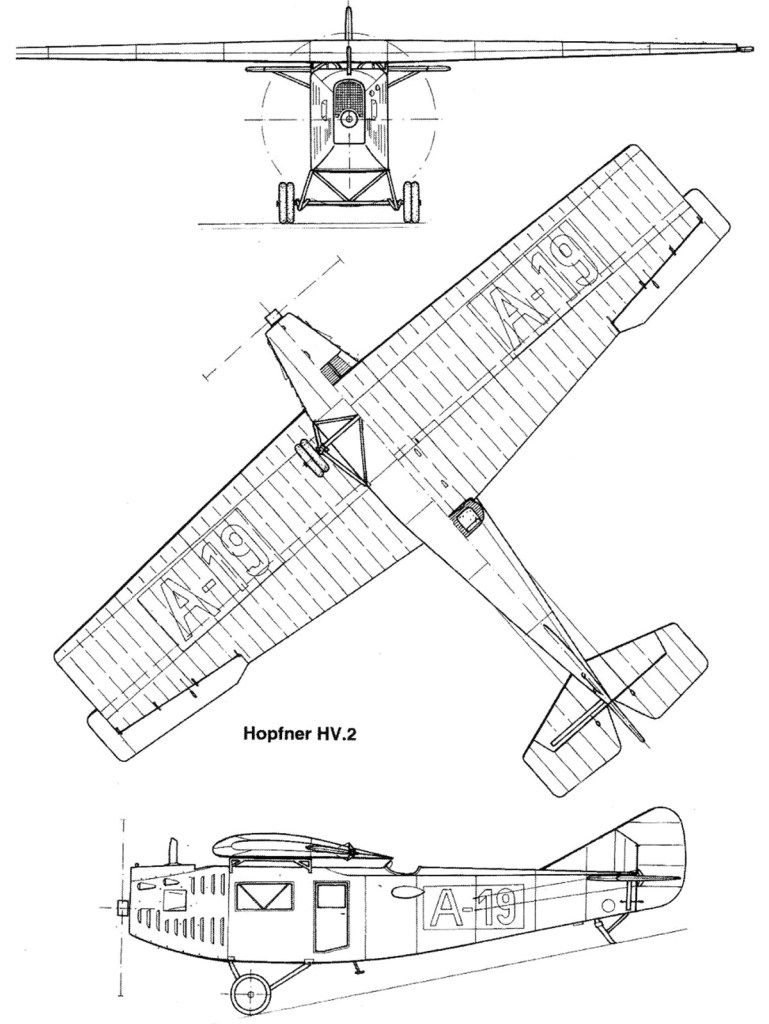
After the release of the light multi-purpose S.1, Theodor Hopfner began developing a five-seater passenger aircraft equipped with a 240 hp Hiero engine. The first flight of the aircraft, designated HV.2 (board number A-19), took place in early 1925.

After several test flights, the aircraft was reconstructed. In this form, it transported about 3,000 passengers in two years.

Engine: Hiero, 240 hp
Wing span: 15.00 m
Wing area: 10.55 m
Length: 3.15 m
Height: 38.00 sq.m
Empty weight: 1500 kg
Normal take-off weight: 2200 kg
Maximum speed: 150 km / h
Cruising speed: 121 km / h
Range: 500 km
Ceiling: 4000 m
Crew: 1
Passengers: 4

Hopfner HV-6/28 / HV.628

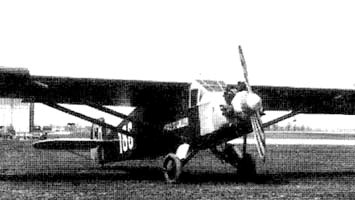
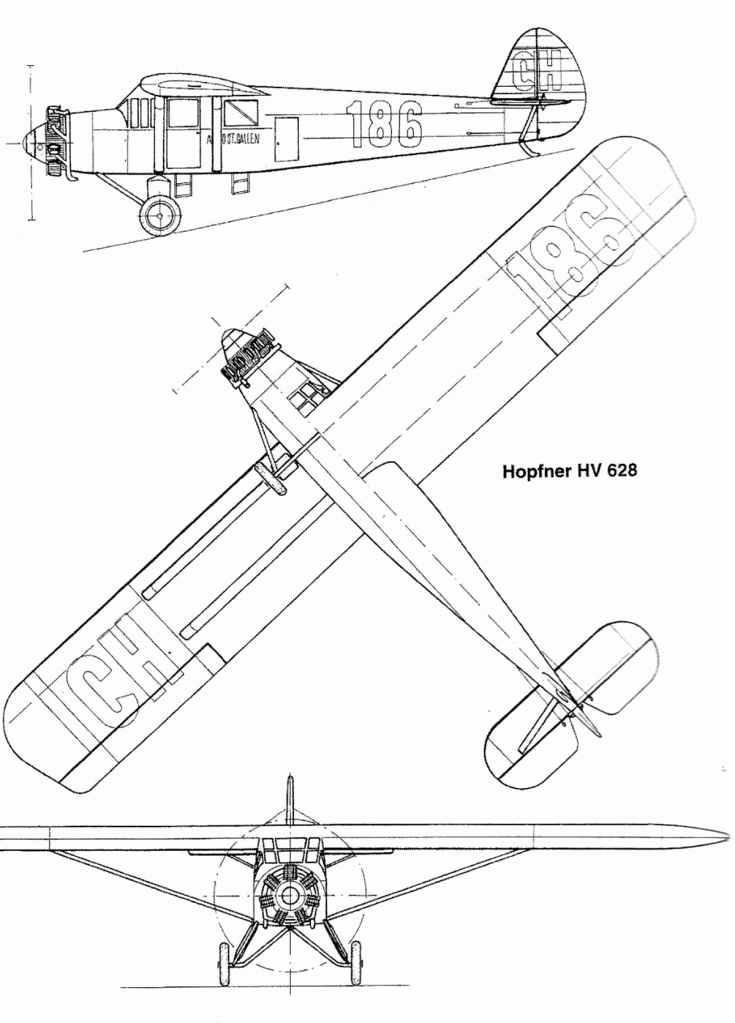
The Hopfner HV-6/28 (HV.628), designrd by Theodor Hopfner, was a small airliner built in Austria for Swiss use.

Unrelated to Hopfner’s other airliners of the period, the HV-6/28 was a conventional, high-wing, single engine, strut-braced monoplane with a fully enclosed cabin. The main units of the fixed tailskid undercarriage were divided. The single example built, CH-186, was handed over on April 19, 1929 and was flown by Ostschweizer Aero Gesellschaft St. Gallen between 1929 and 1931, and then scrapped.

The aircraft was a high-end engine equipped with a 240 hp Walter Castor engine, with a passenger cabin for 6 people.

Engine: 1 × Walter Castor, 180 kW (240 hp)
Length: 10.00 m (32 ft 10 in)
Wingspan: 16.00 m (52 ft 6 in)
Height: 2.90 m (9 ft 6 in)
Wing area: 36.4 sq.m (392 ft2)
Empty weight: 1,113 kg (2,449 lb)
Gross weight: 1,950 kg (4,290 lb)
Maximum speed: 194 km/h (123 mph)
Range: 250 km (160 miles)
Service ceiling: 3,500 m (11,500 ft)
Crew: One pilot
Capacity: 6 passengers

Hopfner HA-1133 / HA.11/33 / WNF Wn 11

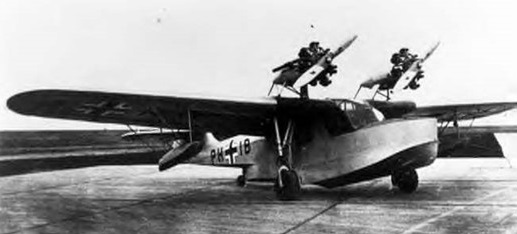
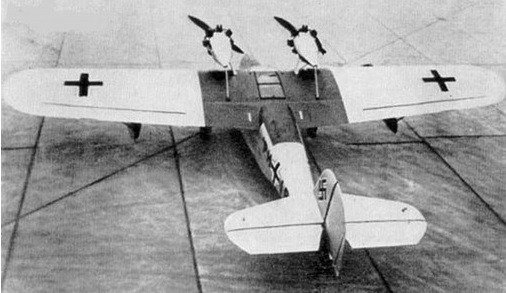
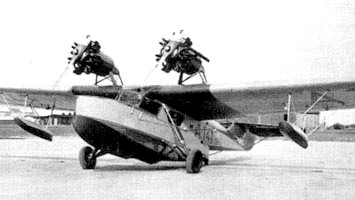
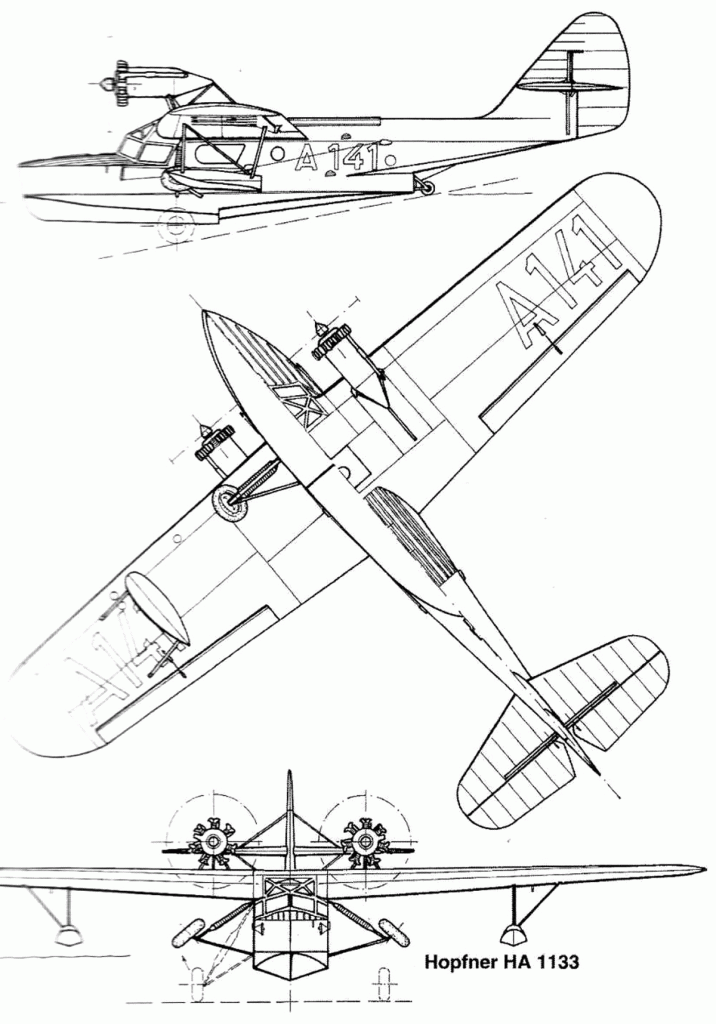
The Hopfner HA-11/33 was an amphibious flying boat built in Austria in 1933 to a specification by the Dr. Oetker company, headed by designer Lampich. The result was a conventional, high-wing cantilever monoplane with a stepped flying boat hull and pontoons on struts under the wings at mid-span. The cabin was fully enclosed, and the twin engines were mounted tractor-fashion on struts above the wing.

The HS.1133 had a semi-retractable landing gear, mounted under the wing and two Siemens Sh 14a engines with a capacity of 160 liters installed on racks and struts above the wing.

Hopfner produced the HA-1133 four-seat twin-engined amphibian before being taken over in 1935 by Hirtenberger Patronen, Zundhutchen und MetallwarenfabrikAG.

The first prototype, with the aircraft number A-141, took off from the lake surface, at the end of 1933. In 1935, the Austrian Air Force purchased the boat for training purposes, where it received the registration number OE-DGH.

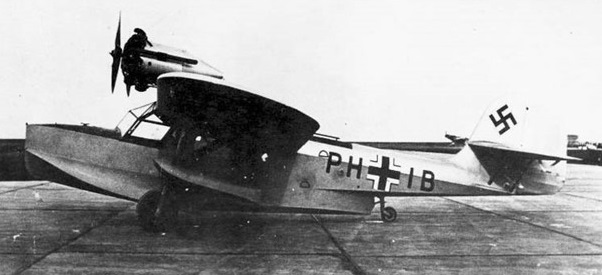
A HA-11/33 was purchased by the Austrian Air Force, and was subsequently absorbed into the German Luftwaffe following the Anschluss. Deemed worthy of further development, WNF (which had absorbed Hirtenberg, which itself had taken over Hopfner) was tasked with developing it into a military training aircraft for flying boat pilots.

The Germans changed their registration number to their Wiener Neustadt Flugzeugwerke (WNF) WN-11 (PH + IB). Of particular interest was shown to the boat as an airplane suitable for training naval aviation pilots. For these purposes, the aircraft was converted – installed a chassis from Bf.109 and a new tail unit. In this form, the WFN WN-11 was tested in the open sea Travemünde.

Testing was undertaken at Travemünde in 1940, but the type was not ordered into production. There were plans to launch a serial production of this flying boat, but in the choice was made in favor of German training aircraft. In addition, in 1940 the plane crashed and was not restored. Development of a highly streamlined derivative with Hirth HM 508 engines, the WNF Wn 11C was also abandoned.

HA.1133
Engines: 2 × Siemens Sh 14A, 93 kW (125 hp) each
Propellers: 2-bladed wooden fixed-pitch
Wingspan: 14.11 m (46 ft 4 in)
Wing area: 30.4 m2 (327 sq ft)
Length: 10.17 m (33 ft 4 in)
Height: 3.15 m (10 ft 4 in)
Empty weight: 1,100 kg (2,425 lb)
Maximum take-off weight: 1,800 kg (3,968 lb)
Maximum speed: 190 km/h (118 mph; 103 kn)
Cruise speed: 160 km/h (99 mph; 86 kn)
Range: 900 km (559 mi; 486 nmi)
Service ceiling: 4,500 m (14,800 ft)
Crew: 1
Capacity: 3 pax
Hopfner HS.1032 / HS.10/32 / HS.1033 / HS.10/33

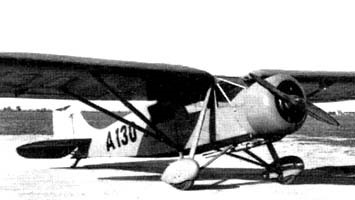
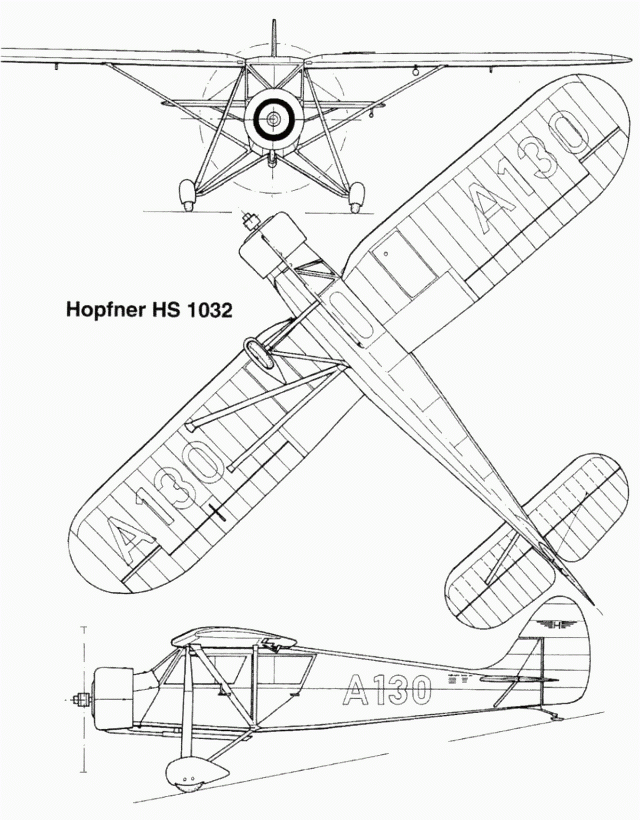
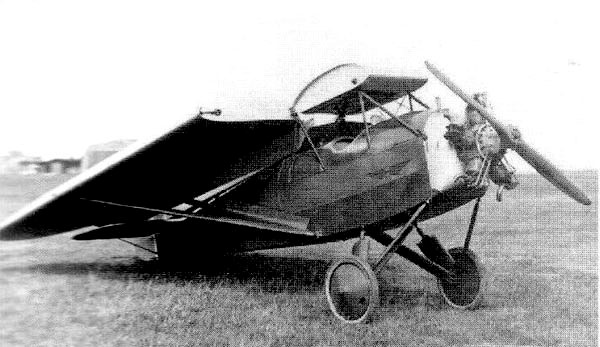
The light transport aircraft Hopfner HS.10/32 (HS.1032) was developed based on the successful light multipurpose aircraft HS.9. The 1932 HS.1032 was a sport und utility aircraft, two-seat, single-engine high-wing monoplane with enclosed cockpit and fixed undercarriage.

The first flight of the aircraft prototype (A-130 / registration – OE-DGL), equipped with a Siemens Sh 14A engine with a power of 150 hp, took place in the second half of 1932. Following it, two more aircraft were manufactured – A-131 and A-132 / OE-DIS.

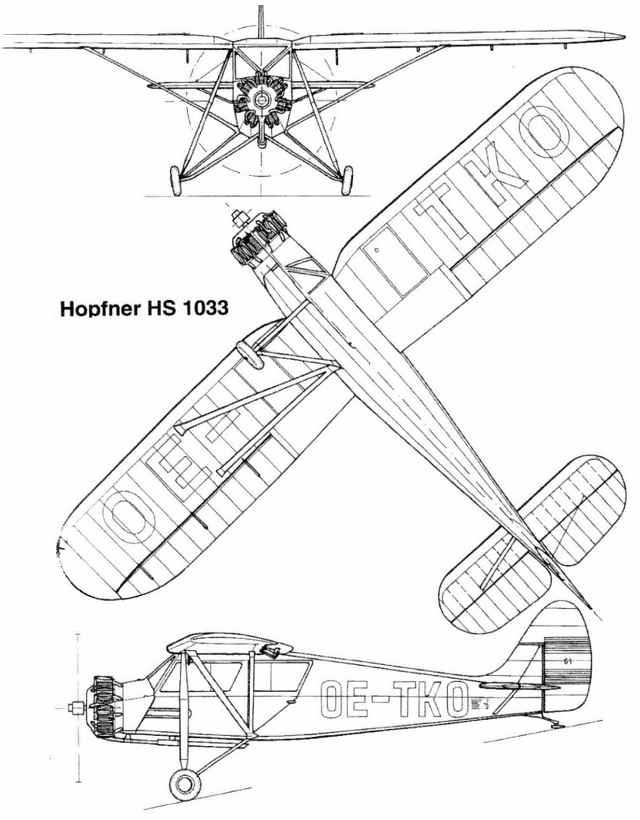
Four were built (including one slightly modified and designated as HS.1033 / HS.10/33.

HS.10/32

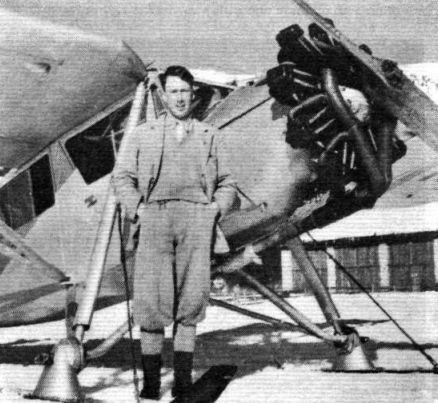
An Austrian mail pilot during the summer months, Hubert Kleinhaus gave joyrides in the winter from Kitzkeuhl and with a HS.10/32, and ran a service, when necessary, to St. Petersburg. Moritz. His machine, is a Hopfner “Superfly” with a Walter “Gamma” engine. Kleinhaus learnt to fly in Germany and took an aerobatic course in this country.

HS.1032
Engine: Siemens Sh 14A, 150 hp
Wing span: 10.96 m
Wing area: 18.00 sq.m
Length: 8.02 m
Height: 2.39 m
Empty weight: 640 kg
Normal take-off weight: 1000 kg
Maximum speed: 190 km / h
Cruising speed: 170 km / h
Practical range: 840 km
Practical ceiling: 4500 m
Seats: 2

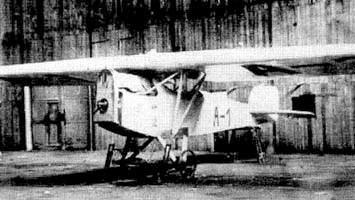
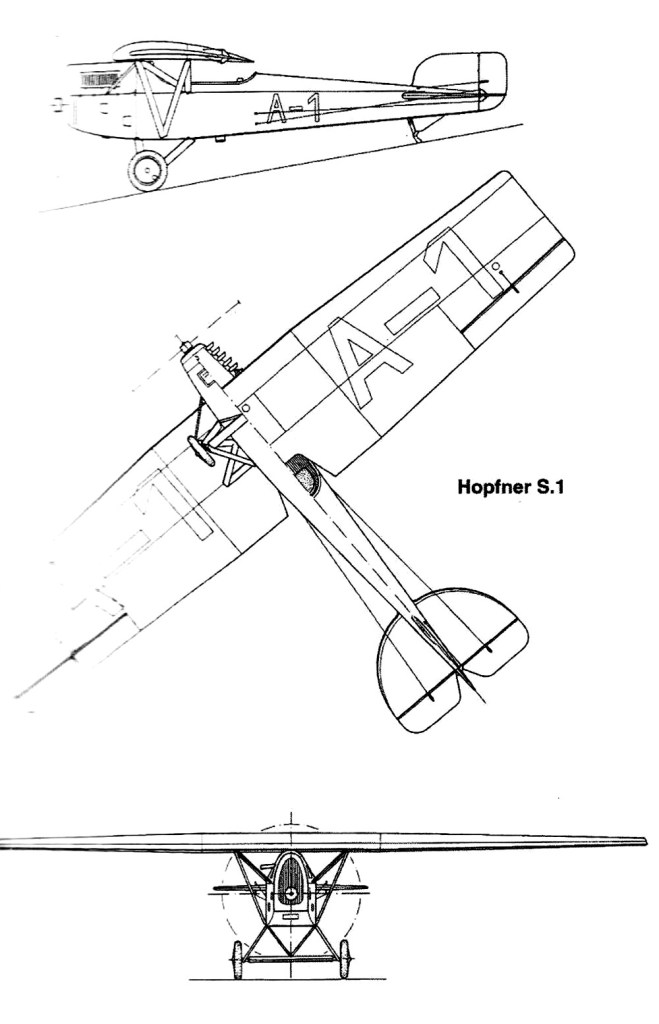
Hopfner S.1

In 1922, Austrian pilot Theodore Hopfner began construction of his first aircraft. The aircraft was built in the workshops near the Aspern Vienna airfield. In parallel, Hopfner establishes his aircraft construction firm Flugzeugbau Hopfner GmbH. The result of this activity is the light multipurpose aircraft Hopfner S.1.

The first flight took place in the spring of 1923. The plane flew until September 1924, after which it was destroyed in an accident.

Engine: Fiat-Mercedes, 100 hp
Wing span: 12.00 m
Wing area: 27.00 sq.m
Length: 7.53 m
Height: 2.56 m
Empty weight: 800 kg
Maximum take-off weight: 1150 kg
Maximum speed: 150 km / h
Cruising speed: 122 km / h
Range: 400 km
Seats: 1

Hopfner

Austria
This was the first Austrian company to manufacture an airplane after the First World War; the Hopfner S.1 three seat monoplane. A developed version with Gipsy Major engine was designated HS-1033. Hopfner also produced the HA-1133 four-seat twin-engined amphibian before being taken over in 1935 by Hirtenberger Patronen, Zundhutchen und MetallwarenfabrikAG.

The company, the founder of which was the engineer Theodor Hopfner, specialized in performing charter flights from the Aspern airfield near Vienna. Most of the aircraft the company designed and built for its own needs.