Ishikawajima Kokuki KK built small batches of 2-seat biplanes: T-2/-3 recon, R-1/-2/-3/-5 trainers and light ambulance (later designated KKY).
Inter-Wars
Ishikawajima KKY / KS-1
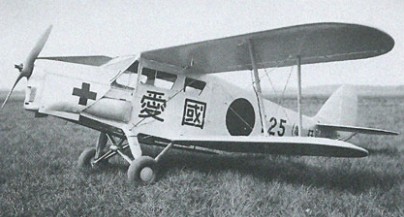
Ishikawajima Aircraft Company built small batches of R-1/-2/-3/-5 trainers and light ambulance (later designated KKY). The KKY with 130hp Cirrus replaced by 150hp Ha-12 or Kamikaze radial was developed as the KS-I.
Ishikawajima
Japan
Ishikawajima Kokuki KK was formed at Tokyo in December 1924, with a factory at Tachikawa. Built small batches of 2-seat biplanes: T-2/-3 recon, R-1/-2/-3/-5 trainers and light ambulance (later designated KKY). KKY with 130hp Cirrus replaced by 150hp Ha-12 or Kamikaze radial was developed as KS-I for survey duty while company was being reorganised 1936 as Tachikawa.
Ishikawajima-Hanma Jukogyo Kabushiki Kaisha (Ishikawajima-Harima Heavy Industries Co Ltd)
1962:
2-4
Ote-Machi,
Chiyoda-ku,
Tokyo
Sole manufacturer of aircraft gas-turbine engines in Japan, Ishikawajima-Harima took over the J3 turbojet from the Nippon Jet-Engine Company in 1959, when the latter had completed its five year development programme for the engine.
It is also manufacturing under licence General Electric J79 turbojets to power Japanese-built F-101J Starfighters, and is preparing to produce the General Electric T58 shaft-turbine for helicopter, marine and industrial applications.
Under development is an aft-fan version of the J3, designated J3-F.
The single stage fan will be in line with the turbine and driven by exhaust gases in the main engine, but will be mechanically independent. It is designed to offer a 40 percent increase of thrust compared with the J3, with no increase in fuel consumption.
Isacco Helicogyros
Italian Vittorio Isacco developed his ‘helicogyros’ in the U.S.S.R. in the 1930s.
Isaac, A.C.T.
Mr A.C.T. Isaac, of London, later of Hillmorton, near Rugby, Warwickshire, in the UK, built a two-seat primary gliders. The first, in 1923 had trials off Parliament Hill,in North London, resulted in the gliders either breaking up and injuring the pilot, or in requests from the police to ‘take them away’.
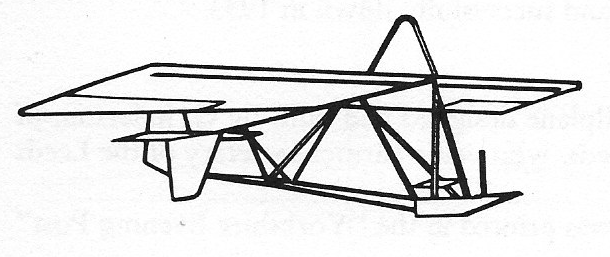
A two seat primary type with 9.29 sq.m / 100 sq.ft wing area with a slotted section.
It was left overnight in dead-calm conditions. The following morning it was not to be seen, and was presumed stolen.
A second machine was built in 1929 to Zogling-like specification but this too was a failure. The flexible structure was abandoned as impracticable. The empty was 45.35 kg / 100 lb.
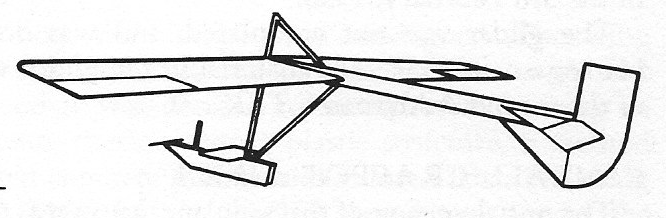
A biplane glider of 7.32m / 24 ft 0 in span was later built and test flown at Chingford, London.
Irwin Meteorplane M-T-2 / SP-1
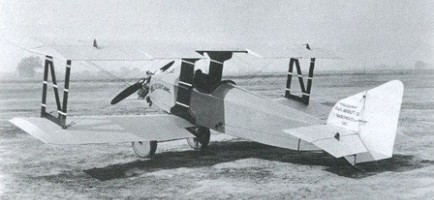
After the First World War the company built an improved version of the M-T, the M-T-2, powered by a 20 hp Meteor engine. The 1926 M-T-2, or SP-1, was of plywood construction and sold for $1,165.
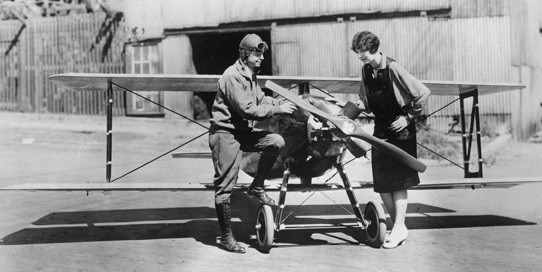
By Irwin’s estimate about 40 were sold, including N2616, plus an unrecorded number sold as kits for $350, including N579M, N3685, and N7788, less motor (the Meteormotor went for $625). One of the world’s first successful small, personal airplanes.
Engine: Irwin Meteormotor, 25hp
Wing span: 14’0″
Length: 12’0″
Useful load: 175 lb
Max speed: 85 mph
Cruise speed: 75 mph
Stall: 24 mph
Range: 200 mi
Seats: 1
Irwin Meteormotor
A 1922 20-25hp 4-cylinder X-shape air-cooled aero engine.
Irwin 79 / X
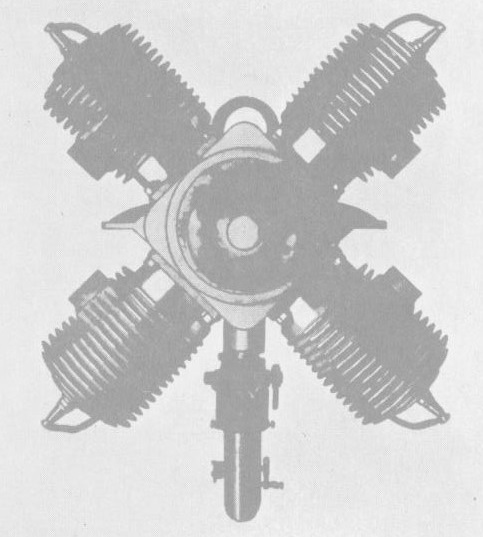
The Irwin 79 cylinders are composd of a nickel cast iron barrel over which an aluminium alloy cylinder is shrunk and doweled. Valve seats are of cast iron shrunk and doweled in place. The crankcase assembly is composed of two major castings of aluminium alloy.
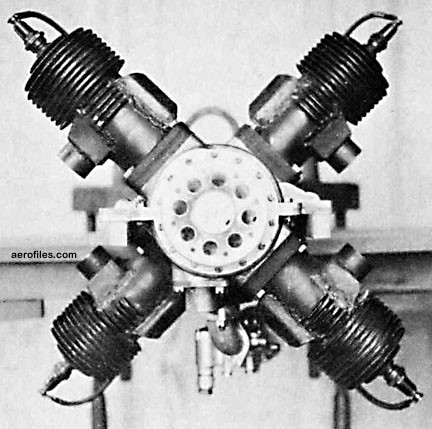
The crankshaft is made from special het treated chrome nickel seel, machined and ground from a solid billet weighing approximately 90 lb, while the finished shaft weighs 6 1/5 lb.
Alloy steel heat treated connecting rods of H section are fitted with bronze gudgeon pin bushings. Pistons of aluminium alloy are fitted with full floating nickel steel hollow gudgeon pins. The main bearings are ball race typ, lubricated under pressure.
Accessories available at extra cost were a propeller and tachometer.
Type: 4 cylinder air cooled radial
Commercial Rating: 20 hp at 1730 rpm
Displacement: 79 cu.in
Compression ratio: 4.9-1
Bore: 2 7/8 in
Stroke: 2 3/4 in
Length: 18 in
Diameter: 23 in
Weight: 58 lb
Fuel consumption: not more than .50 lb/hp/hr
Oil consumption: not more than .06 lb/hp/hr
Lubrication: Jet spray cylinder walls an pressure to main bearings
Ignition: 1 Bosch
Carburation: 1 Winfield
Spark plugs: 1 per cylinder Robert Bosch
Price: $625
Irwin Aircraft Co
USA
In 1916 J. F. Irwin designed a small single-seat monoplane, designated M-T, powered by a motorcycle engine. After the First World War the company built an improved version, the M-T-2, powered by a 20 hp Meteor engine.
1919: Irwin Aircraft Co, Sacramento CA;
1928: Corning CA;
1930: Watsonville CA.
Ireland Meteor / Curtiss-Ireland Meteor
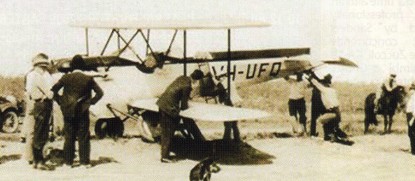
The Ireland Meteor is often refered to as the Curtiss-Ireland Meteor.
The Ireland Meteor, often referred to as the Curtiss-Ireland Meteor, was created by G. Sumner Ireland, who worked as a salesman for the Curtiss company.
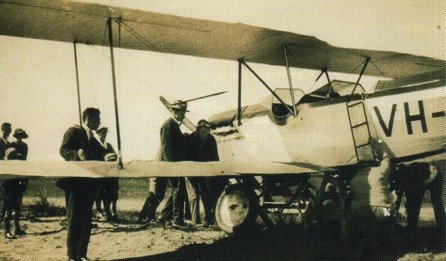
With wings in production and the supply of Curtiss Oriole fuselages ended, G. Sunner Ireland created a new fuselage. Seating was for four in tandem open cockpits, each seating two side by side.
The Meteor never received a US Doc Type Certificate.
At least eight Meteors were built.
Engine: OX-5

