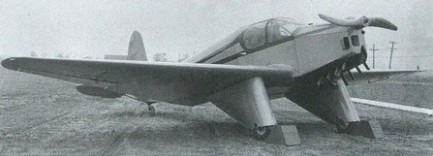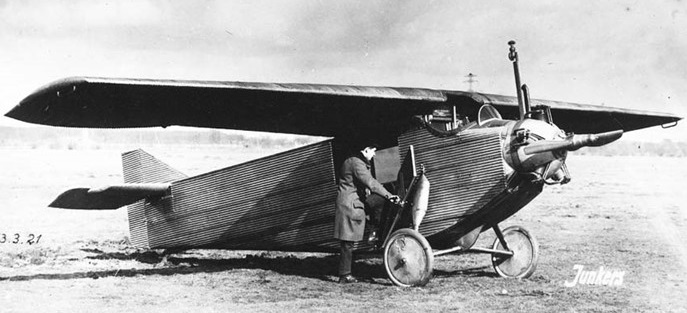
Junkers J 16 / K 16

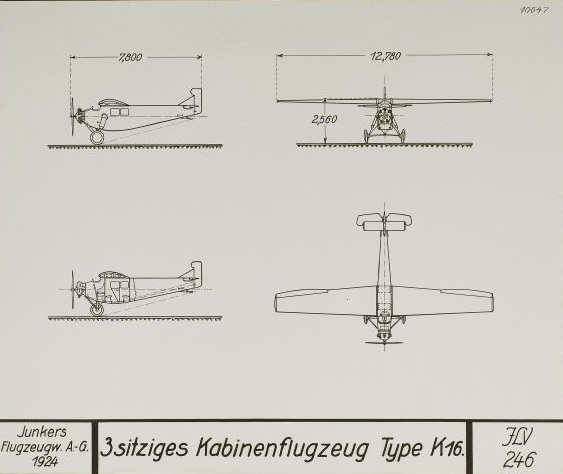
Based on the experimental results with the J 15 touring aircraft, the K 16 (originally designated J16) again offered space for two people in a closed passenger cabin and had an open pilot’s seat, this was now between the engine and the cabin and offered the pilot much better view. It was a conventional, high-wing cantilever monoplane of all-metal construction, equipped with fixed, tailwheel undercarriage.

Due to the stringent requirements of the Treaty of Versailles, the Daimler D III engine had to be replaced by a less powerful Siemens Sh 4 (65 hp).

The construction of the first K 16 was still in the time of total aircraft ban in accordance with the provisions of the Versailles Treaty. After the completion, the prototype was disassembled, moved to the Netherlands, and flown there. The first flight of a prototype aircraft (c / n 526) was on 3 March 1921. Shortly after the prototype flew, aircraft production in Germany was brought to a complete halt by the Allies. The plane was dismantled and transported to the Netherlands, where the test program has been completed. Until 1923, the K16 was in one of the hangars factory Fokker, and was then shown at air show in Gothenburg.
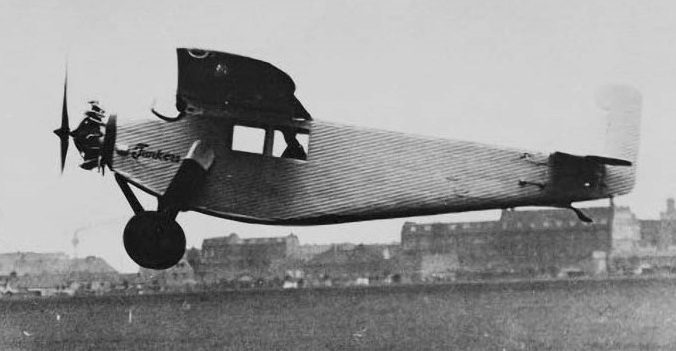
It was stored by Fokker until the restrictions were relaxed and work recommenced at Junkers’ Dessau factory in 1924. The wingspan of the prototype was 11 m but production aircraft wingspan was 12.80 m and with an improved rudder.

In 1924, at the plant in Dessau the first production K16a was built. It differed from the prototype of the new chassis, improved aerodynamics and Siemens Sh 5 engine of 85 hp. It is possible to increase the payload of the aircraft up to 315 kg and reach a maximum speed of 170 km / h.

The initial production in 1924 was followed by two more versions. The K16ba with a new wing (span increased to 12.80 m to 11 m compared with the prototype) and K16be / K16ba version of the engine Bristol Lucifer (100 hp). In 1927 came the K16bi / K16ba version with a Siemens Sh 12 (125 hp) engine, and the last variant, the K16bo with a Walter NZ-120 (120 hp) engine.
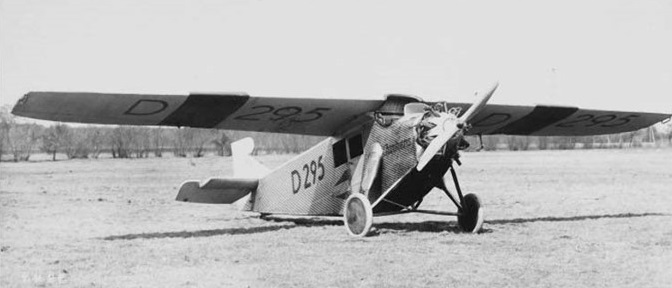
Junkers entered two K 16s in the 1925 Deutsche Rundflug, with one machine winning second place in the competition.

By this time, however, the airline niche that the tiny K 16 had been intended to fill no longer existed, and the seventeen that were produced were mostly sold to private owners. They were delivered with different motors, mainly with “Siemens & Halske AG” radial engines from Berlin-Spandau.

Gallery

Variants
K 16 – initial version with Siemens-Halske Sh 4 engine, later changed to Sh 5
K 16a – modified undercarriage and rear fuselage (modified from prototype)
K 16b – production versions with new wing and a variety of engine choices:
K 16ba – Siemens-Halske Sh 5 engine
K 16bi – Siemens-Halske Sh 20 engine
K 16bo – Walter NZ 120 engine
K 16c – as K 16b but with modified nose section to accommodate engine change
K 16ce – Bristol Lucifer engine

Specifications

K 16 prototype
Engine: 1 × Siemens-Halske Sh 4, 49 kW (65 hp)
Length: 8.00 m (26 ft 3 in)
Wingspan: 11.00 m (36 ft 1 in)
Height: 2.75 m (9 ft 0 in)
Wing area: 16.50 m2 (178 ft2)
Empty weight: 430 kg (950 lb)
Gross weight: 850 kg (1,870 lb)
Maximum speed: 145 km/h (91 mph)
Range: 600 km (375 miles)
Crew: One pilot
Capacity: 2 passengers

Engine: Siemens Sh 4, 47 kW / 65 hp
Span: 12,80 m
Length: 8.00 m
Height: 2.75 m
Wing area: 19,00 m²
Max weight: 850 kg
Top speed: 150 km / h
Crew: 1
Passengers: 2
Junkers L5 / L 55 / L 8 / L 88

Junkers L5

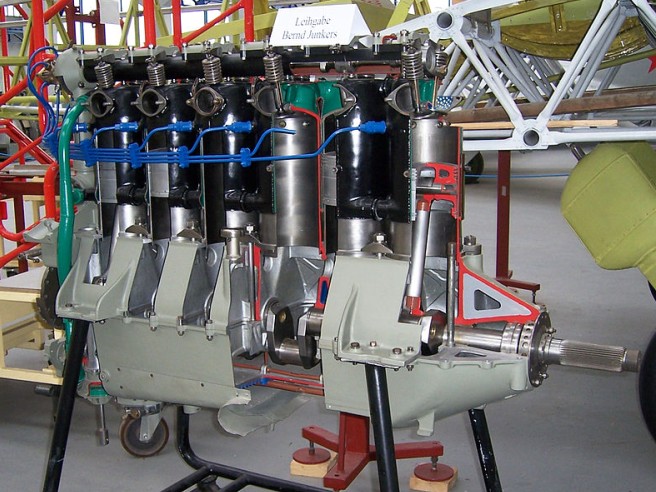
The Junkers L5 was a development of Junkers’ first water-cooled engine, the L2, but at four times the swept volume was a much more powerful engine. It was a water-cooled upright inline 6-cylinder unit, four-stroke and petrol-fuelled, with a capacity of nearly 23 litres. It adopted some of the L2 features, having twin exhaust and inlet valves in each cylinder driven by an overhead camshaft, twin spark plugs and twin magnetos. The splash component of the L2’s lubrication was abandoned in favour of a completely forced recirculating system. The twin carburettors of the L2 were replaced with a single float chamber, dual-venturi model. Like the L2, the L5 was a direct drive engine. First run in 1925, it was a much enlarged development of the Junkers L2, in turn a licensed development of the BMW IV.

The compression ratio of the standard version was 5.5:1, but variants had other ratios to cope with fuels with octane ratings between 76 and 95. The G series introduced carburettor heating together with an hydraulically damped mounting system. There were also choices of starting system, from inertial or compressed air systems to the traditional hand swinging.

The L5 proved to be reliable and became the engine of choice for most Junkers aircraft in the mid-1920s as well as powering aircraft from other German manufacturers. Many of these powered the Junkers F.13 and its derivatives like the W 33, which dominated world air transport in the mid-1920s.
The best demonstration of the reliability of the L5 was given by the unit which powered the single-engined W 33 Bremen in the first fixed wing east to west crossing of the Atlantic in April 1928. For this flight the compression ratio was raised to 7:1 to provide sufficient power for the heavily fuelled aircraft at take off. In July 1925 a W 33 powered by a L5 stayed aloft for 65 h 25 min, with a fuel consumption of 35.6 kg/h.

Overall, less than 1000 were built.

The Junkers L55 was Junkers’ first V-12 engine, appearing in 1927. The L5 was used in 1927 as the basis of the 665 hp L55, which had two banks of six cylinders aligned at 60°. These banks had the same bore, stroke, camshaft operated twin pairs of valves per cylinder, watercooling etc. as the L5, driving new a common crankshaft in a revised crankcase. A supercharger was added after a year to improve high altitude power.

The L55 is only known to have powered two aircraft for certain, the Junkers G 38 early in its career and the Junkers A 32. The first G 38 originally had two L55s inboard plus two L8 engines. The high altitude research Junkers Ju 49 may have used the L55 at the start of its flight programme. The L55 was rapidly replaced by the L88 in both the G 38 and Ju 49.

Variants:

L5 many variants including a variety of on compression ratios, powers and starting systems.

L55 an upright V-12 built from two L5s on a common crankshaft.

L8 a significant 1929 development with the same swept volume but cruising at 2,100 rpm and delivering 354 hp; take off power was 413 hp. The output was geared down at ratios between 2.47:1 and 1.44:1 to enhance propeller efficiency. Only a few were produced, powering early configurations of the Junkers G 38 as outer engines, with two L55s inboard.

L88 an upright V-12 built from two L8s on a common crankshaft.

Applications – L5
Albatros L 73
Albatros L 75
Focke-Wulf A 32
Heinkel HD 42
Heinkel He 50
Junkers F 13
Junkers A 20
Junkers A 35
Junkers G 23
Junkers G 24
Junkers K 30
Junkers G 31
Junkers W 33
Messerschmitt M 24
Rohrbach Ro.VIII

Applications – L55
Junkers A 32
Junkers G 38
Junkers Ju 49, possibly

Specifications:

L 5
Type: 6-cylinder liquid-cooled inline
Bore: 160 mm (6.30 in)
Stroke: 190 mm (7.48 in)
Displacement: 22.92 l (1,398.66 cu in)
Length: 1,750 mm (Bad rounding here5.7 ft)
Width: 650 mm (Bad rounding here2.1 ft)
Height: 1,265 mm (49.80 in)
Dry weight: 334 kg (736.34 lb) dry
Valvetrain: large twin exhaust and twin inlet valves driven by a single overhead camshaft shaft and gear driven from the crankshaft
Supercharger: none
Fuel system: single float, dual venturi carburettor; twin plugs per cylinder, twin magnetos
Fuel type: 95 octane (dependent on compression ratio)
Oil system: forced
Cooling system: liquid
Power output: Take-off – 260 kW (348.7 hp) at 1,450 rpm
Cruise – 208.8 kW (280 hp)
Compression ratio: 7:1
Fuel consumption: 61.6 kg/h (136 lb/hr)
Power-to-weight ratio: 1.22 kg/kW (2.01 lb/hp) @ cruise rpm

Junkers L2

The Junkers L2 was Junkers’ first water-cooled four-stroke engine and the first to be built on a production line, though only 58 were made. First run in 1925, it was a 4-stroke six-cylinder water-cooled inline engine and powered many Junkers aircraft until replaced by the more powerful L5.

The Junkers L2 (the L signifying a four-stroke petrol engine rather than a two-stroke diesel) had some features in common with their first petrol engine, the L1, both six-cylinder upright direct drive inline engines with four overhead camshaft driven valves per cylinder, but was water-cooled rather than air-cooled and had a much greater swept volume. It initially developed a cruise power of 195 horsepower (hp) (145 kW) at 1,550 rpm but was developed to 220 hp (164 kW).

The L2 powered early versions of several Junkers aircraft. It was soon replaced in these models by the more powerful Junkers L5 and only 58 L2s were built.

Variants:
L2 initial version.
L2a refined L2, 230 hp.

Applications:
Early versions of:
Junkers F 13
Junkers A 20
Junkers G 23
Junkers G 24
Junkers W 33
Re-engined:
Junkers Ju 21

Specifications:
L2
Type: 6-cylinder upright water-cooled inline 4-stroke piston engine
Bore: 150 mm (5.906 in)
Stroke: 180 mm (7.09 in)
Displacement: 19.1 L (1,166 cu in)
Length: 1.58 m (5 ft 2¾ in)
Width: 0.555 m (1 ft 9¾ in)
Height: 1.085 m (3ft 6¾ in)
Dry weight: 310 kg (684 lb)
Valvetrain: Two inlet and two exhaust valves per cylinder, overhead camshaft operated
Fuel system: Twin carburettors
Fuel type: Petrol
Oil system: Combined splash and pressure
Cooling system: Water-cooled
Reduction gear: Direct drive
Power output: cruise 195 hp (145 kW) at 1,550 rpm, take-off 230 hp (171 kW)
Fuel consumption: 31.82 kg/hr (70.16 lb/hr)

Junkers L1

The Junkers L1 was the first engine from that company to fly. First run in 1921, it was an aircooled, upright 6-cylinder inline 4-stroke petrol engine only produced in small numbers and largely used for research, but led to the successful L5 and its V-12 development, the L55.

Hugo Junkers’ early engineering experience was with stationary opposed-piston two-stroke diesel engines for industrial applications and this arrangement was eventually adapted for aircraft use. Nonetheless, his company’s first aero engine was a petrol-fuelled four-stroke, the 6-cylinder inline aircooled L1. L was Junkers’ notation for petrol engines from the L1 to the L10, which became the Jumo 210 in 1931. It first ran in 1921 and was the subject of much static testing, but the intention was always to produce a flight engine. The first aircraft to test fly the L1 was the Junkers T 19; this aircraft first flew in 1922, but the date of its first flight with the L1 is uncertain.

Notable features were the four large valves per cylinder, two inlet and two exhaust; the ball race main bearings; and the double ignition system, with twin magnetos and two sparking plugs per cylinder.

The L1 was largely an experimental engine, but a small production line was set up in 1925. Reliability was not high, however and only a few aircraft, themselves built only in small numbers, used the L1 and its variants. The large diameter, circular blower fitted to the L1a resulted in a flat fronted, circular cross section cowling, particularly noticeable on the Junkers T 19 and 26.

Variants:
L1
Original version.

L1a
Larger bore diameter and a large circular blower, gear driven, mounted at the front of the engine to enhance high altitude power.

L1b

Applications:
Focke-Wulf A 16b
Junkers T 19
Junkers T 26
Junkers J 29

Specifications:

L1a
Type: 6-cylinder air-cooled upright 4-stroke
Bore: 100 mm (3.94 in)
Stroke: 120 mm (4.72 in)
Displacement: 5.65 L (345 cu in)
Length: 1.115 m (3 ft 8 in)
Width: 700 mm ( 2 ft 3 in)
Height: 790 mm (2 ft 7 in)
Dry weight: 128 kg (282 lb)
Valvetrain: two large inlet and two large exhaust valves per cylinder, operated by overhead camshaft
Fuel type: petrol
Cooling system: air-cooled; finned cylinder heads
Reduction gear: none:direct drive
Ignition system: twin magnetos and two sparking plugs per cylinder
Power output: cruise 75 hp (56 kW); take-off 85 hp (63 kW)
Fuel consumption: 26 kg/hr (44 lb/hr)

Junkers / Junkers-Fokker-Werke AG / Junkers Flugzeugwerke AG / Junkers Flugzeug und Motorenwerke AG

Professor Hugo Junkers (1859-1935) became enthusiastically interested in aircraft development and worked for several aero-engine manufacturers. Convinced that all metal structure was the ultimate answer to successful aircraft design, he produced the experimental J.1 “Blechesel” (Tin Donkey) to exemplify his 1910 patent for a cantilever all-metal wing. The J.1 flew on December 12, 1915, giving unexpectedly stable performance.

Hugo Junkers Article

Six J 2s were then built, but when J 4 ground-attack biplane was ordered for German Army, he was not geared for mass production. Thus, Junkers-Fokker-Werke was formed at Dessau on October 20,1917, with equal shares held by Junkers and Anthony Fokker. Conflicts of personality caused Fokker and Junkers to separate in 1918, and the Junkers re-formed following April as Junkers FlugzeugwerkeAG at Dessau April 24,1919, first concentrating on all-metal civilian transports such as F13 four-passenger monoplane (more than 350 built).

Representatives of the Junkers Flugzeugwerke (Jfa), the German Government (Reichswehrsministerium, RWM) and the Soviet Government (Trotsky) signed a final agreement on November 26, 1922, and a former motor car factory at Fili, situated south of Moscow, was taken over by Jfa and expanded. Back in the Dessau design office headed by Dipi Ing Emst Zindel, work had begun during 1922 on three new military types intended for production at Fili the J20 two seat low wing reconnaissance floatplane and the J21 two seat reconnaissance and J22 single seat fighter parasol wing aircraft. The parasol wing configuration of the two last mentioned types turned out to be a failure, even though the J21 was built in quantity at Fili.

Junkers established a Swedish subsidiary, AB Flygindustri, near Malmo, and formed Junkers Motorenbau GmbH for production of aero engines. After death of Hugo Junkers the company became state-owned and, amalgamating with the aeroengine firm, became Junkers Flugzeug und Motorenwerke AG in 1936, then the largest aviation company in the world. For German rearmament program, Junkers built factories in many other parts of Germany, and in Czechoslovakia and France.
Avions Metalicos Junkers was founded at Madrid in 1923 to provide facilities for the construction of Junkers aircraft in Spain. A two-seat all-metal monoplane was in production in 1924.

Major types produced included G24 and G31 airliners of 1925/1926: W33 and W34 cargo transports, used also as trainers by Luftwaffe; the G38 “flying wing”of 1928 (prototype flew November 6,1929; production models carried 34 passengers plus seven crew). Some used as military transports in early stages of Second World War. On October 13,1930 came the first flight of famous Ju 52 cargo transport. Three-engined Ju 52/3m based on latter used in wide variety of roles before and during Second World War, production totalling more than 4,850. Prewar production continued with Ju 60 and Ju 160 airliners, Ju 86 bomber, transport and trainer, and Ju 87 dive-bomber in many versions. The 87 was followed by the Ju 88/188/388 family of twin-engined bombers. The Ju 90/290/390 family began as four-engined 38/40-seat airliners, converted as heavy transport/reconnaissance types in Second World War. Junkers was among first companies to produce military jet aircraft. Two prototypes of its Ju 287 with forward swept wings were captured by Russians in 1945.

After Second World War aircraft production ended, Junkers joined with Messerschmitt in 1966, and with absorption of small aero-engine plant by Messerschmitt group in 1975, the Junkers name disappeared entirely.

Jones Aircraft Corp

USA

Jones Aircraft Corp was formed in 1935 by Ben Jones after acquiring rights in D-25 biplane previously built by the New Standard Aircraft Company. Jones built 10 of these in 1938, in factory at Schenectady, New York. In 1937 it introduced the S-125 and S-150 two-seat light cabin monoplanes, powered by Menasco engines.