A two-seat day/night monoplane observation aircraft
Inter-Wars
Karo Aviacijos ANBO II
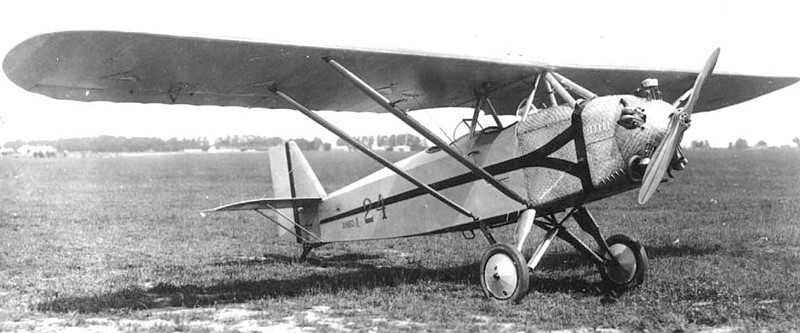
The ANBO II was a parasol-wing monoplane aircraft built by Karo Aviacijos Tiekimo Skyrius in Lithuania in 1927 as a pilot trainer for the Army. Designed by Antanas Gustaitis, it was the first Lithuanian trainer aircraft of own design.
Anbo stands for “Antanas nori būti ore”, which means “Antanas wants to be in the air”.
First flying on 27 November 1927, the plane was not produced in series, yet it served as a prototype for latter trainers Anbo-III and Anbo-V/51, developed by Antanas Gustaitis.
It was eventually reequipped with more powerful engine for the Aero Club of Lithuania in 1931 before being written off after a crash on 26 June 1934.
A full size flying replica was built in 2012-2016 by Rolandas Kalinauskas and Arvydas Šabrinskas. Due to difficulties in obtaining original Walter engine, a Russian-made Shvetsov M-11 engine, having similar parameters, was used. Test flight of the restored Anbo II took place on 18 October 2016. The plane is based in Pociūnai airfield, Lithuania and is mostly used for air shows with both constructors dressing in Lithuanian Air Force uniforms of 1920s-1930s.

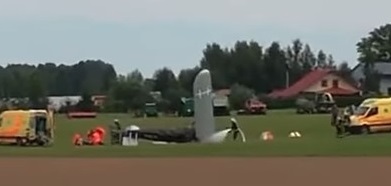
The Lithuanian plane had stopped at Priekuļi airfield, just outside Cēsis, Latvia, to refuel, en route to its destination in Biržai, northern Lithuania. After refueling, it attempted to take-off, but crashed following engine failure a little before 13:30, August 8, 2021. The engine failed during a climb at the altitude of 20-30 m resulting in a fatal crash for both the pilot Arvydas Šabrinskas, and the aircraft. The passenger is Valdas Černius, was taken to a hospital with serious injuries.
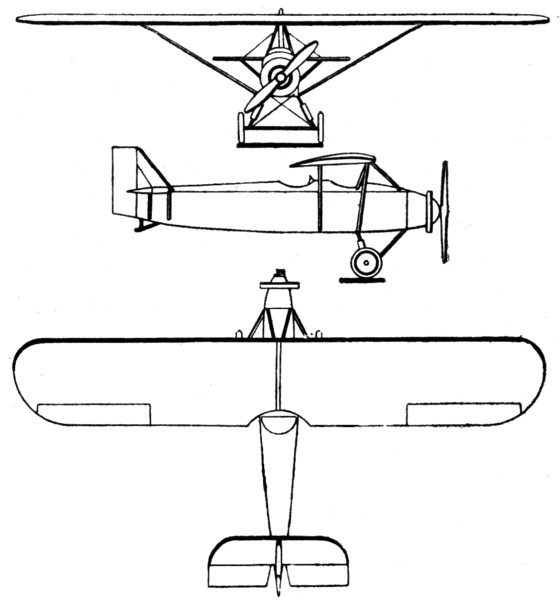
Powerplant: 1 × Walter NZ 60, 45 kW (60 hp)
Wingspan: 10.72 m (35 ft 2 in)
Wing area: 20 m2 (215 sq ft)
Length: 6.75 m (22 ft 2 in)
Empty weight: 280 kg (620 lb)
Gross weight: 550 kg (1,210 lb)
Maximum speed: 160 km/h (100 mph, 87 kn)
Service ceiling: 3,500 m (11,500 ft)
Rate of climb: 2.1 m/s (410 ft/min)
Crew: two, pilot and instructor
Karo Aviacijos ANBO I
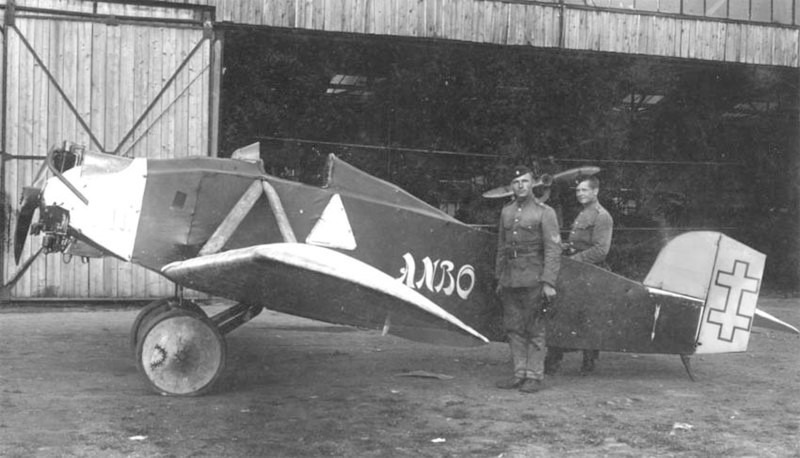
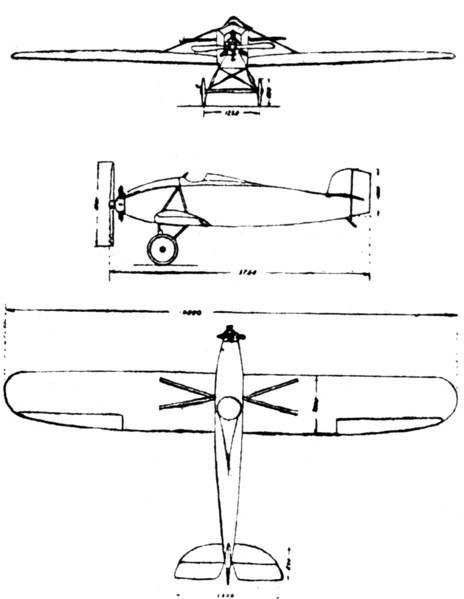
Designed by Antanas Gustaitis and built by Karo Aviacijos Tiekimo Skyrius, the ANBO I was a single-seat aircraft developed in Lithuania, proposed as a trainer for the Army It was a low-wing, braced monoplane of conventional tailwheel configuration. The fuselage structure was of fabric-covered welded steel tube, The wing had a wooden, two-spar structure and was fabric covered but the fuselage, also fabric covered, had a welded steel tube structure.
The first flight took place on 14 July 1925. Ten years later the aircraft was sold to Lithuanian Aviation Museum in Kaunas where it is exhibited today.
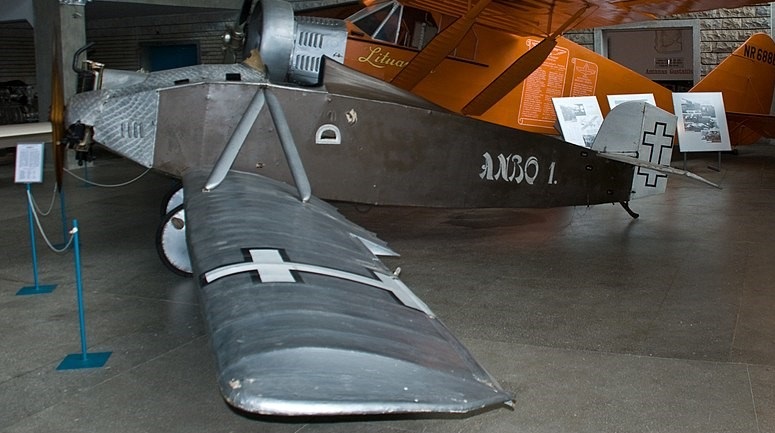
Powerplant: 1 × Anzani 3-cylinder radial, 30 kW (40 hp)
Propeller: 2-bladed Dorand, 1.90 m (6 ft 3 in) diameter
Wingspan: 10 m (32 ft 10 in)
Wing area: 11.40 m2 (122.7 sq ft)
Length: 5.75 m (18 ft 10 in)
Height: 1.95 m (6 ft 5 in)
Empty weight: 190 kg (419 lb) equipped
Gross weight: 300 kg (661 lb)
Fuel capacity: 35 kg (77 lb) fuel and oil
Maximum speed: 142 km/h (88 mph, 77 kn) at ground level
Endurance: 4 hr
Service ceiling: 4,200 m (13,800 ft)
Time to 1,000 m (3,300 ft): 7 min
Take-off distance: 30 m (98 ft)
Landing distance: 40 m (130 ft)
Crew: One
Karo Aviacijos Tiekimo Skyrius
Lithuania
The Lithuanian Army’s aircraft factory, responsible for the construction of the Anbo 41, a two-seat day/night observation aircraft, and the Anbo 51 two-seat trainer, both monoplanes.
Kari-Keen 60 Sioux Coupe / 90
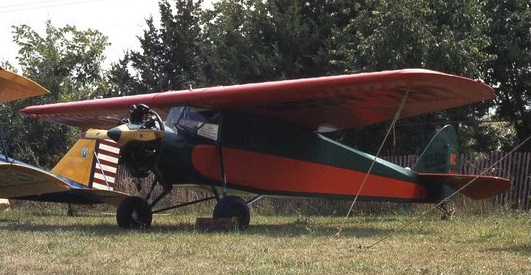
The Kari-Keen 90 Sioux coupe was designed by Swen Swanson and is a two-seat side by side high-wing monoplane with conventional landing gear. The wing is fully cantilevered, with skylights built in. The fuel tank sits above the pilot’s head and is part of the leading edge. Ole Fahlin built all the propellers and test flew the aircraft.
Production of the Sioux coupe began in 1929. The first model, the Kari-Keen 60 Sioux Coup, featured a 60 hp (45 kW) Veile M-5 engine. 22 aircraft were built without a type certificate.
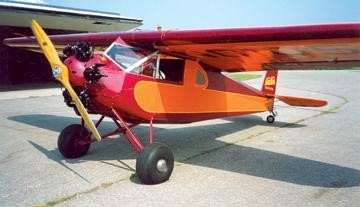
In 1930, six more model 90s were built with a type certificate. The price was US$3,365 in 1930.
In 1931, the Sioux Aircraft Corporation bought the company assets, changing the name of the Kari-Keen 90 into the Sioux Coupe 90.
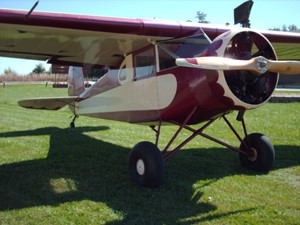
One 1930 Coupe 60 (ATC 2-81), powered by a 65hp Velie M-5 engine, was carried over from Kari-Keen inventory to Sioux Aircraft Corporation.
With the re-organization of Kari-Keen Aircraft Co, the 1931 Sioux Coupe 90 was a slight variation of the Kari-Keen 90. Designed by Swen Swanson and redesign by Gazley & LaSha, the one built, NC10544, sold for $3,355. Originally powered by a 90hp Brownback Tiger, it was later re-powered with a 110hp Warner Scarab.
The Sioux Coupe 90-B Junior (ATC 414) built in 1931, NC10721, sold for $3,500. Originally powered by a 90hp Warner engine, there are reports that a 90hp Lambert was also installed at one time.
The Sioux Coupe 90-C Senior (ATC 2-356) NC10735 was built in 1931.
Production of the Sioux coupe ended on 1 August 1933.
Variants:
Kari-Keen 60 Sioux coupe
First flight 1929. 22 built
Sioux Coupe 90
Lambert R-266 radial engine 90hp.
First flight 1930. 6 built
Sioux Coupe 90A
powered with a 90 hp Brownback Tiger
First flight 1933. 1 built
Sioux Coupe 90B Junior
powered with a 90 hp Warner Scarab Junior – One built
First flight 1931.
Sioux Coupe 90C Senior
powered with a 110 hp Warner Scarab – One built
First flight 1931.
Specifications:
Kari-Keen 90-C Sioux coupe
Engine: 1 × Warner Scarab Radial, 110 hp (82 kW)
Propeller: 2-bladed Ole Fahlin
Wing area: 150 sq ft (14 m2)
Airfoil: Eieffel 385
Gross weight: 1,580 lb (717 kg)
Fuel capacity: 25 US gallons (95 l; 21 imp gal)
Cruise speed: 66 kn; 122 km/h (76 mph)
Crew: one
Capacity: one passenger
Sioux Coupe 90
Engine: 90hp Brownback Tiger
Wingspan: 30’0″
Length: 23’0″
Useful load: 533 lb
Max speed: 115 mph
Cruise: 100 mph
Stall: 45 mph
Range: 400 mi
Seats: 2
Sioux Coupe 90-A
Engine: 90hp Brownback Tiger, later 110hp Warner Scarab
Wingspan: 30’0″
Length: 23’0″
Useful load: 533 lb
Max speed: 115 mph
Cruise: 100 mph
Stall: 45 mph
Range: 400 mi
Seats: 2
Sioux Coupe 90-B Junior
Engine: 90hp Warner
Wingspan: 30’0″
Length: 23’0″
Useful load: 530 lb
Max speed: 115 mph
Cruise: 98 mph
Stall: 45 mph
Range: 400 mi
Seats: 2
Sioux Coupe 90-C Senior
Engine: 110hp Warner Scarab
Wingspan: 30’0″
Length: 23’3″
Seats: 2
Kari-Keen Aircraft Inc
USA
Formed in June 1928, in Sioux City, Iowa, as a subsidiary of Kari-Keen Manufacturing Company Inc., which made automobile accessories. Built Kari-Keen 90 high-wing side-by-side two-seat light cabin monoplane.
Kari-Keen’s automotive product line included the Kari-Keen Kairrier automotive trunks and beds designed by Paul Lier and patented in 1925. Production started in Leeds, Iowa. In 1937, the automotive division ceased operations.
Kari-Keen also operated a flight school to operate their aircraft, the Kari-Keen School of Aviation. In 1930 C.F. Lytlebought the assets of the aviation branch and formed Sioux aircraft, changing the name of the Kari-Keen 90 into the Sioux Coupe 90. Only three prototype new models were built and retained the Kari-Keen logo on the tail.
Karhumäki Bear
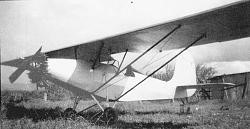
Niilo and Valto Karhumäki started in autumn 1924 the construction of an airplane at their home. The work also involved Emil Kankaanpää and Hope Hovinen. The machine was given the name Bear 1.
The brothers built in the 1920s of four aircraft: Bear 1 Bear 2 Bear 3 and Tern. Construction was initially something of a hobby, but soon expanded into a versatile aviation business.
Karhumäki Tiira / Tern
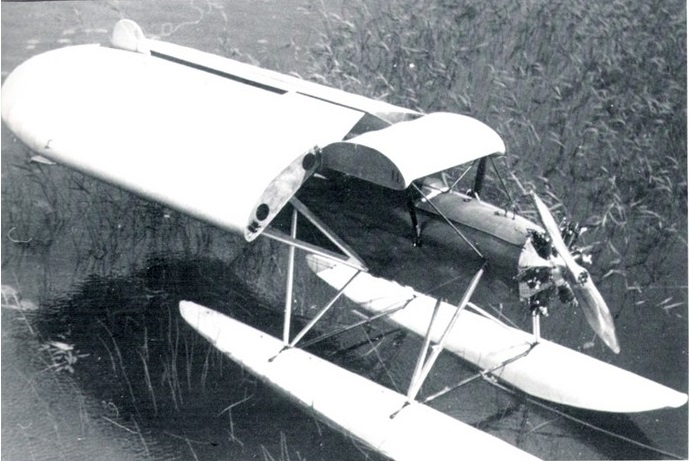
Karhumäki activities began in 1924 at Keljo, near Jyvaskyla, and originally was of an amateur undertaking. Together with his brothers, Valto and Uuno, Niilo Karhumäki designed and built an aircraft and began to fly it. The first aircraft was given the name Karhu (Bear). The work was continued and the boys planned and constructed the Karhu 2, Karhu 3 and Tiira (Tern). The Tiira was built in 1929.
A reproduction of the 1929 Tiira tandem parasol monoplane began flying in 2004.
Karhumäki Viri
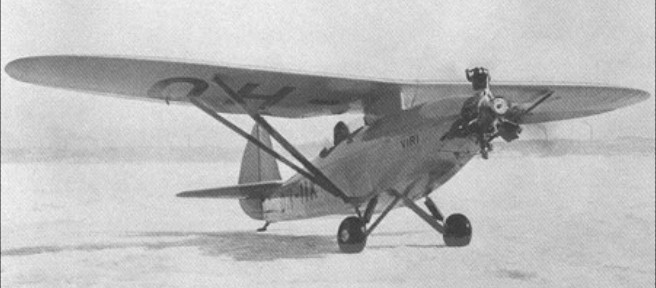
In the 1930s the single-seat light monoplane Viri single-seat light monoplane was built, design by Finnish Club of Aeronautical Engineers.
Karhumäki Brothers
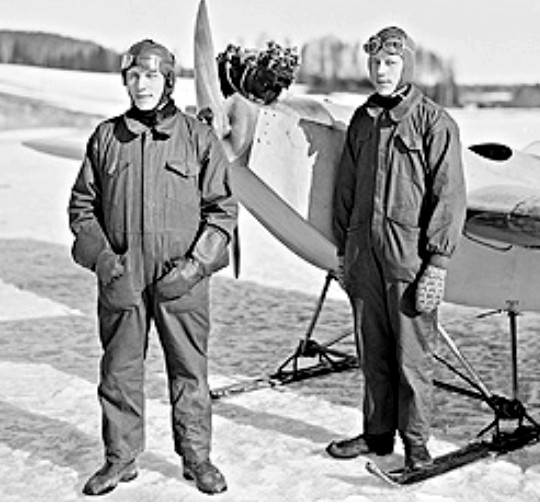
Niilo and Valto Karhumäki, also known as the Karhumäki brothers (Finnish: Veljekset Karhumäki), were Finnish aviation pioneers, aircraft manufacturers and airline founders.
Born in Multia, Niilo and Valto Karhumäki moved to Jyväskylä, where they founded a company called Veljekset Karhumäki in late 1924, which dealt with pilot training, public displays, aircraft maintenance and aerial photography during the 1930s. Niilo Karhumäki had completed in early Air Force reserve pilot course in Vyborg and received a pilot’s license.
Niilo and Valto Karhumäki started in autumn 1924 the construction of an airplane at their home. The work also involved Emil Kankaanpää and Hope Hovinen. The machine was given the name Bear 1. The brothers built in the 1920s of four aircraft: Bear 1 Bear 2 Bear 3 and Tern. Construction was initially something of a hobby, but soon expanded into a versatile aviation business.
In order to start a co-operation with the Finnish Air Force, the headquarters of Veljekset Karhumäki was moved to Kuorevesi. During World War II the company was merged into the Valtion lentokonetehdas company, manufacturer of a number of military aircraft. In the 1930s the Viri single-seat light monoplane was built, design by Finnish Club of Aeronautical Engineers. In 1939-1941 a new factory was built, near Halli airfield, where trainers for Finnish Air Force were built. The Karhumäki brothers designed the Karhumäki Karhu 48B light airplane, of which a small number was produced during the 1950s.
In 1950, Karhumäki Airways was founded by Veljekset Karhumäki, an airline initially offering scheduled passenger flights on mostly domestic routes. In 1963, Aero O/Y (today’s Finnair) acquired the majority of its stake, and in 1996 Karair (as it was known by then) was fully absorbed into Finnair.
Successful air transport and repair activities were discontinued due to tougher competition in 1963. Aerial Photography and the Ministry of Agriculture and Forestry flights continued. The brothers have been honoured with a monument called Lentäjäveljestenaukio (which translates as “Pilot Brothers Square”) in Halli.

