A reconnaissance biplane of 1927, designed by German Dr. Richard Vogt.
Inter-Wars
Kawasaki
Kawasaki aircraft was formed in 1918 as subsidiary of the heavy-industrial complex Kawasaki Jukogyo to build aircraft and aero engines. Based at Kobe, in the early 1930s built Salmson biplanes and engines as well as own designs. Kawasaki had a Dornier license for all-metal construction, and in December 1924 the first Kawasaki-Dornier Wal flying-boat made a notable flight with a German pilot. Thereafter made aircraft mainly for the Japanese Army.
A designer of Kawasaki landplanes was German Dr. Richard Vogt, with the company from 1923 unitl 1933. Vogt designs were Type 88 reconnaissance biplane (1927), Type 92 single-seat biplane fighter (1930), and Ki-3 single-engined biplane bomber. Japanese designed were Ki-10 single-seat fighter biplane (1935), Ki-32 single-engined monoplane bomber (1937), Ki-45 fast and widely used twin-engined fighter (1939), Ki-48 twin-engined light bomber (1939), Ki-61 single-seat fighter (liquid-cooled engine and showing German influence (1941), Ki-100 radial-engined development (1944), and Ki-102 twin-engined fighter (1944).
After the war, in March 1954, a new company of the same name was founded by the merger of Kabushiki Kaisha Kawasaki Gifu Seisakusho and Kawasaki Kikai Kogyo Kabushiki Kaisha. The Kawasaki KAL-1 (July 1953) was the first postwar all-metal aircraft of Japanese design. Early production covered 210 Lockheed T-33 jet trainers, 48 Lockheed P-2H Neptunes and 239 Bell Model 47 helicopters, all built under license from the USA. Also made major components for the NAMC YS-11 turboprop transport.
1962:
38 Akashi-machi,
Ikuta-ku,
Kobe
The company reorganized in April 1969 as Kawasaki Jukogyo Kabushiki Kaisha. In November 1970 flew the C-1 twin turbofan military transport, production aircraft later going to the JASDF. Went on to complete 82 P-2Js (derived from Neptune), 211 KH-4 helicopters (derived from the Model 47), 160 KV107 helicopters (derived from the Boeing Vertol 107 Model II), and many Hughes/McDonnell Douglas Model 500D and OH-6DA helicopters (production continued through 1998). Produced the Lockheed Martin P-3C Orion for the JMSDF; 101st and final aircraft delivered in 1997, when four EP-3/UP-3D electronic intelligence/training variants remained to be delivered up to the year 2000. Kawasaki produced 16 CH-47J examples of Boeing Chinook for the JASDF and compled delivery of 52 CH-47JAs to the JGSDF. It was s prime contractor on the OH-1 Kogata Kansoku armed scout, observation and attack helicopter (first flown August 1996), and had almost completed manufacture of some 200 T-4 intermediate jet trainers and liaison aircraft for the JASDF by 1998. Also constructs components and assemblies for the F-15J and various Airbus and Boeing airliners. Kawasaki teamed with Eurocopter on the BK117 helicopter, and has engine and space programs.
Kawasaki Heavy Industries, Limited is an international corporation and has headquarters in both Chūō-ku, Kobe and Minato, Tokyo. As of 31 March 2013 Kawasaki had 34,010 employees, total assets of ¥ 1.3 trillion at March 31, 2012, and a nett income ¥ 23.3 billion at March 31, 2012.
Kawanishi H3K1 Type 90-2 / Short KF.1
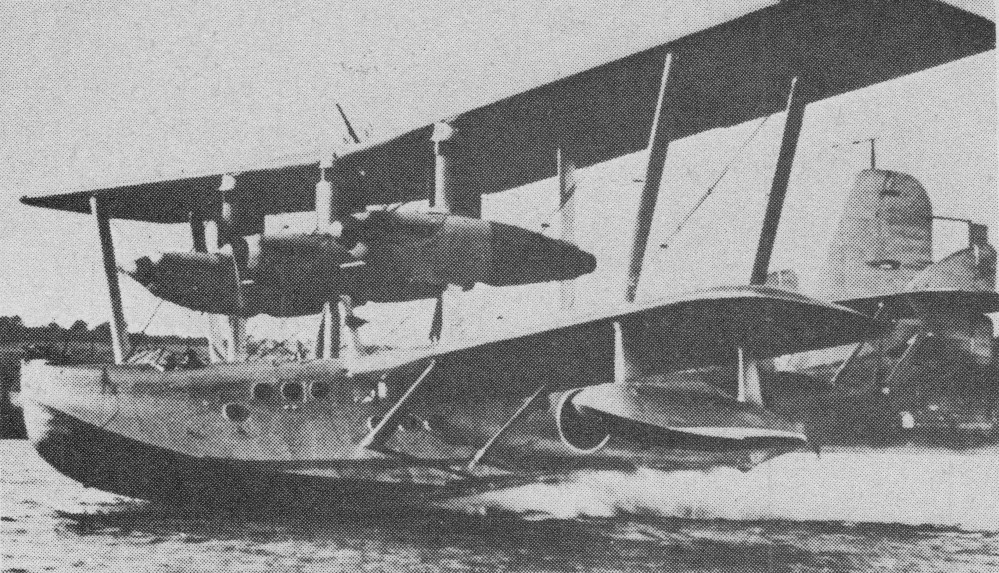
Designed by Short as the KF.1, the prototype was built by Short and delivered to the Japanese Naval Air Force.
Five were built in Japan and at least one saw service in World War II as the Kawanishi H3K1 Type 90-2, a troop and supply transport assigned the code name Belle.
Later models produced by Kawanishi versions had enclosed cockpits and remained active until replaced by H6K2 Type 97 flying boats in 1938-39.
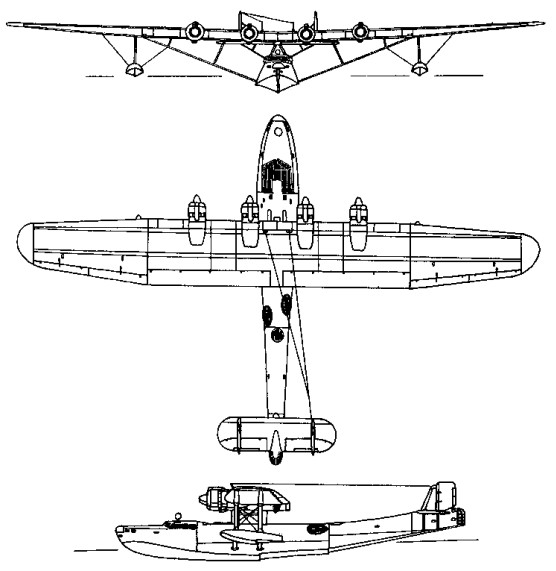
Kawanishi H6K Mavis
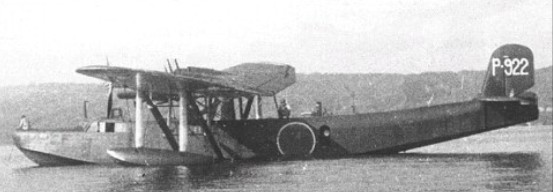
Owing much to American and French flying-boat design of the mid-1930s, the large four engine Kawanishi Type 97 parasol monoplane flying boat. When first flown in July 1936, The Type 97 was Japan’s only in-service long-range reconnaissance flying-boat when that nation went to war in December 1941. The H6K1 initial military version entered limited service with the Imperial Japanese Navy in 1938, and was followed by 10 H6K2 flying-boats.
The first major production version, the H6K4, was powered by four Mitsubishsi Kinsei 43 radiais and armed with four 7.7mm machine-guns in bow and midships positions and a 20mm cannon in a tail turret, and was capable of carrying two 800kg bombs or torpedoes. A total of 66 were in service at the time of Pearl Harbor, later aircraft powered by Kinsei 46 engines. These boats were widely employed, although the initial heavy defeats inflicted on the Allies in the Pacific rendered maritime reconnaissance duties subordinate to the need for air transportation of Japanese troops during the swift conquests in the East Indies and elsewhere. A number of aircraft, designated H6K4-L, were converted for transport duties and were each able to accommodate about 18 fully-armed troops. Lacking armour and self-sealing fuel tanks, they were extremely vulnerable to fighter attacks and, after a number had been shot down, a new version entered production as the H6K5 in August 1942. By that time the maritime reconnaissance version had been given the reporting codename ‘Mavis’ by the Allies, the transport derivative being named ‘Tillie’.
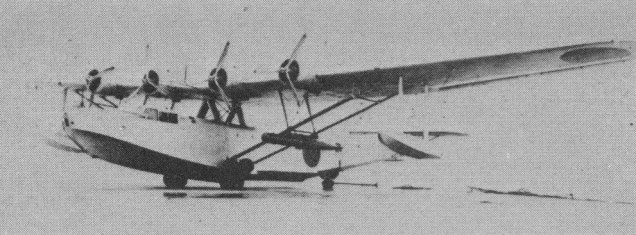
Powered by either Kinsei 51 or 53 radials, the H6K5 was intended to eliminate the shortcomings of the earlier versions, but although the open bow gun position was replaced by a single-gun turret immediately aft of the pilot’s cockpit, the overall armament was not increased. Only 36 H6K5s were completed by 1943, when production gave place to the greatly superior H8K.
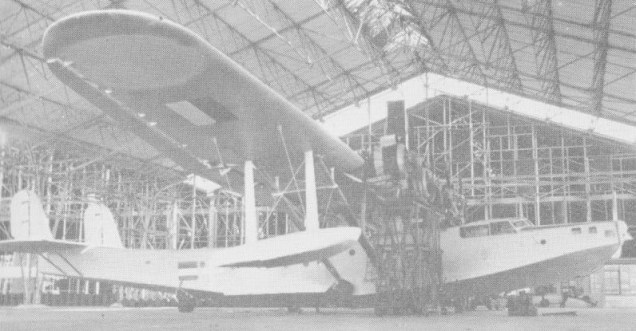
H6Ks served with the 8th, 14th, 801st, Toko and Yokohama Kokutais, and some of the H6K5s were employed as naval staff transports throughout the Pacific in 1943. Eighteen aircraft served on the quasicommercial courier services in South East Asia, a number of them being destroyed by Allied aircraft both in the air and at their moorings.
H6K5
Engine: 4 x Mitsubishi “Kinsei-51”, 975kW
Take-off weight: 17500-23000 kg / 38581 – 50707 lb
Empty weight: 12380 kg / 27293 lb
Wingspan: 40 m / 131 ft 3 in
Length: 25.63 m / 84 ft 1 in
Height: 6.27 m / 20 ft 7 in
Wing area: 170 sq.m / 1829.86 sq ft
Max. Speed: 380 km/h / 236 mph
Cruise speed: 255 km/h / 158 mph
Ceiling: 9560 m / 31350 ft
Range: 4870 km / 3026 miles
Range w/max.fuel: 6670 km / 4145 miles
Crew: 10
Armament: 1 x 20mm cannon, 4 x 7.7mm machine-guns, 2 x 800-kg torpedos or 1000kg of bombs
H6K5
Engines: 4 x Mitsubishi Kinsei 46, 1070 hp
Span: 131 ft 3 in
Max speed: 211 mph at 13,120 ft
Range: 3107 miles
Max bombload: 3527 lb
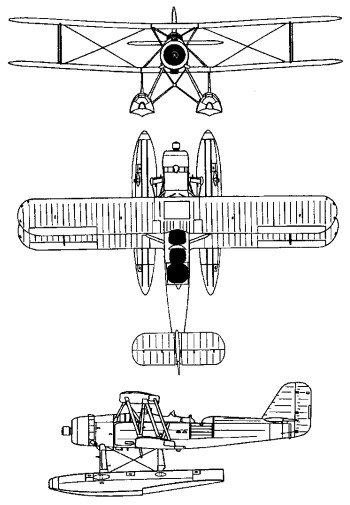
Kawanishi E7K Alf / Navy Type 94
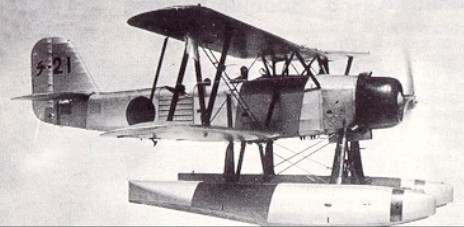
In 1932 the Imperial Japanese Navy sought a replacement for the Navy Type 90-3 Reconnaissance Seaplane which had been built as the Kawanishi E5K. The resulting three-seat Kawanishi E7K1 was an equal-span biplane, powered by a 462kW HiroType91 engine. First flown on 6 February 1933, the prototype was handed over to the Japanese navy three months later for service trials, being flown in competition against the Aichi AB-6 developed to meet the same requirement. The E7K1 was ordered into production as the Navy Type 94 Reconnaissance Seaplane in May 1934, entering service in early 1935. However, its Hiro engine was unreliable, and although late production E7K1s had a more powerful version of the Hiro 91, this offered no improvement.
During 1938 Kawanishi built an E7K2 prototype which, generally similar to the E7K1, replaced the Hiro engine with a Mitsubishi Zuisei 11 radial. Flown for the first time in August 1938, the E7K2 was ordered into production three months later under the designation Navy Type 94 Reconnaissance Seaplane Model 2, the original version then becoming the Navy Type 94 Reconnaissance Seaplane Model 1. Production of the E7K1 totalled 183 (57 built by Nippon), and of the E7K2 about 350 (some 60 built by Nippon).
As a type, the E7Ks saw extensive use from 1935 until the beginning of the Pacific war, when the E7K1s were relegated to second-line duties. The E7K2s continued in first-line service until 1943, and both versions were used in kamikaze operations in the closing stages of the war. When, in the second half of 1942, Allied code names were allocated to Japanese aircraft, the E7K2 became known as ‘Alf’.
Kawanishi / ShinMaywa / Shin Meiwa
In July 1924 a Kawanishi biplane seaplane made a round- Japan flight in nine days. The company formed as Kawanishi Kokuki Kogyo Kabushiki Kaisha in November 1928, taking over the factory and windtunnel (at Kobe) of Kawanishi Machine Works. Held Short Bros license and was Rolls-Royce agent. At the time of formation was supplying aircraft, components, and accessories to Japanese Navy.
Early types included a single-seat biplane fighter and a two-seat long-range high-wing monoplane. At the end of 1930 moved to new works at Narao. In February 1933 flew new three-seat reconnaissance floatplane (E7K) adopted by Japanese Naval Service. Short and Rolls-Royce connections manifested in Navy type 90-2 (K.F.1) flying boat, built in England, assembled in Japan. Built from 1936 a highly successful long-range maritime reconnaissance/ bomber/transport flying-boat, the strut-braced H6K. Subsequent H8K had deep hull and cantilever wing. N1K single-seat fighter monoplane of 1942 originated as floatplane but was developed into outstanding landplane. Projects included suicide aircraft based on German V-1.
ShinMaywa (or Shin Meiwa) became the title of the Kawanishi company after reestablishment in October 1949 as overhaul center for Japanese and U.S. aircraft. Also made components for other constructors, developed re-engined de Havilland Heron.
1962:
Shin Meiwa Industry Co Ltd
125 Agenaruo-Naruocho,
Nishinomiya City
Shin Meiwa’s technical adviser, Dr Shizuo Kikuhara, designed the Type 97 and Type 2 multi-engined flying-boats used by the former Imperial Japanese Navy.
Under his leadership, the company designedg a medium-range patrol flying-boat for the JMSDF. It is also producedfuselage and tail assemblies of the P2V-7 Neptune for Kawasaki and components of the NAMC YS-11, and was licensed to overhaul DH Gipsy Queen engines.
Much other overhaul work is done for the US and Japanese services.
After contract in January 1966 directed attention especially to new marine aircraft. Rebuilt a Grumman Albatross as a dynamically similar flying model for projected very large STOL ASW flying-boat for Japanese Maritime Self Defense Force. The latter type developed as four-turboprop PS-1, but later also as U.S.-1 amphibious search-and-rescue aircraft. PS-1 flew October 1967; U.S.- 1 October 1974. First prototype PS-1 converted later as waterbombing test vehicle. Basic type remarkable for low take-off and landing speeds, achieved by boundary-layer control system and large flaps for slipstream deflection. Company also carries out major subcontract work for advanced Mitsubishi and Kawasaki aircraft, and manufactures components for Boeing 717/ 757/ 767/ 777 and Gulfstream bizjets.
Kavanagh 25
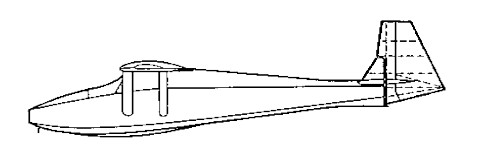
High performance soaring plane, Germany, 1931
Length: 21.096 ft / 6.43 m
Wingspan: 59.055 ft / 18.0 m
Crew: 1
Kavanagh 20
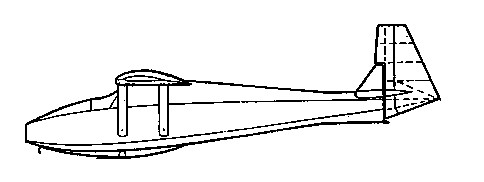
Soaring plane, Germany, 1930
Length: 21.096 ft / 6.43 m
Wingspan: 46.194 ft / 14.08 m
Kassel 12
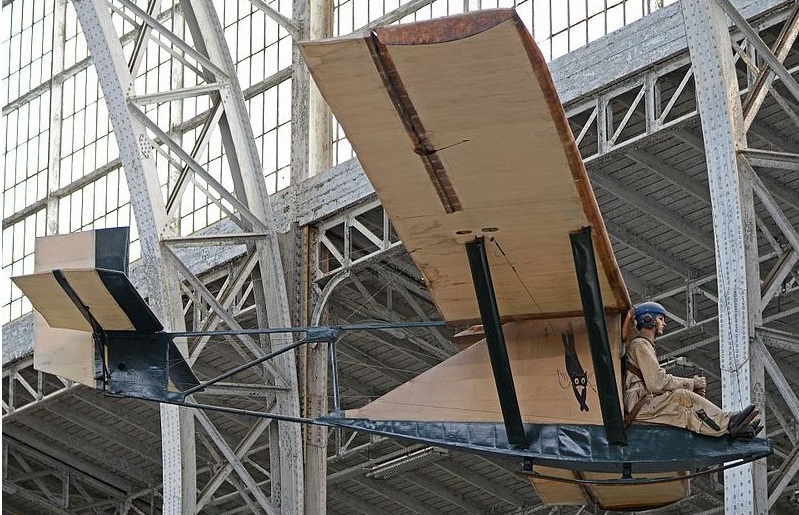
The Segelflugzeugbau Kassel 12 was a German glider used for training, developed in the 1920s. It was a minimalist design with the pilot sitting atop a tapered wooden structure that supported a high wing on a set of struts, and carried a conventional empennage at the rear. A spring skid was provided as undercarriage.
Conscripts from Lentoasema 2 built one Kassel 12A in 1935. The first flight with the aircraft was performed by Lt. Col. Ahonius at Santahamina on 28 March 1935.
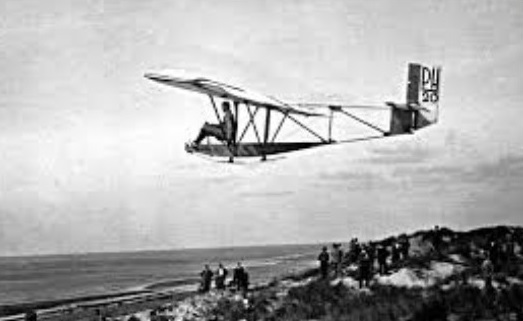
The aircraft was used at the Jämijärvi glider school in the summer of 1936, carrying the designation number “13”. The aircraft is today on display at the Päijänne Tavastia Aviation Museum in Asikkala, near Lahti.
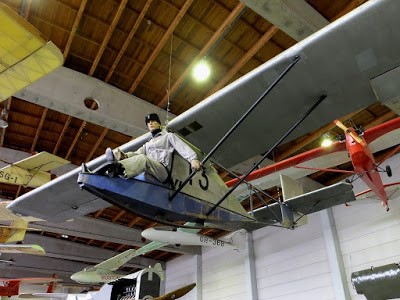
Wingspan: 10.00 m (32 ft 10 in)
Length: 6.50 m (21 ft 4 in)
Height: 2.20 m (7 ft 3 in)
Crew: One pilot
Karo Aviacijos Anbo 51
A two-seat monoplane trainer.

