Loire 45

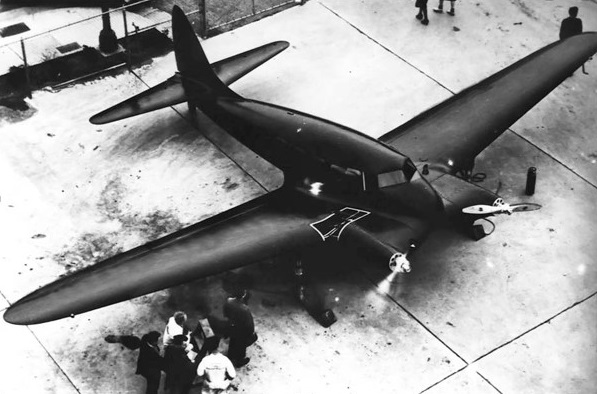
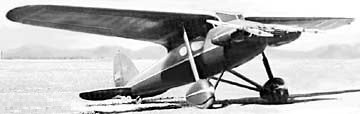
Built as a replacement for the Loire 43, the Loire 45 employed a basically similar airframe, but fitted with an 800hp Gnome-Rhone 14Kds 14-cylinder radial air-cooled engine, three-bladed propeller, and strengthened wing bracing struts. Armament consisted of two 20 mm cannon Oerlikon, installed in wing compartments.

Flown for the first time on 20 February 1933, the prototype was transferred to Villacoublay in June for official testing. At the end of September 1933 formal trials began at the Aircraft Testing Center (SEMA). Military pilots found that the view from the cockpit, especially forward, unsatisfactory.

During the course of trials several modifications were made to the wing roots in attempts to improve visibility from the cockpit, an 880hp Gnome-Rhone 14Kcs was installed in August 1934, and, in the following October, the vertical tail surfaces were enlarged.

After the changes the aircraft returned to SEMA for comparative testing with other fighters Training dogfights showed that even with a new engine the Loire was heavy to fly and had poor maneuvering characteristics. Armament comprised two 20mm cannon in underwing gondolas, but visibility for the pilot was deemed unacceptable.

Once again suffering fighter was sent for revision and, after re-engining with a 900hp Gnome-Rhone 14Kfs with a wooden prop, the sole prototype was relegated to the role of parachute testing as the Loire 45 LP1. It flew in this form for the first time on 18 July 1935, but by that time the military has put an end to this project.

Max take-off weight: 1785 kg
Empty weight: 1340 kg
Wingspan: 11.96 m / 39 ft 3 in
Length: 7.48 m / 24 ft 6 in
Wing area: 20.60 sq.m / 221.74 sq ft
Max. speed: 370 km/h / 230 mph
Loire 43

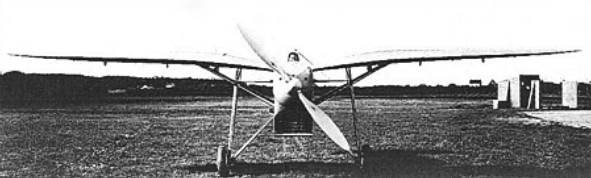
In 1929 Ateliers et Chantiers de la Loire initiated design of a lightweight fighter for which alternative engines were proposed. These were the 300hp Gnome-Rhone Titan II (Loire 40), the 500hp Hispano- Suiza 12Mc (Loire 41) and the 420hp Gnome-Rhone 9Asb Jupiter VII (Loire 42).

When, in 1930, the lightweight fighter concept was discarded by the Service Technique de l’Aeronautique (STAe), a new C1 (single-seat fighter) programme was initiated for which there were 10 official contenders. All of these were powered by the supercharged Hispano-Suiza 12Xbrs 12-cylinder liquid-cooled engine. As one of these contenders, the Loire 43 was a further development of the Loire 40 series of fighter projects.

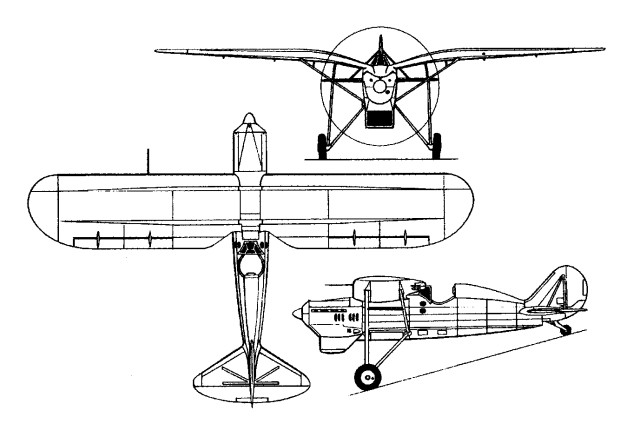
Nine designers created the Loire 43 completely in metal. Even trim control surfaces was duralumin with a metal fixed pitch prop. It was a gull-winged, braced monoplane of all-metal stressed-skin construction with an armament of two synchronised 7.7mm MAC-built Vickers guns.

The Loire 43 was flown on 17 October 1932, but on 14 January 1933, and before it could undergo official evaluation, on January 14, 1932, its pilot apparently lost consciousness after climbing to 9000m and the aircraft spun into the ground.

Engine: 1 x Hispano-Suiza 12Xbrs
Max take-off weight: 1725 kg
Empty weight: 1245 kg / 2745 lb
Wingspan: 12.00 m / 39 ft 4 in
Length: 7.93 m / 26 ft 0 in
Wing area: 20.60 sq.m / 221.74 sq ft
Max. speed: 360 km/h / 224 mph
Range: 600 km / 373 miles

Loire / Loire-Gourdou-Leseurre / Groupe Loire-Nieuport / Ateliers et Chantiers de la Loire

Shipbuilder of St Nazaire and la Baule which entered aviation on acquiring Gourdou and Leseurre in 1925 to become Loire-Gourdou-Leseurre. The latter left in 1929 and Loire started their own aviation department. The first original design appeared in 1931. In 1933, Nieuport- Delage merged with Loire to become the Groupe Loire-Nieuport. They built single and multi-engined flying-boats, both civil and military, and fighters for the navy. Also constructed Bloch 200 and Dewoitine 500 for the Armee de I’Air. In 1936 became part of SNCAO.

Loening S2L

The Loening S2L was one of three amphibian designs to be considered as possible replacements for conventional floatplanes aboard Navy cruisers. A design-for-purpose amphibian was viewed as potentially a better solution to the problem of periodically re-rigging floatplanes to wheeled undercarriage, then back to floats again.

Loening received a contract in 1932 to construct a single amphibian prototype as the XS2L-1. Its design followed a conventional biplane layout.

XS2L-1
Engine: 1 x Pratt & Whitney R-985-28 Wasp Junior, 400 hp
Prop: 2 blade metal, ground adjustable
Wingspan: 34 ft 6 in
Length: 30 ft 7 in
Wing area: 355 sq.ft
Empty weight: 2833 lb
Noral gross weight: 4053 lb
MTOW: 4317 lb
Max speed: 130 mph
Ceiling: 12,400 ft
Range: 633 mi
Seats: 1
Armament: 1 x .30 mg

Loening XO2L

XO2L-2

The prototypes first flight in early 1932 led to the addition of finlets on the horizontal stabilisers. But when performance and handling still fell below Navy expectations, the prototype was returned to the factory and subjected to modifications which included installation of a 550 hp R-1340D engine, lengthening the fuselage and pontoon three and a half feet, and enlarging the fin and rudder. Under the new designation XO2L-2, trials continued into late 1932, but Navy officials judged that the small performance improvement over the OL-9 did not merit production.

Loening XSL-1 / XSL-2

XSL-1

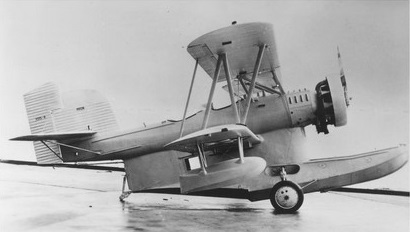
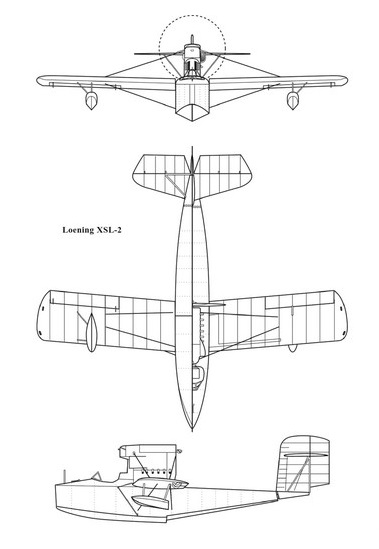
The Loening SL was the last type of airraft used in a series of Navy experiments, conducted intermittently from 1923 to 1933, to develop a small seaplane that could be deployed from a submarine. The aircraft had to be designed so that it could be easily dismantled and stowed in a watertight, eight foot diameter tube carried on the deck of the submarine. In 1930 BuAer decided to reinstate the idea with a small monoplane flying boat, and in June 1930, awarded Loening a contract to construct a single prototype as the XSL-1. The design emerged with a semi-cantilever monoplane wing which attached to the top of a single-step metal boat hull. The Warner engine, mounted on struts in a pusher configuration, featured a ring cowl and a small bullet-shaped nacelle. Stowage in the sub tube was accomplished by simply removing the wings and stabilising floats.

The prototype was delivered to NAS Anacostia for trials in February 1931. When testing revealed the XSL-1 to be underpowered with the Warner engine, it was returned to the factory for installation of a 160 hp Menasco B-6 and a more streamlined engine mount. The revised aircraft, re-designated XSL-2, resumed testing at Anacostia in early 1933 but these trials indicated only a nominal improvement in performance. Soon afterwards the Navy abandoned the entire program when the XSL-2 suffered serious damage during exercises with a submarine.

XSL-1
Engine: Warner Scarab, 110 hp
Prop: 2 blade fixed pitch metal
Wing span: 31 ft 0 in
Length: 27 ft 2 in
Wing area: 148 sq.ft
Empty weight: 1114 lb
Gross weight: 1512 lb
Max speed: 101 mh
Cruise: 88 mph
Ceiling: 13,000 ft

Loening OA-1A

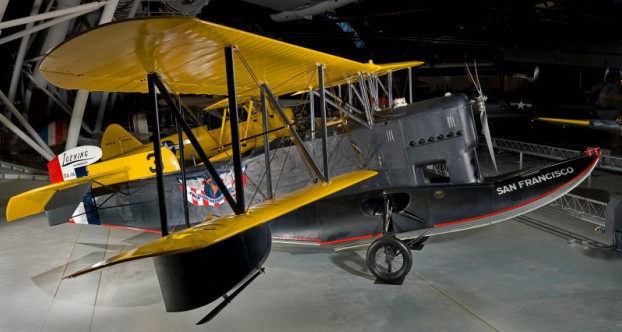
The hull is constructed of duralumin over a wooden frame, and the fuselage was built on top of the hull. The OA-lA is powered by a 420-horsepower, water-cooled Liberty V-12 engine that is mounted inverted.

The historic Pan-American Goodwill Flight of 1926 and 1927 through Mexico and Central and South America was intended to improve relations with Latin American countries, to encourage commercial aviation, and to provide valuable training for Air Corps personnel. The flight was made by ten pilots in five Loening OA-1A amphibian aircraft. To stimulate public interest, each airplane was named after a major U.S. city-the New York, the San Antonio, the San Francisco, the Detroit, and the St. Louis.

The 35,200 km (22,000 mi) flight began on December 21, 1926, from San Antonio, Texas. The journey took 59 flying days, interspersed with 74 days for scheduled maintenance and diplomatic meetings and ceremonies. The flight concluded at Bolling Field in Washington, D.C., on May 2, 1927. Within three weeks, however, the impressive achievement was eclipsed by Lindbergh’s solo trans-Atlantic flight in the Spirit of St. Louis.

Loening OA-1A San Francisco
Engine: Liberty V-12, 313 kw (420 horsepower)
Wingspan: 13.9 m (45 ft 7 in)
Length: 10.7 m (35 ft 1 in)
Height: 3.5 m (11 ft 6 in)

Loening Aeronautical Engineering Company

Grover C. Loening built a monoplane flying-boat in 1911. Formed company in 1918, and built his first Air Yacht (based on prewar design). A two-seat monoplane fighter with very advanced features was ordered by the Government, but contract for 2,000 canceled at war’s end. Produced very popular line of single-float, biplane flying-boats based on Air Yacht for civil and naval use.
In 1920, Grumman joined the Loenings as test pilot for their famous Air Yacht amphibians, and over the next several years, he took over full responsibility for the company’s aircraft design.
The Loenings sold out their company in 1929 and backed Grumman in a venture of his own.
Merged with Keystone Aircraft Corporation in 1928. Built monoplane and biplane pursuits for the Army. After takeover by Keystone, Loening set up the Grover-Loening Aircraft Company at Garden City, New York, as consultant, and built small amphibian flying-boat XS2L for U.S. Navy in 1931. Delivered XSL-2 experimental submarine-borne version in 1933.

Lockheed Brothers Uni-twin / Olympic Duo-4

Lockheed Alcorc 6 1

The Lockheed Brothers left the Company after the Detroit merger and set up the Airover Company, later called Alcor, to build the Uni-twin. With two Menasco engines side-by-side in the nose, driving two propellers. The name of the company was changed to Lockheed Vega when it became a subsidiary of the revived parent organization.

With Allan H. Lockheed as president, built a new version of his Duo twin-engined monoplane. Type was called Alcor Duo-6 and was distinctive in having two Menasco engines placed horizontally.

A demonstration flight was made in May 1934 at Mines Field with one propeller removed—it took off in 1200′, attained 130mph, and reportedly handled much like a single-engine plane.

Alcor Duo-6 NX962Y

The Alcor Olympic Duo-4 of 1930 designed by Allan Loughead, featured two engines mounted side-by-side in a nose nacelle. Powered by two 160hp Menasco B-6 (reportedly first with 125hp C-5s), it was originally planned for one Wright J-6-7c in the nose. The unbraced cantilever wing had two full-length box spars.

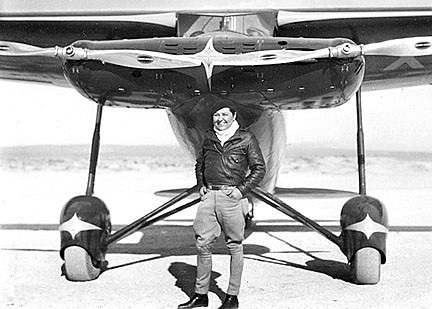
Alcor Duo-4 with Pancho Barnes

The one five-place Alcor Duo-4 built, NX962Y, nosed over in a wind gust during a landing on Mar 18, 1931; although damage was slight, nervous financial backers withdrew their support.

Though Alcor conformed with Lockheed “star names” system and development was pursued in 1930s, no production resulted. Alcor was not a Lockheed Aircraft Corporation product.

Olympic Duo-6
Engines: two 230hp Menasco B-6S
Wingspan: 42’0″
Length: 28’6″
Useful load: 2045 lb
Max speed: 183 mph
Cruise: 157 mph
Stall: 57 mph
Range: 700 mi

Lockheed Brothers Aircraft Corp / Alcor

1929: Allan Loughead resigned from Lockheed Co after its acquisition by Detroit Aircraft Corp to establish Loughead Bros Aircraft Corp Ltd
737 S San Fernando Rd,
Glendale CA.
USA

The Lockheed Brothers left the Company after the Detroit merger and set up the Airover Company, later called Alcor, to build the Uni-twin, with two Menasco engines side-by-side in the nose, driving two propellers.

1934: Legally changed name to Lockheed.

1934: Alhambra Airport & Air Transport Co, Alhambra CA.

1937: Alcor (Allan Lockheed Corp) Aircraft Corp formed, San Francisco CA.

The name of the company was changed to Lockheed Vega when it became a subsidiary of the revived parent organization. The Lockheed Vega Twin then named Olympic Duo-4, crashed 1938. Firm also built low-wing Starliner and NA-35 trainer. With Boeing and Douglas during Second World War, as the BVD pool, built B-17s. Allan Lockheed, during Alcor period, was associated with Alhambra Airport and Air Transport Company.

Gave up aircraft production for parts manufacturing and, after WW2, retired from aviation to focus on his real estate business.